There may be no dirtier item in your wardrobe than the soles of your shoes. And while odds are still long that you would literally track the COVID-19 virus into your home that way, when you think of people who sneeze on sidewalks, the chances suddenly don’t seem so slim.
“The sole of the shoe is the breeding ground of more bacteria and fungi and viruses than the upper part of a shoe,” emergency physician Cwanza Pinckney, MD, told HuffPost. So just to be safe, don’t wear your shoes inside.
After you’ve taken off your shoes, it’s never a bad idea to also change your clothes. If you have an essential job and work in a public space, you may even want to change clothes in your garage or foyer to be safe. Most of you, however, should simply change in your bedroom, tossing your dirty clothes in a hamper away from others. After all, Daniel Kuritzkes, MD, an infectious disease expert at Brigham and Women’s Hospital, told NPR that “flat surfaces and hard surfaces are more friendly to viruses than cloth or rough surfaces.”
After you take off your clothes, hop in the shower. Anytime you go outside, “the safest course of action is to shower right when you get home,” Joshua Zeichner, MD, a New York-based dermatologist, told PopSugar.
Of course, avoid sitting on the furniture and other surfaces, and touching any household items before washing up. Use hot water and scrub portions of your body that have been exposed extra well. The same 20-second hand-washing rule applies.
Clean under your nails often.
Plenty of dirt, grime, and germs can live under your fingernails. In fact, the CDC recommends that hospital workers don’t keep their nails long or wear artificial nails, because germs can remain under your nails even after you wash your hands.
“It’s harder to get that area truly clean when washing your hands,” Elizabeth Ransom, MD, chief physician executive at Baptist Health in Jacksonville, Florida, told HuffPost. “You have to be pretty diligent cleaning these areas.”
Don’t wear your jewelry outside.
Regularly clean your hand jewelry if you’re wearing it outdoors or, better yet, don’t wear it outside at all. “Removing your rings may lead to better hand hygiene,” Ramon Tallaj, MD, a board-certified physician and chairman of the board of SOMOS Community Care, previously told Best Life. “If the rings are contaminated and you put them back on after washing your hands, you’ve just re-contaminated your hands.” And for more on this, check out Should I Ditch My Jewelry During Coronavirus? Experts Weigh In.
Wipe down your glasses regularly.
If you wear glasses every day, chances are high you’re often touching your face. “When adjusting your glasses, you often inadvertently touch your face and may be tempted to rub your eyes without washing your hands first,” Lucky Sekhon, MD, of Reproductive Medicine Associates of New York, previously told Best Life. Plus, “droplets from a person’s sneeze or cough could land on your glasses,” so it’s important to clean them frequently. And for more on what to clean in your home, here are 25 Things You Should Clean Every Day and How to Do It.
Cover your mouth with your elbow.
As the World Health Organization (WHO) notes, it’s imperative to make sure you, and the people around you, follow good respiratory hygiene. This means covering your mouth and nose with your bent elbow or a tissue when you cough or sneeze. Then dispose of the used tissue immediately.
And of course, wash your hands for 20 seconds!
Hot water. Lots of soap. At least 20 seconds. Yes, we know you’ve heard it before. But it’s critical in helping lessen the public health risk from the coronavirus outbreak.
Many countries observe Good Friday as a national holiday on the Friday before Easter. The day commemorates the crucifixion and death of Jesus Christ.
Some countries observe the Orthodox calendar in which Good Friday may occur on a different date.
What is Good Friday?
The most important events in Christianity are the death and later resurrection of Jesus Christ, who Christians believe is the Son of God, and whose life and teachings are the foundation of Christianity.
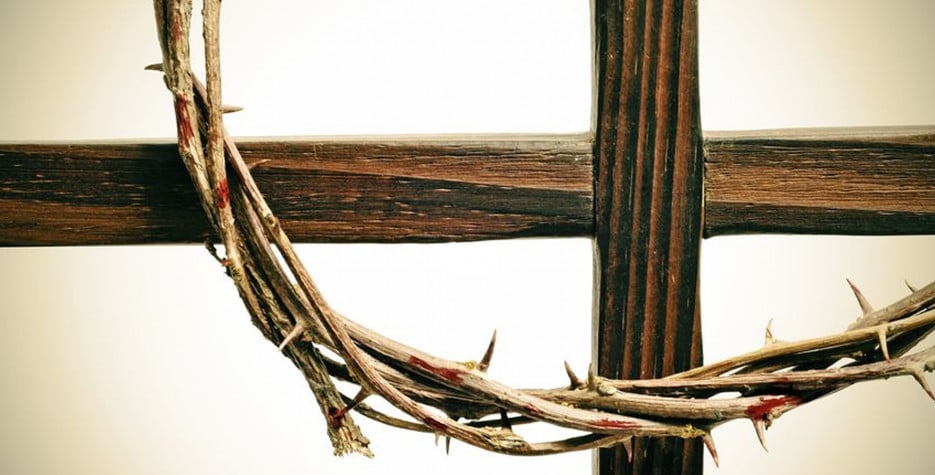
After the last supper, Jesus was arrested in the Garden of Gethsemane, put on trial, sentenced to death. He was then tied and nailed by the wrists and feet to a large wooden cross and left to die. Therefore the cross is used as a symbol of the Christian faith.
Good Friday is a day of mourning. During special Good Friday services Christians meditate on Jesus’s suffering and death on the cross, and what this means for their faith.
Why is it called ‘Good Friday’?
At first glance, it seems a strange name for a day that marked such a terrible event as a crucifixion, but when we look at the origin of the name it becomes clearer… or it would if there was one origin that people could agree on. As it stands, you can take your pick from the following:
Some say it comes from the use of “Good” as an adjective applied to the day, which is an Old English synonym for “holy.”
Others believe it stems from a corruption of the word “God,” in much the same way that “Goodbye” comes from the phrase “God be with ye.” So the name may be derived from ‘God’s Friday’.
Undoubtedly most Christians perceive the day as “good” because the message of Easter is of Christ’s victory over sin, death, and the devil. Indeed, the New Testament is also known as the Gospel, which is Greek for ‘Good News’.
Also, it also worth noting that this confusion over the name is mainly confined to Western European and North American Christians. Eastern Orthodox Christians call it “Great and Holy Friday. Around the rest of the world, it’s known as Holy Friday in most Latin nations, ‘Great Friday’ by the Slavic peoples, “Friday of Mourning” in Germany and “Long Friday” in Norway.
Good Friday Traditions
Many Church services are held in the afternoon, usually between noon to 3pm, to remember the hours when Jesus was crucified on the cross.
Some churches observe the day by re-enacting the process of the cross in the rituals of stations of the cross, which depicts the final hours of Jesus’ life. Other churches may participate in Veneration of the Cross, a short ceremony in which Christians kneel before the cross and affirm their faith.
In Jerusalem, Christians follow in Jesus’ footsteps and walk Via Dolorosa, the traditional path that led to the site of the crucifixion. Many who participate try to ritually bear the same weight Jesus did by carrying crosses on their backs.
Though it’s not a public holiday in the Vatican or Italy, the Pope will say a mass at the Vatican before leads an annual public prayer of the Stations of the Cross at the Colosseum in Rome. A procession is then made to the Palatine Hill, accompanied by a huge cross covered in burning torches.
“I had to say that while Easter eggs mostly hatched rabbits, there were instances in which they hatched other things, as, for instance, handfuls of eagles and half-eagles and double-eagles, especially in the case of the golden eggs that the goose laid. They knew all about that goose…”
Easter Joys postcard, 1915
The old fellow who told that story of dream-transference on a sleeping-car at Christmas-time was again at the club on Easter Eve. Halson had put him up for the winter, under the easy rule we had, and he had taken very naturally to the Turkish room for his after-dinner coffee and cigar. We all rather liked him, though it was Minver’s pose to be critical of the simple friendliness with which he made himself at home among us, and to feign a wish that there were fewer trains between Boston and New York, so that old Newton (that was his name) could have a better chance of staying away. But we noticed that Minver was always a willing listener to Newton’s talk, and that he sometimes hospitably offered to share his tobacco with the Bostonian. When brought to book for his inconsistency by Rulledge, he said he was merely welcoming the new blood, if not young blood, that Newton was infusing into our body, which had grown anaemic on Wanhope’s psychology and Rulledge’s romance; or, anyway, it was a change.
Newton now began by saying abruptly, in a fashion he had, “We used to hear a good deal in Boston about your Easter Parade here in New York. Do you still keep it up?”
No one else answering, Minver replied, presently, “I believe it is still going on. I understand that it’s composed mostly of milliners out to see one another’s new hats, and generous Jewesses who are willing to contribute the ‘dark and bright’ of the beauty in which they walk to the observance of an alien faith. It’s rather astonishing how the synagogue takes to the feasts of the church. If it were not for that, I don’t know what would become of Christmas.”
“What do you mean by their walking in beauty?” Rulledge asked over his shoulder.
“I shall never have the measure of your ignorance, Rulledge. You don’t even know Byron’s lines on Hebrew loveliness?
“‘She walks in beauty like the night Of cloudless climes and starry skies, And all that’s best of dark and bright Meets in her aspect and her eyes.'”
“Pretty good,” Rulledge assented. “And they _are_ splendid, sometimes. But what has the Easter Parade got to do with it?” he asked Newton.
“Oh, only what everything has with everything else. I was thinking of Eastertime long ago and far away, and naturally I thought of Easter now and here. I saw your Parade once, and it seemed to me one of the great social spectacles. But you can’t keep anything in New York, if it’s good; if it’s bad, you can.”
“You come from Boston, I think you said, Mr. Newton,” Minver breathed blandly through his smoke.
“Oh, I’m not a _real_ Bostonian,” our guest replied. “I’m not abusing you on behalf of a city that I’m a native proprietor of. If I were, I shouldn’t perhaps make your decadent Easter Parade my point of attack, though I think it’s a pity to let it spoil. I came from a part of the country where we used to make a great deal of Easter, when we were boys, at least so far as eggs went. I don’t know whether the grown people observed the day then, and I don’t know whether the boys keep it now; I haven’t been back at Eastertime for several generations. But when I was a boy it was a serious thing. In that soft Southwestern latitude, the grass had pretty well greened up by Easter, even when it came in March, and grass colors eggs a very nice yellow; it used to worry me that it didn’t color them green. When the grass hadn’t got along far enough, winter wheat would do as well. I don’t remember what color onion husks would give; but we used onion husks, too. Some mothers would let the boys get logwood from the drugstore, and that made the eggs a fine, bold purplish black. But the greatest egg of all was a calico egg, that you got by coaxing your grandmother (your mother’s mother) or your aunt (your mother’s sister) to sew up in a tight cover of brilliant calico. When that was boiled long enough the colors came off in a perfect pattern on the egg. Very few boys could get such eggs; when they did, they put them away in bureau drawers till they ripened and the mothers smelt them and threw them out of the window as quickly as possible. Always, after breakfast, Easter Morning, we came out on the street and fought eggs. We pitted the little ends of the eggs against one another, and the fellow whose egg cracked the other fellow’s egg won it, and he carried it off. I remember grass and wheat-colored eggs in such trials of strength, and onion and logwood colored eggs; but never calico eggs; _they_ were too precious to be risked; it would have seemed wicked.
“I don’t know,” the Boston man went musingly on, “why I should remember these things so relentlessly; I’ve forgotten all the important things that happened to me then; but perhaps these were the important things. Who knows? I only know I’ve always had a soft spot in my heart for Easter, not so much because of the calico eggs, perhaps, as because of the grandmothers and the aunts. I suppose the simple life is full of such aunts and grandmothers still; but you don’t find them in hotel apartments, or even in flats consisting of seven large, light rooms and bath.” We all recognized the language of the advertisements, and laughed in sympathy with our guest, who perhaps laughed out of proportion with a pleasantry of that size.
When he had subdued his mirth, he resumed at a point apparently very remote from that where he had started.
“There was one of those winters in Cambridge, where I lived then, that seemed tougher than any other we could remember, and they were all pretty tough winters there in those times. There were forty snowfalls between Thanksgiving and Fast Day–you don’t know what Fast Day is in New York, and we didn’t, either, as far as the fasting went–and the cold kept on and on till we couldn’t, or said we couldn’t, stand it any longer. So, along about the middle of March somewhere, we picked up the children and started south. In those days New York seemed pretty far south to us; and when we got here we found everything on wheels that we had left on runners in Boston. But the next day it began to snow, and we said we must go a little farther to meet the spring. I don’t know exactly what it was made us pitch on Bethlehem, Pennsylvania; but we had a notion we should find it interesting, and, at any rate, a total change from our old environment. We had been reading something about the Moravians, and we knew that it was the capital of Moravianism, with the largest Moravian congregation in the world; I think it was Longfellow’s ‘Hymn of the Moravian Nuns’ that set us to reading about the sect; and we had somehow heard that the Sun Inn, at Bethlehem, was the finest old-fashioned public house anywhere. At any rate, we had the faith of our youthful years, and we put out for Bethlehem.
“We arrived just at dusk, but not so late that we couldn’t see the hospitable figure of a man coming out of the Sun to meet us at the omnibus door and to shake hands with each of us. It was the very pleasantest and sweetest welcome we ever had at a public house; and though we found the Sun a large, modern hotel, we easily accepted the landlord’s assurance that the old Inn was built up inside of the hotel, just as it was when Washington stayed in it; and after a mighty good supper we went to our rooms, which were piping warm from two good base-burner stoves. It was not exactly the vernal air we had expected of Bethlehem when we left New York; but you can’t have everything in this world, and, with the snowbanks along the streets outside, we were very glad to have the base-burners.
“We went to bed pretty early, and I fell into one of those exemplary sleeps that begin with no margin of waking after your head touches the pillow, or before that, even, and I woke from a dream of heavenly music that translated itself into the earthly notes of bugles. It made me sit up with the instant realization that we had arrived in Bethlehem on Easter Eve, and that this was Easter Morning. We had read of the beautiful observance of the feast by the Moravians, and, while I was hurrying on my clothes beside my faithful base-burner, I kept quite superfluously wondering at myself for not having thought of it, and so made sure of being called. I had waked just in time, though I hadn’t deserved to do so, and ought, by right, to have missed it all. I tried to make my wife come with me; but after the family is of a certain size a woman, if she is a real woman, thinks her husband can see things for her, and generally sends him out to reconnoitre and report. Besides, my wife couldn’t have left the children without waking them, to tell them she was going, and then all five of them would have wanted to come with us, including the baby; and we should have had no end of a time convincing them of the impossibility. We were a good deal bound up in the children, and we hated to lie to them when we could possibly avoid it. So I went alone.
“I asked the night porter, who was still on duty, the way I wanted to take, but there were so many people in the streets going the same direction that I couldn’t have missed it, anyhow; and pretty soon we came to the old Moravian cemetery, which was in the heart of the town; and there we found most of the Moravian congregation drawn up on three sides of the square, waiting and facing the east, which was beginning to redden. Of all the cemeteries I have seen, that was the most beautiful, because it was the simplest and humblest. Generally a cemetery is a dreadful place, with headstones and footstones and shafts and tombs scattered about, and looking like a field full of granite and marble stumps from the clearing of a petrified forest. But here all the memorial tablets lay flat with the earth. None of the dead were assumed to be worthier of remembrance than another; they all rested at regular intervals, with their tablets on their breasts, like shields, in their sleep after the battle of life. I was thinking how right and wise this was, and feeling the purity of the conception like a quality of the keen, clear air of the morning, which seemed to be breathing straight from the sky, when suddenly the sun blazed up from the horizon like a fire, and the instant it appeared the horns of the band began to blow and the people burst into a hymn–a thousand voices, for all I know. It was the sublimest thing I ever heard, and I don’t know that there’s anything to match it for dignity and solemnity in any religious rite. It made the tears come, for I thought how those people were of a church of missionaries and martyrs from the beginning, and I felt as if I were standing in sight and hearing of the first Christians after Christ. It was as if He were risen there ‘in the midst of them.'”
Rulledge looked round on the rest of us, with an air of acquiring merit from the Bostonian’s poetry, but Minver’s gravity was proof against the chance of mocking Rulledge, and I think we all felt alike. Wanhope seemed especially interested, though he said nothing.
“When I went home, I told my wife about it as well as I could, but, though she entered into the spirit of it, she was rather preoccupied. The children had all wakened, as they did sometimes, in a body, and were storming joyfully around the rooms, as if it were Christmas; and she was trying to get them dressed. ‘Do tell them what Easter is like; they’ve never seen it kept before,’ she said; and I tried to do so, while I took a hand, as a young father will, and tried to get them into their clothes. I don’t think I dwelt much on the religious observance of the day, but I dug up some of my profane associations with it in early life, and told them about coloring eggs, and fighting them, and all that; there in New England, in those days, they had never seen or heard of such a thing as an Easter egg.
“I don’t think my reminiscences quieted them much. They were all on fire–the oldest hoy and girl, and the twins, and even the two-year-old that we called the baby–to go out and buy some eggs and get the landlord to let them color them in the hotel kitchen. I had a deal of ado to make them wait till after breakfast, but I managed, somehow; and when we had finished–it was a mighty good Pennsylvania breakfast, such as we could eat with impunity in those halcyon days: rich coffee, steak, sausage, eggs, apple butter, buckwheat cakes and maple syrup–we got their out-door togs on them, while they were all stamping and shouting round and had to be caught and overcoated, and fur-capped and hooded simultaneously, and managed to get them into the street together. Ever been in Bethlehem?”
We all had to own our neglect of this piece of travel; and Newton, after a moment of silent forgiveness, said:
“Well, I don’t know how it is now, but twenty-five or thirty years ago it was the most interesting town in America. It wasn’t the old Moravian community that it had been twenty-five years before that, when none but Moravians could buy property there; but it was like the Sun Hotel, and just as that had grown round and over the old Sun Inn, the prosperous manufacturing town, with its iron-foundries and zinc-foundries, and all the rest of it, had grown round and over the original Moravian village. If you wanted a breath of perfect strangeness, with an American quality in it at the same time, you couldn’t have gone to any place where you could have had it on such terms as you could in Bethlehem. I can’t begin to go into details, but one thing was hearing German spoken everywhere in the street: not the German of Germany, but the Pennsylvania German, with its broad vowels and broken-down grammatical forms, and its English vocables and interjections, which you caught in the sentences which came to you, like _av coorse_, and _yes_ and _no_ for _ja_ and _nein_. There were stores where they spoke no English, and others where they made a specialty of it; and I suppose when we sallied out that bright Sunday morning, with the baby holding onto a hand of each of us between us, and the twins going in front with their brother and sister, we were almost as foreign as we should have been in a village on the Rhine or the Elbe.
“We got a little acquainted with the people, after a while, and I heard some stories of the country folks that I thought were rather good. One was about an old German farmer on whose land a prospecting metallurgist found zinc ore; the scientific man brought him the bright yellow button by which the zinc proved its existence in its union with copper, and the old fellow asked in an awestricken whisper: ‘Is it a gold-mine?’ ‘No, no. Guess again.’ ‘Then it’s a _brass-mine_!’ But before they began to find zinc there in the lovely Lehigh Valley–you can stand by an open zinc-mine and look down into it where the rock and earth are left standing, and you seem to be looking down into a range of sharp mountain peaks and pinnacles–it was the richest farming region in the whole fat State of Pennsylvania; and there was a young farmer who owned a vast tract of it, and who went to fetch home a young wife from Philadelphia way, somewhere. He drove there and back in his own buggy, and when he reached the top overlooking the valley, with his bride, he stopped his horse, and pointed with his whip. ‘There,’ he said, ‘as far as the sky is blue, it’s all ours!’ I thought that was fine.”
“Fine?” I couldn’t help bursting out; “it’s a stroke of poetry.”
Minver cut in: “The thrifty Acton making a note of it for future use in literature.”
“Eh!” Newton queried. “Oh! I don’t mind. You’re welcome to it, Mr. Acton. It’s a pity somebody shouldn’t use it, and of course _I_ can’t.”
“Acton will send you a copy with the usual forty-per-cent. discount and ten off for cash,” the painter said.
They had their little laugh at my expense, and then Newton took up his tale again. “Well, as I was saying–By the way, what _was_ I am saying?”
The story loving Rulledge remembered. “You went out with your wife and children for Easter eggs.”
“Oh yes. Thank you. Well, of course, in a town geographically American, the shops were all shut on Sunday, and we couldn’t buy even an Easter egg on Easter Sunday. But one of the stores had the shade of its show-window up, and the children simply glued themselves to it in such a fascination that we could hardly unstick them. That window was full of all kinds of Easter things–I don’t remember what all; but there were Easter eggs in every imaginable color and pattern, and besides these, there were whole troops of toy rabbits. I had forgotten that the natural offspring of Easter eggs is rabbits, but I took a brace, remembered the fact, and announced it to the children. They immediately demanded an explanation, with all sorts of scientific, which I gave them, as reckless of the truth as I thought my wife would suffer without contradicting me. I had to say that while Easter eggs mostly hatched rabbits, there were instances in which they hatched other things, as, for instance, handfuls of eagles and half-eagles and double-eagles, especially in the case of the golden eggs that the goose laid. They knew all about that goose; but I had to tell them what those unfamiliar pieces of American coinage were and promise to give them one each when they grew up if they were good. That only partially satisfied them, and they wanted to know specifically what other kinds of things Easter eggs would hatch if properly treated. Each one had a preference; the baby always preferred what the last one said; and _she_ wanted an ostrich, the same as her big brother; he was seven then.
“I don’t really know how we lived through the day; I mean the children, for my wife and I went to the Moravian church, and had a good long Sunday nap in the afternoon, while the children were pining for Monday morning, when they could buy eggs and begin to color them, so that they could hatch just the right kind of Easter things. When I woke up I had to fall in with a theory they had agreed to between them that any kind of two-legged or four-legged chick that hatched from an Easter egg would wear the same color, or the same kind of spots or stripes, that the egg had.
“I found that they had arranged to have calico eggs, and they were going to have their mother cover them with the same sort of cotton prints that I had said my grandmother and aunts used, and they meant to buy the calico in the morning at the same time that they bought the eggs. We had some tin vessels of water on our stoves to take the dryness out of the hot air, and they had decided that they would boil their eggs in these, and not trouble the landlord for the use of his kitchen.
“There was nothing in this scheme wanting but their mother’s consent–I agreed to it on the spot–but when she understood that they each expected to have two eggs apiece, with one apiece for us, she said she never could cover a dozen eggs in the world, and that the only way would be for them to go in the morning with us, and choose each the handsomest egg they could out of the eggs in that shop-window. They met this proposition rather blankly at first; but on reflection the big brother said it would be a shame to spoil mamma’s Easter by making her work all day, and besides it would keep till that night, anyway, before they could begin to have any fun with their eggs; and then the rest all said the same thing, ending with the baby: and accepted the inevitable with joy, and set about living through the day as well as they could.
“They had us up pretty early the next morning–that is, they had me up; their mother said that I had brought it on myself, and richly deserved it for exciting their imaginations, and I had to go out with the two oldest and the twins to choose the eggs; we got off from the baby by promising to let her have two, and she didn’t understand very well, anyway, and was awfully sleepy. We were a pretty long time choosing the six eggs, and I don’t remember now just what they were; but they were certainly joyous eggs; and–By the way, I don’t know why I’m boring a brand of hardened bachelors like you with all these domestic details?”
“Oh, don’t mind _us_,” Minver responded to his general appeal. “We may not understand the feelings of a father, but we are all mothers at heart, especially Rulledge. Go on. It’s very exciting,” he urged, not very ironically, and Newton went on.
“Well, I don’t believe I could say just how the havoc began. They put away their eggs very carefully after they had made their mother admire them, and shown the baby how hers were the prettiest, and they each said in succession that they must be very precious of them, for if you shook an egg, or anything, it wouldn’t hatch; and it was their plan to take these home and set an unemployed pullet, belonging to the big brother, to hatching them in the coop that he had built of laths for her in the back yard with his own hands. But long before the afternoon was over, the evil one had entered Eden, and tempted the boy to try fighting eggs with these treasured specimens, as I had told we boys used to fight eggs in my town in the southwest. He held a conquering course through the encounter with three eggs, but met his Waterloo with a regular Bluecher belonging to the baby. Then he instantly changed sides; and smashed his Bluecher against the last egg left. By that time all the other children were in tears, the baby roaring powerfully in ignorant sympathy, and the victor steeped in silent gloom. His mother made him gather up the ruins from the floor, and put them in the stove, and she took possession of the victorious egg, and said she would keep it till we got back to Cambridge herself, and not let one of them touch it. I can tell you it was a tragical time. I wanted to go out and buy them another set of eggs, and spring them for a surprise on them in the morning, after they had suffered enough that night. But she said that if I dared to dream of such a thing–which would be the ruin of the children’s character, by taking away the consequences of their folly–she should do, she did not know what, to me. Of course she was right, and I gave in, and helped the children forget all about it, so that by the time we got back to Cambridge I had forgotten about it myself.
“I don’t know what it was reminded the boy of that remaining Easter egg unless it was the sight of the unemployed pullet in her coop, which he visited the first thing; and I don’t know how he managed to wheedle his mother out of it; but the first night after I came home from business–it was rather late and the children had gone to bed–she told me that ridiculous boy, as she called him in self-exculpation, had actually put the egg under his pullet, and all the children were wild to see what it would hatch. ‘And now,’ she said, severely, ‘what are you going to do? You have filled their heads with those ideas, and I suppose you will have to invent some nonsense or other to fool them, and make them believe that it has hatched a giraffe, or an elephant, or something; they won’t be satisfied with anything less.’ I said we should have to try something smaller, for I didn’t think we could manage a chick of that size on our lot; and that I should trust in Providence. Then she said it was all very well to laugh; and that I couldn’t get out of it that way, and I needn’t think it.
“I didn’t, much. But the children understood that it took three weeks for an egg to hatch, and anyway the pullet was so intermittent in her attentions to the Easter egg, only sitting on it at night, or when held down by hand in the day, that there was plenty of time. One evening when I came out from Boston, I was met by a doleful deputation at the front gate, with the news that when the coop was visited that morning after breakfast–they visited the coop every morning before they went to school–the pullet was found perched on a cross-bar in a high state of nerves, and the shell of the Easter egg broken and entirely eaten out. Probably a rat had got in and done it, or, more hopefully, a mink, such as used to attack eggs in the town where I was a boy. We went out and viewed the wreck, as a first step towards a better situation; and suddenly a thought struck me. ‘Children,’ I said, ‘what did you really expect that egg to hatch, anyway?’ They looked askance at one another, and at last the boy said: ‘Well, you know, papa, an egg that’s been cooked–‘ And then we all laughed together, and I knew they had been making believe as much as I had, and no more expected the impossible of a boiled egg than I did.”
“That was charming!” Wanhope broke out. “There is nothing more interesting than the way children join in hypnotizing themselves with the illusions which their parents think _they_ have created without their help. In fact, it is very doubtful whether at any age we have any illusions except those of our own creation; we–“
“Let him go on, Wanhope,” Minver dictated; and Newton continued.
“It was rather nice. I asked them if their mother knew about the egg; and they said that of course they couldn’t help telling her; and I said: ‘Well, then, I’ll tell you what: we must make her believe that the chick hatched out and got away–‘ The boy stopped me: ‘Do you think that would be exactly true, papa?’ ‘Well, not _exactly_ true; but it’s only for the time being. We can tell her the exact truth afterwards,’ and then I laid my plan before them. They said it was perfectly splendid, and would be the greatest kind of joke on mamma, and one that she would like as much as anybody. The thing was to keep it from her till it was done, and they all promised that they wouldn’t tell; but I could see that they were bursting with the secret the whole evening.
“The next day was Saturday, when I always went home early, and I had the two oldest children come in with the second-girl, who left them to take lunch with me. They had chocolate and ice-cream, and after lunch we went around to a milliner’s shop in West Street, where my wife and I had stopped a long five minutes the week before we went to Bethlehem, adoring an Easter bonnet that we saw in the window. I wanted her to buy it; but she said, No, if we were going that expensive journey, we couldn’t afford it, and she must do without, that spring. I showed it to them, and ‘Now, children,’ I said, ‘what do you think of that for the chick that your Easter egg hatched?’ And they said it was the most beautiful bonnet they had ever seen, and it would just exactly suit mamma. But I saw they were holding something back, and I said, sharply, ‘Well?’ and they both guiltily faltered out: ‘The _bird_, you know, papa,’ and I remembered that they belonged to the society of Bird Defenders, who in that day were pledged against the decorative use of dead birds or killing them for anything but food. ‘Why, confound it,’ I said, ‘the bird is the very thing that makes it an Easter-egg chick!’ but I saw that their honest little hearts were troubled, and I said again: ‘Confound it! Let’s go in and hear what the milliner has to say.’ Well, the long and short of it was that the milliner tried a bunch of forget-me-nots over the bluebird that we all agreed was a thousand times better, and that if it were substituted would only cost three dollars more, and we took our Easter-egg chick home in a blaze of glory, the children carrying the bandbox by the string between them.
“Of course we had a great time opening it, and their mother acted her part so well that I knew she was acting, and after the little ones were in bed I taxed her with it. ‘Know? Of course I knew!’ she said. ‘Did you think they would let you _deceive_ me? They’re true New-Englanders, and they told me all about it last night, when I was saying their prayers with them.’ ‘Well,’ I said, ‘they let you deceive _me_; they must be true Westerners, too, for they didn’t tell me a word of your knowing.’ I rather had her there, but she said: ‘Oh, you goose–‘ We were young people in those days, and goose meant everything. But, really, I’m ashamed of getting off all this to you hardened bachelors, as I said before–“
“If you tell many more such stories in this club,” Minver said, severely, “you won’t leave a bachelor’s in it. And Rulledge will be the first to get married.”
The Chick Of The Easter Egg was featured as The Short Story of the Day on Sun, Apr 21, 2019
As per Hindu mythology, it’s widely believed that Lord Rama was born on this day in Ayodhya. Some other devotees believe that Lord Rama was a reincarnation of Vishnu who descended to Ayodhya from heaven as a newborn baby on this day.
How Is Rama Navami Celebrated?
Bhajans and kirtans are organized at devotees’ homes or religious sites that are dedicated to Lord Rama. People usually visit temples to seek blessings on this day. In places like Ayodhya, processions are taken out with miniature statues of Rama placed on a cradle.
Most temples organize “Havana”—a ritual concerning fire that aims to purify the mind, body, and soul. Priests distribute sweets and fruits to the devotees in the form of “prasad”. Generally, devotees observe fasting for the entire day until midnight. The fast is usually broken by consuming sweets and fruits.
Ramlila—a theatrical portrayal of Lord Rama defeating Ravana is performed in many parts of the country. The play is usually performed on an open-air stage.
Though the festival is observed across the country, the major celebrations take place at Ayodhya, Bhadrachalam, Rameswaram, and Sitamarhi. Other than Lord Rama, deities of Sita, Laxman, and Hanuman are also worshipped on this day
New Delhi: Ram Navami, an important festival in the Hindu calendar, will be celebrated across India on April 2. The festival falls on the ninth day in the month of Chaitra, which also marks the end of Navratri. Lord Rama was born on Navami Tithi in the Shukla Paksha of the Chaitra month according to the Hindu calendar to Queen Kaushalya, King Dasharathas first wife. The Prince of Ayodhya, who was married to Devi Sita, is worshipped by millions across the globe. Thus, Ram Navami is celebrated to commemorate the birth of Lord Rama.
On this day, devotees observe a day-long fast and break it only after offering puja to Lord Rama. People who fast during Navratri also break their fast after worshipping the god. Devotees also hold kanjak puja in parts of North India to mark the celebrations. As per traditions, nine young girls, who haven’t hit puberty, are invited and the devotees worship them and treat them to simple dishes like poori, chana and halwa or fruits.
According to Drikpanchang, the time for puja during Rama Navami is between 11 am to 1.39 pm (2 hours 30 minutes).
Devotees worship Lord Rama, listen or recite prayers and holy scriptures. At various places, artists perform the ceremonial wedding of Lord Rama and Goddess Sita and procession is taken out. However, this year, the celebrations will be indoors due to the coronavirus outbreak.
During the month of April, many regional public holidays are celebrated in the country. Listed below are the regional public holidays which will be celebrated:
Date
Day
Holiday
Celebrated in
1 April 2020
Wednesday
Odisha Day
Odisha
2 April 2020
Thursday
Ram Navami
Several states
6 April 2020
Monday
Mahavir Jayanti
Several states
9 April 2020
Thursday
Maundy Thursday/Shab e-Barat
Maundy Thursday – Kerala Shab e-Barat – Bihar
10 April 2020
Friday
Good Friday
Several states
13 April 2020
Monday
Biju Festival/Vaisakhi
Biju festival – Tripura Vaisakhi – Punjab and Haryana
14 April 2020
Tuesday
Ashoka’s birth anniversary/Dr. Ambedkar Jayanti/Maha Vishuba Sankranti/Tamil New Year/Bohag Bihu/Bengali New Year/Vishu
Ashoka’s birth anniversary – Bihar Dr. Ambedkar Jayanti – Several states Maha Vishuba Sankranti – Odisha Tamil New Year – Tamil Nadu Bohag Bihu – Assam and Arunachal Bengali New Year – Tripura and West Bengal Vishu – Kerala
15 April 2020
Wednesday
Himachal Day
Himachal Pradesh
21 April 2020
Tuesday
Garia Puja
Tripura
22 April 2020
Wednesday
Tithi of Damodar Deva
Assam
25 April 2020
Saturday
Maharshi Parshuram Jayanti/Basava Jayanti
Parashurama Jayanti -Several states Basava Jayanti – Karnataka
Note: Babu Jagjivan Ram Birthday falls on 5 April 2020 which is a Sunday.
A brief description of Holidays in April 2020
Odisha Day: The day commemorates the establishment of Odisha as a separate British India province. The state came into being on 1 April 1936. To mark the occasion, people indulge in merrymaking and decorating shops. Various cultural programs and competitions are also held.
Ram Navami: The festival is one of the most important Hindu festivals. It celebrates the birth of Rama, the seventh incarnation of Lord Vishnu. On the occasion, temples of Rama are decorated while people offer water to the Sun God as he is believed to be the ancestor of Lord Rama.
Babu Jagjivan Ram Birthday: Telangana celebrates the birthday of Babu Jagjivan Ram, who was a politician and contributed significantly to the creation of the All-India Depressed Classes League. He entered the Legislative Assembly of Bihar in 1937.
Mahavir Jayanti: Mahavir Jayanti marks the day when Lord Mahavir, the founder of Jainism was born. The day holds special significance for the Jain community. On the day of the festival, people engage themselves in charitable work while prayers are organized in temples dedicated to the spiritual teacher of Jainism.
Maundy Thursday: Maundy Thursday commemorates Jesus Christ’s mandate. Maundy is the shortened form of the Latin term ‘man datum’ and it means command. Celebrated on the Thursday before Easter, it is believed that on this day Christ celebrated his final Passover with his disciples and had washed their feet to show his humility.
Shab e-Barat: On the day of Shab e-Barat, people stay awake the entire night, pray to Allah, and seek forgiveness for any sins committed in the past. Sweets are distributed among people on the night of Shab e-Barat.
Good Friday: The day commemorates the final hours of Jesus Christ’s life, crucifixion, and death. Special church services and prayers are held on Good Friday. In many churches, a bitter drink is served after the service. The drink is made of leaves, vinegar, and other ingredients.
Easter Saturday: Easter Saturday commemorates the day Jesus Christ lay in his tomb after the crucifixion. It is the final day of Lenten fasting. People celebrate Easter Saturday as a day of somber reflection.
Biju: The festival which is a three-day-long colorful one is celebrated by the Chakma. During the festival, different cultural programs are performed which highlight the indigenous people’s distinctive cultural heritage. Biju marks the end of the previous year and celebrates the Bangla New Year.
Bohag Bihu: Also known as Rongali Bihu, Bohag Bihu marks the beginning of the Assamese new year. The festival is celebrated with feasts, music, and dancing. The festivities run for almost a month with various cultural events being held around the state.
Ashoka’s birth anniversary: While historians still cannot agree on the Mauryan emperor’s birth date, the Bihar government has declared April 14 as a public holiday to commemorate Ashoka’s birthday.
Dr Ambedkar Jayanti: The day commemorates the birth anniversary of B.R Ambedkar, the chief architect of the Indian constitution. On the day, processions are taken out and statues of Ambedkar are beautifully decorated. People pay homage to the social reformer on the day for his immense contribution.
Maha Vishuba Sankranti: The festival is also celebrated as Odia New year or Pana Sankranti or Mesha Sankranti. The day marks the start of the new Odia almanac. To mark the occasion, Odia people prepare a sweet concoction known as ‘Pana’ which is distributed amongst everyone.
Tamil New Year: Also known as Puthandu, it is the first day of the Tamil calendar. Observed as family time, people greet one another on this day. On the day, Tamilians clean their houses, light the family puja rooms and visit temples. The same day is celebrated as a traditional new year in many other states of the country.
Bengali New Year: As the name suggests, it is the celebration of the Bengali New year. The date of the festival is set according to the solar Bengali calendar. The day is marked by fairs, processions, and family time. Festive foods like confectionery and sweets are distributed to friends and family members.
Vishu: It is the new year festival of Kerala. The day is the appropriate time to offer oblations to Lord Vishnu. The day indicates the movement of the sun to Aries. Farmers begin the plowing of land and other agricultural activities.
Cheiraoba: Cheiraoba festival is the celebration of the Manipuri New year. This is a sacred festival and hence people clean and decorate their houses on the occasion. To mark the occasion, locals climb the nearest hilltops as it signifies the rise of human civilization.
Himachal Day: Himachal Day is celebrated to commemorate the creation of the state. On the day, a grand parade takes place where the Governor and the Chief Minister addresses the gathering. Various cultural programs are also held on the occasion.
Vaisakhi: Vaisakhi is celebrated as a harvest festival. People sing, dance, and wear festive clothes. It marks the start of the new year in the Nanakshahi solar calendar. The Khalsa Panth organisation was established during the Vaisakhi festival, hence Sikhs commemorate the first five men who comprised the Khalsa with five symbols of purity and courage.
Tithi of Damodar Deva: The day marks the death anniversary of Damodaradev, a Vaishnava saint who was a contemporary of Sankardeva. It falls on Shukla Paksha Pratipada in the Vaishakh month of the north Indian calendar. The customs and rituals followed are different from those in the satras of Sankardeva and Madhavdeva.
Parashurama Jayanti: Celebrated during Shukla Paksha Tritiya in the month of Vaishakha, it celebrates the birth anniversary of the sixth incarnation of Lord Vishnu. With people believing that Parashurama still lives on earth, he is not worshipped. However, there are many temples on the western coast of the country which are dedicated to Lord Parashurama.
Basava Jayanti: The day marks the birth anniversary of Basavanna, a 12th-century poet-philosopher. He was considered to be the founding saint of the Lingayat sect. On the day of the festival, people offer prayers to Lord Basaveshwar, distribute sweets and greetings and take part in various events organized to mark the day.
Garia Puja: It is celebrated as a harvest festival by the ethnic tribes residing in the state of Tripura. Celebrated with a lot of pomp and gaiety, the puja is done to please God Garia. The god is worshipped to bestow the people with peace, wealth, children, and domestic animals.