Swollen Feet? Home Remedies

Home Remedies for Swollen Feet

by Top10HomeRemedies TeamFebruary 9, 2019 17

Swollen feet is a common problem that anyone can suffer from. It is not a disease in itself, but rather a symptom of an underlying issue. Usually, this problem arises when fluid accumulates in the tissues, leading to swelling known as edema.

This can occur for several reasons, such as being overweight, standing or sitting for long periods of time, aging, pregnancy, premenstrual syndrome (PMS), nutritional deficiencies, lack of physical exercise and poor blood circulation.

An injury or surgery involving the leg, ankle or a foot can also cause swelling in your feet.

People who have diabetes, heart problems, kidney or liver disease, and pregnant women are more prone to this problem.

As the swelling increases, it can cause general discomfort and people may find it difficult to walk or stand. Other symptoms may include pain, inflammation and redness in the feet.

Luckily, there are plenty of effective tips and remedies to treat swollen feet at home, so you can get back out and enjoy the world.

However, if the swelling is painful or occurs often, consult your doctor. It can be a sign of heart, kidney or liver problems that may need timely treatment.
home remedies for swollen feet

Here are the top 10 home remedies for swollen feet.

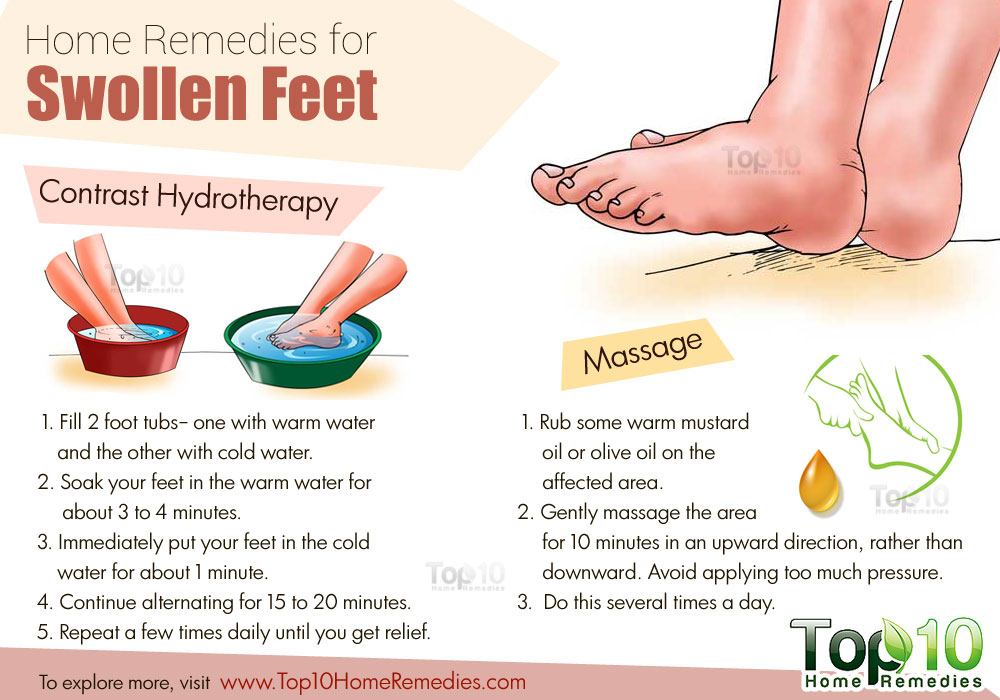
1. Contrast Hydrotherapy

This type of hydrotherapy, which includes both cold and warm water, is highly effective for reducing swelling in your feet. While the warm water helps improve circulation, cold water helps reduce swelling and inflammation.

  1. Fill 2 foot tubs– one with cold water and the other with warm water.
  2. Soak your feet in the warm water for about 3 to 4 minutes.
  3. Immediately put your feet in the cold water for about 1 minute.
  4. Continue alternating for 15 to 20 minutes.
  5. Repeat a few times daily until you get relief.

2. Massage

A foot massage is one of the best remedies for swollen feet. It creates pressure on the affected area that helps relax sore muscles and improve circulation. It also encourages excess fluid drainage to reduce swelling.

  1. Rub some warm mustard oil or olive oil on the affected area.
  2. Gently massage the area for 5 minutes in an upward direction, rather than downward. Avoid applying too much pressure.
  3. Do this several times a day.

It is most effective to massage your feet during or after taking a bath.

Note: If the swelling in your feet is due to pregnancy, see a therapist who specializes in prenatal massage.

3. Epsom Salt

Epsom salt works fast to reduce swelling and can help alleviate pain and discomfort, too. The magnesium sulfate in Epsom salt is easily absorbed through the skin and helps improve circulation and reduce swelling. It is also relaxing for sore, tired muscles and even helps neutralize foot odor.

  1. Mix ½ cup of Epsom salt in a foot tub filled with warm water.
  2. Soak your swollen feet in it for 10 to 15 minutes.
  3. Repeat up to 3 times a week.

4. Ginger

Ginger is a natural diuretic that helps treat swollen feet. It helps dilute sodium, a major contributing factor behind swelling. In addition, its anti-inflammatory property helps reduce swelling.

  • Massage your swollen feet with ginger oil when massaging a few times daily.
  • You can also drink 2 to 3 cups of ginger tea or chew some raw ginger slices.

5. Dandelion

The diuretic property of dandelion helps the body metabolize extra fluids, making it a great remedy for swollen feet. According to a 2009 study published in the Journal of Alternative and Complementary Medicine, dandelion has a diuretic effect that helps treat water retention.

It also helps regulate the sodium level in the body.

  • Mix 1 teaspoon of fresh or dried dandelion leaves in a cup of hot water. Cover, steep for 5 minutes and strain it. Drink this herbal tea 2 or 3 times a day.
  • You can also take dandelion tincture or supplements, but only after consulting a doctor.

6. Lemon Water

Drinking lemon water helps flush out excess fluid and toxins from your body, which can reduce swelling in the feet and other areas of the body caused by water retention. In addition, it helps keep the body hydrated and provides anti-inflammatory benefits.

  1. Mix 2 tablespoons of lemon juice in a cup of warm water.
  2. Sweeten it with a little raw honey.
  3. Drink this lemon water a few times daily.

7. Apple Cider Vinegar

apple cider vinegar

Apple cider vinegar also helps reduce swelling in your feet. Its high potassium content helps reduce fluid retention, a common cause of swelling in the feet.

  • Mix equal amounts of warm water and raw, unfiltered apple cider vinegar. Soak a towel in the solution, wring out the excess liquid and then wrap the towel around your swollen feet. Do this for 10 minutes, a few times daily.
  • Also, add 2 tablespoons of raw, unfiltered apple cider vinegar to a glass of water. Add some raw honey and drink it twice daily.

8. Coriander Seeds

coriander

A popular Ayurvedic treatment for swollen feet is coriander seeds. The anti-inflammatory property of these seeds helps reduce swelling as well as improve circulation.

  1. Add 2 to 3 teaspoons of coriander seeds to 1 cup of water.
  2. Boil it until the quantity reduces by half.
  3. Strain the solution, let it cool slightly and drink it.
  4. Repeat 2 times a day until you get relief.

9. Exercise

exercise

Regular physical exercise is important for preventing swelling in your feet. Exercise stimulates circulation and prevents blood from pooling in your lower extremities.

  • Swimming is one of the best exercises you can do to lessen swelling and relieve inflammation and pain.
  • Enjoy 30 minutes of walking or jogging, at least 5 days a week.
  • Do some leg strengthening and stretching exercises.
  • Do some yoga daily to help improve your circulation.

10. Magnesium

green leafy veg

Magnesium deficiency in the body can also contribute to swelling in the feet due to edema. Eat foods rich in magnesium to help fight this problem.

  • Eat magnesium-rich foods like dark leafy greens, nuts, seeds, fish, soybeans, avocado, bananas and dark chocolate.
  • You can also take magnesium supplements, but only after consulting your doctor.

Note: People with heart or kidney disease should avoid taking magnesium supplements.

Additional Tips

  • To reduce swelling, elevate your legs so that they are above the level of heart.
  • Limit your salt and caffeine intake, as they are common causes of foot swelling.
  • Eat fresh fruits and vegetables instead of canned versions, which often contain added salt for preservation.
  • Drink plenty of water to keep your body hydrated and promote detoxification.
  • Avoid sitting for long hours. Take short breaks and walk around a bit.
  • During long journeys in a car, plane, bus or train, consider wearing compression socks to prevent foot inflammation.

Resources:

http://www.ncbi.nlm.nih.gov/pubmed/19678785

Pets~Home Remedies

Home Remedies for Fleas

Use these home remedies to get rid of fleas on pets and in the home. Remember: He that lieth down with dogs shall rise up with fleas.

  • Place a flea collar in the bag of your vacuum cleaner. Any fleas you sweep up will stay put in there.
  • If you don’t want to use a flea collar with insecticides, active ingredients such as cedar, lemongrass, rosemary, and marigold won’t exterminate fleas, but will deter them.
  • Give your dog a flea bath with limonene shampoo, and flea-comb him down thoroughly while he’s in the water so the fleas drown.
  • As a flea deterrent, try adding a teaspoon of vinegar to each quart of the animal’s drinking water. It helps keep pets free of fleas and ticks but is not harmful to the pet itself. Learn about the other helpful household uses for vinegar.
  • Sprinkle borate powder into crevices of couches and chairs.
  • Stock your yard with off-leaf larvae-eating nematodes (available at pet and garden stores). Nematodes will also help to bring down your Japanese beetle population.
  • Getting proper nutrition for your pets is the best flea prevention. Add brewer’s yeast to your pet’s food, as well as essential fatty acids such as omega-3 and omega-6. Check out these tips for proper pet nutrition.
  • Spray window and door screens with distilled water containing several drops of bitter orange essential oil. (Fleas hate citrus scent and will avoid crawling in through the screens.)
  • Learn everything you need to know about fleas. Try this page for even more home remedies for fleas.
itchy-dog-dry-skin.jpg


Photo Credit: Crestock.

Itchiness: Dry Skin on Dogs and Cats

  • Oatmeal Bath: Put uncooked oatmeal or rolled oats into a sock or nylon stocking and run a tubful of warm water over it. Soak your dog (cats will rarely let you do this) in the water for 5 to 10 minutes. Oatmeal-based shampoos are also available at pet stores. Find out more about oatmeal’s soothing benefits.
  • Aloe Vera: Break off a piece of the plant and apply the thick juice directly to the raw area. Do not let your pet lick the area, as aloe vera can cause vomiting when ingested. Learn more about the benefits of aloe vera or how to grow your own aloe vera plant.
  • Aggravated skin sores, also known as hot spots, can make your pet miserable. If you see a hot spot developing, clip about one-half to one inch around the sore to prevent hair and other dirt from further aggravating it. Clean the sore with hydrogen peroxide on gauze or a cotton ball, and after it dries, spray the area with cortisone cream. Do this twice a day until the sore starts to dry out or a scab begins to form.

Home Treatment for Cuts, Scrapes, Abrasions

  • Mix together 1 pint water, ½-teaspoon salt, and ½ teaspoon calendula tincture.
  • Soak an injured paw in the solution. If the wound is on the body, put the solution in a squirt bottle or large syringe and gently apply it to the injured area.
  • Repeat the soaking or application every 4 to 6 hours for the first 24 hours.

Home Treatment for Bites and Scratches

For serious bites and scratches, take your pet to the vet. For smaller wounds:

  • Rinse out the fresh wounds and punctures with large amounts of this solution: 1 pint water, ½ teaspoon salt, and ½ teaspoon Echinacea/goldenseal tincture.
  • Hydrogen peroxide may also be used to clean wounds, but it can damage delicate tissues.
  • Cat wounds are notorious for forming abscesses. If the abscess is draining, clean it with with Echinacea/goldenseal solution. Always wear latex gloves while handling an abscess.
cuts-bruises-srapes-cats.jpg

How to Heal Tissue Trauma

  • If your pet falls, gets stepped on, is in a fight, or is otherwise bruised, the common homeopathic remedy arnica can speed recovery. Give two pellets of arnica 30c once per hour for three hours following the injury.

What to Do if a Pet Is Choking

You can perform the Heimlich maneuver on animals.

  • Lift a small pet, or reach over the back of a large one and raise the back legs, so that the rear end is elevated over the head.
  • Place your hands around the lowest part of the chest and give a quick, gentle thrust inward and upward. 
  • Remember to scale the force of your thrust to the size of your pet. For small pets, imagine you are performing this on an infant or toddler.

Pet Indigestion or Loose Stool

  • When your dog scavenges something from the compost pile, it irritates the bowel, creating nerve impulses that signal the gut to speed up. When food moves too quickly through the gut, the result is loose stools. In dogs and cats with chronic inflammatory bowel disease, the gut responds as if irritated at the slightest stress or change of diet.
  • The herb slippery elm, available as powder or capsules, coats the lining of the gastrointestinal tract, counteracting the irritation and allowing stools to firm up. Put 1 tablespoon of the powder (break open capsules) into 1 pint of water and bring to a boil to thicken. Let it cool, and administer by mouth. Give a teaspoon or less to small pets and several tablespoons to large dogs every 2 to 4 hours, until the gut settles down (usually 8 to 24 hours).
  • Also, be sure to check our list of foods that are poisonous to pets so that you can keep your furry friends from too many stomach aches.
sick-dog-home-remedies.jpg

Burrs in Fur: Tips for Grooming

  • For dogs, comb the burrs in their fur with a metal comb immediately. If burrs are badly tangled, rub vegetable oil on your fingers and work the lubrication slowly through the fur until you can pull the burrs out.
  • Cats typically will want to take care of their own grooming, but you can help by gently working through the mess with a wire brush. Most cats won’t let you cut the fur or lubricate it the way a dog will. (We suggest wearing long sleeves… Maybe even two layers.)

Remedies for Itchy Ears

  • Aloe vera or the contents of a vitamin E capsule can soothe red or inflamed areas of the ear.
  • A gentle cleaning with a cotton swab or gauze dipped into vegetable oil can help to remove a buildup of wax and dirt.
  • Remember that dog and cat ear canals take a right-angle turn at the base of the ear, and be careful not to jam anything deep into the ear canal.
cat-itchy-ears.jpg

Home Remedies for Sore or Runny Eyes

  • A simple rinse of saline solution can help a mild eye irritation. Continue eye drops every four hours, until clear.
  • If symptoms persist, consult with your vet.

How to Ease Pet Arthritis

  • Massage helps to relieve muscle tension that contributes to pain. Be gentle. Start from the center of the body and work your way outward. If feet are too sensitive, leave them alone.
  • Nutritional research suggests that supplements containing chondroitin sulfate and glucosaminoglycans can help inflamed or damaged joints. Check with your vet or health-food store.
  • Egg-crate foam and other creature comforts can bring relief to older and arthritic pets. Buy enough foam for two or three beds, cover the foam with washable covers (easy to make from old towels), and put them into the places your pet likes to sleep.
  • Find more tips about caring for an elderly pet.
  • How old is your dog? Find out your dog’s age in dog years with our dog age conversion chart.
old-dogs-arthritis.jpg

How to Get Rid of Skunk Spray on Pets

  • Bathe your dog in a mixture of 1 quart hydrogen peroxide, ¼ cup baking soda, and 1 teaspoon liquid soap. Work the solution into the fur (avoiding eyes), then rinse.
  • To rid the stench from your pet, douse him with tomato juice, leaving it on for several minutes before rinsing it off. For a large dog, a single washing can require several cans of tomato juice. You may have to repeat the procedure, but the odor will eventually work itself out of your pet’s coat.
  • Get more tips for dealing with that gross skunk spray smell.

Check out these tips for pet home safety so that you never have to use these home remedies! Also, try our ideas for pet-proofing your home.

Is your pet a bit overweight? Check out these tips to help them lose the pounds.

pet-health-veterinarian.jpg

Note: The Old Farmer’s Almanac does not have professional vets on staff, so please do not inquire about serious pet health issues on this page. Contact a vet immediately if your pet develops serious symptoms, such as trouble breathing, urinating, or moving, or if s/he shows signs of shaking or weakness, seizures, confusion, fever, vomiting (unless it’s a hairball), swelling, deep wounds, bleeding in urine or poop, or other ailments that may indicate that the pet requires prompt attention. If your vet office is not open during an emergency, there are 24-hour veterinary hospitals that you can call for advice; check with your vet beforehand to get the number of one, or search online. If your financial resources are limited, your vet may be able to work with you to develop a payment plan. There are also other options for financial assistance, including pet insurance (for future ailments); for advice, consult a local animal shelter or local branch of an animal welfare association, such as The Humane Society.