MSG stands for monosodium glutamate. It is a flavor enhancer that is commonly added to Chinese food, canned vegetables, soups, and processed meats. It is part of a larger group of chemicals called glutamates. “MSG contains glutamic acid which is also naturally found in tomatoes, parmesan cheese, meat, walnuts, clams, sardines, mushrooms, and other foods,” says Emily Rubin, RD, the head dietitian for the celiac and fatty liver centers at Thomas Jefferson University in Philadelphia.00:4500:47 Clear Signs You’re Eating Too Much SaltUP NEXTThese Health Benefits of Avoc…4
What is MSG used for?
MSG is added to foods to enhance their savory or umami quality. Umami is a fifth flavor category, joining sweet, sour, salty, and bitter, according to the Academy of Nutrition and Dietetics. Always check out the ingredient list on the labels of prepared foods for MSG.
What does MSG taste like?
MSG has no texture or smell. It simply enhances a food’s natural flavor as opposed to adding a new one and tends to be most flavor intensifying when used in poultry, seafood, meats, and some vegetables.
What is MSG made of?
In a nutshell, MSG is produced by fermenting starch, sugar beets, sugar cane, or molasses. Fermentation is the process by which yeast or bacteria convert carbs into alcohol. This is the same process used to make yogurt and other healthful fermented foods.
Where did MSG come from?
A Japanese scientist first isolated MSG from seaweed soup in 1908 and noted its flavor-enhancing properties. He then filed a patent to produce MSG, which led to commercial production of the flavor enhancer; and decades later, the controversy started, the US Food and Drug Administration notes. In 1968 a brouhaha ignited when a biomedical researcher wrote to the editors of the New England Journal of Medicine citing a strange illness he developed after eating at Chinese restaurants—specifically those that cooked with MSG. His symptoms included numbness, weakness, and heart palpitations and became known as “Chinese Food syndrome.” Despite the lack of social media at the time, the letter went viral. Soon after its publication, everyone turned on MSG and a flurry of research on its health effects began.
There has been controversy as to whether some people develop symptoms such as headaches, muscle aches, and tingling after consumption of MSG, according to Rubin. “There has been no definitive evidence of a link between MSG and these symptoms,” she says. Despite this, some 50 years after the syndrome was first named, U.S. consumers still say they avoid MSG, according to the International Food Information Council, an industry-funded group.
The U.S. Food and Drug Administration says that MSG is “generally recognized as safe” (GRAS). The watchdog group requires that foods containing Added MSG list it on the ingredient panel as monosodium glutamate. If MSG is found naturally in some of the ingredients (hydrolyzed vegetable protein, autolyzed yeast, hydrolyzed yeast, yeast extract, soy extracts, and protein isolate), the manufacturer does not have to list MSG on the label. That said, these foods can’t say “No MSG” or “No added MSG” on their packaging. MSG also cannot be listed as generic spices and flavoring. Here’s a guide to decoding food labels.
Why do people think MSG is bad?
Some people may be sensitive to the additive and experience swelling in the throat and other symptoms when they consume a lot. Experts such as Michael Galitzer, MD, an integrative medicine specialist in Los Angeles and author of Outstanding Health: A Longevity Guide for Staying Young, Healthy, and Sexy for the Rest of Your Life believe the flavor enhancer is dangerous: “Its ingestion can cause inflammation of the small intestine, referred to as leaky gut, which will result in symptoms such as bloating, gas, diarrhea, and abdominal pain,” he says. These 7 signs suggest you may have a leaky gut.
How much MSG is safe?
Most research suggests you’d have to eat more than 3 grams of added MSG in a sitting to experience adverse effects—that’s according to a 2019 review of studies published in the journal Comprehensive Reviews in Food Science and Food Safety. The FDA explains that a typical serving of a food with added MSG contains less than 0.5 grams of MSG and that Americans consume about that much daily, on average. “MSG is generally found in processed foods. If your diet is filled with fresh, whole foods, your MSG intake is low,” says Rubin.
Is MSG gluten-free?
Yes, according to the National Celiac Foundation. There may be starches or sugars used in fermenting MSG, but wheat starch—which contains gluten—is not one of them. Even if wheat starch were used to make MSG, it is highly unlikely that the end-product would contain traces of gluten. They further clarify by stating that a person with celiac disease may react to the wheat in soy sauce, but not the MSG, for example.
Does MSG cause headaches?
MSG has been linked to headaches—including a debilitating migraine headache—but this link is far from conclusive. In fact, some research suggests MSG does not increase the risk of migraines. These findings were presented by the headache information site Curelator at the 2018 Annual Scientific Meeting of the American Headache Society. In January 2018, the International Headache Society struck MSG from a list of causative factors for headaches. Here are 13 foods that do make headaches worse.
Does MSG make you sleepy?
The FDA states that drowsiness that may occur in some people who are sensitive to MSG and consume 3 grams or more of the flavor enhancer. “MSG is controversial and the research has been inconsistent, but there are MSG-sensitive people and for them, it can trigger headaches, migraine, numbness, and extreme fatigue,” says Robin Foroutan, RDN, an integrative medicine dietitian at the Morrison Center in New York City and a spokesperson for the Academy of Nutrition and Dietetics. “I generally recommend that people with tendencies for headaches, migraine, and fatigue avoid it.”
Soy sauce is a common one, says Foroutan. “It’s best to read the ingredient list if you want to avoid it.” Here are some more types:
Chips and other snack foods
Seasoning blends
Canned soups
Frozen foods
Processed meats (jerky, deli meats, hot dogs, sausages)
Fast food and MSG:
At one time, it was easy to find MSG in fast-food restaurants, but more and more chains are eliminating the flavoring. Here’s the lowdown on some popular fast-food chains and whether they use MSG.
Does McDonald’s use MSG?
None of the items on McDonald’s core U.S. menu contain added MSG, but a handful of test and regional items in the United States do contain added MSG, a McDonald’s spokesperson confirmed.
Does Panda Express use MSG?
This popular Chinese restaurant does not add MSG to any of their dishes, but some ingredients may contain natural MSG, according to the corporate website.
Does Chick-fil-A use MSG?
MSG is present in some of Chick-fil-A’s menu choices, but they also offer a variety of options that do not contain added MSG, states Chick-fil-A, Inc.
Does Burger King use MSG?
The chain has dropped the flavoring from all its foods.
Does Subway use MSG?
The popular sandwich shop doesn’t add MSG to any of the items on the chain’s standard menu.
Consuming umami-rich broth may promote healthy eating behaviors and food choices, especially in women at risk of obesity, according to a study in Neuropsychopharmacology. Researchers evaluated changes in the brains of women after they consumed chicken broth with or without MSG. The broth with added MSG lit up areas of the brain connected to satisfaction and better eating control, the researchers discovered. What’s more, women who had the broth made better choices during their meal, favoring foods with less saturated fat.
“Our study suggests the possibility that people at high risk of obesity could benefit from an umami-rich broth before a meal to facilitate healthy eating and healthy food choice,” says Miguel Alonso-Alonso, MD, PhD, an Assistant Professor at the Center for the Study of Nutrition Medicine in Beth Israel Deaconess Medical Center in a news release.
“In Western and European cuisine, the flavor is built by adding fat,” says Carlene Thomas, RDN, a dietitian in the Washington DC- area and author of The Wedding Wellness Workbook: Your Nutrition How-To Before “I Do.” This includes butter, heavy cream, and cheese. “For those struggling with calorie consumption, using umami to season rather than fat could help with healthy weight management,” she says. (Here are 9 signs your overeating is actually an addiction.)
MSG can also be a major tool in helping to reduce your salt intake, Thomas adds. “The use of umami allows for less salt, specifically for MSG. That means, sodium levels can be reduced while maintaining or improving the taste of a product,” she explains. That can make a big difference in sodium intake, she says. (Check out these 7 signs you are eating too much salt.)
The post What Is MSG—and How Bad Is It, Really? appeared first on The Healthy.
Typically, the start of the month is welcomed with greetings such as “Ramadan mubarak!”
On the last day of Ramadan, which is Eid-al-fitr, the greeting changes to “Eid Mubarak.”
The last day of Ramadan in 2020 will be 23 May.
What is Ramadan?
Ramadan, the ninth month in the Islamic calendar, is a period of fasting observed by Muslims across the globe to celebrate “the best of times”.
It celebrates the first time the Koran was revealed to Muhammad, according to Islamic belief.
Fasting is only obligatory for healthy adult Muslims, anyone who is suffering from an illness, travelling, elderly, pregnant, breastfeeding, diabetic, chronically ill or menstruating are exempt from the practice.
The fasting period, during which Muslims are not allowed to eat or drink, is from dawn to sunset and Muslims engage in increased prayer activity.
Muslims often try and practice an increased self-discipline during the month of Ramadan.
In 2018 it starts on the evening of May 15 and ends in the evening of June 14.
Ramadan Kareem Quotes
“Whoever fasts in the month of Ramadan out of sincere faith, and hoping for a reward from Allah, then all his previous sins will be forgiven.” – Sahih Bukhari
“When the month of Ramadan starts, the gates of the heaven are opened and the gates of Hell are closed and the devils are chained.” – Sahih Bukhari
“Fasting is the shield, it will protect you from the hellfire and prevent you from sins.” – Prophet Muhammad (PBUH).
“He has left his food, Drink, and desires for my sake, The fast is for me, So I will reward (The fasting person) for it and the reward of good deeds is multiplied ten times” – Sahih Al Bukhari
Ramadan is knocking at our door with holding all its blessings, grace, mercy and forgiveness; and calling all the true Muslims to perform their devotions.
Let dedicate your soul, mind and body for the devotion of the holy month of Ramadan and be blessed with maximum benefits.
Ramadan is the month of blessings for the Muslim society which is the opportunity to nourish all the seeds of their good deeds.
Let’s not change ourselves only for the holy month of Ramadan, but reform ourselves to devote for Allah till the death comes.
Though you cannot perform all the rituals perfectly during Ramadan, Allah will not see that perfectness, but the dedication you hold in your heart. Keep on trying.
Ramadan brings good news to all the true Muslims who have fear for their Lord in their hearts. So count every single day to be the better Muslim.
Your fast, prayer and dedication for Allah during Ramadan are the shield that will work for you in the life hereafter and protect you from the hellfire.
It’s Shrove Tuesday today, also known as Shrovetide Tuesday or Pancake Tuesday.
By Greg Garrison | ggarrison@al.com
It’s Shrove Tuesday today, also known as Shrovetide Tuesday or Pancake Tuesday. So what does “Shrove” mean? And why are some Christians eating pancakes today?
Pancakes were traditionally eaten on the day before Ash Wednesday because they were a way to use up eggs, milk, and sugar before the fasting season of the 40 days of Lent. Liturgical fasting during Lent emphasizes eating plainer food and refraining from “pleasurable” foods such as meat, dairy and eggs. Many people “give something up” during Lent as a way to prepare for Easter, which is on April 12 this year.
Shrove is the past tense of shrive, which means to gain absolution of sins by confession and repentance. Shrove Tuesday is also known as Pancake Tuesday in some western European countries. The pancake aspect is not as widely observed in the United States as it is in England.
Of course, in America today is more popularly known as Mardi Gras, which is “Fat Tuesday” in French.
It’s called Fat Tuesday because it’s the last day of indulgence before Ash Wednesday, when ashes are imposed on the forehead in the mark of a cross, with the minister quoting Genesis on the mortality of man.
Many Episcopal churches have pancake suppers on Shrove Tuesday, often as fundraisers for parish youth groups.
Not sure what’s keeping you up at night? It could be all that hot sauce that you keep in your bag.
In one study, men were given tabasco sauce and mustard with their evening meals and had a more difficult time falling asleep. Scientists believe it may have something to do with thermoregulation—the body’s process of regulating its core internal temperature in order to get to sleep.
It’s not just Tabasco sauce either. Spicy meals, in general, could potentially contribute to insomnia and difficulty sleeping.
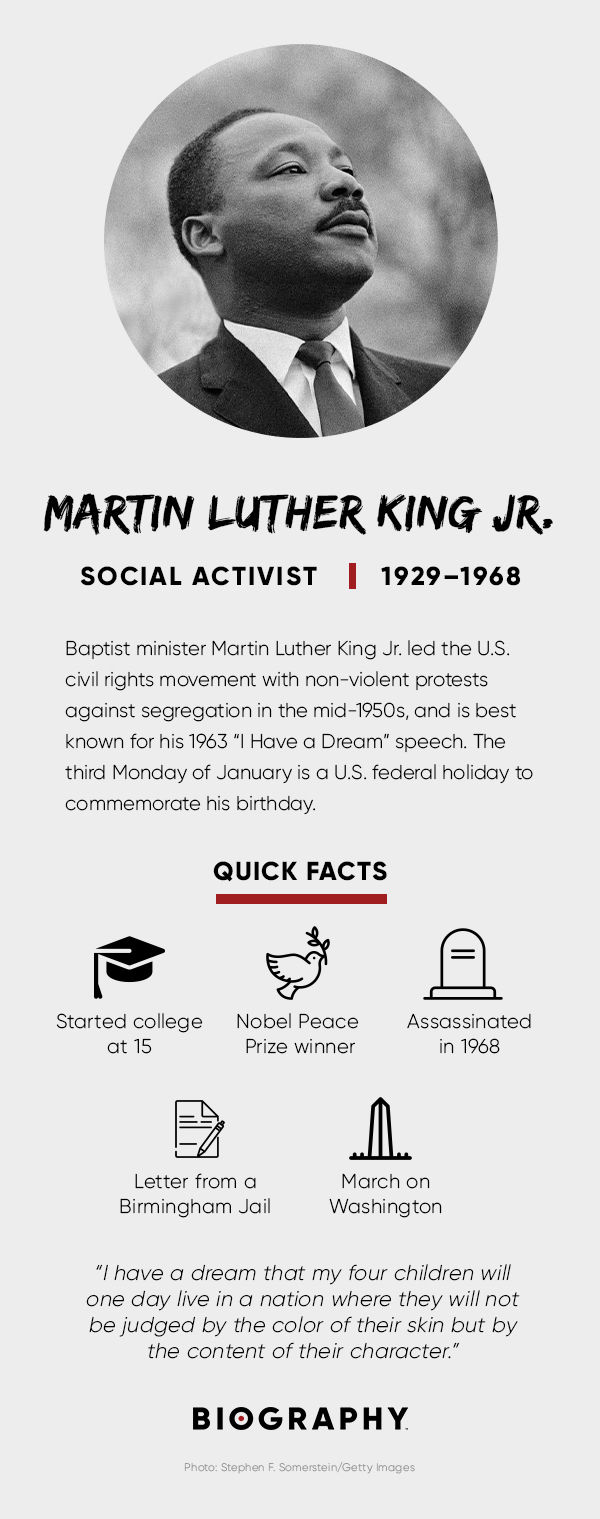
(1929-1968)UPDATED: JAN 16, 2020 | ORIGINAL: MAR 9, 2015
Martin Luther King Jr. was a scholar and minister who led the civil rights movement. After his assassination, he was memorialized by Martin Luther King Jr. Day.
Who Was Martin Luther King Jr?
Martin Luther King Jr. was a Baptist minister and civil-rights activist who had a seismic impact on race relations in the United States, beginning in the mid-1950s.
Among his many efforts, King headed the Southern Christian Leadership Conference (SCLC). Through his activism and inspirational speeches, he played a pivotal role in ending the legal segregation of African-American citizens in the United States, as well as the creation of the Civil Rights Act of 1964 and the Voting Rights Act of 1965.
King won the Nobel Peace Prize in 1964, among several other honors. He continues to be remembered as one of the most influential and inspirational African-American leaders in history.
Early Life
Born as Michael King Jr. on January 15, 1929, Martin Luther King Jr. was the middle child of Michael King Sr. and Alberta Williams King.
The King and Williams families had roots in rural Georgia. Martin Jr.’s grandfather, A.D. Williams, was a rural minister for years and then moved to Atlanta in 1893.
He took over the small, struggling Ebenezer Baptist church with around 13 members and made it into a forceful congregation. He married Jennie Celeste Parks and they had one child that survived, Alberta.
Martin Sr. came from a family of sharecroppers in a poor farming community. He married Alberta in 1926 after an eight-year courtship. The newlyweds moved to A.D.’s home in Atlanta.
Martin Sr. stepped in as pastor of Ebenezer Baptist Church upon the death of his father-in-law in 1931. He too became a successful minister and adopted the name Martin Luther King Sr. in honor of the German Protestant religious leader Martin Luther. In due time, Michael Jr. would follow his father’s lead and adopt the name himself.
READ MORE: Martin Luther King Jr. and Martin Luther: The Parallels Between the Two Leaders
King had an older sister, Willie Christine, and a younger brother, Alfred Daniel Williams King. The King children grew up in a secure and loving environment. Martin Sr. was more the disciplinarian, while his wife’s gentleness easily balanced out the father’s strict hand.
Though they undoubtedly tried, King’s parents couldn’t shield him completely from racism. Martin Sr. fought against racial prejudice, not just because his race suffered, but because he considered racism and segregation to be an affront to God’s will. He strongly discouraged any sense of class superiority in his children which left a lasting impression on Martin Jr.
Growing up in Atlanta, Georgia, King entered public school at age five. In May 1936 he was baptized, but the event made little impression on him.
In May 1941, King was 12 years old when his grandmother, Jennie, died of a heart attack. The event was traumatic for King, more so because he was out watching a parade against his parents’ wishes when she died. Distraught at the news, young King jumped from a second-story window at the family home, allegedly attempting suicide.
King attended Booker T. Washington High School, where he was said to be a precocious student. He skipped both the ninth and eleventh grades, and entered Morehouse College in Atlanta at age 15, in 1944. He was a popular student, especially with his female classmates, but an unmotivated student who floated through his first two years.
Although his family was deeply involved in the church and worship, King questioned religion in general and felt uncomfortable with overly emotional displays of religious worship. This discomfort continued through much of his adolescence, initially leading him to decide against entering the ministry, much to his father’s dismay.
But in his junior year, King took a Bible class, renewed his faith and began to envision a career in the ministry. In the fall of his senior year, he told his father of his decision.
Reverend Martin Luther King, Jr. speaks with people after delivering a sermon on May 13, 1956, in Montgomery, Alabama. Photo: Michael Ochs Archives/Getty Images
Martin Luther King, Jr. spending time with his son, Martin III, and daughter Yolanda. Photo: Marvin Koner/Corbis
Education and Spiritual Growth
In 1948, King earned a sociology degree from Morehouse College and attended the liberal Crozer Theological Seminary in Chester, Pennsylvania. He thrived in all his studies, and was valedictorian of his class in 1951, and elected student body president. He also earned a fellowship for graduate study.
But King also rebelled against his father’s more conservative influence by drinking beer and playing pool while at college. He became involved with a white woman and went through a difficult time before he could break off the affair.
During his last year in seminary, King came under the guidance of Morehouse College President Benjamin E. Mays who influenced King’s spiritual development. Mays was an outspoken advocate for racial equality and encouraged King to view Christianity as a potential force for social change. After being accepted at several colleges for his doctoral study, King enrolled at Boston University.
In 1954, while still working on his dissertation, King became pastor of the Dexter Avenue Baptist Church of Montgomery, Alabama. He completed his Ph.D. and earned his degree in 1955. King was only 25 years old.
During the work on his doctorate, King met Coretta Scott, an aspiring singer and musician at the New England Conservatory school in Boston. They were married in June 1953 and had four children, Yolanda, Martin Luther King III, Dexter Scott and Bernice.
Montgomery Bus Boycott
On March 2, 1955, a 15-year-old girl refused to give up her seat to a white man on a Montgomery city bus in violation of local law. Teenager Claudette Colvin was then arrested and taken to jail.
At first, the local chapter of the NAACPfelt they had an excellent test case to challenge Montgomery’s segregated bus policy. But then it was revealed that Colvin was pregnant and civil rights leaders feared this would scandalize the deeply religious black community and make Colvin (and, thus the group’s efforts) less credible in the eyes of sympathetic whites.
On December 1, 1955, they got another chance to make their case. That evening, 42-year-old Rosa Parks boarded the Cleveland Avenue bus to go home after an exhausting day at work. She sat in the first row of the “colored” section in the middle of the bus. As the bus traveled its route, all the seats in the white section filled up, then several more white passengers boarded the bus.
The bus driver noted that there were several white men standing and demanded that Parks and several other African Americans give up their seats. Three other African American passengers reluctantly gave up their places, but Parks remained seated.
The driver asked her again to give up her seat and again she refused. Parks was arrested and booked for violating the Montgomery City Code. At her trial a week later, in a 30-minute hearing, Parks was found guilty and fined $10 and assessed $4 court fee.
On the night that Parks was arrested, E.D. Nixon, head of the local NAACP chapter met with King and other local civil rights leaders to plan a Montgomery Bus Boycott. King was elected to lead the boycott because he was young, well-trained with solid family connections and had professional standing. But he was also new to the community and had few enemies, so it was felt he would have strong credibility with the black community.
In his first speech as the group’s president, King declared, “We have no alternative but to protest. For many years we have shown an amazing patience. We have sometimes given our white brothers the feeling that we liked the way we were being treated. But we come here tonight to be saved from that patience that makes us patient with anything less than freedom and justice.”
King’s skillful rhetoric put new energy into the civil rights struggle in Alabama. The bus boycott involved 382 days of walking to work, harassment, violence, and intimidation for Montgomery’s African American community. Both King’s and Nixon’s homes were attacked.
But the African American community also took legal action against the city ordinance arguing that it was unconstitutional based on the Supreme Court’s “separate is never equal” decision in Brown v. Board of Education. After being defeated in several lower court rulings and suffering large financial losses, the city of Montgomery lifted the law mandating segregated public transportation.
Southern Christian Leadership Conference
Flush with victory, African American civil rights leaders recognized the need for a national organization to help coordinate their efforts. In January 1957, King, Ralph Abernathy and 60 ministers and civil rights activists founded the Southern Christian Leadership Conference to harness the moral authority and organizing power of black churches. They would help conduct non-violent protests to promote civil rights reform.
King’s participation in the organization gave him a base of operation throughout the South, as well as a national platform. The organization felt the best place to start to give African Americans a voice was to enfranchise them in the voting process. In February 1958, the SCLC sponsored more than 20 mass meetings in key southern cities to register black voters in the South. King met with religious and civil rights leaders and lectured all over the country on race-related issues.
In 1959, with the help of the American Friends Service Committee, and inspired by Mahatma Gandhi’s success with non-violent activism, King visited Gandhi’s birthplace in India. The trip affected him in a profound way, increasing his commitment to America’s civil rights struggle.
African American civil rights activist Bayard Rustin, who had studied Gandhi’s teachings, became one of King’s associates and counseled him to dedicate himself to the principles of nonviolence. Rustin served as King’s mentor and advisor throughout his early activism and was the main organizer of the 1963 March on Washington.
But Rustin was also a controversial figure at the time, being a homosexual with alleged ties to the Communist Party. Though his counsel was invaluable to King, many of his other supporters urged him to distance himself from Rustin.
Greensboro Sit-In
In February 1960, a group of African American students in North Carolina began what became known as the Greensboro sit-in movement.
The students would sit at racially segregated lunch counters in the city’s stores. When asked to leave or sit in the colored section, they just remained seated, subjecting themselves to verbal and sometimes physical abuse.
The movement quickly gained traction in several other cities. In April 1960, the SCLC held a conference at Shaw University in Raleigh, North Carolina with local sit-in leaders. King encouraged students to continue to use nonviolent methods during their protests.
Out of this meeting, the Student Nonviolent Coordinating Committeeformed and for a time, worked closely with the SCLC. By August of 1960, the sit-ins had been successful in ending segregation at lunch counters in 27 southern cities.
By 1960, King was gaining national exposure. He returned to Atlanta to become co-pastor with his father at Ebenezer Baptist Church but also continued his civil rights efforts.
On October 19, 1960, King and 75 students entered a local department store and requested lunch-counter service but were denied. When they refused to leave the counter area, King and 36 others were arrested.
Realizing the incident would hurt the city’s reputation, Atlanta’s mayor negotiated a truce and charges were eventually dropped. But soon after, King was imprisoned for violating his probation on a traffic conviction.
The news of his imprisonment entered the 1960 presidential campaign when candidate John F. Kennedy made a phone call to Coretta Scott King. Kennedy expressed his concern for King’s harsh treatment for the traffic ticket and political pressure was quickly set in motion. King was soon released.
Letter from Birmingham Jail
In the spring of 1963, King organized a demonstration in downtown Birmingham, Alabama. With entire families in attendance, city police turned dogs and fire hoses on demonstrators.
King was jailed along with large numbers of his supporters, but the event drew nationwide attention. However, King was personally criticized by black and white clergy alike for taking risks and endangering the children who attended the demonstration.
In his famous Letter from Birmingham Jail, King eloquently spelled out his theory of non-violence: “Nonviolent direct action seeks to create such a crisis and foster such a tension that a community, which has constantly refused to negotiate, is forced to confront the issue.”
“I have decided to stick with love. Hate is too great a burden to bear.” Photo: Michael Ochs Archives/Getty Images“Our lives begin to end the day we become silent about the things that matter.”
‘I Have a Dream’ Speech
By the end of the Birmingham campaign, King and his supporters were making plans for a massive demonstration on the nation’s capital composed of multiple organizations, all asking for peaceful change.
On August 28, 1963, the historic March on Washington drew more than 200,000 people in the shadow of the Lincoln Memorial. It was here that King made his famous “I Have a Dream” speech, emphasizing his belief that someday all men could be brothers
“I have a dream that my four children will one day live in a nation where they will not be judged by the color of their skin but by the content of their character.” — Martin Luther King, Jr. / “I Have A Dream” speech, August 28, 1963
The rising tide of civil rights agitation produced a strong effect on public opinion. Many people in cities not experiencing racial tension began to question the nation’s Jim Crow laws and the near-century of second-class treatment of African American citizens.
Nobel Peace Prize
This resulted in the passage of the Civil Rights Act of 1964, authorizing the federal government to enforce desegregation of public accommodations and outlawing discrimination in publicly owned facilities. This also led to King receiving the Nobel Peace Prize in 1964.
King’s struggle continued throughout the 1960s. Often, it seemed as though the pattern of progress was two steps forward and one step back.
On March 7, 1965, a civil rights march, planned from Selma to Montgomery, Alabama’s capital, turned violent as police with nightsticks and tear gas met the demonstrators as they tried to cross the Edmund Pettus Bridge.
King was not in the march, however, the attack was televised showing horrifying images of marchers being bloodied and severely injured. Seventeen demonstrators were hospitalized in a day that would be called “Bloody Sunday.”
A second march was canceled due to a restraining order to prevent the march from taking place. A third march was planned and this time King made sure he was part of it. Not wanting to alienate southern judges by violating the restraining order, a different approach was taken.
On March 9, 1965, a procession of 2,500 marchers, both black and white, set out once again to cross the Pettus Bridge and confronted barricades and state troopers. Instead of forcing a confrontation, King led his followers to kneel in prayer and they then turned back.
Alabama governor George Wallacecontinued to try to prevent another march until President Lyndon B. Johnsonpledged his support and ordered U.S. Army troops and the Alabama National Guard to protect the protestors.
On March 21, approximately 2,000 people began a march from Selma to Montgomery, the state capitol. On March 25, the number of marchers, which had grown to an estimated 25,000, gathered in front of the state capitol where King delivered a televised speech. Five months after the historic peaceful protest, President Johnson signed the 1965 Voting Rights Act.
From late 1965 through 1967, King expanded his civil rights efforts into other larger American cities, including Chicago and Los Angeles. But he met with increasing criticism and public challenges from young black power leaders.
King’s patient, non-violent approach and appeal to white middle-class citizens alienated many black militants who considered his methods too weak, too late and ineffective.
To address this criticism, King began making a link between discrimination and poverty, and he began to speak out against the Vietnam War. He felt that America’s involvement in Vietnam was politically untenable and the government’s conduct in the war discriminatory to the poor. He sought to broaden his base by forming a multi-racial coalition to address the economic and unemployment problems of all disadvantaged people.
Assassination
By 1968, the years of demonstrations and confrontations were beginning to wear on King. He had grown tired of marches, going to jail, and living under the constant threat of death. He was becoming discouraged at the slow progress of civil rights in America and the increasing criticism from other African American leaders.
Plans were in the works for another march on Washington to revive his movement and bring attention to a widening range of issues. In the spring of 1968, a labor strike by Memphis sanitation workers drew King to one last crusade.
On April 3, he gave his final and what proved to be an eerily prophetic speech, “I’ve Been to the Mountaintop,” in which he told supporters at the Mason Temple in Memphis, “I’ve seen the promised land. I may not get there with you. But I want you to know tonight that we, as a people, will get to the promised land.”
The next day, while standing on a balcony outside his room at the Lorraine Motel, Martin Luther King Jr. was killed by a sniper’s bullet. The shooter, a malcontent drifter and former convict named James Earl Ray, was eventually apprehended after a two-month, international manhunt.
The assassination sparked riots and demonstrations in more than 100 cities across the country. In 1969, Ray pleaded guilty to assassinating King and was sentenced to 99 years in prison. He died in prison on April 23, 1998.
Legacy
King’s life had a seismic impact on race relations in the United States. Years after his death, he is the most widely known African American leader of his era.
His life and work have been honored with a national holiday, schools and public buildings named after him, and a memorial on Independence Mall in Washington, D.C.
But his life remains controversial as well. In the 1970s, FBI files, released under the Freedom of Information Act, revealed that he was under government surveillance, and suggested his involvement in adulterous relationships and communist influences.
Over the years, extensive archival studies have led to a more balanced and comprehensive assessment of his life, portraying him as a complex figure: flawed, fallible and limited in his control over the mass movements with which he was associated, yet a visionary leader who was deeply committed to achieving social justice through nonviolent means.
Martin Luther King Jr. Day
In 1983, President Ronald Reagan signed into law a bill creating Martin Luther King Jr. Day, a federal holiday honoring the legacy of the slain civil rights leader.
Martin Luther King Jr. Day was first celebrated in 1986, and in all 50 states in 2000.
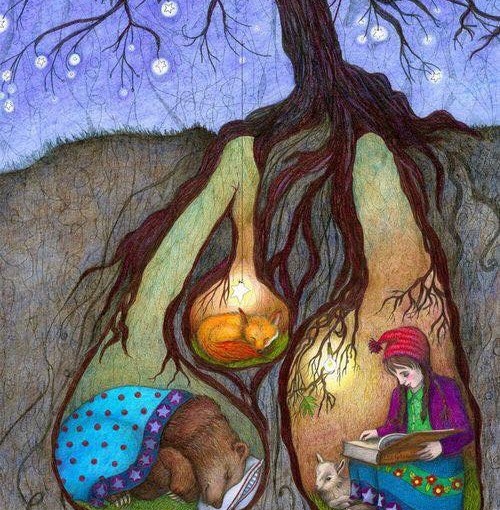
“The winter solstice time is no longer celebrated as it once was, with the understanding that this is a period of descent and rest, of going within our homes, within ourselves and taking in all that we have been through, all that has passed in this full year which is coming to a close… like nature and the animal kingdom around us, this time of hibernation is so necessary for our tired limbs, our burdened minds.
Our modern culture teaches avoidance at a max at this time; alcohol, lights, shopping, overworking, over spending, comfort food and consumerism. And yet the natural tug to go inwards as nearly all creatures are doing is strong and the weather so bitter that people are left feeling that winter is hard, because for those of us without burning fires and big festive families, it can be lonely and isolating.
Whereas in actual fact winter is kind, she points us in her quiet soft way towards our inner self, towards this annual time of peace and reflection, embracing the darkness and forgiving, accepting and loving embracing goodbye the past year.
“Winter takes away the distractions, the buzz, and presents us with the perfect time to rest and withdraw into a womb like love, bringing fire & light to our hearth”.
.. and then, just around the corner the new year will begin again, and like a seed planted deep in the earth, we will all rise with renewed energy once again to dance in the sunlight.

 UP NEXTThese Health Benefits of Avoc…4
 © Ekaterina_Minaeva/ShutterstockIs MSG safe?
 © mark schlicht/ShutterstockWhat types of food tend to have added MSG?







 Mws R Writings