Emily Dickinson, in full Emily Elizabeth Dickinson, (born December 10, 1830, Amherst, Massachusetts, U.S.—died May 15, 1886, Amherst), American lyric poet who lived in seclusion and commanded a singular brilliance of style and integrity of vision. With Walt Whitman, Dickinson is widely considered to be one of the two leading 19th-century American poets.
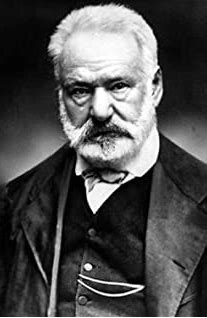
“According to popular folklore, every French town has a street named after 19th-century writer Victor Hugo. While the “Les Misérables” author was not beloved by the imperial Bonapartist regime — which forced him into exile for 19 years — he collected friends among many creatives, especially musicians. Besides being close with pianist Franz Liszt and conductor Hector Berlioz, Hugo also wrote the libretto for Louise Bertin’s “La Esmeralda,” an opera based on his 1831 novel “The Hunchback of Notre-Dame.” Today, Hugo’s texts have inspired more than 1,000 works of ballet, opera, and musical theater, and every two years, in the Channel Islands, fans celebrate him at the Victor Hugo International Music Festival.”
Victor-Marie Hugo was a French poet, novelist, essayist, playwright, and dramatist of the Romantic movement. During a literary career that spanned more than sixty years, he wrote abundantly in an exceptional variety of genres: lyrics, satires, epics, philosophical poems, epigrams, novels, history, critical essays, political speeches, funeral orations, diaries, and letters public and private, as well as dramas in verse and prose.
“Seize the moments of happiness, love and be loved! That is the only reality in the world, all else is folly. It is the one thing we are interested in here.”
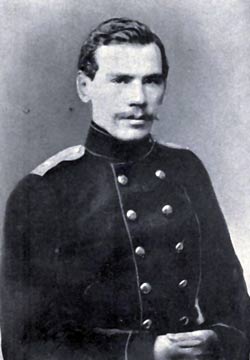
Born in 1828, Leo Tolstoy came from an aristocratic Russian family with links to some of the most powerful Russian families. He was the fourth cousin of Alexander Pushkin.
MRS. BROWNING was born in London, England, in 1809, and she died at Casa Guidi, Florence, June 29, 1861.
Her father, Mr. Barrett, was an English country gentleman. Possessing some means, he helped his daughter to acquire an excellent classical education; and, possessing considerable ability, he became, as she says, her public and her critic.
“Her studies were early directed to the poets of antiquity, and, under the guidance of her blind tutor, Boyle, whose name she always warmly cherished, she mastered the rich treasures of AEschylus. The sublime Grecian possessed for her a charm which was only equaled by the fascination held over her wondering spirit by Shakespeare.” While she was profoundly versed in Greek literature, and intimately acquainted with all the Attic writers in tragedy and comedy, she was thoroughly versed in pure and undefiled English. In her extensive correspondence with contemporaries, she shows a thorough knowledge of English literature, from Chaucer to her own time.
Physically she was very delicate, but nature made up for her fragile frame by giving her a superior mental and spiritual organization. Miss Mitford, her intimate friend, describes her as a “slight, delicate figure, with a shower of dark curls falling on each side of a most expressive face, large tender eyes, richly fringed by dark eyelashes, and a smile like a sunbeam.” Such, in brief, is a description of the attainments and person of the lady who, according to E. C. Stedman, was not only “the greatest female poet that England has produced, but more than this, the most inspired woman so far as known, of all who have composed in ancient or modern tongues or flourished in any land or clime.”
Almost before her childhood had passed, she showed remarkable preferences for the arts, but especially for the poetic art. Some of her poems written before she was fifteen, show strong marks of genius, and are worthy of preservation. Her first publication was an “Essay on Mind, and other Poems.” This, it is said, was written in her seventeenth year. In 1833 appeared her excellent translation of “Prometheus;” 1838, her second volume of original poetry, “The Seraphim, and other poems;” and in 1839, “The Romance of the Page.”
While thus busily engaged in her work, she met with a personal calamity. A blood-vessel burst in her lungs, which forced her to remain at home close confinement for some time. At length her physician ordered that she be removed to a milder climate. In company with friends she went to reside at Torquay. At that place an accident occurred which saddened her life, and gave a deeper hue of thought and feeling to her poetry. Her favorite brother and two friends were taking a pleasure ride on a small vessel when the boat sank, and all on board were drowned. The shock caused a severe sickness, from which she never entirely recovered. It was a year before she was able to be removed to her father’s house in London. For many years she remained in a darkened chamber, and received no visitors except her own family and a few devoted friends. While thus secluded from the outward world, she read extensively the valuable books in almost every language.
In 1844 she came forth from her seclusion in two volumes of “Poems by Elizabeth Barrett.” The melancholy thought showed traces of the sadness of much of her former life.
In 1846, her thirty-seventh year, she was married to Robert Browning, noted English poet. In hopes of finding health, Mr. Browning removed to Italy. His wish was gratified, for under the sunny skies of Florence, his wife found the health which had forsaken her in her native land. In her adopted home she remained till her death.
The revolutionary outbreak in 1848, furnished the theme for her next work. “Casa Guidi Windows” is a poem relating to the impressions that were made upon her mind by the events which she saw from the windows of her house in Florence. It shows great warmth of feeling for the Italians. In 1856 “Aurora Leigh” was published. This is a novel in blank verse, which the poetess declared to be her most mature work. While the poem is full of splendid passages, yet as a whole it is not considered satisfactory. It contains a prodigality of genius, with discordant mixture of material. Notwithstanding the lack of unity, which is so essential for a poem of such magnitude, a large number of critics consider “Aurora Leigh” the chief source of Mrs. Browning’s fame. But perhaps an equal number look upon “Casa Guidi Windows” as “containing her ripest growth and greatest intellectual strength.” Indeed the circumstances under which this poem was written, were such as to call out her best efforts. She was looking from her window, and beholding the Italians struggling for freedom. Being in full sympathy with them, her utterances were in accordance with her heart–they were lavish and unrestrained. In 1860 appeared her last publication, “Poems Before Congress,” which evinced her deep interest in the people of Italy. She died in the following year, and a marble tablet in front of the villa of the Brownings records that in it wrote and died Elizabeth Barrett Browning, who, by he songs, created a golden link between Italy and England, and that in gratitude Florence had erected that memorial. “Last Poems,” published in 1862, contained the literary remains of the priestess of English poetry.
Some of her poems are especially admired. “Cowper’s Grave,” “The Cry of the Children,” “A Child Asleep,” and “He Giveth His Beloved Sleep,” are jewels that shine with the brilliancy of the sun.
Her genius was perhaps as great as that of any poet of her generation, but circumstances retarded its highest possible development. In certain intellectual qualities she was inferior to Tennyson, and the author of `Sordello,’ but in others she was their superior. Be her exact niche, however, what it may, she occupies a favored place in English literature, and is undoubtedly one of the few leading poets of the nineteenth century. Her poetry is that which refines, chastens, and elevates.
Although remembered now for his elegantly argued critical essays, Matthew Arnold (1822-1888) began his career as a poet, winning early recognition as a student at the Rugby School where his father, Thomas Arnold, had earned national acclaim as a strict and innovative headmaster. Arnold also studied at Balliol College, Oxford University. In 1844, after completing his undergraduate degree at Oxford, he returned to Rugby as a teacher of classics. After marrying in 1851, Arnold began work as a government school inspector, a grueling position which nonetheless afforded him the opportunity to travel throughout England and the Continent. Throughout his thirty-five years in this position, Arnold developed an interest in education, an interest which fed into both his critical works and his poetry. Empedocles on Etna (1852) and Poems (1853) established Arnold’s reputation as a poet and in 1857 he was offered a position, which he accepted and held until 1867, as Professor of Poetry at Oxford. Arnold became the first professor to lecture in English rather than Latin. During this time Arnold wrote the bulk of his most famous critical works, Essays in Criticism (1865) and Culture and Anarchy (1869), in which he sets forth ideas that greatly reflect the predominant values of the Victorian era.
Meditative and rhetorical, Arnold’s poetry often wrestles with problems of psychological isolation. In “To Marguerite—Continued,” for example, Arnold revises Donne’s assertion that “No man is an island,” suggesting that we “mortals” are indeed “in the sea of life enisled.” Other well-known poems, such as “Dover Beach,” link the problem of isolation with what Arnold saw as the dwindling faith of his time. Despite his own religious doubts, a source of great anxiety for him, in several essays Arnold sought to establish the essential truth of Christianity. His most influential essays, however, were those on literary topics. In “The Function of Criticism” (1865) and “The Study of Poetry” (1880) Arnold called for new epic poetry: a poetry that would address the moral needs of his readers, “to animate and ennoble them.” Arnold’s arguments, for a renewed religious faith and adoption of classical aesthetics and morals, are particularly representative of mainstream Victorian intellectual concerns. His approach—his gentlemanly and subtle style—to these issues, however, established criticism as an art form and has influenced almost every major English critic since, including T. S. Eliot, Lionel Trilling, and Harold Bloom. Though perhaps less obvious, the tremendous influence of his poetry, which addresses the poet’s most innermost feelings with complete transparency, can easily be seen in writers as different from each other as W. B. Yeats, James Wright, Sylvia Plath, and Sharon Olds. Late in life, in 1883 and 1886, Arnold made two lecturing tours of the United States. Matthew Arnold died in Liverpool in 1888.
EDGAR ALLEN POE was born in Boston, January 19, 1809, and after a tempestuous life of forty years, he died in the city of Baltimore, October 7, 1849.
His father, the son of a distinguished officer in the Revolutionary army, was educated for the law, but having married the beautiful English actress, Elizabeth Arnold, he abandoned the law, and in company with his wife, led a wandering life on the stage. The two died within a short time of each other, leaving three children entirely destitute. Edgar, the second son, a bright, beautiful boy, was adopted by John Allen, a wealthy citizen of Richmond. Allen, having no children of his own, became very much attached to Edgar, and used his wealth freely in educating the boy. At the age of seven, he was sent to school at Stoke Newington, near London, where he remained for six years. During the next three years, he studied under private tutors, at the residence of the Allen’s in Richmond. In 1826 he entered the University of Virginia, where he remained less than a year.
After a year or two of fruitless life at home, a cadetship was obtained for him at West Point. He was soon tried by court-martial and expelled from school because he drank to excess and neglected his studies. Thus ended his school days.
In 1829 he published “Al Aaraaf and Minor Poems.” “This work,” says his biographer, Mr. Stoddard, “was not a remarkable production for a young gentleman of twenty.” Poe himself was ashamed of the volume.
After his stormy school life, he returned to Richmond, where he was kindly received by Mr. Allen. Poe’s conduct was such that Mr. Allen was obliged to turn him out of doors, and, dying soon after, he made no mention of Poe in his will.
Now wholly thrown upon his own resources, he took up literature as a profession, but in this, he failed to gain a living. He enlisted as a private soldier but was soon recognized as the West Point cadet and a discharge procured.
In 1833 Poe won two prizes of $100 each for a tale in prose, and for a poem. John P. Kennedy, one of the committees who made the award, now gave him means of support, and secured employment for him as editor of the “Southern Literary Messenger” at Richmond. After a short but successful editorial work on “The Messenger,” his old habits returned, he quarreled with his publishers and was dismissed. While in Richmond he married his cousin, Virginia Clem, and in January 1837, removed to New York. Here he gained poor support by writing for periodicals.
His literary work may be summed up as follows: In 1838 appeared a fiction entitled “The Narrative of Arthur Gorden Pym;” 1839, editor of Burton’s “Gentleman’s Magazine,” Philadelphia; next, editor of “Graham’s Magazine;” 1840, “Tales of the Grotesque and Arabesque,” in two volumes; 1845, “The Raven,” published by the “American Review;” then sub-editor of the “Mirror” underemployment of N. P. Willis and Geo. P. Norris; next associate editor of the “Broadway Journal.”
His wife died in 1848. His poverty was now such that the press made appeals to the public for his support.
In 1848 he published “Eureka, a Prose Poem.”
He went to Richmond in 1849, where he was engaged to a lady of considerable fortune. In October he started for New York to arrange for the wedding, but at Baltimore, he met some of his former boon companions and spent the night in drinking. In the morning he was found in a state of delirium and died in a few hours.
The most remarkable of his tales are “The Gold Bug,” “The Fall of the House of Usher,” “The Murders of the Rue Morgue,” “The Purloined Letter,” “A Descent into Maelstrom,” and “The Facts in the Case of M. Valdemar.” “The Raven” and “The Bells” alone would make the name of Poe immortal. The teachers of Baltimore placed a monument over his grave in 1875.
Poe has been severely censured by many writers for his wild and stormy life, but we notice that Ingram and some other prominent authors claim that he has been willfully slandered and that many of the charges brought against him are not true. His ungovernable temper and high spirit led him into disputes with his friends, hence he was not enabled to hold any one position for a great length of time. Like Byron and Burns, he had faults in personal life, but his ungovernable passions are sleeping, while the sad strains of “The Raven,” the clear and harmonious tones of “The Bells,” and the powerful images of his fancy live in the immortal literature of his time.
Emily Dickinson (1830-1886) was born in Amherst, Massachusetts, to a family well known for educational and political activity. Her father, an orthodox Calvinist, was a lawyer and treasurer of the local college. He also served in Congress. Dickinson’s mother, whose name was also Emily, was a cold, religious, hard-working housewife, who suffered from depression. Her relationship with her daughter was distant. Later Dickinson wrote in a letter, that she never had a mother.
Dickinson was educated at Amherst Academy (1834-47) and Mount Holyoke Female Seminary (1847-48). Around 1850 she started to compose poems – “Awake ye muses nine, sing me a strain divine, / Unwind the solemn twine, and tie my Valentine!” she said in her earliest known poem, dated March 4, 1850. It was published in Springfield Daily Republican in 1852.
The style of her first efforts was fairly conventional, but after years of practice she began to give room for experiments. Often written in the metre of hymns, her poems dealt not only with issues of death, faith and immortality, but with nature, domesticity, and the power and limits of language. From c.1858 Dickinson assembled many of her poems in packets of ‘fascicles’, which she bound herself with needle and thread. A selection of these poems appeared in 1890.
In 1862 Dickinson started her life long correspondence and friendship with Thomas Wentworth Higginson (1823-1911), a writer and reformer, who commanded during the Civil War the first troop of African-American soldiers. Higginson later published Army Life in a Black Regiment in 1870. On of the four poems he received from Dickinson was the famous ‘Safe in their Alabaster Chambers.’




 Mws R Writings