Follow these easy instructions to learn how to make shaving cream Easter eggs. You should be able to color Easter eggs with shaving cream in under an hour.
BRIE PASSANO
Step 1: Prepare Eggs
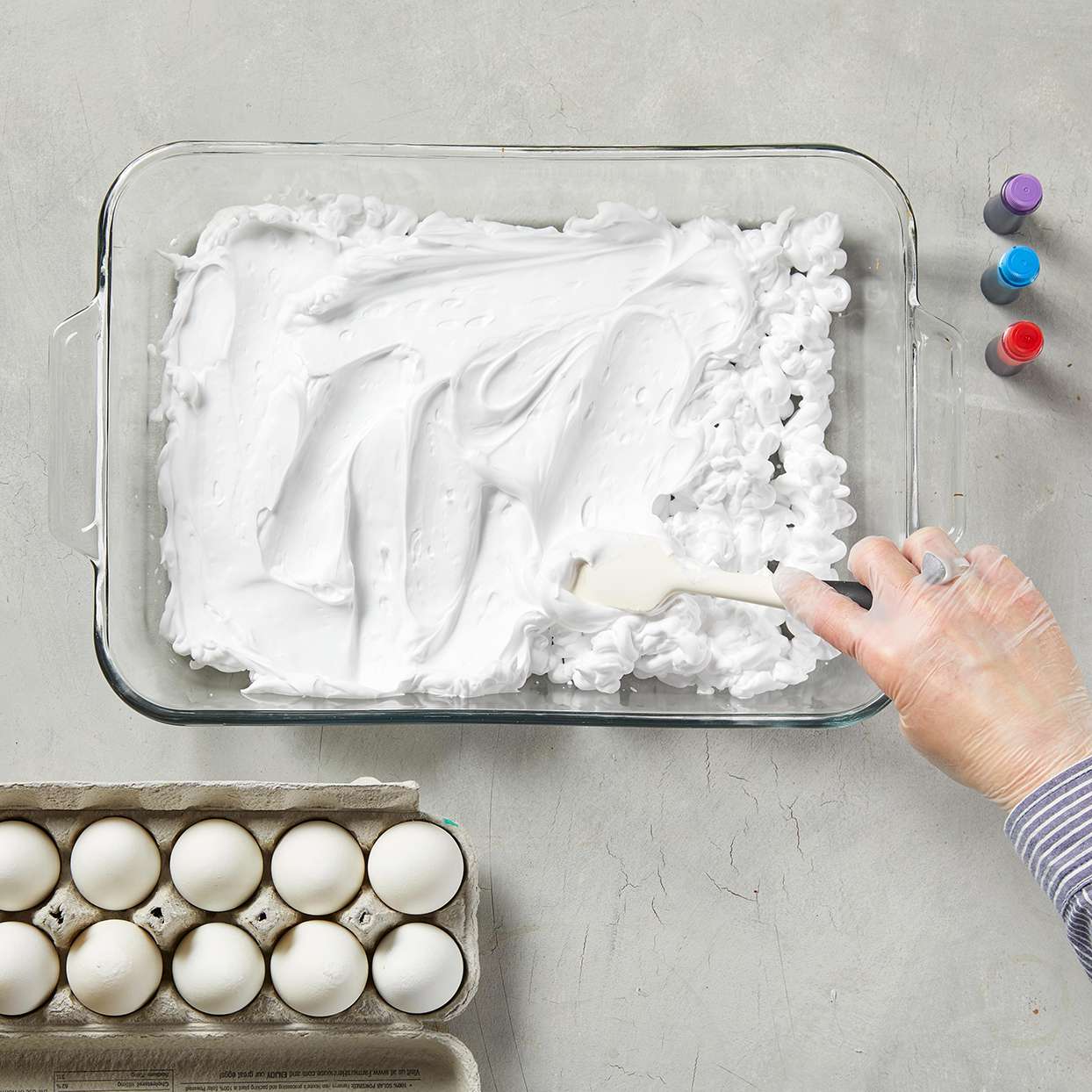
Start this easy Easter craft by preparing a batch of hard-boiled eggs. When the eggs have cooled, place them in a large bowl of vinegar. Let the eggs soak for 20 minutes; this will allow the dye to adhere more permanently to the shells. Fill a shallow glass baking dish (like this Pyrex Oblong Glass Baking Dish, $10.99) with a thick layer of shaving cream; we used a plain drugstore shaving cream. Spray the shaving cream so that it covers the bottom of a pan with a layer that is about an inch thick.
Editor’s Tip: To make whipped cream dyed eggs, simply spread a layer of non-dairy whipped topping in the bottom of your pan about an inch thick. Follow the rest of the instructions to make dyed eggs with shaving cream or whipped cream eggs.
BRIE PASSANO
Step 2: Add Color to Shaving Cream
Generously place drops of food coloring on top of the shaving cream; we used a two-color combination for each set of eggs. You can use one color combination for the whole pan or divide the pan of shaving cream into halves or quarters to create more color combinations. When most of the surface is covered with food coloring, drag a bamboo skewer across the top of the shaving cream to swirl and marble the colors.
BRIE PASSANO
Step 3: Roll Eggs
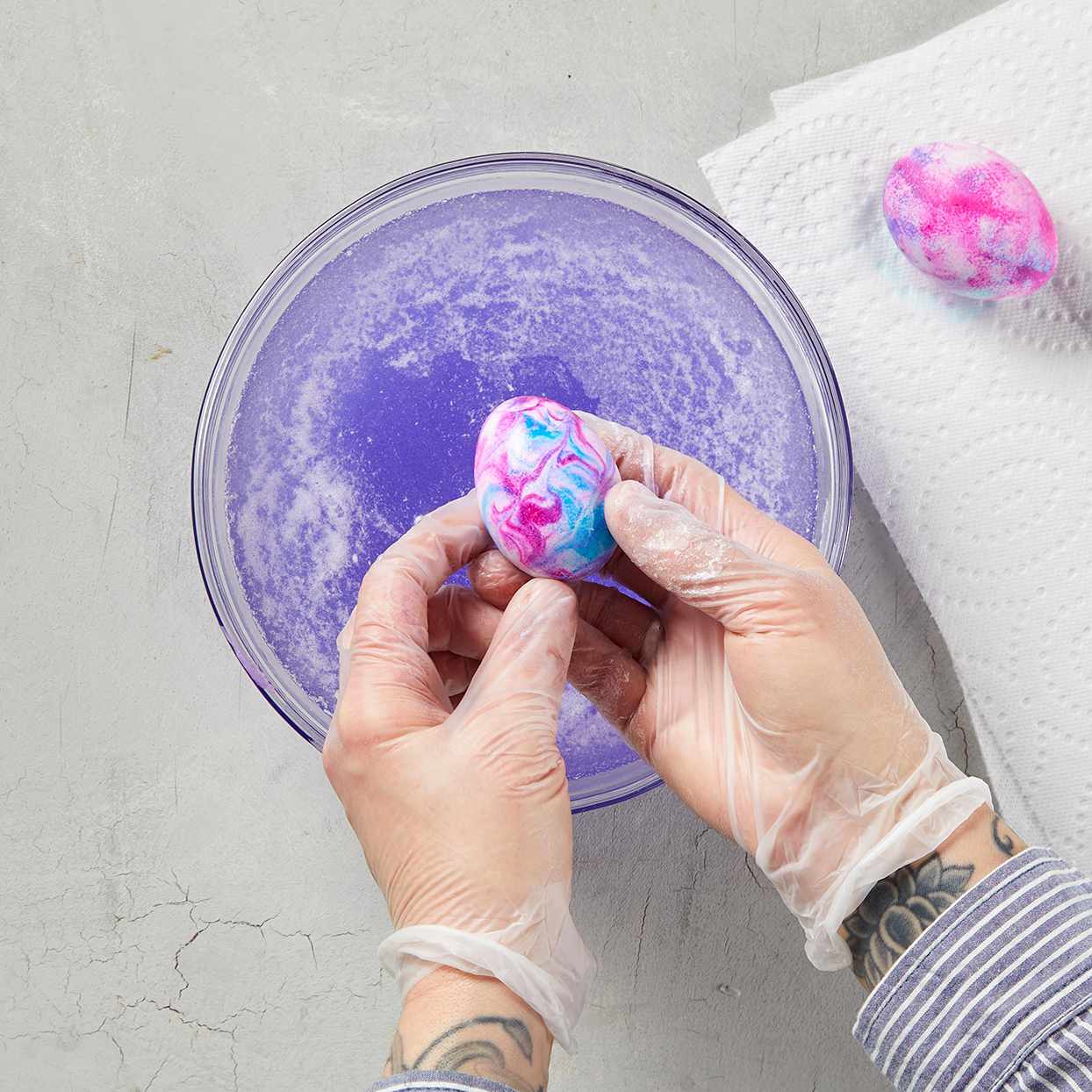
When the colored shaving cream is ready, put on a pair of gloves to protect your hands from the dye. Pick up a hard-boiled egg and set it gently on the surface of the shaving cream. Slowly roll the egg over the surface, so that the colored shaving cream completely coats the egg’s shell. Place the egg on a paper towel and let dry for 20 minutes—don’t wipe off any of the shaving cream until the egg has completely dried. Repeat this process with as many hard-boiled eggs as you’d like to color, reusing the colored shaving cream mixture.
BRIE PASSANO
Step 4: Clean and Display
To clean the dried shaving cream egg, carefully dip each egg into a bowl of water. The water will remove the excess shaving cream while leaving the colored design on the egg’s shell. Pat each egg dry with a paper towel but be careful not to rub or wipe the surface of the egg, as this might smear or remove the dye from the shell. When each egg has been cleaned and dried, add the eggs to a colorful display. To add sheen to the finished shaving cream Easter eggs, rub them with a little vegetable oil. Eggs decorated with shaving cream are not edible, but whipped cream dyed eggs are safe to eat as long as they are stored in the refrigerator.
Asafoetida (Ferula asafoetida) is the dried sap obtained from the roots of Ferula plants (1Trusted Source).
While it’s native to Afghanistan and Iraq, asafoetida is commonly used in Indian cuisine where it’s dried, ground into a spice, and referred to as hing (1Trusted Source).
In addition to flavoring food, asafoetida has also been used for centuries around the world for its perceived health benefits (1Trusted Source, 2Trusted Source, 3Trusted Source).
This article examines the benefits, downsides, and uses of asafoetida.
What is asafoetida?
Technically a gum-resin, asafoetida is a hard substance that’s extracted from large, carrot-shaped roots of the Ferula plants (1Trusted Source, 4Trusted Source).
Once extracted, it’s commonly dried, ground into a coarse, yellow powder, and used for either culinary or medicinal purposes.
As a spice, asafoetida is known for its strong, pungent odor, which is due to its high concentration of sulfur compounds. In fact, due to its unpleasant smell, this seasoning is sometimes referred to as stinking gum (4Trusted Source).
However, when cooked, its flavor and smell become much more palatable and are often described as being similar to leeks, garlic, and even meat (1Trusted Source, 4Trusted Source).
In addition to adding a distinct flavor to dishes, asafoetida has been used in traditional medicine for centuries.
For example, in Ayurvedic medicine, hing is used to aid digestion and gas, as well as treat bronchitis and kidney stones. While during the Middle Ages, the dried gum was sometimes worn around the neck to help ward off infection and disease (4Trusted Source).
Yet despite being used for thousands of years, many of the traditional uses of asafoetida have not been proven by modern science.
SUMMARY
Asafoetida is sulfurous smelling gum-resin that’s extracted from Furula plants. It’s traditionally ground into a powder and used either for its proposed medicinal qualities or as a spice to add a savory flavor to food.
Potential benefits of asafoetida
While research is limited, asafoetida may offer some health benefits.
Good source of antioxidants
Asafoetida has been found to be a good source of antioxidants (1Trusted Source, 5Trusted Source,
These plant compounds help protect your cells against potential damage caused by unstable molecules called free radicals. As a result, antioxidants may also help protect against chronic inflammation, heart disease, cancer, and type 2 diabetes (7Trusted Source, 8Trusted Source).
Specifically, asafoetida has been shown to contain high amounts of phenolic compounds, such as tannins and flavonoids, which are known for their potent antioxidant effects ( 9Trusted Source).
While test-tube and animal studies have found asafoetida to exhibit anti-inflammatory and antioxidant activity, more research needs to be done on its potential antioxidant effects in humans (5Trusted Source, 10Trusted Source).
Additionally, as asafoetida is used in such small amounts when cooking, it’s unclear if culinary use of the spice would still provide these potential benefits to health.
May be good for digestion
One of the most common uses of asafoetida is helping with indigestion (1Trusted Source).
In one 30-day study in 43 adults with moderate to severe indigestion, those taking 250 mg capsules containing asafoetida twice a day reported significant improvements in bloating, digestion, and overall quality of life compared with the placebo group (11Trusted Source).
This study was funded by the company that produced the supplement, so it may have impacted results.
Asafoetida has also been shown to help boost digestion by increasing the activity of digestive enzymes. Specifically, it may increase the release of bile from the liver, which is needed for the digestion of fat (1Trusted Source, 12Trusted Source).
While the spice is also frequently used to prevent or reduce gas after eating, there’s currently a lack of research to support this effect.
May help reduce symptoms of IBS
Irritable bowel syndrome (IBS) is a chronic gastrointestinal (GI) condition that’s characterized by abdominal pain or discomfort, bloating, gas, and constipation, diarrhea, or both (13Trusted Source).
Due to its potential effects on digestion, asafoetida is thought to help reduce symptoms associated with IBS.
Two small studies in adults with IBS found a significant improvement in reported IBS symptoms after 2 weeks of taking asafoetida supplements. Yet another study found no effect of the supplement on IBS symptoms (14Trusted Source).
Overall, the research on whether asafoetida may be effective for managing IBS symptoms is quite limited.
However, one less direct way that asafoetida may be beneficial for individuals with IBS is as a substitute for onion and garlic in cooking.
Onion and garlic contain high amounts of fructans — indigestible, fermentable carbs that can cause GI distress in some individuals with IBS (15Trusted Source, 16Trusted Source, 17Trusted Source).
As asafoetida provides a flavor similar to onions and garlic, it could be a good option for those who need to avoid or limit their consumption of these high fructan foods.
Other possible benefits
While studies on asafoetida are quite limited, early research suggests that it may have additional benefits, including:
Antibacterial, antifungal, and antimicrobial effects. Test-tube studies have found asafoetida may help protect against potential pathogens, such as various strains of Streptococcus bacteria (1Trusted Source, 18Trusted Source, 19Trusted Source).
Help lower blood pressure. Asafoetida may help lower blood pressure by relaxing blood vessels. However, research is very limited and has only been studied in animals (1Trusted Source, 20Trusted Source).
Anticancer effects. Animal and test-tube studies have shown a potential for asafoetida to help stop the growth and spread of certain cancer cells, including breast and liver cancer (1Trusted Source, 21Trusted Source, 22Trusted Source).
Protect brain health. Several animal studies have found asafoetida may help protect against memory loss and nerve damage in the brain (23Trusted Source, 24Trusted Source).
Help ease asthma symptoms. Mice studies have shown asafoetida to have a relaxing effect on airway smooth muscles, which is important in the treatment of asthma. While promising, this effect hasn’t been proven in humans (25Trusted Source, 26Trusted Source, 27).
Help lower blood sugar levels. One study in rats found 50 mg/kg of asafoetida extract to reduce fasting blood sugar levels. However, this effect hasn’t been studied in humans (1Trusted Source, 4Trusted Source).
Overall, while animal and test-tube studies suggest many potential benefits of this pungent spice, there’s currently a lack of evidence in humans to support these claims.
It’s also worth noting that these studies use a concentrated form of asafoetida rather than the amounts typically used when cooking. As a result, culinary use of the spice may have minimal effects.
SUMMARY
Asafoetida is rich in antioxidants and may provide multiple health benefits, particularly for digestive health. However, as research is currently limited, studies in humans are needed to confirm these effects.
Potential side effects of asafoetida
While research on the safety of asafoetida in humans is limited, amounts of asafoetida that are typically used in cooking are thought to be generally safe for most individuals.
One study in humans found 250 mg twice per day for 30 days was well tolerated by the participants (11Trusted Source).
However, animal studies suggest large doses of asafoetida may cause swelling of the mouth, gas, diarrhea, anxiety, and headaches. Furthermore, a study in mice suggests possible toxicity at doses greater than 455 mg per pound (1,000 mg per kg) of body weight (1Trusted Source, 28Trusted Source).
Additionally, due to a lack of research, asafoetida isn’t recommended for women who are pregnant or breastfeeding, or young children (1Trusted Source).
Because it may lower blood pressure or thin the blood, people on blood pressure medications or blood-thinning drugs should avoid asafoetida supplements (29Trusted Source).
When used as a spice, asafoetida is often mixed with either wheat or rice flour. As a result, asafoetida (or hing) products may not be gluten-free. This can be a particular concern when dining out at a restaurant that uses hing powder in their dishes.
If you have any questions or concerns, it’s important to consult with your healthcare provider before trying asafoetida.
SUMMARY
When used in small amounts for cooking, asafoetida is likely safe for most individuals. However, due to a lack of research, asafoetida may not be safe for women who are pregnant or breastfeeding or when consumed in large doses.
How to use asafoetida
Asafoetida has been used for thousands of years to give flavor to dishes. In fact, ancient Romans used to store it in jars along with pine nuts to be used as a seasoning (4Trusted Source).
Today, ground asafoetida powder, often labeled as hing, can be found online as well as at some Indian grocery stores.
If you follow a gluten-free diet, make sure to look for hing powder that’s blended with rice flour instead of wheat.
For culinary uses of hing powder, it’s recommended to incorporate it into hot oil or another source of fat to help reduce its sulfurous flavor and smell.
In Indian cuisine, hing powder is often paired with other spices like turmeric or cumin to provide a savory, umami flavor to lentil- or vegetable-based dishes. In France, it’s sometimes used to add a boost of flavor to steaks (4Trusted Source).
As a supplement, asafoetida is available in capsule form. While one study found 250 mg twice per day helped reduce indigestion, overall research on what’s a safe and effective dose is lacking (11Trusted Source).
SUMMARY
Asafoetida or hing powder can add a savory, umami quality to cooked dishes. While asafoetida is also sold in capsule form as a supplement, there’s currently insufficient evidence on what’s a safe and effective dose.
The bottom line
Asafoetida is a dried plant sap that’s been used for centuries for its potential health benefits and unique flavor.
It has been shown to be a good source of antioxidants. Still, while limited research suggests multiple benefits, particularly for digestive health, there’s a need for more research especially in humans.
Still, when ground into a powder, hing can be a good addition to your spice cabinet. Just a small pinch can add a savory, umami quality to dishes, such as curries, lentil dal, soups, and stews.
You’d probably be surprised to learn that only three elements on Earth are more abundant than magnesium! As far as our health is concerned, there are only 10 other elements that are found in higher concentrations inside our own body. Magnesium is also essential to all cells, and it plays a major role in DNA and RNA. This makes magnesium deficiency pretty darn bad, right?
Also, about half of your magnesium is stored in bone, which means that bone health rests just as much on magnesium as it does other elements. Some studies have even induced osteoporosis by mimicking our current low magnesium diet.
Why Do I Need Magnesium?
For starters, magnesium is needed for over 300 enzymatic reactions in the human body. This includes neurotransmission and energy for your very cells. Sound important? It is.
It’s even more important for women to have enough of this nutrient, as a magnesium deficiency can make your period much more painful. Magnesium can also help to reduce headaches, nausea and cramps associated with that time of the month.
A magnesium deficiency affects your fitness level, too. Studies have shown that even a marginal magnesium deficiency impairs athletic performance and amplifies the negative effects of exercise, like soreness, making it harder for you to effectively work out. [tweet_quote]Not enough energy to work out, and then extra sore the next day? You may have a magnesium deficiency. [/tweet_quote]
Besides impairing performance, acute exercise can cause the body to redistribute magnesium throughout the body and to lose more magnesium, resultant from the exercise. Magnesium goes into the red blood cells, presumably to deal with the stress of exercise.
As a muscle relaxant, magnesium can help with sleep, as well as constipation. Sleep and magnesium are so interrelated, that one study shows that not getting enough magnesium can disrupt your sleep, and even alter your mood. This is why it is important to take magnesium strategically – at the right time, with the right intention.
How To Get More Magnesium
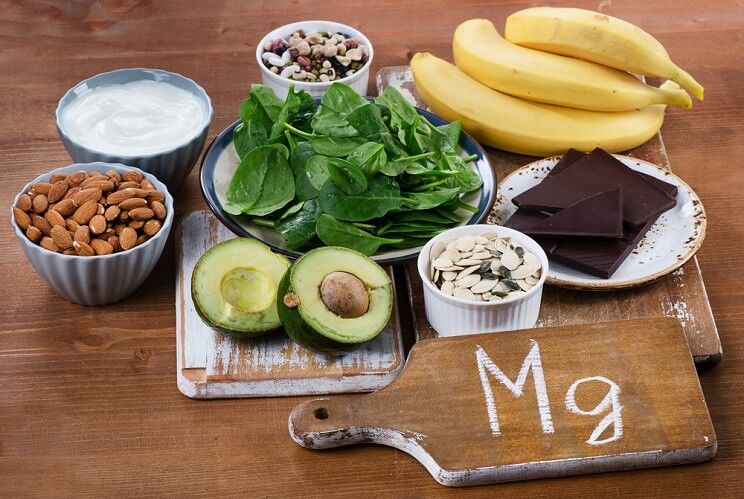
The easiest way is to supplement it. But, the best way, and the cheaper way, is to eat a diet which contains much more magnesium. This means lots of halibut, spinach, Swiss chard, nuts and (with moderation) dark chocolate. Eating these foods adds other much-needed minerals and vitamins as well.
Since everyone in the Paleo world loves nuts, it is important to note that Brazil nuts, almonds, and cashews all contain decent amounts of magnesium. Squash and pumpkin seeds also contain a large amount. Wild-caught mackerel and tuna are also excellent sources of magnesium. [tweet_quote] Fish, spinach, nuts and dark chocolate are great sources of magnesium.[/tweet_quote]
Drinking mineral water can also help bring some magnesium into your body. While our Paleolithic ancestors consumed water that was rich with minerals, our tap water has been stripped of magnesium. Making a conscious effort to drink mineralized water can help bridge that gap.
Of course, especially in this day and age, people always want to be able to take a pill. This means that, of course, you can supplement with magnesium. It is wise to choose a small amount to start with and then slowly progress from there. That is due to the laxative effect that magnesium has. In the Paleo community, and in my work with clients, it seems that Natural Calm is the best source of magnesium supplementation.
The only form of magnesium supplement worth avoiding is magnesium oxide. as your body can’t absorb this form very well. Magnesium citrate seems to have the most risk as a potential laxative, so choosing another from in those susceptible, may be a good option.
The Bottom Line
Magnesium deficiency is not a pretty thing, but fortunately, it’s both easy and delicious to fix. And also, if you’re a coffee drinker, perhaps I’ve given you the motivation to cut back on the bean and step up your meditation and sleeping routines. Remember, your body does not need caffeine, but your cells do require magnesium!
If you think your cat is expressing her love for you when she licks you, you’re likely right. “Cats that have a relationship with one another—be it mother and child, siblings, or just friends—will groom each other as a sign of affection,” she says. “The same [is true] when your cat licks you.”
She’s teaching you how to groom.
Cats groom one another. House cats’ wild relatives groom each other so that they don’t attract predators, while house cats have a maternal instinct and want to teach their kittens how to keep themselves clean. “To a cat, it doesn’t matter that you are human,” Ochoa says, and “once they have come to care for you, they will treat you the same way as any member of its group.” That includes grooming you and—in their minds, at least—teaching you how to groom yourself.
We all know—some from unfortunate experience—that male cats will spray urine to mark their territory. “But by licking you, they are also marking you as their territory,” says Ochoa. Why? “It’s a way of letting other cats know they care about you, and you belong to them,” she says.
She’s helping you keep calm.
Cats can be very empathetic. And “if your cat senses you are stressed or sick, it may lick to help calm you down or make you feel better, just like it would another cat in the wild,” says Ochoa. It’s a behavior your cat likely learned from her mother who did it to her. “By licking or rubbing their head against you, they really are showing you how much they care about you,” Ochoa says.












 Mws R Writings