Category: Animals

Amazing Animals!
Axolotl
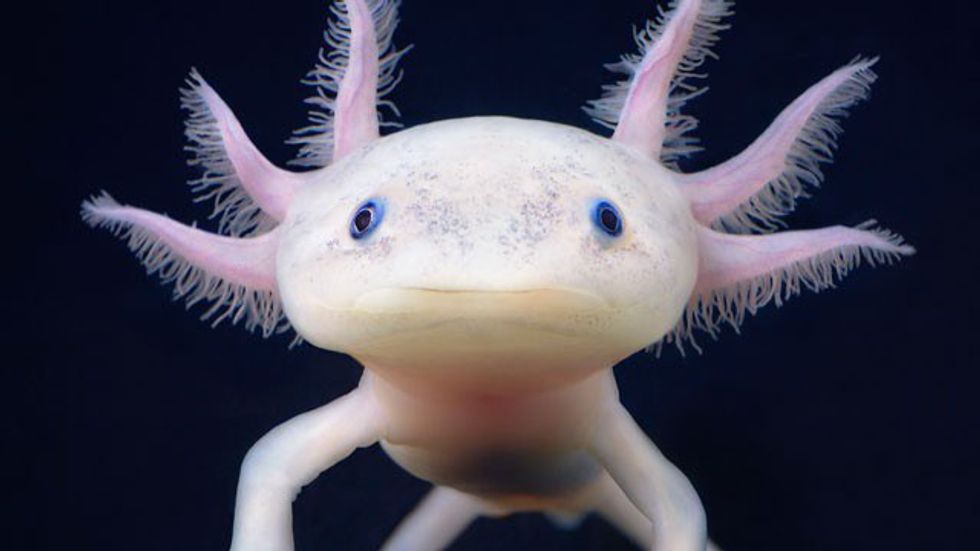
The axolotl or “Mexican salamander” (who looks like a Pokémon , if you ask me) is often spotted in lakes in various places around Mexico. These little salamanders are amphibious although often spend their adult lives strictly in the water. However, the population of these cute creatures is dwindling due to non-native predators and the continued urbanization of Mexico. The axolotl eats small worms, insects, and fish in order to survive.

Birds~ Did You Know?
SOURCE~~~~http://a.msn.com/0E/en-us/BBZn2Za?ocid=scu2
Nature puts every chirp in its proper place. Avian sounds—flutish trills, alarmlike buzzes, and one-note squawks alike—are immediately absorbed, reflected, and scattered by everything in a bird’s habitat. Nearby leaves or branches, canyon walls, and even the wind influence notes, so over time, species tailor songs to suit those surroundings. Some minimize echoes by putting more space between notes, while others use low frequencies that travel farther. Here’s how some birds have tweaked their waveforms.

© AJ Freena How birds got their groove

© AJ Freena Human mnemonic: ra-vi-o-li (flutelike) oo-duh-lay-oh or oodle-drrrr
Wood thrush
This three-part call often consists of soft, low-pitched phrases flourished with a final, elaborate trill—a complex tune compared with other thrushes. The intricacy makes the tune susceptible to warping when it hits vegetation, so males manage by singing from the lower canopy or midstory of forests, where there’s less obstruction.
Northern cardinal
This seconds-long song often begins with a loud string of two-part whistles and ends in a slow trill. Cardinals nest in dense foliage, but they sing from lofty perches so their high-pitched songs can travel long distances without branches and leaves dampening or muffling their notes.
Eastern meadowlark
Amorous males of this species sing from exposed perches like fence posts or telephone lines—or while in flight. The slurred, slightly drooping whistles are easily heard ringing out through their native grasslands. In open areas with few trees to distort their songs, these birds are free to devise complicated and variable tunes.

© AJ Freena Human mnemonic: cheer-cheer-purty-purty-purty
Common yellowthroat
These marsh-dwellers sometimes repeat their short, choppy melodies up to 300 times per hour in the summer. The explosive sound can bounce through dense cattails and other tangled vegetation at the edges of their native wetlands. By singing ad nauseam, the species ensures at least some repetitions reach potential mates’ ears.
Canyon wren
This cliff-nester makes a musical ripple of cascading notes. Although the melodies bounce and echo off the surrounding canyon walls, the repetitive nature and slow, descending scale help female wrens (and human hobbyists) pinpoint each bird’s location along the steep rock faces it inhabits.
Black-capped chickadee
Because they often live and feed in dense, wooded habitats, these cute bits of fluff can’t always spot other members of their flock, even when they’re close by. The simplicity of their two- or three-note whistles allows a listener to judge the song’s quality (and therefore the singer’s), regardless of any distortion caused by the surrounding forest.

© AJ Freena Human mnemonic: but-I-DO-love-you spring-of-the-year
This story originally published in the Noise, Winter 2019 issue of Popular Science.

Magnificent Animals
Gulf porpoise

Also known as the vaquita (Spanish for “little cow”), the Gulf porpoise is now one of the rarest mammals in the world, with a global population estimated at under 100 in 2014. The precariously low numbers add inbreeding to a list of potential threats that includes habitat loss, environmental pollution and being accidentally caught in fishing nets. Today, the last remaining porpoises live in North America’s Gulf of California. Barring drastic conservation efforts, National Geographic estimates the last of them will likely disappear by 2018.

Amazing Animal~

Lowland streaked tenrec
First described in 1798
This tiny, punky mammal can only be found in one place on Earth: Madagascar, off the coast of southeast Africa. These animals can grow up to 20 centimetres long (eight inches), weighing only 125 to 280 grams (four to 10 ounces). Its spines, like those of a porcupine, are detachable, providing a defence mechanism while foraging on the ground. This tenrec also uses its quills to communicate with other members of the species, rubbing them together to warn of a predator.

Fascanating Animal
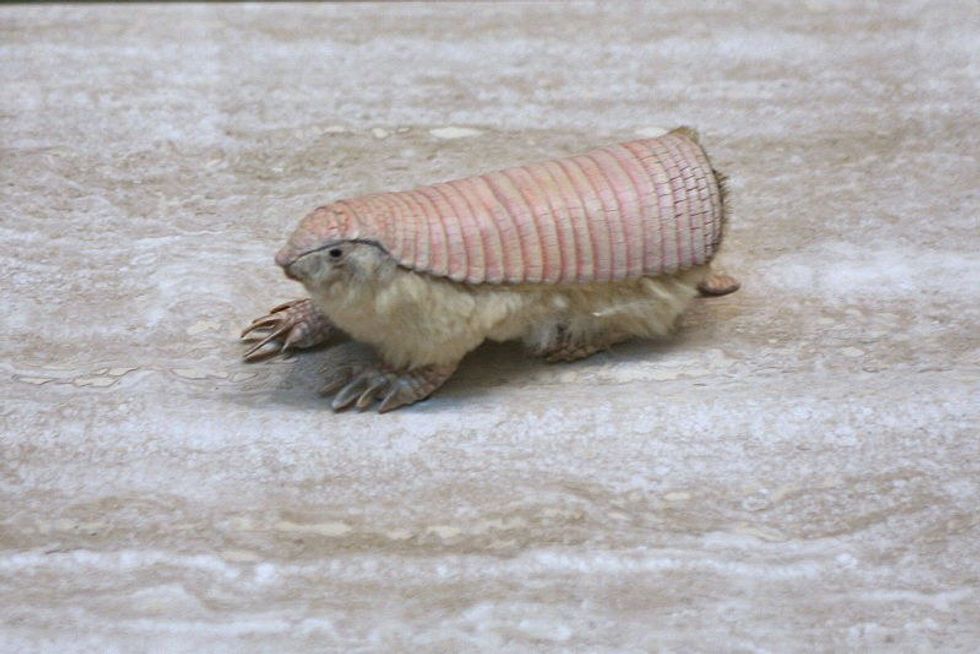
The pink fairy armadillo is the smallest and cutest species of armadillo. It is on the list of threatened species and is found in the sandy plains, dunes, and grasslands of Argentina. The pink fairy armadillo is a nocturnal creature that survives mostly on insects and plants.
Unusual Yet Beautiful- creature
Christmas Tree Worm
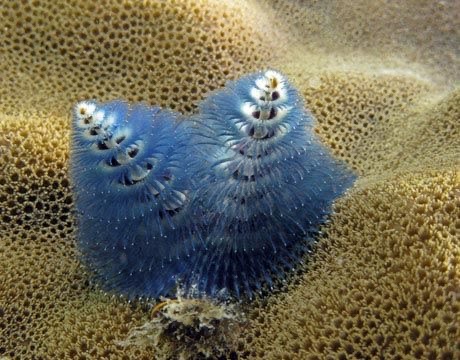
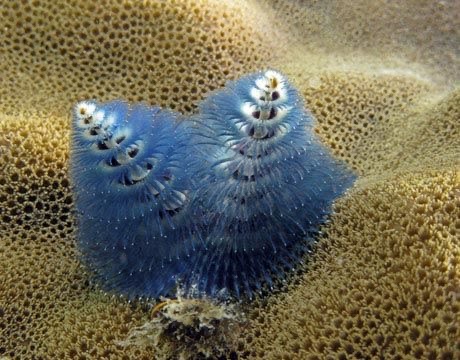
Scientists found this strange creature at the Great Barrier Reef’s Lizard Island and named it, aptly, the Christmas tree worm. One better might have been “fake plastic Christmas tree worm,” but it’s still a pretty good name. (Scientists also refer to it as Spirobranchus giganteus). The spiral “branches” are actually the worm’s breathing and feeding apparatus. The worm itself lives in a tube, and it can withdraw its tree-like crowns if threatened.

Bizarre Creature

California: Banana slug
The sex life of these gooey, yellow mollusks is even more bizarre than their coloring or the fact that they inch down from high tree branches on thin strands of slime in much the same way as spiders utilize their webbing. For starters, according to a 1916 paper by Stanford University zoology professor Harold Heath, they are hermaphrodites. Two, a slug penis, which emerges from its head, can be as long as its entire body. That makes for some of the largest male genitalia of any species in proportion to its overall size. Three, reproductive sessions last hours and sometimes end in apophallation, which is when a banana slug gnaws off and eats its partner’s privates. They do not grow back.
Banana slugs are often bright yellow (giving rise to the banana nomenclature) although they may also be greenish, brown, tan, or white. The species Ariolimax columbianus sometimes has black spots that are so extensive that the animal looks almost entirely black. Individual slugs will change colors with alterations in food consumption, light exposure, and moisture levels. Color may also indicate whether a slug is healthy or injured or what age it is.[4]
The Pacific banana slug is the second-largest species of terrestrial slug in the world, growing up to 25 centimetres (9.8 in) long,[5] and weights of 115 grams (4.1 ounces).[6] (The largest slug species is Limax cinereoniger of Europe, which can reach 30 centimetres (12 in) in length.) Banana slugs have an average lifespan of 1–7 years.[4]
Banana slugs (like other gastropods and many other mollusks) have a radula, a ribbon-like anatomical structure covered in rows of microscopic teeth; the radula is used for feeding.[citation needed] Individuals can move at 6 1⁄2 inches (17 cm) per minute.[7]
Slugs use two pairs of tentacles to sense their environment. The larger, upper pair, termed “eyestalks,” are used to detect light or movement. The second, lower pair are used to detect chemicals. The tentacles can retract and extend themselves to avoid damage. If a predator bites off a tentacle, the slug can grow a new one.[8]
Banana slugs have a single lung (on the right side) which opens externally via a pneumostome. The pneumostome lung cavity is heavily vascularized to allow gas exchange. Dehydration is a major problem for the mollusk; to combat this, banana slugs excrete a thick coating of mucus around their bodies and can also aestivate. To do so, they secrete a protective layer of mucus and insulate themselves with a layer of soil and leaves. They remain inactive in this state until the environment becomes moist again. Due to their susceptibility to desiccation, they are more commonly active at night, but also appear during cool, moist days.[9]

This individual Ariolimax columbianus has numerous black spots. The patterning may be so extensive as to make the animal look almost solid black. Banana slugs have a single lung which opens externally via a pneumostome. The placement of the pneumostome on the mantle helps to distinguish the species of Ariolimax.
The slime also contains pheromones to attract other slugs for mating. Slugs are simultaneous hermaphrodites, and reproduce by exchanging sperm with their mate. They produce up to 75 translucent eggs, which are laid in a log or on leaves. Slugs mate and lay eggs throughout the year. The adults provide no further care for their eggs beyond finding a suitable hiding spot, and the eggs are abandoned as soon as the clutch is laid.[citation needed]
 Mws R Writings