Signs Of Fleas, On Your Pets

How to Spot the Signs of Fleas

The problem begins with some scratching here and there. Maybe you spot some tiny specks around the house that you might’ve missed before. Maybe that beautiful hair that was so thick is looking a tad thin these days. Before you know it … yep. It’s confirmed.

Fido has fleas. And you’d better check Fluffy the Cat, too.

More than 2,500 different species of fleas exist throughout the world, yet one is the most common among American dogs and cats. It’s called Ctenocephalides felis, or the cat flea.

That’s right. If your dog has fleas, they’re most likely cat fleas.

Every pet owner should be aware of the signs of a possible flea infestation. They include:

Your dog (or cat) is scratching. Even if you don’t catch fleas red-handed, if you see your pet scratching or biting at its fur, fleas may well be the culprit. That’s because not only can fleas cause a sharp pain when they bite, their salivary glands give off a substance that’s irritating to many dogs and cats.

You can see them. Adult fleas are about an eighth of an inch long. They’re reddish-brown and very thin. It’s hard to really see what they look like without a microscope (though it’s easier on a light-colored fur), but they do have big back legs. They can jump, by some measurements, upward and outward at least 12 inches in a single leap. And one estimation finds that for every adult flea found on your pet, there are at least 100 immature ones hanging around.

You can see what they leave behind. It’s called “flea dirt,” and it looks a little like pepper. You can spot it on your pet’s skin, or your pet could leave it someplace, like:

  • Its bedding
  • The carpet
  • That favorite chair he’s been sleeping on even though you’ve ushered him off it a thousand times

The specks are actually bits of dried blood that will turn from black to brown, and finally back to red if you rehydrate them on a wet paper towel.

You can see other suspicious stuff around your home: Fleas lay eggs on your pet — tiny white ovals — that mostly fall off into the environment around it (your bed, the dog bed, the carpet, that favorite chair), only to hatch a few days later into flea larvae.

You can see larvae, too. They’re little, squiggly, worm-looking things with brown heads that will feed on all those specks until they wrap themselves up into a cocoon called a pupa. From larva to pupa takes about 3-4 weeks. After that, they’re fully grown fleas, looking for a ride and a little of your pet’s (or your) blood.

If you see tapeworms — internal parasites that are white or pinkish white and look like small pieces of rice that often show up by slipping out of your pet’s rectum — that’s a sign your pet may have been having it out with fleas.

Your dog (or cat) is losing its hair: It’s not from the fleas themselves, but from all the itching and biting. Fleas often gather at the neck and shoulder blades of your pets. The base of the tail and along the back of the legs is a favorite hangout for them, too. Those are also places animals will bite to get to the fleas. That can take its toll on a pet’s coat. With full-blown infestations, fleas are visible in the bare areas of a pet’s belly, too.

Their skin looks irritated: If you can get past your pet’s fur and look at the skin, fleabites are usually small, raised red dots. Again, look for bites on the back and neck and on the base of the tail. Another problem with fleabites is they can lead to flea allergy dermatitis, also known as fleabite hypersensitivity. If your pet has this, their skin can become itchy, red, and scaly. It can lead to secondary skin infections, too.

Their gums are pale: With a large infestation of fleas, some pets (especially smaller kittens or pups) could be in danger of anemia, or a loss of red blood cells. Fleas can take in up to 15 times their body weight in blood. Pale gums often signal anemia.

Fleas are, in the strictest sense of the word, pests. But they can be way more than that. They can transmit disease (to humans, too) and cause life-threatening problems for your pet. If you see any signs of fleas, ask your veterinarian what to do.

Thanksgiving Foods That Are Not Good For Pets

https://www.msn.com/en-us/lifestyle/pets-animals/6-thanksgiving-foods-that-are-bad-for-cats-and-dogs/ar-BBX3zjg?ocid=spartandhp

  • Stuffing: Thanksgiving dressing is often made with onions, scallions or garlic. These ingredients are extremly toxic for pets and can cause life-threatening anemia. This is the destruction of red blood cells.
  • Ham: Ham and other pork products can cause pancreatitis, upset stomach, vomiting and diarrhea. Pork is also high in fat, which can lead to obesity in pets. Even a small amount of ham can contribute a very large amount of calories to a small dog or cat’s diet.
  • Turkey Bones: Bones can cause severe indigestion in dogs and cats, potentially causing vomiting and obstructing the bowel. Bones may also splinter and cause damage to the inside of the stomach and intestines. In some cases, turkey bones may even puncture through the stomach and cause a potentially fatal abdominal infection.
  • Mashed Potatoes: While potatoes are safe for pets to eat, mashed potatoes usually contain butter and milk, which can cause diarrhea in lactose intolerant pets. Additionally, some recipes call for onion powder or garlic, which are very toxic to pets.
  • Salads with Grapes/Raisins: There are many salads served at Thanksgiving that include grapes or raisins as an ingredient, from fruit salad, to waldorf salad, to ambrosia. However, grapes and raisins are very virulent and potentially deadly. Grapes can cause severe, irreversible and sometimes fatal kidney failure in dogs. Be sure to keep all dishes that include grapes and raisins away from pets.
  • Desserts: While pumpkin pie is the most famous Thanksgiving dessert (canned pumpkin also has many pet health benefits), many people offer a variety of chocolate desserts at Thanksgiving. Chocolate is toxic to dogs and cats, yet dogs love the smell and taste of it. The darker the chocolate, the more toxic it is. Keep all chocolate desserts out of the reach of pets to prevent an emergency trip to the veterinarian.

If your pets ingest any of these foods this Thanksgiving, be sure to call your veterinarian immediately.

Copyright 2019 WAFB. All rights reserved.

https://www.msn.com/en-us/lifestyle/pets-animals/6-thanksgiving-foods-that-are-bad-for-cats-and-dogs/ar-BBX3zjg?ocid=spartandhp

Pets~ Things You Should Know

a cat lying on a couch: Here's another for good measure.
  • INSIDER asked a group of pet experts about some of their best advice for those who have animals.
  • Socializing your pets is great for their mental and physical health, according to animal expert Larissa Wohl.
  • It’s fairly common for dogs and cats to become obese, so it’s important to keep an eye on your pet’s diet and weight.

Owning a pet is a huge responsibility and although it can be rewarding, it’s not always easy. Fortunately, there’s a lot of handy advice out there that can benefit you and your pets.

Here are some useful things for pet owners to know, according to experts. Allpets should be seen by their veterinarian at least once per year, even if they seem healthy

You may be tempted to skip your pet’s annual exam if they seem healthy, but Katy Nelson, host of “The Pet Show TV” on WJLA in Washington DC, said she recommends staying on top of wellness check-ups to ensure your furry friend is as healthy as they appear.

She told INSIDER that annual check-ups can help you catch health issues “early on while you still have time to intervene,” which can save you money and keep your pet feeling as well as possible. Obesity is quite common in cats and dogs, so it’s important to keep an eye on what your pet eats and how much they weigh

a close up of a cat eating from a bowl

© iStock

“Being overweight is devastating to our pets and overlooking it by calling them cutesy names like ‘Chunky,’ or ‘Fluffy’ is doing them no favors,” she said. “Adipose cells, known as fat cells, are hormone factories, producing dozens of inflammatory cytokines that increase your pets risk of diabetes, heart disease, joint disease, and even cancer.”

She said she suggests individuals speak to their veterinarian about their pet’s diet, their eating habits (including treats), and exercise patterns. She also encourages owners to try to keep their pets active.

“Find creative ways to exercise your pets like hunting feeders for cats or doggy daycare [or] anything that you can do to get them moving is a move toward getting healthy and fit,” she told INSIDER. Instead of telling your pet what not to do, try to direct them toward engaging in proper behaviors

Many of us forget that our pets don’t understand things as we do – so sometimes it’s helpful to guide them to proper actions, especially when they are doing something you’re trying to discourage, Kim Paciotti, an experienced dog trainer and pet expert from Charlotte, North Carolina, told INSIDER.

“Your dog may be chewing on something inappropriate, like a piece of furniture, and you quickly tell them to stop. They do for a short time but then they go right back to that same undesired behavior,” said Paciotti. “Why? Because you told them what not to do, instead of telling them what to do. The appropriate action would have been to give the dog something they were allowed to chew on.” If your dog is pulling on its leash, you may need to change how you act before and during a walk

Paciotti said one of the main behavior issues many dog owners complain about is that their animal pulls when it is on a leash. She said that sometimes owners are the cause of the problem, not the dog.

“Stop and see if you are actually setting your dog up to do this. Are you one who gets your dog all excited to go? Or are you one who knows your dog is distracted by other dogs and you proceed to walk them when everyone in your neighborhood walks their dogs?” said Paciotti.

“Or, maybe you have a puppy and want them to walk with you. A 6-foot leash and a new puppy are two things that should not go together. The pup must learn to focus on you and not the surroundings,” she added. When teaching your dog a new command, try speaking in plurals and using a high-pitched voice.

Another tip that Paciotti shared is that you should try to be mindful of the tone and pitch in your voice when talking to your dog. She said that speaking in plurals and even changing the tone of your voice can help you train a puppy in a lot faster.

“For example, if you want your dog to sit, say ‘sitting,’ and if you want your dog to lay say ‘laying,'” she said. “Dogs hear tone and pitch in our voices. The tone of our voice will change and peak the dog’s ears to pay attention.” Whenever your pet’s behavior changes, you may want to go see a veterinarian as it can be a sign of something more serious

As tempting as it may be to use the internet to diagnose changes to your pet’s behavior, Steve Dale, a certified animal-behavior consultant and host of several pet radio shows, said that a veterinarian should always be consulted to rule out a possible medical explanation for behavioral issues.

“Don’t assume, don’t wait, and don’t depend on [search engines]. Until a time comes when [the internet] can do blood work or heart your pet’s heart online, seeing your veterinarian is the right thing to do,” added Dale. Declawing a cat is considered to be inhumane and it’s not necessary

“A declaw is an amputation no matter how you slice it … the veterinarian amputates the end section of the last bone which contains the growth plate along the nail,” explained Dale. “It’s a procedure that we now know may cause long-term pain, including phantom pain.”

In addition, the Humane Society advises against removing a cat’s claws and multiple countries and some cities and states in the US, such as New York, have made declawing cats illegal.Socializing your pets is important to help keep them happy

Most pets enjoy getting out and playing with other animals, Larissa Wohl, a pet expert on Hallmark Channel’s “Home & Family” show, told INSIDER.

“Socializing your animals, particularly dogs, is so important. We get so busy with our own day-to-day responsibilities that oftentimes [we forget that] our animals sit at home for the entire day,” said Whol. “The dog may get a walk in the morning or night, but socializing the animal with other animals helps them mentally and physically and helps them play nicely with other animals.”

She suggests dropping your canine off at a doggy daycare location a couple of times a week or scheduling a play date with a friend who has a dog. And, if you have a social cat and are prepared to adopt more pets, you may want to look into adopting another feline for it to socialize with throughout the day. Microsoft may earn an Affiliate Commission if you purchase something through recommended links.

https://www.msn.com/en-us/lifestyle/pets-animals/8-things-every-pet-owner-should-know-according-to-experts/ar-AAFQNVs

Products That Are Causing Cancer In Your Pets

Elephants and naked mole rats are two animals that rarely get cancer. Scientists believe these two creatures may have genetic mechanisms that allow them repair damaged DNA (which could otherwise precipitate tumors). Unfortunately, household pets (especially cats and dogs) are not so lucky.

Why are so many pets getting cancer?

Indeed, these beloved creatures are experiencing higher rates of cancer than even humans. For instance, today one person out of five will get some form of cancer in their lifetime. But one out of every two dogs will develop the disease at some point.

All told, at least six million dogs and six million cats will be diagnosed with cancer this year. Veterinarians often explain these alarming stats by telling owners that it’s because their pets are living longer than ever before and tumors are almost inevitable in old age.

However, it’s not just advanced age that seems to be a problem. In all probability, inflammatory diets, toxic pet care products, and environmental factors are contributing to the epidemic of cancer that is afflicting cats and dogs.

How to keep your pets cancer-free

With that in mind, here are seven likely carcinogenic culprits that you’ll want to keep your pet away from as much as possible.

1. Heat-processed pet food

Animal lovers have been horrified to learn about some of the stuff that turns up in many brand name pet foods. Part of the problem is that the FDA hasn’t made the health and well-being of cats and dogs much of a priority.

Another problem with conventional pet food is that it is heat-processed and loaded with preservatives. All this is meant to extend the shelf life of the product, but these methods can subtract years from your pet’s life. That’s because heavily processed foods tend to stimulate compounds called cytokines, which promote inflammation in both the gut and throughout the body.

Chronic inflammation is a known risk factor for cancer and other diseases. For instance, it can precipitate a condition known as leaky gut syndrome, which can upset your pet’s hormonal balance while triggering an overactive immune system.

Increasingly, scientists believe that intestinal integrity is one of the keys to avoiding and preventing cancer. Many veterinarians do recommend conventional pet food brands, but the evidence suggests that both humans and pets are better off eating more nutritionally-rich raw foods.

Of course, cats and dogs have unique dietary requirements, which generally includes consuming excellent protein sources such as meat (along with raw veggies, grains and fruits).

2. Secondhand smoke

Cats exposed to secondhand smoke are 2.5 times more likely to get lymphoma than felines from smoke-free homes. Similarly, dogs exposed to secondhand smoke are at much greater risk for respiratory and nasal cancers. Smoking isn’t good for you, but it’s especially bad for your pet. Now, you have another good reason to quit the habit!

3. Preservatives in food

Artificial preservatives like BHA, BHT and ethoxyquin have been linked to a variety of health problems and are suspected carcinogens to boot. Pet food companies could opt for all-natural preservatives such as tocopherols (vitamin E), citric acid (vitamin C) and rosemary extract, but they don’t because that would cost more. To avoid artificial preservatives you can look for organic brand pet foods that specify that they have no artificial additives or preservatives.

4. Flea and tick control products

Many popular flea and tick control remedies include suspected carcinogens like fipronil and permethrin. These chemicals have been shown to cause tumors in laboratory studies and have been linked to thyroid problems as well as cancers of the lung, liver and thyroid too.

At the very least, you should limit using conventional flea and tick products to the months when these pests are active. For an even better solution, it’s very easy to make your own apple cider vinegar flea and tick repellent spray.

5. Commercial pesticide sprays

A recent study has linked the chemical dichlorophenoxyacetic acid (also known as 2,4-D), which is used in many lawn herbicides sprays, to an increased risk of cancer in dogs. The scientists at Tufts University who conducted the research explained, “Specifically, the use of professionally applied pesticides was associated with a significant 70 percent higher risk of CML (canine malignant lymphoma).”

Earlier studies have found a link between lawn sprays and bladder cancer in pets. Eradicating dandelions and other weeds may provide aesthetic benefits, but there’s a tradeoff that may impact your pet’s health. At the very least, try to keep your pets away from lawns that have been treated with toxic herbicides and pesticides.

6. Cleaning agents and household items with formaldehyde

Formaldehyde has long been suspected to be a carcinogen and a health hazard to both humans and pets. Unfortunately, this chemical is used to treat and persevere everything from cleaning agents to cosmetics to furnishing (like sofas and carpets).

To reduce exposure, scrutinize product labels and avoid shampoos, laundry detergents and other household products that specifically include formaldehyde or any of the following ingredients: Quaternium-15, Diazolidinyl urea, Imidazolidinyl urea, DMDM hydantoin and Sodium hydroxymethylglycinate.

It’s hard to avoid carpeting and other furnishings treated with formaldehyde, but thankfully the chemical begins to break down when exposed to fresh air. Therefore, keeping your home well-ventilated can help reduce the health hazards from formaldehyde exposure.  

By the way, dogs and cats have very different types of skin than people. So, never use a shampoo intended for humans on your dog or cat. To avoid a shampoo with harmful preservatives (like formaldehyde), try making your own with these simple DIY recipes for dogs and cats.

7. Electromagnetic radiation

There is not a real lot of evidence tying radiation from cell phones, TV screens and computer to cancer in pets, but it’s well known that other forms of radiation (including ultraviolet light and x-rays) can damage DNA.

Cats and dogs love warm places, but allowing them to fall asleep directly under the TV, on top of a computer or near WiFi routers is probably not a great idea. It’s hard to avoid electromagnetic pollution these days, but keeping your pets at least several feet away from common devices can help reduce their exposure.

— Scott O’Reilly

DIY

Tomatoes~Poisonous to Dogs?

Are Tomatoes Poisonous for Dogs?

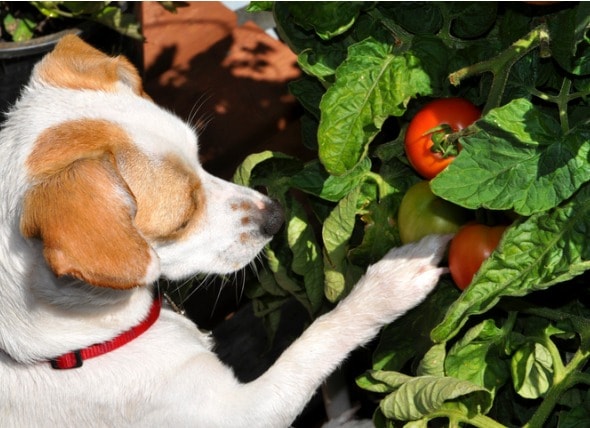
Those of us with furry, barking friends may wonder whether tomatoes are safe to share. There’s a lot of confusing information out there on the topic, so here’s what you should know about each part—the ripe fruit, stems and leaves, as well as the flowering plant.

Can My Dog Eat Tomatoes?

Dogs can absolutely have the tomato fruit. If you want to give a tomato to a dog, small amounts won’t hurt them a bit. Many dogs love them for the same reason people do; they’re tasty!

While they are nontoxic, don’t feed too much tomato to your dog because it can cause stomach upset. Tomatoes are notoriously acidic, which could definitely cause problems in a dog with a sensitive stomach.

Be sure you start with small amounts to see how your dog reacts, just like you would when introducing any new food.

Cooked Tomatoes and Tomato Pomace

Cooked tomatoes are safe for dogs, just like ripe ones, and tomato pomace is a common ingredient in many dog foods.

Tomato pomace is made from the ripe fruit and incorporates skin, pulp and seeds. It’s a frequent byproduct of human food production.

Why Do People Think Tomatoes Are Poisonous to Dogs?

The tomato is a member of the nightshade family of plants. Since some other members of this family are known to be very toxic, it raises doubt as to whether the more commonly consumed plants are truly healthy for dogs.

Toxic Tomatine in Tomato Plants

There is a potentially toxic substance found in tomatoes—called tomatine—that can be very harmful when consumed in large quantities.

However, ripe tomatoes contain such a small amount that, even if your furry friend consumes far more than you ever intended, it’s not really a concern as far as toxicity goes.

Unripe tomatoes contain slightly more tomatine, but the difference is probably not significant.

Tomatine is found in greatest concentration in the tomato plant itself—more so in the flowers and small stems, but also in the leaves and the stalk.

Even so, the flowers, stems and leaves don’t actually present much of a threat to dogs. The likelihood of a dog consuming enough of the plant to cause serious harm is very slim.

Mild gastrointestinal upset is the most likely outcome when dogs eat tomato greenery. Large, grazing animals are the main concern when it comes to toxicity from tomato plants due to the volume of plant material they consume.

That said, if you think that your dog has eaten a large amount of tomato plant, call your veterinarian for advice.

Do Tomatoes Have Health Benefits for Dogs?

Since we know tomatoes are not poisonous to dogs, it’s natural to wonder whether they offer any health benefits. Tomatoes can absolutely be good for dogs, which is why so many pet food manufacturers use them in their formulas.

Tomatoes have lots of soluble and insoluble fiber. The pomace form has more fiber than whole tomatoes since the liquid is removed from the pomace, leaving behind only the fibrous parts of the fruit.

Fiber helps to support healthy digestion and maintain your dog’s steady blood sugar levels.

Tomatoes also contain antioxidants and several important vitamins and minerals, like potassium, vitamin C and vitamin K. The amount of these nutrients in the tomato or tomato pomace will depend heavily on the quality of the fruit.

By: Jennifer Coates, DVM

Featured Image: iStock.com/jbosley58


    Pets~ diseases and such we can catch from our pets~ Did You Know

    https://www.msn.com/en-us/health/medical/vets-reveal-the-most-dangerous-diseases-pets-can-give-you/ss-BBTuiZr?ocid=spartandhp&fullscreen=true#image=16

    Vets reveal the most dangerous diseases pets can give you

    Pets are one of life’s great joys. According to the National Institutes of Health, some 68 percent of American households have a pet, and their benefits are countless, from getting active to boosting mood. But as wonderful as our furry (or scaly, or feathered) friends are, there are certain health risks that come with having an animal in your home.

    “Zoonotic diseases (zoonoses) are those that can be transmitted between animals and people,” explains Christa Gallagher, BSC, DVM, an assistant professor of public health and epidemiology at Ross University School of Veterinary Medicine. “Animals, whether wild or domesticated, can transmit harmful bacteria, viruses, parasites, and fungi to humans.”

    But talking to your veterinarian about possible disease transmission can help you avoid the risks. Diseases from pets can be transmitted through contact with bodily fluids, touching and/or petting, through bites and scratches, inhalation, and through mosquitos, ticks, and fleas, Dr. Gallagher says. Very young children, the elderly, and those with compromised immune systems are particularly at high risk. Here are 15 diseases you can get from your pet.

    Toxoplasmosis

    “Toxoplasmosis (Toxoplasma Gondii) is a parasitic infection in which cats are the main source of infection,” explains Dr. Gallagher. While healthy people don’t typically contract the disease, it can cause serious health complications for pregnant women and immunocompromised people. Be sure to change the cat litter frequently (once a day if anyone has a weakened immune system in the house), and thoroughly wash your hands afterward. Pregnant women should avoid changing the cat litter altogether. Keeping your cat indoors will also help prevent them from contracting it.

    Symptoms in pets: Cats don’t typically show symptoms of toxoplasmosis. Kittens, who are more vulnerable, may get diarrhea.

    Symptoms in humans: Healthy people often won’t show any symptoms, and the CDC estimates that some 40 million people may be living with toxoplasmosis. Some people will have flu-like symptoms, including swollen lymph nodes or enduring muscle aches.

    Rabies

    While it’s unlikely that you’ll contract rabies from your pet (it’s most commonly contracted from wild animals like raccoons and bats), it’s within the realm of possibility since it is transmitted through the saliva of an infected animal. “The disease is most commonly contracted through a bite, although potentially it could be transmitted through a scratch as well,” says Gary Richter, MS, DVM, a veterinary health expert with Rover.com. “Although human exposure to rabies from a dog is uncommon, it’s worth noting since rabies is almost 100 percent fatal if the person is not treated immediately after exposure.” The best way to prevent it is to keep your pet up-to-date with their vaccines.

    Symptoms in pets: Foaming at the mouth is the most common sign of rabies, but other symptoms could include behavioral changes, fever, hypersensitivity to touch, light, and sound, hiding in dark places, staggering, loss of appetite, and seizures.

    Symptoms in humans: According to the CDC, preliminary symptoms can include fever, headache, and weakness, but as it progresses and infects the central nervous system, you can experience insomnia, anxiety, confusion, partial paralysis, and hallucinations.

    Salmonella

    You’re probably aware that you can get salmonella from raw or undercooked poultry, but did you know you can get it from your pets? “This infection can also be caused by the bacteria that live on the skin of pet reptiles,” warns Tsippora Shainhouse, MD, FAAD, a board-certified dermatologist in Los Angeles. Jory D. Lange Jr, a food safety lawyer, also says they have seen cases of pet hedgehogs, backyard chickens, and dog food causing salmonella outbreaks.

    To avoid it, wash your hands well after handling reptiles, especially after feeding them. Be sure to also clean pet toys and bedding outside.

    Symptoms in pets: Reptiles don’t typically present with symptoms of salmonella, says Dr. Shainhouse.

    Symptoms in humans: Fever, headache, abdominal pain, nausea, vomiting, and chills are common symptoms in humans, according to Dr. Shainhouse.

    Leptospirosis

    Leptospirosis is a bacteria that is shed in the urine of infected animals. Our pets can contract this infection from ground water that is contaminated by infected wildlife. Though this infection does require contact with infected urine, it’s much easier than you may think to inadvertently come in contact with your pet’s urine,” says Johanna Reel, NHV Natural Pet’s in-house registered veterinary technician. Get your pet vaccinated against the disease, and don’t swim in water that may be contaminated with animal urine.

    Symptoms in pets: Some animals won’t show signs of leptospirosis, while others may have fever, vomiting, diarrhea, refusal to eat, depression, infertility, and other symptoms.

    Symptoms in humans: Some people with leptospirosis won’t have any symptoms, while others may have a high fever, headache, chills, muscle aches, vomiting, diarrhea, rash, or other symptoms. According to the CDC, if you recover from the first phase of symptoms and become more severely ill a second time, it could be a sign of meningitis or kidney or liver failure.

    Toxocariasis

    Most commonly contracted from the feces of dogs but sometimes from cats, toxocariasis is a parasitic disease from the larvae of toxocara roundworms. Dr. Shainhouse says, “Be careful to use gloves or a plastic bag or shovel to clean up doggy poop, and wash your hands well afterward.”

    Symptoms in pets: Diarrhea, vomiting, bloody stool, worms seen in the stool

    Symptoms in humans: “Humans contract roundworm infections by oral-fecal transmission, but the worms tend to end up in the lungs, which can present as shortness of breath and hives/itch, abdominal pain, bBloodystool,” explains Dr. Shainhouse.

    Tapeworm

    “While you can contract this by eating undercooked pork, you can also contract this from an infected pet,” explains Dr. Shainhouse. It is contracted via oral-fecal transmission through direct contact with pet stool (which is more common than you may think). You can prevent contracting tapeworm by handling animal feces with gloves or a shovel, and washing your hands thoroughly.

    Symptoms in pets: According to Dr. Shainhouse, abdominal pain, diarrhea, rice-like pieces in the stool, fatigue, hunger or loss of appetite, and longer worms in vomit are signs of tapeworm. She says that pets with tapeworm also often drag their bottoms along the ground.

    Symptoms in humans: Abdominal pain, diarrhea, rice-like pieces in the stool, fatigue, hunger or loss of appetite.

    Ringworm

    “Ringworm, which is a fungal disease (despite the deceptive name), grows on hair follicles. It is transmitted through direct contact,” explains Dr. Richter. Cleaning your pet’s bedding regularly, frequently washing your hands, vacuuming, and disinfecting are your best bets for avoiding ringworm.

    Symptoms in pets: Animals get the same circular lesion as humans, but it can be difficult to see under their fur so look out for signs like red lesions, crusty skin, and patchy hair.

    Symptoms in humans: Ringworm in humans is usually easy to spot thanks to the telltale ring-shaped rash that is often red and itchy. 9/16 SLIDES© SilviaJansen – Getty Images

    Cat scratch disease

    “This bacterial infection is caused by Bartonella henselae, which is carried by kittens. It is transmitted to humans via a scratch from the infected animal,” explains Dr. Shainhouse. According to the CDC, 30 to 40 percent of adopted shelter cats have documented cases of cat scratch fever. People with weakened immune systems are at higher risk, so they may want to hold off getting a kitten less than a year old, since they’re more likely to get the infection. If you do get scratched, wash the area immediately.

    Symptoms in pets: Cats usually don’t show any symptoms but in some cases may have a fever, and in rare cases, may have labored breathing, vomiting, swollen lymph nodes, red eyes, and/or decreased appetite. And despite the name, dogs can also get cat scratch fever and may show signs of fever, arrhythmia, and inflammation of the heart (endocarditis).

    Symptoms in humans: Cat scratch fever is often contracted by kids who can show symptoms like fever and enlarged lymph nodes. Giardia

    “Pets can also pass some parasites on to their humans,” says Dr. Reel. “Giardia is a common intestinal parasitic microorganism, which causes severe gastrointestinal symptoms. This parasite can be spread through contact with contaminated water or contact with infected fecal matter.

    Symptoms in pets: Painful gas, stomach cramps, diarrhea, and vomiting are common.

    Symptoms in humans: Painful gas, stomach cramps, diarrhea, and vomiting are some of the common symptoms in humans as well.11/16 SLIDES© MRBIG_PHOTOGRAPHY – Getty Images

    Pet scabies (mange)

    Not to be confused with human scabies, pet scabies can’t truly be spread to humans, but can cause some discomfort. “In pet scabies, the animal is the only viable host for the mite, meaning the mite only lives on the pet,” explains Dr. Shainhouse. “However, the mite can jump off of the pet, bite the human owner, then jump back home (aka, the pet’s skin).” The best way to protect you and your dog is to avoid having your dog around other animals that have it.

    Symptoms in pets: Pet scabies can affect your pet-typically dogs-with severe itching, rash, blisters, and sores.

    Symptoms in humans: Temporary itching and skin irritation.

    Campylobacteriosis

    Camp-what? The name may be hard to pronounce, but the CDC estimates that Campylobacter is the top cause of bacterial diarrheal illness in the country. Though it’s typically contracted from raw or undercooked poultry, pets can also spread it. “Campylobacteriosis is a bacterial disease cause by Campylobacter species. Fecal-oral transmission can result in gastrointestinal symptoms in most healthy persons. More serious infections can occur if a person is very young, elderly, or immunocompromised,” says Dr. Gallagher.

    That’s why it’s important to wash your hands frequently, especially if you come in contact with animal feces.

    Symptoms in pets: Most common in puppies younger than six months old. Fever, vomiting, and enlarged lymph nodes are possible symptoms in your dog.

    Symptoms in humans: Severe, often bloody diarrhea, fever, and abdominal cramps are the top symptoms.

    Myobacterium marinum

    Although our furry friends get the brunt of the diseases that can be passed on to humans, our scaled sidekicks aren’t without their possible infections. Mycobacterium Marinum grows in fish tanks and can be spread to humans. “It is commonly seen in people who put their ungloved hands into fish tanks (like when you clean out your pet’s tank),” explains Dr. Shainhouse. So be sure to wear gloves when scooping out fish and cleaning the fish tank.

    Symptoms in humans: Red bumps or sores on the hand or finger that can spread to the arm. Symptoms can also include low-grade fevers.

    Hookworms

    Yet another canine parasite, hookworms suck on the intestinal lining of dogs. The eggs in the pet feces could transfer through the skin if you come in contact with it. Thoroughly washing your hands will go a long way, especially after curbing your dog.

    Symptoms in pets: Diarrhea, weight loss

    Symptoms in humans: People often show no symptoms but can come down with loss of appetite, anemia, cough, wheezing, or rash.

    Cellulitis

    “Dog and cat bites that pierce human skin can cause severe skin infection and cellulitis if not treated immediately,” warns Dr. Shainhouse. “Cats’ mouths carry Pasturella multocida, while dogs carry Staphylococcus, Streptomyces and Capnocytophaga sp.” Avoid rough play with your pets or other animals that might result in them taking an unintentional nibble of your skin.

    Symptoms in pets: None.

    Symptoms in humans: Bite mark and severe skin infection.

    Irritant contact dermatitis

    Though it’s not totally a disease, contact dermatitis is an irritating side effect of having pets for some people. “Pet kisses may be a sign of affection or loyalty, but it can cause skin irritation in humans,” says Dr. Shainhouse.

    “If you are crazy enough to have a pet tarantula, know that they are not soft and fuzzy. Their ‘fur’ is actually spines that can be shed as protection when they are afraid or in fighting mode. These spines can prickle your skin and cause an irritant dermatitis.”

    Take preventative measures especially if you have sensitive skin, like washing up after getting licked by your pet to prevent a rash.

    Symptoms in pets: None

    Symptoms in humans: Skin irritation, rash, and itchiness.Vets reveal the most dangerous diseases pets can give you Pets are one of life’s great joys. According to the National Institutes of Health, some 68 percent of American households have a pet, and their benefits are countless, from getting active to boosting mood. But as wonderful as our furry (or scaly, or feathered) friends are, there are certain health risks that come with having an animal in your home.
    “Zoonotic diseases (zoonoses) are those that can be transmitted between animals and people,” explains Christa Gallagher, BSC, DVM, an assistant professor of public health and epidemiology at Ross University School of Veterinary Medicine. “Animals, whether wild or domesticated, can transmit harmful bacteria, viruses, parasites, and fungi to humans.”
    But talking to your veterinarian about possible disease transmission can help you avoid the risks. Diseases from pets can be transmitted through contact with bodily fluids, touching and/or petting, through bites and scratches, inhalation, and through mosquitos, ticks, and fleas, Dr. Gallagher says. Very young children, the elderly, and those with compromised immune systems are particularly at high risk.

    Pet~Choking and CPR

    See the source image