
Although I personally do not celebrate Lent, it is still part of our world’s practice. I think from a personal standpoint, we should all be willing to learn about our “neighbors” and what they hold dear to themselves and their families.
MwsR
History of Lent
- FR. WILLIAM SAUNDERS
What are the origins of Lent? Did the Church always have this time before Easter?
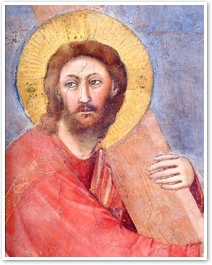
Lent is a special time of prayer, penance, sacrifice and good works in preparation of the celebration of Easter. In the desire to renew the liturgical practices of the Church, The Constitution on the Sacred Liturgy of Vatican Council II stated, “The two elements which are especially characteristic of Lent — the recalling of baptism or the preparation for it, and penance — should be given greater emphasis in the liturgy and in liturgical catechesis. It is by means of them that the Church prepares the faithful for the celebration of Easter, while they hear God’s word more frequently and devote more time to prayer” (no. 109). The word Lent itself is derived from the Anglo-Saxon words lencten, meaning “Spring,” and lenctentid, which literally means not only “Springtide” but also was the word for “March,” the month in which the majority of Lent falls.
Since the earliest times of the Church, there is evidence of some kind of Lenten preparation for Easter. For instance, St. Irenaeus (d. 203) wrote to Pope St. Victor I, commenting on the celebration of Easter and the differences between practices in the East and the West: “The dispute is not only about the day, but also about the actual character of the fast. Some think that they ought to fast for one day, some for two, others for still more; some make their ‘day’ last 40 hours on end. Such variation in the observance did not originate in our own day, but very much earlier, in the time of our forefathers” (Eusebius, History of the Church, V, 24). When Rufinus translated this passage from Greek into Latin, the punctuation made between “40” and “hours” made the meaning to appear to be “40 days, twenty-four hours a day.” The importance of the passage, nevertheless, remains that since the time of “our forefathers” — always an expression for the apostles — a 40-day period of Lenten preparation existed. However, the actual practices and duration of Lent were still not homogenous throughout the Church.
Lent becomes more regularized after the legalization of Christianity in A.D. 313. The Council of Nicea (325), in its disciplinary canons, noted that two provincial synods should be held each year, “one before the 40 days of Lent.” St. Athanasius (d. 373) in this “Festal Letters” implored his congregation to make a 40-day fast prior to the more intense fasting of Holy Week. St. Cyril of Jerusalem (d. 386) in his Catechectical Lectures, which are the paradigm for our current RCIA programs, had 18 pre-baptismal instructions given to the catechumens during Lent. St. Cyril of Alexandria (d. 444) in his series of “Festal Letters” also noted the practices and duration of Lent, emphasizing the 40-day period of fasting. Finally, Pope St. Leo (d. 461) preached that the faithful must “fulfill with their fasts the Apostolic institution of the 40 days,” again noting the apostolic origins of Lent. One can safely conclude that by the end of the fourth century, the 40-day period of Easter preparation known as Lent existed, and that prayer and fasting constituted its primary spiritual exercises.
Of course, the number “40” has always had special spiritual significance regarding preparation. On Mount Sinai, preparing to receive the Ten Commandments, “Moses stayed there with the Lord for 40 days and 40 nights, without eating any food or drinking any water” (Ex 34:28). Elijah walked “40 days and 40 nights” to the mountain of the Lord, Mount Horeb (another name for Sinai) (I Kgs 19:8). Most importantly, Jesus fasted and prayed for “40 days and 40 nights” in the desert before He began His public ministry (Mt 4:2).
Once the 40 days of Lent were established, the next development concerned how much fasting was to be done. In Jerusalem, for instance, people fasted for 40 days, Monday through Friday, but not on Saturday or Sunday, thereby making Lent last for eight weeks. In Rome and in the West, people fasted for six weeks, Monday through Saturday, thereby making Lent last for six weeks. Eventually, the practice prevailed of fasting for six days a week over the course of six weeks, and Ash Wednesday was instituted to bring the number of fast days before Easter to 40. The rules of fasting varied. First, some areas of the Church abstained from all forms of meat and animal products, while others made exceptions for food like fish. For example, Pope St. Gregory (d. 604), writing to St. Augustine of Canterbury, issued the following rule: “We abstain from flesh, meat, and from all things that come from flesh, as milk, cheese and eggs.”
Nevertheless, I was always taught, “If you gave something up for the Lord, tough it out. Don’t act like a Pharisee looking for a loophole.”
Second, the general rule was for a person to have one meal a day, in the evening or at 3 p.m.
These Lenten fasting rules also evolved. Eventually, a smaller repast was allowed during the day to keep up one’s strength from manual labor. Eating fish was allowed, and later eating meat was also allowed through the week except on Ash Wednesday and Friday. Dispensations were given for eating dairy products if a pious work was performed, and eventually this rule was relaxed totally. (However, the abstinence from even dairy products led to the practice of blessing Easter eggs and eating pancakes on Shrove Tuesday, the day before Ash Wednesday.)
Over the years, modifications have been made to the Lenten observances, making our practices not only simple but also easy. Ash Wednesday still marks the beginning of Lent, which lasts for 40 days, not including Sundays. The present fasting and abstinence laws are very simple: On Ash Wednesday and Good Friday, the faithful fast (having only one full meal a day and smaller snacks to keep up one’s strength) and abstain from meat; on the other Fridays of Lent, the faithful abstain from meat. People are still encouraged “to give up something” for Lent as a sacrifice. (An interesting note is that technically on Sundays and solemnities like St. Joseph’s Day (March 19) and the Annunciation (March 25), one is exempt and can partake of whatever has been offered up for Lent.
Nevertheless, I was always taught, “If you gave something up for the Lord, tough it out. Don’t act like a Pharisee looking for a loophole.” Moreover, an emphasis must be placed on performing spiritual works, like attending the Stations of the Cross, attending Mass, making a weekly holy hour before the Blessed Sacrament, taking time for personal prayer and spiritual reading and most especially making a good confession and receiving sacramental absolution. Although the practices may have evolved over the centuries, the focus remains the same: to repent of sin, to renew our faith and to prepare to celebrate joyfully the mysteries of our salvation.
https://www.catholiceducation.org/en/culture/catholic-contributions/history-of-lent.html
The Bible does not mention Ash Wednesday or Lent, and the early New Testament Church did not observe these days. Here is how the BBC Religion page describes Ash Wednesday and Lent:
“Ash Wednesday is the beginning of Lent for Western Christian churches. It’s a day of penitence to clean the soul before the Lent fast.
“Roman Catholic, Anglican, and some other churches hold special services at which worshippers are marked with ashes as a symbol of death and sorrow for sin…
“The Christian churches that observe Lent in the 21st century (and not all do significantly) use it as a time for prayer and penance. Only a small number of people today fast for the whole of Lent, although some maintain the practice on Ash Wednesday and Good Friday. It is more common these days for believers to surrender a particular vice such as favorite foods or smoking”
Lent is counted differently by those of the Western Catholic tradition and those of the Eastern Orthodox tradition. “ The western church excludes Sundays (which is celebrated as the day of Christ’s resurrection) whereas the eastern church includes them. The churches also start Lent on different days. Western churches start Lent on the 7th Wednesday before Easter Day (called Ash Wednesday). Eastern churches start Lent on the Monday of the 7th week before Easter and end it on the Friday 9 days before Easter. Eastern churches call this period the ‘Great Lent ‘”
Various biblical events and customs are referred to by those who celebrate these days. The Bible mentions people mourning in sackcloth and ashes. The Bible also talks about repentance and fasting, and the number 40 is prominent in various biblical events.
“The justification for the Lenten 40-day preparation for Easter is traditionally based on Jesus’ 40-day wilderness fast before His temptation by Satan ( Harper’s Bible Dictionary, ‘Lent’; Matthew 4:1-2; Mark 1:13). The problem with this explanation is that this incident is not connected in any way with Jesus’ supposed observance of Easter. The 40-day pre-Easter practice of fasting and penance did not originate in the Bible” (The Good Friday—Easter Sunday Question ).
Some have suggested that Lent may be connected to earlier, pagan holidays. In Ezekiel 8:14, the prophet in vision saw women weeping for the pagan god Tammuz. “It has been suggested by some scholars that the practice of ‘weeping for Tammuz’ was the actual origin of Lent, the Roman Catholic 40-day period of abstinence prior to Easter (starting after Mardi Gras, ‘Fat Tuesday,’ on Ash Wednesday). Consider that the name Easter itself is derived from Ishtar, the ancient Babylonian fertility goddess and Tammuz’s mother”. (See the Bible commentary on Ezekiel 8 for details. )
The Bible does teach the importance of fasting and self-examination, but it does not teach a 40-day period called Lent or an Ash Wednesday of putting ashes on the forehead. These customs appear to have pagan origins and are not practiced by the United Church of God. We seek to follow the customs and practices of the early New Testament Church as described in the Bible. For more on the biblical religious festivals, such as the Passover and the Feast of Unleavened Bread in the spring, see God’s Holy Day Plan: The Promise of Hope for All Mankind.
Many Christians throughout the world observe Lent. Catholic, Orthodox, and many Protestants benefit from this annual season of sacrifice and simplicity. Even some non-Christians observe it as a period of improvement and reflection.
People tend to view Lent in a variety of ways. For some, it is a period of going on a diet; for others, it is when Catholic co-workers show up to work with ashes on their heads and fast-food restaurants start selling fish sandwiches. So what is Lent and where did it come from?
In basic terms, Lent is the church season before Easter which lasts liturgically from Ash Wednesday until the Mass of Holy Thursday exclusive (see General Norms for the Liturgical Year and Calendar). The evening of Holy Thursday begins the The Easter Triduum, which lasts from Holy Thursday to the Evening Prayer of Easter Day. However, Lenten fasting and penance continue until the end of Holy Week, and all of Holy Week is included in the traditional 40 day Lenten fast, despite Lent ending liturgically on Holy Thursday.
We should note that in many Protestant churches, the season of Lent continues through Holy Saturday, although in current Catholic discipline, Lent ends liturgically before Holy Thursday. While Sundays are usually excluded from fasting and abstinence restrictions, and are not numbered in the traditional “40 Days” of Lent, they are still part of the Lenten season, as can be seen from their Lenten themes. So, the way Lent is observed in the Catholic Church can seem confusing, because the actual modern liturgical season (lasting 44 days, including Sundays) is numbered slightly differently than the traditional 40 day Lenten fast, which excludes Sundays.
The purpose of Lent is to be a season of fasting, self-denial, spiritual growth, conversion, and simplicity. Lent, which comes from the Teutonic (Germanic) word for springtime, can be viewed as a spiritual spring cleaning: a time for taking spiritual inventory and cleaning out those things which hinder our relationship with Jesus Christ.
Thus it is fitting that the season of Lent begin with a symbol of repentance: placing ashes mixed with oil on one’s head or forehead. However, we must remember that our Lenten disciplines are supposed to ultimately transform our entire person: body, soul, and spirit, and help us become more like Christ. Eastern Christians call this process theosis, which St. Athanasius describes as “becoming by grace what God is by nature.”
There are a few basic tasks that traditionally have been associated with Lent. Many of these have a long history. These are fasting, almsgiving, and prayer. In addition, reading the Scriptures and the Church’s Writings can help one grow during the season. Let’s look at each of these suggestions individually.
Fasting: The Western Rite of the Catholic Church expects its members age 18 to 59 to fast on Ash Wednesday and Good Friday unless a physical condition prevents it. This means only one full meal is permitted on a fast day. The Fridays of Lent are days of required abstinence, meaning meat, and soups or gravies made of meat, are not permitted. Abstinence is required of those age 14 and older. Most Protestant churches do not have these official requirements. “Giving something up” for Lent is a form of fasting, an excellent spiritual discipline. Eastern Christians have a more rigorous fast, abstaining from meat, wine, oil, dairy products, and even fish. Some people choose to give up sins (gossip, drunkenness, etc) for Lent. In this way, Lent represents a spiritual training time to overcome evil. St. Leo, for example, emphasized that fasting from wrath is required along with food. Some give up things they have a strong desire for, e.g. sweets, caffeine, etc. We have listed various things you can give up for Lent here. By giving these up, the person fasting learns to control a particular part of his or her life, which leads to greater self-discipline even when Lent is over. As such in Lent, we are able to learn, examine, and get under control our material excesses. Whatever you decide to fast from, remember, as Steven Clark likes to say: “Lent is more than a diet.” Lent is about spiritual results, not material ones. So, while losing a few pounds may be a nice side benefit, all fasting should be done for God’s glory and spiritual growth.
Prayer: Lent is a perfect time to develop or strengthen a discipline of regular prayer. The Liturgy of the Hours, an ancient practice of praying throughout the day, is a good place to start.
The Litany of the Precious Blood, The Great Litany (AnAlmsgiving (Charity): The best way to remove vice is to cultivate virtue. Lent has been a traditional time of helping the poor. While as Christians this is a year-round calling, Lent is a good time to examine ways to get involved and to make resolutions to actually do them. Giving alms can be done in more ways than just giving out money to people on the street. It can be done by helping your family, friends, and neighbors out of tight situations or being more generous to hired help. However, one of the best ways to give alms is by volunteering for a charity. There are many lay religious orders.
Scripture Reading: When facing temptation in the desert, Jesus relied on Scripture to counter the wiles of the devil. Lent is an excellent time to dive into the Bible. One way to read Scripture is to use the lectionary of the Liturgy of the Hours. This will get you through most of the Bible in two years. The Bible is even online! Reading the Church Fathers can also be helpful to spiritual growth.
History
Lent probably originated with the pre-Easter baptismal rituals of catechumens, although the number of days set aside for fasting varied according to region. Irenaeus (AD 180) testifies to the variety of durations of pre-Easter fasts in the second century. Tertullian (AD 200) suggests that Catholics fasted two days prior to Easter, but that the Montanists (a heretical sect that Tertullian later joined) fasted longer. However, the number forty, hallowed by the fasts of Moses, Elijah, and especially Jesus, probably influenced the later fixed time of 40 days.
The Canons of Nicaea (AD 325) were the first to mention 40 days of fasting. Initially the forty day Lenten fast began on a Monday, and was intended only for those who were preparing to enter the Church at Easter. Lent still begins on a Monday in many Eastern Churches. Eventually the West began Lent on Ash Wednesday, and soon the whole Church, and not just catechumens, observed the Lenten fast. The East has no equivalent to Ash Wednesday.
The earliest fasts of Lent tended to be very strict, allowing one meal a day, and even then meats, eggs, and other indulgences were forbidden. The Eastern Churches follow this today. Now, in the Western Church, only Ash Wednesday and Good Friday are enjoined as strict fast days, but Fridays are set aside for abstinence from meat.
Sundays are not a part of the Lenten fast, because Sunday is always a feast of the resurrection. However, the Sundays of Lent are still a part of the Lenten liturgical season in the Western Church, and the worship services tend to be more simple and austere than normal. They lack the Gloria, and the joyous “alleluias” of the Easter season. The Western liturgical color of Lent is violet, symbolizing royalty and penitence. Solemnities like St. Joseph and the Annunciation, take precedence over Lenten observances in the Church calendar. These days, when they fall on Fridays, do away with Lenten abstinence requirements. However, at least in the current Western Church, Lent nearly always trumps the observances of minor feast days. Too many festivals take away from the simple and penitential spirit of the Lenten season. Certain devotions and liturgies have developed during the Lenten season, including (in the West), the Stations of the Cross.















 Mws R Writings