The COVID-19 pandemic has created a seemingly endless list of tips to follow to stay safe, but there are just as many mistruths and myths about coronavirus out there. Washing one’s hands and limiting contact with as many people as possible (AKA social distancing) are still the best ways to both stay healthy and not spread the virus. But a stubborn amount of misinformation is spreading just as fast as COVID-19 itself.
To help you stay educated, the World Health Organization (WHO) and numerous other reputable medical institutions, such as Johns Hopkins Medicine, are debunking the myths surrounding COVID-19. Here are the 15 biggest ones you need to stop believing.
1Myth: There’s a coronavirus vaccine out there.
iStock
There is no vaccine for the coronavirus currently available. According to the experts at Johns Hopkins: “There is no vaccine for the new coronavirus right now. Scientists have already begun working on one but developing a vaccine that is safe and effective in human beings will take many months.”
“The first thing you’ve got to do is make sure it’s safe. When you find out it’s safe and that it induces the kind of response you want it to, then you do it in a lot of people,” Fauci said. “The first trial is, like, 45 people. Then you go into hundreds, if not thousands, of people. That’s what takes the extra eight months… If we really push, we hope that we will know by the time we get into next winter whether or not we have something that works.”
2Myth: COVID-19 was deliberately created and released by people.
Shutterstock
As those at Johns Hopkins plainly state, this myth is 100-percent false. “Viruses can change over time,” the experts continue. “Occasionally, a disease outbreak happens when a virus that is common in an animal such as a pig, bat, or bird undergoes changes and passes to humans. This is likely how the new coronavirus came to be.”
3Myth: If you can hold your breath for 10 seconds, you don’t have coronavirus.
Shutterstock
Despite what you may have seen on social media, being able to hold your breath for 10 seconds or more without coughing or feeling discomfort does not mean you don’t have COVID-19 or any other lung disease.
According to WHO, “The best way to confirm if you have the virus producing COVID-19 disease is with a laboratory test. You cannot confirm it with this breathing exercise, which can even be dangerous.”
4Myth: Ordering products from China could give you COVID-19.
iStock
COVID-19 is mainly spread through liquid droplets. So while it’s technically possible that a product ordered from China could house a virus-infected bit of liquid, the odds of that happening are almost impossible.
“I don’t think we need to get completely obsessed about packages that come in, because those types of surfaces… the virus might live there for a very short time,” Fauci told Trevor Noah on the Mar. 26 episode of Noah’s at-home The Daily Show. “But people say, ‘Should I get a package from a grocery store that says, “Made in China”?’ I wouldn’t worry about that. That’s not the issue.”
5Myth: A change in temperature can kill coronavirus.
iStock
According to WHO, “There is no reason to believe that cold weather can kill the new coronavirus or other diseases.” And they also note, “you can catch COVID-19, no matter how sunny or hot the weather is.”
“The virology of COVID-19 does not diminish in warm temperatures,” Rocio Salas-Whalen, MD, of New York Endocrinology previously told Best Life. “Although the virus may have a seasonal cycle, it is not reasonable to expect a huge decline in transmission due to warmer weather alone. We see the largest decrease in infections when people refrain from being in locations with poor ventilation and/or large crowds.”
6Myth: Taking a hot bath will protect you against coronavirus.
iStock
There may be relaxing benefits to a hot bath, but it won’t keep you from contracting coronavirus. “Taking a hot bath will not prevent you from catching COVID-19,” WHO asserts. “Your normal body temperature remains around 36.5°C to 37°C, regardless of the temperature of your bath or shower.”
7Myth: Mosquitoes can pass coronavirus from person to person.
Shutterstock
There is no evidence to suggest that coronavirus can spread via mosquitoes, according to WHO. “The new coronavirus is a respiratory virus which spreads primarily through droplets generated when an infected person coughs or sneezes, or through droplets of saliva or discharge from the nose,” the experts note.
8Myth: Bleach, silver solution, and garlic can protect you from coronavirus.
Shutterstock
There are a ton of scams that have arisen in the past few weeks, leading to a flurry of complaints from the Food and Drug Administration (FDA). There have been false claims that drinkable silver, gargling with bleach, and garlic soup can help you avoid COVID-19. Long story short, if something sounds too good to be true, then it almost certainly is. Washing your hands and limiting contact with others are still the best ways to avoid getting sick.
9Myth: Drinking alcohol can prevent you from contracting COVID-19.
iStock
Some people believe that drinking alcohol will prevent them from contracting coronavirus—so many, in fact, that WHO had to address it and debunk the myth.
It turns out, the opposite is actually true. Paul Sasha Nestadt, MD, co-director of the Johns Hopkins Anxiety Disorders Clinic, told Global Health Now, “There are risk factors with isolation, the lack of a schedule, and if alcohol is just there in the house with you. People with depression, anxiety, and substance abuse are also at higher risk when stressed.”
10Myth: Aiming a blow dryer up your nose can cure you of coronavirus.
Shutterstock
There are some people who believe that aiming a hairdryer up your nose will cure you from COVID-19. In fact, Florida politician Bryant Culpepper went so far as to brag about his background as a paramedic as he publicly promoted this “cure” that he saw “one of the foremost doctors who has studied the coronavirus” reveal on cable TV. The belief is that the hot air travels up into your nostrils and kills the contagion. But, as you likely already assumed, this “cure” is just a bunch of hot hair. Hairdryers are good for drying hair, not curing or preventing coronavirus.
11Myth: Hand dryers kill COVID-19.
Shutterstock
Just like hairdryers don’t kill COVID-19, hand dryers don’t either. WHO plainly states: “Hand dryers are not effective in killing the 2019-nCoV.” Washing your hands regularly, however, is a definite must. And if you want to know how to wash your hands effectively, check out The Best Way to Wash Your Hands to Prevent Getting Sick.
12Myth: Drinking lots of water will help you avoid COVID-19.
Shutterstock
Drinking lots of water through the course of the day is good for you, but will it help you avoid coronavirus? Nope. A frequently shared meme on Facebook, Twitter, and on text cites an unnamed Japanese doctor who claims drinking water every 15 minutes washes any virus down the esophagus so it can’t get into your lungs. Turns out, this isn’t true at all. Sure, it’s good to hydrate, but it won’t keep the COVID-19 contagion away.
13Myth: Essential oils and herbal supplements are effective ways to fight coronavirus.
Shutterstock
Nope, essential oils do not prevent coronavirus either. But that hasn’t stopped a few companies from trying to sell their products as such. The FDA called out Idaho-based company Herbal Amy for selling “unapproved and misbranded products related to coronavirus disease.” Whether it’s traditional Chinese herbs or CBD/hemp related supplements, there is currently zero evidence that herb consumption will do anything to fight or cure COVID-19
14Myth: UV disinfection lamps can kill coronavirus.
Shutterstock
Again, WHO warns, this is yet another coronavirus myth. “UV lamps should not be used to sterilize hands or other areas of skin as UV radiation can cause skin irritation,” they note.
15Myth: Malaria drugs can cure COVID-19.
Shutterstock
“To date, there is no specific medicine recommended to prevent or treat the new coronavirus,” WHO says plainly. Sadly, a man in his 60s in Arizona died after self-medicating with chloroquine phosphate in an apparent attempt to cure himself from the novel coronavirus. He and his wife reportedly ingested the household chemical, which is commonly used to clean fish tanks, in late March amid reports that hydroxychloroquine—which is approved by the FDA for treating malaria, lupus, and rheumatoid arthritis—can cure coronavirus.
Responding to the incident, Daniel Brooks, MD, Banner Poison and Drug Information Center medical director, said in a statement, “We understand that people are trying to find new ways to prevent or treat this virus. But self-medicating is not the way to do so.”
Similarly, Fauci told Noah that “there is no proven, safe, and effective direct therapy for coronavirus disease.” And though some clinical trials are underway, it’ll be months before anything is proven.
There may be no dirtier item in your wardrobe than the soles of your shoes. And while odds are still long that you would literally track the COVID-19 virus into your home that way, when you think of people who sneeze on sidewalks, the chances suddenly don’t seem so slim.
“The sole of the shoe is the breeding ground of more bacteria and fungi and viruses than the upper part of a shoe,” emergency physician Cwanza Pinckney, MD, told HuffPost. So just to be safe, don’t wear your shoes inside.
After you’ve taken off your shoes, it’s never a bad idea to also change your clothes. If you have an essential job and work in a public space, you may even want to change clothes in your garage or foyer to be safe. Most of you, however, should simply change in your bedroom, tossing your dirty clothes in a hamper away from others. After all, Daniel Kuritzkes, MD, an infectious disease expert at Brigham and Women’s Hospital, told NPR that “flat surfaces and hard surfaces are more friendly to viruses than cloth or rough surfaces.”
After you take off your clothes, hop in the shower. Anytime you go outside, “the safest course of action is to shower right when you get home,” Joshua Zeichner, MD, a New York-based dermatologist, told PopSugar.
Of course, avoid sitting on the furniture and other surfaces, and touching any household items before washing up. Use hot water and scrub portions of your body that have been exposed extra well. The same 20-second hand-washing rule applies.
Clean under your nails often.
Plenty of dirt, grime, and germs can live under your fingernails. In fact, the CDC recommends that hospital workers don’t keep their nails long or wear artificial nails, because germs can remain under your nails even after you wash your hands.
“It’s harder to get that area truly clean when washing your hands,” Elizabeth Ransom, MD, chief physician executive at Baptist Health in Jacksonville, Florida, told HuffPost. “You have to be pretty diligent cleaning these areas.”
Don’t wear your jewelry outside.
Regularly clean your hand jewelry if you’re wearing it outdoors or, better yet, don’t wear it outside at all. “Removing your rings may lead to better hand hygiene,” Ramon Tallaj, MD, a board-certified physician and chairman of the board of SOMOS Community Care, previously told Best Life. “If the rings are contaminated and you put them back on after washing your hands, you’ve just re-contaminated your hands.” And for more on this, check out Should I Ditch My Jewelry During Coronavirus? Experts Weigh In.
Wipe down your glasses regularly.
If you wear glasses every day, chances are high you’re often touching your face. “When adjusting your glasses, you often inadvertently touch your face and may be tempted to rub your eyes without washing your hands first,” Lucky Sekhon, MD, of Reproductive Medicine Associates of New York, previously told Best Life. Plus, “droplets from a person’s sneeze or cough could land on your glasses,” so it’s important to clean them frequently. And for more on what to clean in your home, here are 25 Things You Should Clean Every Day and How to Do It.
Cover your mouth with your elbow.
As the World Health Organization (WHO) notes, it’s imperative to make sure you, and the people around you, follow good respiratory hygiene. This means covering your mouth and nose with your bent elbow or a tissue when you cough or sneeze. Then dispose of the used tissue immediately.
And of course, wash your hands for 20 seconds!
Hot water. Lots of soap. At least 20 seconds. Yes, we know you’ve heard it before. But it’s critical in helping lessen the public health risk from the coronavirus outbreak.
Many countries observe Good Friday as a national holiday on the Friday before Easter. The day commemorates the crucifixion and death of Jesus Christ.
Some countries observe the Orthodox calendar in which Good Friday may occur on a different date.
What is Good Friday?
The most important events in Christianity are the death and later resurrection of Jesus Christ, who Christians believe is the Son of God, and whose life and teachings are the foundation of Christianity.
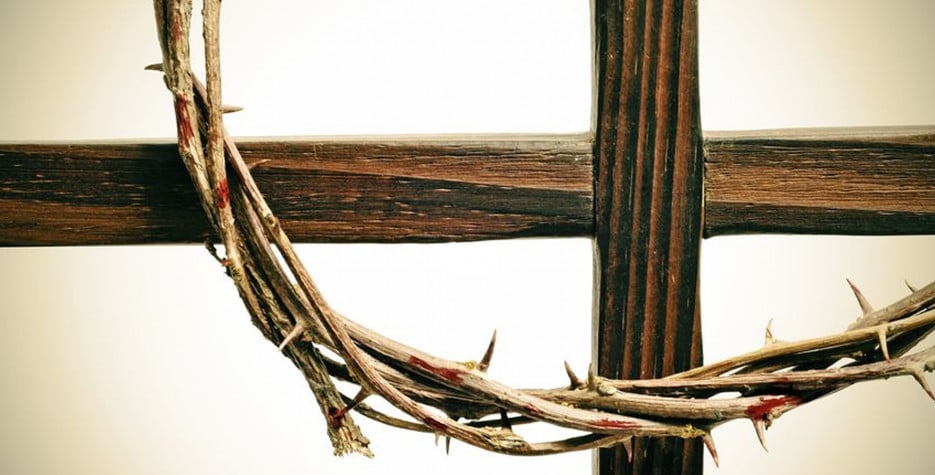
After the last supper, Jesus was arrested in the Garden of Gethsemane, put on trial, sentenced to death. He was then tied and nailed by the wrists and feet to a large wooden cross and left to die. Therefore the cross is used as a symbol of the Christian faith.
Good Friday is a day of mourning. During special Good Friday services Christians meditate on Jesus’s suffering and death on the cross, and what this means for their faith.
Why is it called ‘Good Friday’?
At first glance, it seems a strange name for a day that marked such a terrible event as a crucifixion, but when we look at the origin of the name it becomes clearer… or it would if there was one origin that people could agree on. As it stands, you can take your pick from the following:
Some say it comes from the use of “Good” as an adjective applied to the day, which is an Old English synonym for “holy.”
Others believe it stems from a corruption of the word “God,” in much the same way that “Goodbye” comes from the phrase “God be with ye.” So the name may be derived from ‘God’s Friday’.
Undoubtedly most Christians perceive the day as “good” because the message of Easter is of Christ’s victory over sin, death, and the devil. Indeed, the New Testament is also known as the Gospel, which is Greek for ‘Good News’.
Also, it also worth noting that this confusion over the name is mainly confined to Western European and North American Christians. Eastern Orthodox Christians call it “Great and Holy Friday. Around the rest of the world, it’s known as Holy Friday in most Latin nations, ‘Great Friday’ by the Slavic peoples, “Friday of Mourning” in Germany and “Long Friday” in Norway.
Good Friday Traditions
Many Church services are held in the afternoon, usually between noon to 3pm, to remember the hours when Jesus was crucified on the cross.
Some churches observe the day by re-enacting the process of the cross in the rituals of stations of the cross, which depicts the final hours of Jesus’ life. Other churches may participate in Veneration of the Cross, a short ceremony in which Christians kneel before the cross and affirm their faith.
In Jerusalem, Christians follow in Jesus’ footsteps and walk Via Dolorosa, the traditional path that led to the site of the crucifixion. Many who participate try to ritually bear the same weight Jesus did by carrying crosses on their backs.
Though it’s not a public holiday in the Vatican or Italy, the Pope will say a mass at the Vatican before leads an annual public prayer of the Stations of the Cross at the Colosseum in Rome. A procession is then made to the Palatine Hill, accompanied by a huge cross covered in burning torches.
As I rise my mind sorts through All the things of this new day I must do. No rest, even though I am tired No forgetting of troubles, I know, I have tried. So much before me still left unfinished The need to get them done has not diminished. My body’s issues and pains Make me feel like a dog that’s chained. I wish for peace down in my soul A place of safety few will ever know. With the light of a new day, I can attempt again, I hope that I find this before my end. I will keep trying, doing things over and over till it is there. One minute, one day at a time, even if it takes a whole year.










 Mws R Writings