Forearm Plank Core muscle fibers tend to shrink and become less supple as we age, which can put more strain on your back. Planks are one of the best moves you can do to keep your core muscles strong. How to do it: Place your forearms on the floor with your elbows aligned below your shoulders and your arms parallel to your body about shoulder-width apart. Close your hands into fists. Push your toes into the floor and squeeze your glutes to stabilize the bottom half of your body. Be careful not to lock your knees. Neutralize your neck and spine by looking at the floor about a foot in front of your hands. Your head should be in line with your spine. Try to hold this position for 20 seconds. As you get more comfortable and your core gets stronger, hold the plank for as long as possible without sacrificing form or breath.Downward Dog Split with Knee Drive This is another great move for the core. It is particularly good for strengthening the obliques (the muscles on the sides of your core). How to do it: Start on your hands and knees with your wrists directly under your shoulders and your knees directly under your hips. Spread your fingers wide apart and press firmly through your knuckles and palms, distributing your weight evenly across your hands. Tuck your toes and lift your butt toward the ceiling as you extend your legs without locking your knees. Bring your body into the shape of an upside-down “V.” Then raise your right leg to move into the downward dog split. Bend your right knee and pull it toward your tummy and then toward your forehead. Then straighten and raise your leg back up toward the ceiling. Bend your knee and this time, bring it in toward your tummy and eventually toward your right elbow. Straighten your leg again, then bring your knee across your tummy and toward your left elbow. Repeat three times. Switch legs and repeat.Chair Dip
You’ll tighten weak and flabby triceps with this exercise. How to do it: Sit on a sturdy chair. Place your palms against the seat of the chair, next to your hips, and scoot your butt forward until it comes off the chair and you are supporting your body weight with your arms and legs. Bend your legs at a 90-degree angle. Bend your elbows back and slowly lower your butt toward the floor. Keep your elbows tucked in. Your body should just clear the seat. Push back up until your arms are extended straight, but don’t use your feet for help. Do 8 to 15 reps.Biceps Curl
Tone and strengthen your biceps, which will help you with independence and mobility as you get older. How to do it: Place a resistance band under your right foot. Hold one end of the band in each hand. Bend your elbows as you curl your hands toward your upper arms. Pull up for 2 seconds, breathing out as you raise the band, then release for 3 seconds. Make sure that you only move your arms, not your upper body. Do six reps, then switch to the left foot and do six more. For an added balance challenge, try standing on one leg while you perform the curls.
Squat
Squats are a fantastic way to tone your legs, glutes, and core muscles all at once. They help with balance and flexibility to prevent age-related falls.
How to do it: Stand with your feet flat on the floor. Push your butt back and bend your knees down into a squat, no farther than 90 degrees. As you lower, raise both arms forward. At your lowest point, your glutes should be back as if you were going to sit down in a chair and your weight should be on your heels. If you are in the proper position, you should be able to raise your toes off the floor and you should be able to see your toes. Return to starting position as you lower your arms to your sides.
Children with anxiety may experience some physical symptoms we typically associate with physical illnesses — like stomachaches and headaches, for example. It’s important to be aware of these physical signs of childhood anxiety because more and more children are affected by anxiety every day. According to the Centers for Disease Control and Prevention (CDC), in the U.S. alone, over 4.4 million children between ages 3 and 17 have diagnosed anxiety.
Here’s what our community shared:
1. Stomachaches and/or Vomiting
One of the most common symptoms of childhood anxiety is abdominal pain, or stomachaches, which can sometimes lead to vomiting. This is because the brain and gut are highly connected.
“If we think of the brain as a stereo receiver and speakers, it helps us understand how the gut-brain axis works. The gut reports pain to the spine, which relays the pain signals to the brain,” Nicole Sawangpont Pattamunch, Ph.D., director of general GI and GI education director at Seattle Children’s hospital said. “Children under stress, whether it be physical or emotional, will often have the volume dial turned up on their stereo receiver. How the brain receives and interprets the pain signal is highly tied to our emotional state.”
Awful stomachaches to the point where the nurse called my mother and said I was faking. I would be on the floor before school with such awful pains in my stomach. I went to so many stomach doctors and was told it was IBS, but now that I know how I feel when my anxiety is bad, I know that the doctors were wrong. None of them took a minute to think it could have been anxiety. — Amber A.
I vomit when I have severe anxiety. Did as a child growing up. — Deborah A.
A symptom of anxiety I had as a child was stomach aches. It got to a point where I needed ultrasounds to see why my stomach hurt, but as an adult I see it was because of anxiety. — Savannah W.
2. Headaches
Like adults, children can experience headaches as a result of anxiety or heightened stress. According to the Anxiety and Depression Association of America (ADAA), migraines and chronic daily headaches are also common in people who live with anxiety disorders.
Debilitating headaches that would last hours a day, nearly every day from middle school throughout high school. I got used to them because I had to, but they made everything so much harder to do. My mom would ask my doctors about them and they always blew them off, leaving me feeling like I was making them up and that they weren’t really as bad as they were. I never knew if they were tension headaches or migraines or what to call them. — Kimberly B.
3. Dizziness or Fainting
Dizziness in children is often linked to dehydration, but can also be due to anxiety. According to the Boston Children’s Hospital, a child who feels faint or dizzy might use terms like, “woozy,” “foggy” or “cloudy” to describe what they are experiencing.
Dizziness. I used to get so dizzy and convince myself I was going to faint. — Tracy K.
Was dizzy often and always scared. — Kellee S.
4. Heart Palpitations or Chest Pain
In adults, chest pain is often linked to cardiac problems, but in children, less than 2% of patients receive a cardiac diagnosis for their chest pain, according to a 2012 study. In the study, researchers found children with noncardiac chest pain reported higher levels of anxiety sensitivity.
Heart palpitations. I think every single time I’d have anxiety I’d feel my heart rev into gear and then go into full-blown panic. — Kristi A.
Left me with reoccurring chest pain throughout my adult life as an adult with anxiety. — Justine H.
Chest pain/heart palpitations and headaches/dizziness. I didn’t know it was anxiety at the time so I always thought I was going to die because of a heart issue or something. Missed so much class due to sick days and the times I was at school I remember hiding in the washroom trembling uncontrollably waiting for my panic attacks to end but wondering if/when I was finally gonna die. Not fun times. — Alicia C.
5. Hives
Ever notice when you get stressed, your skin starts to break out? Stress and anxiety can trigger acne breakouts or can even cause you to get hives on your skin. For children or adults who already have skin conditions like psoriasis, an autoimmune skin disease that causes red, scaly patches to appear on the skin, stress can trigger a flare-up.
I had hives on my arms and neck. — Katy K.
I broke out in hives constantly on my face as a child with anxiety. — Lisa D.
Severe blushing all over my body. At the time, I didn’t know it was related to anxiety. I just thought I was weirdly sensitive to heat and touch but now I know I was having severe panic attacks that would leave me bloodshot all over my body. — Mary T.
6. Loss of Appetite
Stress and anxiety sometimes suppress our appetites to help us deal with pressure. This can be true in cases of childhood anxiety. In many cases, once the stress resides, a child’s appetite will return.
I couldn’t eat. Started not eating at school and only at home. Eventually stopped eating at home as well. I was in second grade. It continued until fourth grade. I still periodically can’t eat due to nerves and nausea, but it’s nothing like it was. I didn’t know it was anxiety when I was small. I just knew I felt sick and couldn’t swallow food. — Melissa H.
7. Skin Picking or Other Body-Focused Repetitive Behaviors
According to the TLC Foundation for Body-Focused Repetitive Behaviors, body-focused repetitive behaviors (BFRBs) like scratching, compulsive skin picking or hair pulling are seldom self-harm. In most cases, people engage in BFRBs as a way to self-soothe or alleviate anxiety.
I have scarring on the inside of my mouth thanks to chewing my cheeks when I was anxious. — Amity L.
I used to pull out my hair, one strand at a time, until I had bald spots all over my scalp. It was so embarrassing, but I would do it without even recognizing what I was doing. — Jillian H.
Chewed on my fingers and nails and skin around my nails until they bled. If that wasn’t working I would, and still do, chew on the skin on my upper and lower lip. — Katherine S.
8. Shortness of Breath
Children who have difficulty breathing sometimes have health issues like asthma, lung disease or pneumonia, but in some cases, shortness of breath can be related to anxiety. Anxiety-reducing strategies like exercise and deep breathing may help a child with this symptom.
Shortness of breath. My pediatrician kept dismissing it as my asthma. I didn’t find out it was anxiety until I was 15 and went to a new doctor. — Arena G.
9. Gas and Diarrhea
Indigestion, gas and diarrhea can be common physical symptoms of anxiety in adults and children. Whether related to anxiety or a different physical condition, if you or a child in your life is experiencing gastrointestinal issues, it’s important to seek treatment.
My anxiety hit my gut resulting in cramps, gas and sometimes diarrhea which, as you can imagine, caused some pretty rough times in social situations. To make matters worse, the fear and anxiety of having those embarrassing moments, led to more intestinal irritation, so I was caught in a vicious cycle. Trying to go to college a few years ago (at age 56), the issues almost caused me to drop out. — Vicki L.
Every January, curious Googlers search for this elimination diet every January, which puts a 30-day ban on added sugar, soy, beans, peanuts, sweeteners, grains, dairy, almost all processed foods, and booze. (If you consume one of said substances, even on day 25, you have to start all over). The theory is that these things cause inflammation in your body, and skipping them will curb cravings and boost your metabolism.
But while slashing processed foods and alcohol is definitely not not good for you, there’s no evidence that following this plan will squash your chip cravings or spike the amount of cals you burn, says Jessica Cording, RD, author of The Little Book of Game Changers. As for the suggestion that this or any diet can “reset” your body…well, take that claim with a big grain of pink Himalayan salt, says Cording.
Going pegan
Created in 2014 by Mark Hyman, MD, this bb is a mashup of paleo (no processed foods, dairy, alcohol, added sugar, or grains) and veganism (no animal products). Yet some sustainably raised, grass-fed animal protein and fish and eggs are allowed, as are gluten-free grains and beans. So…? “It’s just a more restrictive version of the Mediterranean diet,” says Scott Keatley, RDN. “It’s heavy on fish and healthy fat, but it demonizes dairy and gluten, which are fine for most people.” FWIW, telling the average person that nutrient-rich foods are bad for them just encourages a shame-y relationship with eating. (Not the healthiest news, considering Pinterest searches for “eating pegan” skyrocketed 337 percent last year.)
Intermittent fasting
Okay, so this emotional roller coaster of a diet involves eating whatever you want—but only during certain hours or on certain days of the week. Then you go long periods (like, up to 16 hours) without ingesting anything. Google searches for this fad hit an all-time high last January and show no signs of stopping. But science is way less enthusiastic. Studies suggest that calorie restriction can increase life span in animals—but not, so far, in humans. And fasting does def cause some people to go HAM when they do eat. “We’re wired to consume more after restricting,” says Cording. So to repeat: This. Is. Pointless.
I’ve done Atkins and South Beach. I once dabbled in calorie counting before going raw vegan. When that left me exhausted, I tried paleo. For 10 years, I micromanaged everything I ate to the point of obsession. But no matter how diligent I was (or how long I lurked on diet message boards), all I thought about were cookies. I started dreaming of being a food writer because I was so passionate about bougie food—but turns out, I was just hungry. My new lifestyle: less effs, more carbs. Now, my appetite issues are healed. I sleep better, have more energy, and no longer obsess over pasta—I just eat it. And I finally feel like a human again.
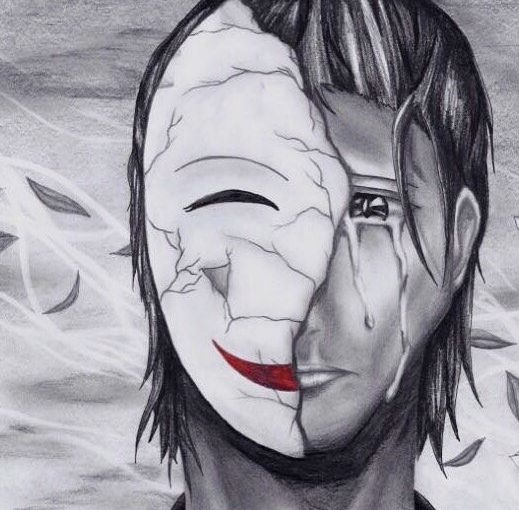
Nothing was worse then the thoughts in her own mind. Sometimes she looked for a place to which she could hide. Often she sat and her mind worked through a situation.One that had not happened and that really gave her no satisfaction. Why must she torture herself that way? What was the reason in her mind she would replay? Things that needed to be forgotten, people in her life that always seemed rotten. This was the way most of her mind would be, she was not sure, ever, what tomorrow would bring. She was a Shatter-ling. She was easily shattered. It sometimes took just a look, but mostly it was from mean and hurtful chatter. Whenever she was faced with what others thought of her ways, she felt cornered and caged, just like an animal, who has to stand against someone else’s rage.
She would literally shatter a little more than the last time. Maybe it all was something just in her own mind. Either way she could not seem to matter, instead each argument, each taunt, would send her spiraling down the highway of matter, back to where she would eventually shatter. Being a Shatter-ling meant things would not bounce off of her, instead they penetrated her. Each time would be like the first, to her. Didn’t matter much if it was intentional or not, all she knew is it hurt the same , as if someone threw at her, a giant rock. To be a Shatter-ling was not a good thing, it was hard and trying, and a very difficult thing. She wished she could be like her friends and family, the ones who let things go past, and the ones who never seemed to be affected by someone’s tongue lash. She just wasn’t. She probably never would.
A New Year’s Gift is a story about infidelity and whether a woman’s risks for love match her lover’s loyalty. “I wished for a New Year’s gift–the gift of your heart.”
Gabriel Metsu, Man Writing a Letter, 1650s
Jacques de Randal, having dined at home alone, told his valet he might go out, and he sat down at his table to write some letters.
He ended every year in this manner, writing and dreaming. He reviewed the events of his life since last New Year’s Day, things that were now all over and dead; and, in proportion as the faces of his friends rose up before his eyes, he wrote them a few lines, a cordial New Year’s greeting on the first of January.
So he sat down, opened a drawer, took out of it a woman’s photograph, gazed at it a few moments, and kissed it. Then, having laid it beside a sheet of notepaper, he began:
MY DEAR IRENE: You must by this time have received the little souvenir I sent, you addressed to the maid. I have shut myself up this evening in order to tell you—-“
The pen here ceased to move. Jacques rose up and began walking up and down the room.
For the last ten months he had had a sweetheart, not like the others, a woman with whom one engages in a passing intrigue, of the theatrical world or the demi-monde, but a woman whom he loved and won. He was no longer a young man, although he was still comparatively young for a man, and he looked on life seriously in a positive and practical spirit.
Accordingly, he drew up the balance sheet of his passion, as he drew up every year the balance sheet of friendships that were ended or freshly contracted, of circumstances and persons that had entered into his life.
His first ardor of love having grown calmer, he asked himself with the precision of a merchant making a calculation what was the state of his heart with regard to her, and he tried to form an idea of what it would be in the future.
He found there a great and deep affection; made up of tenderness, gratitude and the thousand subtleties which give birth to long and powerful attachments.
A ring at the bell made him start. He hesitated. Should he open the door? But he said to himself that one must always open the door on New Year’s night, to admit the unknown who is passing by and knocks, no matter who it may be.
So he took a wax candle, passed through the antechamber, drew back the bolts, turned the key, pulled the door back, and saw his sweetheart standing pale as a corpse, leaning against the wall.
He stammered:
“What is the matter with you?”
She replied:
“Are you alone?”
“Yes.”
“Without servants?”
“Yes.”
“You are not going out?”
“No.”
She entered with the air of a woman who knew the house. As soon as she was in the drawing-room, she sank down on the sofa, and, covering her face with her hands, began to weep bitterly.
He knelt down at her feet, and tried to remove her hands from her eyes, so that he might look at them, and exclaimed:
“Irene, Irene, what is the matter with you? I implore you to tell me what is the matter with you?”
Then, amid her sobs, she murmured:
“I can no longer live like this.”
“Live like this? What do you mean?”
“Yes. I can no longer live like this. I have endured so much. He struck me this afternoon.”
“Who? Your husband?”
“Yes, my husband.”
“Ah!”
He was astonished, having never suspected that her husband could be brutal. He was a man of the world, of the better class, a clubman, a lover of horses, a theatergoer and an expert swordsman; he was known, talked about, appreciated everywhere, having very courteous manners, a very mediocre intellect, an absence of education and of the real culture needed in order to think like all well-bred people, and finally a respect for conventionalities.
He appeared to devote himself to his wife, as a man ought to do in the case of wealthy and well-bred people. He displayed enough of anxiety about her wishes, her health, her dresses, and, beyond that, left her perfectly free.
Randal, having become Irene’s friend, had a right to the affectionate hand-clasp which every husband endowed with good manners owes to his wife’s intimate acquaintance. Then, when Jacques, after having been for some time the friend, became the lover, his relations with the husband were more cordial, as is fitting.
Jacques had never dreamed that there were storms in this household, and he was bewildered at this unexpected revelation.
He asked:
“How did it happen? Tell me.”
Thereupon she related a long story, the entire history of her life since the day of her marriage, the first disagreement arising out of a mere nothing, then becoming accentuated at every new difference of opinion between two dissimilar dispositions.
Then came quarrels, a complete separation, not apparent, but real; next, her husband showed himself aggressive, suspicious, violent. Now, he was jealous, jealous of Jacques, and that very day, after a scene, he had struck her.
She added with decision: “I will not go back to him. Do with me what you like.”
Jacques sat down opposite to her, their knees touching. He took her hands:
“My dear love, you are going to commit a gross, an irreparable folly. If you want to leave your husband, put him in the wrong, so that your position as a woman of the world may be saved.”
She asked, as she looked at him uneasily:
“Then, what do you advise me?”
“To go back home and to put up with your life there till the day when you can obtain either a separation or a divorce, with the honors of war.”
“Is not this thing which you advise me to do a little cowardly?”
“No; it is wise and sensible. You have a high position, a reputation to protect, friends to preserve and relations to deal with. You must not lose all these through a mere caprice.”
She rose up, and said with violence:
“Well, no! I cannot stand it any longer! It is at an end! it is at an end!”
Then, placing her two hands on her lover’s shoulders, and looking him straight in the face, she asked:
“Do you love me?”
“Yes.”
“Really and truly?”
“Yes.”
“Then take care of me.”
He exclaimed:
“Take care of you? In my own house? Here? Why, you are mad. It would mean losing you forever; losing you beyond hope of recall! You are mad!”
She replied, slowly and seriously, like a woman who feels the weight of her words:
“Listen, Jacques. He has forbidden me to see you again, and I will not play this comedy of coming secretly to your house. You must either lose me or take me.”
“My dear Irene, in that case, obtain your divorce, and I will marry you.”
“Yes, you will marry me in–two years at the soonest. Yours is a patient love.”
“Look here! Reflect! If you remain here he’ll come to-morrow to take you away, seeing that he is your husband, seeing that he has right and law on his side.”
“I did not ask you to keep me in your own house, Jacques, but to take me anywhere you like. I thought you loved me enough to do that. I have made a mistake. Good-by!”
She turned round and went toward the door so quickly that he was only able to catch hold of her when she was outside the room:
“Listen, Irene.”
She struggled, and would not listen to him. Her eyes were full of tears, and she stammered:
“Let me alone! let me alone! let me alone!”
He made her sit down by force, and once more falling on his knees at her feet, he now brought forward a number of arguments and counsels to make her understand the folly and terrible risk of her project. He omitted nothing which he deemed necessary to convince her, finding even in his very affection for her incentives to persuasion.
As she remained silent and cold as ice, he begged of her, implored of her to listen to him, to trust him, to follow his advice.
When he had finished speaking, she only replied:
“Are you disposed to let me go away now? Take away your hands, so that I may rise to my feet.”
“Look here, Irene.”
“Will you let me go?”
“Irene–is your resolution irrevocable?”
“Will you let me go.”
“Tell me only whether this resolution, this mad resolution of yours, which you will bitterly regret, is irrevocable?”
“Yes–let me go!”
“Then stay. You know well that you are at home here. We shall go away to-morrow morning.”
She rose to her feet in spite of him, and said in a hard tone:
“No. It is too late. I do not want sacrifice; I do not want devotion.”
“Stay! I have done what I ought to do; I have said what I ought to say. I have no further responsibility on your behalf. My conscience is at peace. Tell me what you want me to do, and I will obey.”‘
She resumed her seat, looked at him for a long time, and then asked, in a very calm voice:
“Well, then, explain.”
“Explain what? What do you wish me to explain?”
“Everything–everything that you thought about before changing your mind. Then I will see what I ought to do.”
“But I thought about nothing at all. I had to warn you that you were going to commit an act of folly. You persist; then I ask to share in this act of folly, and I even insist on it.”
“It is not natural to change one’s mind so quickly.”
“Listen, my dear love. It is not a question here of sacrifice or devotion. On the day when I realized that I loved you, I said to myself what every lover ought to say to himself in the same case: ‘The man who loves a woman, who makes an effort to win her, who gets her, and who takes her, enters into a sacred contract with himself and with her. That is, of course, in dealing with a woman like you, not a woman with a fickle heart and easily impressed.’
“Marriage which has a great social value, a great legal value, possesses in my eyes only a very slight moral value, taking into account the conditions under which it generally takes place.
“Therefore, when a woman, united by this lawful bond, but having no attachment to her husband, whom she cannot love, a woman whose heart is free, meets a man whom she cares for, and gives herself to him, when a man who has no other tie, takes a woman in this way, I say that they pledge themselves toward each other by this mutual and free agreement much more than by the ‘Yes’ uttered in the presence of the mayor.
“I say that, if they are both honorable persons, their union must be more intimate, more real, more wholesome, than if all the sacraments had consecrated it.
“This woman risks everything. And it is exactly because she knows it, because she gives everything, her heart, her body, her soul, her honor, her life, because she has foreseen all miseries, all dangers all catastrophes, because she dares to do a bold act, an intrepid act, because she is prepared, determined to brave everything–her husband, who might kill her, and society, which may cast her out. This is why she is worthy of respect in the midst of her conjugal infidelity; this is why her lover, in taking her, should also foresee everything, and prefer her to every one else whatever may happen. I have nothing more to say. I spoke in the beginning like a sensible man whose duty it was to warn you; and now I am only a man–a man who loves you–Command, and I obey.”
Radiant, she closed his mouth with a kiss, and said in a low tone:
“It is not true, darling! There is nothing the matter! My husband does not suspect anything. But I wanted to see, I wanted to know, what you would do I wished for a New Year’s gift–the gift of your heart–another gift besides the necklace you sent me. You have given it to me. Thanks! thanks! God be thanked for the happiness you have given me!”
A New Year’s Gift was featured as The Short Story of the Day on Sat, Dec 29, 2018