Weird Words/Did You Know?

Keto Hawaiian Rolls

img

INGREDIENTS

  • 1 1/2 cups Almond Flour
  • 2 tsp Baking Powder
  • 3/4 cup Swerve (powdered)
  • 3 cups Mozzarella cheese, shredded
  • 3 oz cream cheese
  • 2 eggs
  • 6 drops Lorann Pineapple oil
  • 1 tsp fresh ginger paste

INSTRUCTIONS

  1. Gather all of the ingredients first and measure them out.  This is important because once you melt the mozzarella cheese you will need to combine the ingredients quickly before it cools down.
  2. Place the Almond flour, baking powder and Swerve into a medium size bowl and mix the ingredients until they are combined.
  3. Place the Mozzarella cheese and cream cheese in a microwave-safe container and cook it on high for about a minute and a half or until the cheese is melted.  You can use a double broiler for this part if you prefer.
  4. Pour the melted cheeses mixture into the medium bowl filled with the dry ingredients.
  5. Add the eggs, fresh ginger, and Lorann Pineapple oil.
  6. Mix the ingredients until it’s fully combined.  The dough will be sticky.
  7. Place the dough on a silicone mat or parchment paper to continue kneading the dough together until if forms.  It will get less sticky the more you knead it but it will always be a bit sticky.
  8. Cut the dough into 10 even parts.
  9. Roll each part into a ball.
  10. Place the dough ball into a well greased baking pan.
  11. Bake it at 425 degrees for about 15 to 20 minutes or until golden brown.
  12. Use a knife to separate the lines before you pull each roll out of the pan.  The bottom of the rolls should have a nice brown crust.

Nutrition  ×Serving: 1g, Calories: 189kcal, Carbohydrates: 6.2g, Protein: 16.1g, Fat: 12.3g, Cholesterol: 51.9mg, Sodium: 297.2mg, Fiber: 2.4g, Sugar: 1.6g

Flat Belly Tips

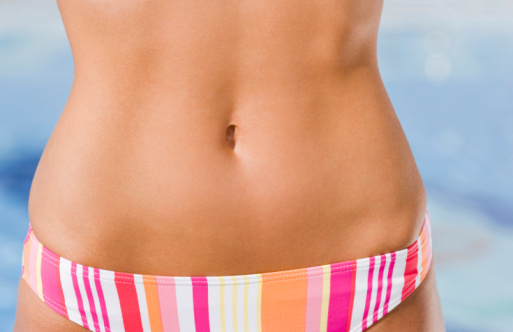
Muffin tops used to be something good, as in yummy. Today the phrase refers to that ugly spillover of fat at your waist.

Belly fat is more than unsightly. The overflow you see is just regular old fat. Scientists call it “subcutaneous,” which just means “under the skin.” But underneath that visible fat often lurks a hidden layer of fat, called visceral fat, made up of active cells that can trigger an inflammatory process in the body. Inflammation has been linked to everything from diabetes to heart disease, cancer and Alzheimer’s disease. So, not only ugly, it’s dangerous.

Fortunately, science has discovered many different ways to attack both kinds of fat and blast them away. Here are seven ways to whittle your waist and get a flat belly:

1. Lose weight with diet and exercise.
When you drop pounds, no matter how you do it, your belly will definitely shrink. But a study at the University of Alabama in Birmingham found that the women participants, who lost an average of 24 pounds lost both visceral and subcutaneous fat. But only those women who kept up their exercise programs after their weight loss—only 40 minutes twice a week—maintained that visceral fat loss while the others experienced a 33 percent increase in this dangerous form of belly fat.

2. Go all out, then rest.
That’s a description of an exercise program called high-intensity interval training, or HIIT for short. Studies at the University of Virginia, Australia, and elsewhere have found that it specifically targets belly fat while helping to preserve muscle. Basically, it’s any high intensity exercise that you do for a certain period of time (even just a minute) then drop the intensity (say for 30 seconds), then repeat. To be considered high intensity, you should be exercising at 80 to 95 percent of your maximum heart rate—the max number of times your heart will beat in a minute “without overexerting yourself,” according to American College of Sports Medicine. Think running or speedwalking rather than jogging.

But, says the ACSM, HIIT can be easily modified for people of all fitness levels and even those with conditions such as obesity and diabetes. You can do high intensity intervals in your water aerobics or spin class, on the elliptical or rowing machine at the gym, or on your daily walk. Bonus: Not only does it provide similar fitness benefits as endurance activities, it actually burns more calories, usually for hours after you exercise. So, calculate 80 to 95 percent of your max heart rate (it varies with age) and wear a heart rate monitor to make sure you hit the mark. And watch your belly shrink right under your nose. (Always check with your doctor before starting any exercise program.)

3. Cut down on sugar.
It’s not just about the calories. It’s also about cortisol, the chemical your body makes when you’re stressed out. Cortisol contributes to belly fat and, as it turns out, says a 2013 study published in journal Obesity, having high cortisol levels and eating too much sugar magnifies the effect. A similar study published in 2016 confirmed that sugar consumption—in this particular case, sugar-sweetened beverages—is linked to more visceral belly fat and higher levels of cortisol.

4. Speed up the crunches.
Crunches alone aren’t going to reduce belly fat, particularly the dangerous fat deep under the skin, though doing core exercises can help strengthen those muscles so the fat is reined in a bit. The ab muscles are, after all, like a natural girdle. But a 2008 study in the Journal of Strength and Conditioning Research found that speeding up those crunches (one per second) while still maintaining good form helps activate the muscles that can help tighten up your belly. Talk to your doctor before speed crunching and, if possible, have a skilled trainer check your form.

5. Get out and walk.
All you need is a pair of good sneakers for this one. Researchers at the College of Sports Science at Sungkyunkwan University in Korea provided some of the latest evidence for the benefits of walking to blast belly fat. In their study, published in the Journal of Exercise, Nutrition and Biochemistry, they found that obese menopausal women who participated in a walking program (three days a week, for 50 to 70 minutes, at about two-thirds of their maximum heart rate) significantly reduced both visceral and subcutaneous fat compared to a similar group who remained sedentary. Their fat cells actually shrunk, the researchers reported, and the regular walks appeared to also reduce some symptoms of a prediabetic condition called insulin resistance that is characterized by, among other things, a large waist size and elevated blood sugar.

6. Sleep!
Like too much sugar, too little sleep can nudge your production of cortisol, the stress hormone, which tells the body to accumulate fat around your middle. Cortisol can also trigger cravings for high sugar and high-fat foods, adding insult to injury. Too much sleep has also been linked to belly fat accumulation. A recent study in the journal, SLEEP, found that people sleeping fewer than five hours a night had a 32 percent gain in visceral fat versus a 13 percent gain in people snoozing for six or seven hours a night. Sleeping eight hours was linked to a 22 percent gain in the deadly form of belly fat. Your best belly bet: Stick to six to seven hours of sleep.

7. Relax, chill, find your peaceful place.
You’ve heard it already: Too much of the stress hormone cortisol equals too many inches around your waist. This particular fat storage issue is probably caused in part by the sugar and fat cravings that cortisol brings to the party, but it’s also because the stress hormone tells the body to store fat in your midsection. It sends the signal that you’re in survival mode—it can’t be more specific—so your body stores all your calories as fat in that warehouse you call your waist, where it can be accessed quickly in case of emergency. There’s a sort of logic there we can all appreciate, until it’s time to button our pants. To cut back on cortisol, you need to cut back on your reactions to stress. Among the best ways to do both are by learning to meditate (one study found it cut cortisol by 20 percent over a four-month practice); listening to your favorite playlist (Japanese researchers found that it slashed cortisol by 66 percent), get a massage (it cut cortisol by a third in study participants at the University of Miami), or do something spiritual (University of Mississippi researchers found that church-going slashed cortisol by a quarter).

Things You May Or May Not Know About Processed Foods

https://www.msn.com/en-us/health/nutrition/heres-why-ultra-processed-foods-are-so-bad-for-your-health/ar-BBTBzxz?ocid=spartandhp

Increasing the amount of ultra-processed foods that you eat also shortens your life, according to a new study. The research, published in JAMA Internal Medicine, tracked nearly 45,000 French men and women over eight years. It found that for every 10 percent increase in the amount of ultra-processed foods the participants ate, risk of death went up 1 percent.

Ultra-processed foods fall at the far end of the NOVA food classification system, which breaks what you eat down into four categories: unprocessed foods (edible parts of plants and animals); processed ingredients (like oils, flour, or sugar); processed foods (which involve cooking unprocessed foods with processed ingredients to make breads or canned vegetables); and ultra-processed foods (which don’t have any intact, unprocessed parts).

These ultra-processed foods are mostly made from substances derived from other foods, preservatives, and additives—designed to create convenient and long-lasting products. Both processed and ultra-processed foods can add excess sugars, oils, and fats to a diet, notes Claire Berryman, an assistant professor in the department of nutrition, food, and exercise sciences at Florida State University. Ultra-processed foods, though, take the amount to the next level—and also contain additives and other highly manufactured ingredients.

The JAMA Internal Medicine research can’t say these foods caused an earlier death, just that they’re associated with an early death. It’s not possible, therefore, to say what exactly in these foods contributes to the problems. However, the high amounts of bad-for-you ingredients are likely to play a role, Berryman says. “Any time you’re getting an excess of sugar, fat, or salt, there can be problems.” Here’s what’s hiding in the packaging:

Lots of sugar

Ultra-processed foods have, on average, eight times more added sugars than processed foods. So, as people eat more ultra-processed foods, naturally their added sugar intake goes up along with it—which can have negative effects on health. Reports by the World Health Organization, the American Heart Association, and other groups show that eating more added sugars increases the risk for diabetes, hypertension, cancer, and stroke. Consuming added sugar also increases the risk of dying from cardiovascular disease.

Lots of salt

These foods also have higher amounts of sodium—in the JAMA Internal Medicine study, people who ate more processed foods also consumed more sodium. “We know that when you over-consume salt you can contribute to increases in blood pressure [and] hypertension,” Berryman says. In addition, high salt intake is associated with a higher risk of dying from cardiovascular disease.

Fats and saturated fats

The more ultra-processed foods someone eats, the more likely they are to eat a diet that’s higher in saturated fats. “They’re often added to foods for flavor,” says Cristina Swartz, a clinical oncology dietitian at Northwestern Medicine Delnor Hospital. “Saturated fat is a well-known risk factor for increasing LDL cholesterol, which can put you at risk for cardiovascular disease. It’s something that should be limited.”

Crowding out nutrients

Eating a diet high in ultra-processed foods is also associated with eating a diet lower in fiber, which decreases risk of death. The new study found that for every 10 percent increase in the amount of ultra-processed food someone ate, the amount of fiber they consumed dropped off significantly. “Excessive intake of these foods can displace the intake of nutrients like vitamins, minerals, and fiber from whole foods,” Swartz says.

Additives and preservatives

Trans fats, which used to be common in ultra-processed foods, were banned by the Food and Drug Administration because of their clear link to high cholesterol and heart disease. But trans fats are just one of the additives manufacturers add to foods. Some research has raised questions about the health effects of others, like high fructose corn syrup, says Berryman, but there isn’t conclusive evidence available to say for sure what they are.

“Sometimes these additives are derived from natural products, but we don’t know the chemical and physical effects the food has on our bodies,” she says. “There’s lots of research in our future, and some additives might have a similar fate to trans fats.”

However, just because ultra-processed foods can increase overall risk of death doesn’t mean eating them is going to immediately kill someone—it’s still fine to have some ice cream. Living a healthy life means making sure most of your diet comes from minimally processed foods, Berryman says, but eating something high in sugar isn’t going to send you straight to the grave. “Everything in moderation,” Berryman says. “You don’t want to deprive yourself.”

Poem

Listening Heart

Let the feelings flow

Take the good and bad, you know.

Things will always have 2 ways,

Let it compel you to pray

Get rid of your inhibitions, it will be okay.

If you let yourself, that inner spirit

Your heart will hear it.

Your listening heart will know

That other person’s beautiful soul.

MwsR ❤️

Poem

Listening Heart

Let the feelings flow

Take the good and bad, you know.

Things will always have 2 ways,

Let it compel you to pray

Get rid of your inhibitions, it will be okay.

If you let yourself, that inner spirit

Your heart will hear it.

Your listening heart will know

That other person’s beautiful soul.

MwsR ❤️

Poem

Road by MwsR

The road ahead may not be where you imagined you would go,

It may not twist or turn but only lengthen so.

One must try to find a way making it bearable,

So you can continue if need be and if able.

On any road there is surprises, things not ever seen before

But you are the one who must search for more.

After all a road is available for anyone who goes searching

It can be simple or all consuming.

Travel smart, travel prepared as to not get lost or have to be trapped there.

If you find it keeps going on and on,

Keep hope inside you to get to where you belong.