Beautifully Designed~ Amazing Animals

If you are wondering weather the tiny and cute creatures featured here are real, the answer is yes. They do exist. While the distinct honour of being the world’s largest monkeys go to the Mandrill Monkeys,( relatives of the baboons) , the tiny primates pictured here are the proud holders of the title, ‘the world’s tiniest monkeys’.

Aptly called Finger monkeys for their diminutive size, these teeny weeny monkeys are nothing more than 5-6 inches in size (not including the tail which can grow up to 8-9 inches. )They are said to be lighter than an apple,weighing only about 130-140 g: just 140 grams (0.3 pounds) for males and 120 grams for females.

http://archives.sundayobserver.lk/2011/10/23/jun07.asp

Even though they are called Finger monkeys ,dwarf monkeys or pocket monkeys by many, their offical name is Pygmy marmoset (Callithrix pymaea).

These primates belong to the family Callitrichidae, species Cebuella and genus C. pygmaea.The marmosets are part of a primitive family of monkeys of the New World, including tamarins too.

Where are these adorable monkeys found? In the rain forests of Brazil, Peru, Bolivia, Ecuador and Colombia.In fact there are 22 species are found in Brazil and few in adjacent tropical countries.

They live in both dry and wet forests.They enjoy a view of the water and prefer forests that may have a riverfront view or else flood-plain.

Small is beautiful and indeed these tiny monkeys are baeutiful in their own way with furry bodies generally of tawny colouring with black flecks,large almond shaped eyes and fur around the head similar to a lion’s mane. they have either creamish or white underbellies and black rings on their tails .

These monkeys have claws, not nails. The claws enable them to climb the trees in the style of the squirrels, with an amazing skill and speed. Marmosets rarely descend on the ground and, in resting position, they stay lain on their belly, with the tail hanging. .

Their diet includes leaves, nectar of flowers, fruits, insects, spiders, small lizards, and sometimes, small reptiles.

Food habits also include drinking plant sap and eating gum from trees. They scramble about like squirrels in the deep rain forest and drink the sap of trees. Since they are so tiny they can climb very high up in the trees on slender branches to find untapped sources of food – the sap and gum of trees.

They spend most of the day making inch-deep holes in the bark of trees with the help of sharp, lower incisors and keep returning to the holes to gather and

eat gum produced by the trees. They also like to eat grasshoppers and some other insects when available. However, when the food source dwindles, the finger monkey shifts to another area. As these monkeys are highly social animals in the wild, they live in groups of 6-10 made of an adult pair and their offspring. They communicate with other members in the group by body language, scent marking, making high pitched sounds, and grooming each other.The communicating language includes high pitched clicks, squeaks, whistles and trills. In fact they can make noises that are so high pitch that humans can’t even hear them.

They do have a language of sorts, where certain types of calls and squeaks signify danger or other important monkey communications.

A female finger monkey can give birth every five months. Usually, the breeding female gives birth to twins and sometimes, to single babies and even twins, triplets and quadruplets, after around 135 days gestation (pregnancy period ). And can you imagine the size of a baby finger monkey at birth?! About half an ounce.

The responsibility of looking after the newborn is shared by both parents with the father finger monkey looking after the offspring for a couple of weeks after birth.

The parents are ably supported by the older offspring in the group.

The finger monkey is vulnerable to cats, snakes and birds of prey. When threatened, finger monkeys resort to either vocalizing, chasing or keeping still till the danger passes off. Unlike other primates, the species is not endangered, though loss of habitat is a concern. By the night, marmosets retreat in tree hollows.

These monkeys live in groups, in a well-established hierarchy.

Male pygmy marmosets may make displays of strength and prowess when confronted by other males and competing for territory.

They do this by raising and flattening their ear tufts, arching their backs and grimacing while eyeing each other.

Not only males fight for supremacy, but also females engage in aggressive disputes for the social rank.

The winner is the female who manages to deliver more slaps and scratches.

It is rather hard to observe them in the wild as they tiny are enough to be high-up in the trees on small branches. But up there, they have to be on the lookout for birds of prey.

Would you believe that these cute monkeys are able to jump more than 16 ft or 5 m? Quite a distance for such a small monkey.

Their lifespan in captivity and in the wild differs.

The average lifespan of a finger monkey is 11-15 years, however, some are known to live up to 25 years.


Amazing Creature

Pink Fairy Armadillo

With its shielded head and torso, this 4-inch nocturnal pink armadillo uses those crazy claws to basically swim through sand just below the surface

Animal Facts~

These Animal Facts Will Blow Your Mind

We are constantly learning new information about animals. In fact, we still discover hundreds of new species a year! And the more we learn about the animal kingdom, the more we discover facts that truly blow our minds. Here are 10 animal facts that do just that.

Some animals may be immortal

You know how most animals get older as time goes on? Turns out that isn’t true 100 percent of the time. Several species demonstrate what researchers refer to as “negligible senescence,” meaning there is little, if any, evidence they age.

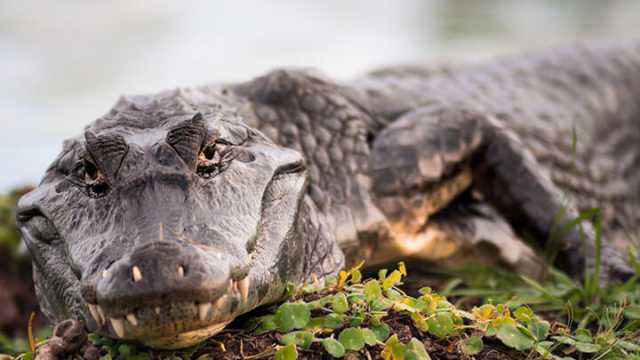
For instance, crocodiles are just as likely to die at 10 years old as they are at 100. Their cells don’t degenerate with age like ours do. Crocodiles never stop growing either, so they require more food as they get older.

Turritopsis dohrnii is perhaps the best-known animal with negligible senescence. This species of jellyfish, often referred to as “the immortal jellyfish,” has the ability to revert back to a prepubescent state after reaching sexual maturity. Basically, this jellyfish can reverse its age, making it biologically immortal. Most of these jellyfish will die due to disease or predators, instead of aging.

Penguins propose with pebbles

Humans aren’t the only species who require material possessions to establish a mate. What humans do with rings, penguins do with pebbles. When choosing a mate, a male penguin will present a pebble to her that could be used in a nest for their offspring. When you consider that penguins are already wearing tuxedos, it starts to become clear that we copied a lot of our wedding traditions from them. The phrase “penguins propose with pebbles” also alliterates quite nicely.

Planarian flatworm will regrow itself indefinitely

If you cut a planarian flatworm into two pieces, each piece will regenerate into a full individual. Cut it into three pieces and you’ll get three new individuals. Anytime part of the individual is separated, the remaining piece will grow back the part it’s missing.

This does mean that one planarian flatworm could be used as a completely sustainable source of food. Just eat half and wait for the other half to re-grow. Then we’d have to eat worms though, and who wants that?

Only six to seven percent of shark attack victims are female

Studies out of Australia showed that even though men and women both like to swim in the ocean, sharks seem to go after males far more than females. One study showed that out of a 100 shark attack victims, on average only six to seven of them will be female.

No hard science can show why this is, and the sharks themselves aren’t talking. Some speculate that the reason men are more likely to be attacked by a shark is similar to why more men get in car accidents: a propensity for reckless behavior.

While men and women both like to swim in the ocean, guys are far more likely to be engaging in dumb behavior while in there. This can include swimming or surfing in more dangerous locations, long distance swimming and engaging in riskier water sports that could make them prone to shark attacks.

Ants have built-in GPS

An ant understands its surroundings far better than we do, and possibly even better than our iPhones. A recent study showed that ants understand which direction they are heading, even when they are traveling backward. Scientists believe that ants use tiny magnet-like sensors in their antennae in order to determine where they are in relation to where they want to go via the Earth’s natural magnetic field. So, even if you were to spin an ant around repeatedly in a circle (don’t do that), the ant would still know exactly where it is in relation to where it wants to go.

Chimpanzees go to war

Chimpanzees are our closest living relative on the planet. As such, they share many of our good, and not-so-good, characteristics. These animals, just like us, can be pretty violent. Also, like us, they occasionally go to war.

From 1974 to 1978, Jane Goodall documented “the Gombe Chimpanzee War” between two rival communities of chimpanzees. The community began to separate into two sub-groups in the early 70s. Eventually, they became divided into northern and southern locations of habitat they previously shared together. The southern group was smaller. Over the course of four years, the northern group succeeded in taking over their territory, killing all the males in the community.

The “pizzly bear” now exists

What is a “pizzly bear,” you ask? It is a hybrid polar-grizzly bear that we may be seeing more of in the future. As global sea ice continues to disappear, polar bears are having to travel farther and farther to mate. As such they are ending up in grizzly bear habitat and mating with them.

Last summer in Nunavut, Canada, hunters discovered a pizzly, leading to speculation that more are out there. It is thought that polar bears may eventually go extinct as they begin to mix their DNA with other bear species.

Orangutans were believed to be human

We share 97 percent of our genes with orangutans, which may help to explain why they used to be thought of as rather hairy human beings. Indigenous people of Malaysia and Indonesia used to believe that orangutans were just human beings who preferred to hang out in the forest as opposed to, you know, having to work and stuff. The name “orangutan” is derived from “orang hutan” which literally translates to “person of the forest.”

Sea otters hold hands while they sleep

Sea otters will naturally float, but when sleeping they are at risk of just drifting away. Luckily, these adorable little creatures have developed an easy system to prevent that from happening: they hold hands. Groups of sea otters will all hold hands while eating, sleeping or resting so they all stay together wherever they may drift. A group of otters holding hands is referred to as a “raft.”

Dogs have unique nose prints

If your dog commits a crime, they better make sure to wipe off their nose prints from the scene, otherwise they will be caught for sure. That is because a dog’s nose print is much like our fingerprints, no two sets are identical. A similar phenomenon involves tigers, with no two tigers sharing the exact same set of stripes.

Aren’t animals awesome? We sure think so. Let us know your favorite animal facts in the comments.

— Ian Careyhttps://www.thealternativedaily.com/animal-facts-that-will-blow-your-mind/

Weird Animal

See the source image

The aye-aye (Daubentonia madagascariensis) is a long-fingered lemur, a strepsirrhine primate native to Madagascar that combines rodent-like teeth that perpetually grow[4] and a special thin middle finger.

It is the world’s largest nocturnal[5] primate. It is characterized by its unusual method of finding food: it taps on trees to find grubs, then gnaws holes in the wood using its forward-slanting incisors to create a small hole in which it inserts its narrow middle finger to pull the grubs out. This foraging method is called percussive foraging, and takes up 5–41% of foraging time.[6][7] The only other animal species known to find food in this way is the striped possum.[8] From an ecological point of view, the aye-aye fills the niche of a woodpecker, as it is capable of penetrating wood to extract the invertebrates within.[9][10]

The aye-aye is the only extant member of the genus Daubentonia and family Daubentoniidae. It is currently classified as Endangered by the IUCN; and a second species, Daubentonia robusta, appears to have become extinct at some point within the last 1000 years.[11]

Fascinating Animal

Markhor Goat (Animal)

Markhor Goat – اردو میں پڑھیںDisclaimer: As an encyclopedia, pakpedia.pk’s articles contains shared information which has collected from different sources and people. We welcome everyone for corrections and updates, Thank you.
Article Upload Date: Sun 12 Mar 2017

Markhor (Capra falconeri) is the National Animal of Pakistan. It’s a species of wild goat in genes Capra, subfamily Caprinae, family Bovidae. It’s a high altitude mountain goat, found between 600-3,600 meters in elevation. In Pakistan it’s found in Gilgit-Baltistan, Hunza-Nagar Valley, northern and central Pakistan, and Azad Kashmir. It spends summer at higher altitudes than winter. In the winter months it moved down from high altitudes to lower altitudes to avoid extrems cold.
Markhors are active during daylight and twilight. They are lively and quick and can easily climb and jump over rocky landscape. Males are generally found singles while females gather into group of up to 9. The number of mature Markhors is less than 2,50 and is grouped as endangered species by International Union For Conservation of Nature (IUCN).[1] Markhor Photography. blogspot.com

  • Details
  • Kingdom: Animalia
  • Body Length: 132-186 cm / 4.4-6.2 ft.
  • Name: Markhor
  • In Urdu: مارخور
  • Phylum: Chordata
  • Tail Length: 8-20 cm / 3.2-8 in.
  • Shoulder Height: 65-115 cm / 2.1-3.8 ft.
  • Class: Mammalia
  • Order: Artiodactyla
  • Family: Bovidae
  • Distinctive Features: Long winter hair and large, spiralled horns
  • Predators: Wolves, Snow Leopard, Lynx
  • Main Prey: Grasses, Leaves, Herbs
  • Average Litter Size: 1
  • Habitat: Sparsely wooded cliff-sides
  • Colour: Grey, Black, White, Brown, Tan
  • Young per Birth: 1 or 2, rarely 3
  • Subfamily: Caprinae
  • Weight: 32kg – 110kg (71lbs – 240lbs)
  • Conservation Status: Endangered
  • Lifestyle: Herd
  • Weaning: At 5-6 months.
  • Life Span: 12-13 years.
  • Genus: Capra
  • Species: C. Falconeri
  • Varieties: Kabul and Suleiman markhor and Kashmir markhor
  • Type: National Animal
  • Category: Wilde Animal living: Dangerous and steep cliffs of the mountains
  • Male markhor: Long twisted horns

Fascinating Creature~

Weird Insects Around The World, Venezuelan Poodle Moth

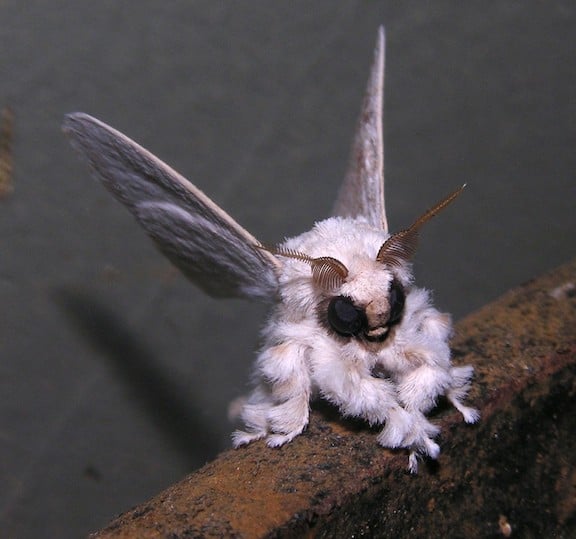
Venezuelan Poodle Moth 

Discovered in Venezuela’s Gran Sabana region by Kyrgyzstan’s Dr. Arthur Anker in 2009, this unusual insect looks like a cross between a poodle and an angora sweater.

Ankara’s odd (some might say adorable) discovery went relatively unnoticed for several years, until someone posted his photo of the fuzzy white moth with bulging black eyes and bizarre antennae online.

It quickly went viral, but the moth (which experts believe belongs to the Artace genus) has yet to be confirmed as a new species.


    Amazing Creature!

    Yeti Crab


    Also known as the Kiwaidae, this crab is a type of marine decapod living at deep-sea hydrothermal vents and cold seeps. The animals are commonly referred to as “yeti crabs” because of their claws and legs, which are white and appear to be furry like the mythical yeti

      Animal Facts~DYK

      36 Really Cool Animal Facts

      1. When opossums are “playing ‘possum,” they are not playing. They actually pass out from sheer terror.
      2. The two-foot long bird called a Kea that lives in New Zealand likes to eat the strips of rubber around car windows.
      3. Snakes are true carnivores as they eat nothing but other animals. They do not eat any type of plant material.
      4. The Weddell seal can travel underwater for seven miles without surfacing for air.
      5. According to tests made at the Institute for the Study of Animal Problems in Washington, D.C., dogs and cats, like people, are either right-handed or left-handed—that is, they favor either their right or left paws.
      6. An iguana can stay under water for 28 minutes.
      7. Crocodiles and alligators are surprisingly fast on land. Although they are rapid, they are not agile, so if you ever find yourself chased by one, run in a zigzag line. You’ll lose him or her every time.
      8. Horses can’t vomit.
      9. A crocodile cannot stick its tongue out.
      10. Butterflies taste with their feet.
      11. Penguins can jump as high as six feet in the air.
      12. All polar bears are left-handed.
      13. An eagle can kill a young deer and fly carrying it.
      14. It was discovered on a space mission that a frog can throw up. The frog vomits its entire stomach out so the organ is dangling out of its mouth. Then the frog uses its forearms to dig out all of the stomach’s contents and swallows the stomach back down again.
      15. The leg bones of a bat are so thin that no bat can walk.
      16. The katydid bug hears through holes in its hind legs.
      17. Slugs have four noses.
      18. Ostriches stick their heads in the sand to look for water.
      19. In a study of 200,000 ostriches over a period of 80 years there were no reported cases of an ostrich burying its head in the sand.
      20. It’s possible to lead a cow upstairs, but not downstairs.
      21. A shrimp’s heart is in its head.
      22. A snail can sleep for three years.
      23. The chicken is one of the few things that man eats before it’s born and after it’s dead.
      24. Some dogs can predict when a child will have an epileptic seizure and even protect the child from injury. They’re not trained to do this, they simply learn to respond after observing at least one attack.
      25. A pregnant goldfish is called a twit.
      26. Rats multiply so quickly that in 18 months, two rats could have over a million descendants.
      27. There are only three types of snakes on the island of Tasmania and all three are deadly poisonous.
      28. It is physically impossible for pigs to look up into the sky.
      29. Dolphins sleep with one eye open.
      30. A goldfish has a memory span of three seconds.
      31. A shark is the only fish that can blink with both eyes.
      32. Emus and kangaroos cannot walk backwards and are on the Australian coat of arms for that reason.
      33. The jellyfish is 95% water.
      34. A hippo can open its mouth wide enough to fit a 4 foot tall child inside.
      35. Only female mosquitoes bite.
      36. Most elephants weigh less than the tongue of the blue whale.

      https://owlcation.com/misc/Over-200-Odd-Facts-Did-You-Know-Them