I sell this stuff. Reviewed on it are great. My friends are using it and they love how it helps you lose weight, and feel better, and healthier. Give it a try. Click the link and order you some.
United States Surgeon General Luther Terry knew his report was a bombshell. He intentionally chose to release it on January 11, 1964, a Saturday, so as to limit its immediate effects on the stock market. It was on this date that, on behalf of the U.S. Government, Terry announced a definitive link between smoking and cancer.
Civilizations around the world have been celebrating the start of each new year for at least four millennia. Today, most New Year’s festivities begin on December 31 (New Year’s Eve), the last day of the Gregorian calendar, and continue into the early hours of January 1 (New Year’s Day). Common traditions include attending parties, eating special New Year’s foods, making resolutions for the new year and watching fireworks displays.
The early Roman calendar consisted of 10 months and 304 days, with each new year beginning at the vernal equinox; according to tradition, it was created by Romulus, the founder of Rome, in the eighth century B.C. A later king, Numa Pompilius, is credited with adding the months of Januarius and Februarius. Over the centuries, the calendar fell out of sync with the sun, and in 46 B.C. the emperor Julius Caesar decided to solve the problem by consulting with the most prominent astronomers and mathematicians of his time. He introduced the Julian calendar, which closely resembles the more modern Gregorian calendar that most countries around the world use today.
The short-faced bear is an extinct ancient bear that lived in North America 11,000 years ago. They were extremely large bears, weighing more than 1 ton (1000 kg) and standing up to 12 feet (3.7 m) tall. Despite their enormous stature, the Bear could run up to 40 miles per hour
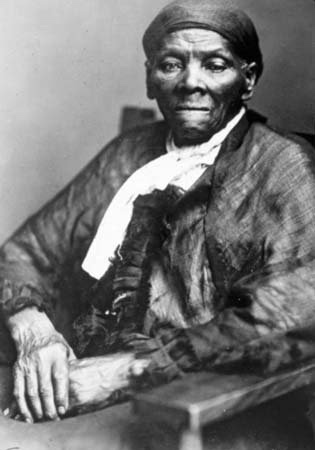
Dorchester county, Maryland, U.S.—died March 10, 1913, Auburn, New York), American bondwoman who escaped from slavery in the South to become a leading abolitionist before the American Civil War.









 Mws R Writings