DIY~Candles

https://www.instructables.com/id/DIY-Candles/

You will need:

Small Glass Jars
You should get around a dozen small glass jars. I found my leftover (5 oz) glass yogurt jars worked well. You can also buy new jars in a variety of fun shapes and sizes off Amazon.

5lb Soy Wax
Soy wax is a cheap and easy to work with natural wax. I find a 5lb bag yields roughly 20 – 24 candles.

Wicks
Getting pre-made wicks will make your life much easier in the long run.

Box of Non-Toxic Crayons
Non-toxic crayons make a great coloring agent because they come in a multitude of colors that can be mixed and matched. They are also already wax-based, so you can melt it directly into the wax without having to worry about diluting it.

Assorted Scents
You can optionally add essential oil to your candle to give it a nice scent. I ordered a sample-sized scent pack from Nurielights. This is a cool little company that sources traditionally made oils from all over the world. Each sample only makes a few candles, so if you want to scent all of them the same, you should consider a larger size.

Wooden Clothespins
These are for holding the wicks while the wax sets.

Glass Measuring Cup
You will want to get a new glass measuring cup specifically for candle making. Wax is hard to clean off.

3 Quart Sauce Pan
While you can use the one you have, I highly recommend buying one specifically for candle making. Once the wax gets in there (and it will), you will have a heckuva time washing it out. Life will simply be easier to get a new pan.

Candy Thermometer
The last thing you will need is a candy thermometer that goes up to at least 200 degrees.

Picture of Materials
Step 1 – Supplies
Picture of Setup the Wicks
Step 2- Set up wick

First things first, you will want to prepare all of the jars for later. You will not want to be fussing with this when dealing with the wax.

Center the wicks upright in the center of the jars using clothespins and then set them aside.

Picture of Coloring
Step 3- Coloring

Pick out the color crayons you like and cut small bits off of them to be used as coloring.

A little bit goes a long way. That said, reds, oranges, and purples tend to require a little bit less coloring than blues, greens and yellows.

Picture of Melt the Wax
Step 4- Melt wax

Melting the wax directly in the pot will make the wax too hot, ruin it, and make a giant mess.

You will want to improvise a double boiler by filling the pot 2/3 of the way with water, and then hooking the handle of the measuring cup on the side of the pan. The cup should float and the water should be about an inch lower than the side of the pan.

If at any point it looks like the water is going to boil over the edge of the pan, or get into the cup of of wax, remove some water.

Insert the thermometer into the empty cup, and when it gets near 170 degrees, pour in some wax until the cup is half full.

Stir the wax to aid in melting.

Continue adding wax little by little until there is about 2 cups worth of melted wax inside.


Let the wax sit until the thermometer reaches 170 degrees

Picture of Add Color
Step 5- Add Color

When your wax is at temperature, drop in the crayon coloring bricks and stir until they are firmly melted.

Keep in mind the color will change change as it cools. Make the color more vibrant than you think it should be as it will be less vibrant once settled. Also, don’t get to worried if it seems to change color a little. It will sort itself out as the wax cools.

The coloring process takes some trial and error to get a hang of.

Picture of Scented Candles
Step 6 -Scented Candles

If you want to make scented candles, you can try adding about 10 drops of essential oil to the mix.

Again, this is going to take some trial and error to get right. Some oils are stronger or weaker than others and may require more or less oil.

However, keep in mind that if you add too much oil, the wax will not set properly. Don’t go overboard.

Picture of Pour
Step 7- Pour

Pour the wax into the jars.

If the wicks have moved off-center after you have filled the jar, gently re-position them.

Picture of Wait
WAIT!

Trim the wicks to be about 1/2″ long.

Wipe away any wax that got splashed around the outside of the glass jar.

Enjoy your new candles.


    Beautiful Place- Slovenia

    If you glimpse Lake Bled in Slovenia is one of the distant mountaintops, you will be convinced that you are seeing some magical, lost fantasy world of dragons and knights: A vivid emerald green lake with a tiny island in the middle with a church perched on its cliff and an ancient medieval castle clinging to its slopes, hugged on all sides by enormous mountains, snow-topped and covered with dark, green, ancient forests.

    Lake Bled is just as beautiful as you get closer and is a popular Slovenian tourist destination that attracts those seeking romance on Bled Island, visitors enjoying a leisurely hike around the lake or rowing its placid waters, and young adventurers exploring the steep hiking trails of the surrounding Julian Alps and the Karavanke Mountains.

    Short Story Share

    FAMILY

    I wade through the Christmas morning obstacle course, around the scattered toys and books and abandoned candy canes. I grab a crumpled ball of wrapping paper and stuff it deep inside an overflowing trash bag full of tinsel and tape and cardboard packages. When the bag begins to overflow, I stuff the last handful of Christmas cheer into its plastic prison and tie it shut.

    My siblings were happy to have me home from school, for the first hour. They then promptly forgot that they hadn’t seen me in months, and returned to bickering, sugar cookies,and singing Christmas carols out of tune. I sift through the aftermath of their Christmas morning, and clean up the wreckage. I head for the door.

    “Don’t forget the crockpot,” my mother calls, “Take it to the dumpster, too.”

    I carry the overfilled garbage bag and the old crockpot outside to the dumpster, into the cold, wet December afternoon. I consider how funny it is that my mother received this fine kitchen appliance on this same day, a year ago, and it has somehow already found its way to the dumpster. I open the lid and toss it in, along with the wrapping paper, the packages, the candy canes, and tinsel. I look up the street, at the soggy paper luminaries.

    Everything is on its way out, isn’t it? I like being surprised when a kitchen appliance lasts more than a year, but why am I surprised in the first place? It’s almost like everything is just in a different state of being thrown away. Everything is going to get trashed; it’s just a matter of time.

    How long will it be before we trash that brand new coffee maker we unwrapped this morning? Or the iPad? Or the new set of coffee mugs? How long will those things last? Five years? Ten? Twenty years?

    I pull my brand new scarf and sweater tighter over my shoulders, and hesitate, before going back inside. I wonder, how long until I throw them out, too? How long before I tear a hole in the sweater, or the scarf gets lost?

    Everything is just in a different stage of being thrown out, I’m sure of it. Everything is headed for the trash—the only difference is the amount of time it takes to get there. And that’s scary as hell. What is not going to end up in the trash, eventually? Anything?

    My mind wanders, and I step back inside. My younger siblings clamber around the TV, eating candy canes and sugar cookies, watching Linus Van Pelt monologue about Christmas trees needing love.

    Maybe that was it. Maybe this cliché answer of “Love and Christmas Cheer” is the one that won’t end up in the trash. Maybe love is the one thing that’s not on a path to the landfill. Maybe the Beatles really were right, and it’s as simple as that. If that were true, though, I think we would have better answers for everything.

    “Watch Charlie Brown with us!” my little sister yells at me, as I turn to leave. There’s no escaping my siblings. When they want something from me, it’s as good as theirs. So I sit down beside them, and watch Lucy Van Pelt declare Charlie Brown a completely hopeless loser.

    It’s not love. Love is erased when everything melts. Love is dependent on the people who carry it, the people who nurture it, the people who use it. My sister leans her head against me, and I understand that there is only one thing not destined for the trash.

    Family.

    That’s cliché, too. Almost as cliché as love. But it seems inarguable. Even when you’re in the ground, there’s no way to become unrelated to your siblings, or your parents, or your children. There’s no way to disconnect from them. You’ll always be family to them, and they’ll always be family to you, whether or not you like it. You can try to forget them, or disown them, or escape them, but they’re always there.

    It’s in your DNA, and no escaping that.

    “Do you wanna watch the Grinch with us?” my little sister asks me, as Charlie Brown ends.

    I smile.

    “Sure.”

    http://astoryeachday.com/december

    Laugh a Little

    Worst Foods For Bladder Health

    Did you know that 40 percent of women experience overactive bladders? “Take five women in a room and two of them are affected,” says Rupa Kitchens, MD, urologist at Urology Centers of Alabama. “And about 25 percent of men,” she adds. In total, about 33 million adults in the U.S. suffer from an overactive bladder.

    Here’s the thing: An overactive bladder affects more than just how many times you’re running to the restroom. “It affects everything,” says Kitchens. From work productivity (how can you sit at your desk and get through a task if you’re constantly getting up to go to the bathroom?) to sexual health.

    In one study, women with overactive bladders reported it hindered function, frequency, and satisfaction in the bedroom—a triple whammy. And that can take a toll on a romantic relationship. There’s a mental health component, too. “It predisposes people to depression because if someone is constantly wet, they don’t want to leave the house. So people stay home and avoid activities, they stick to the same routines like the grocery store because they know where the bathroom is,” says Kitchens. “In my opinion, the only thing worse is stool leakage.”

    Turns out, some of your favorite guilty pleasures could be exacerbating the issue. In other words, what you eat and drink impacts your bladder in more ways than just filling it up. And, in fact, your habits now can impact your incontinence—or lack thereof—later in life.

    Here are the five foods and drinks to avoid if you have an overactive bladder.

    Citrus

    This includes lemonade; orange, grapefruit, and pineapple juices; and citrus fruits such as lemons and limes. The acid in them can irritate your urinary tract lining, including your bladder. For some people, tomatoes (which are acidic) can also be problematic. The good news? You don’t have to eliminate citrus altogether. It’s about moderation—Kitchens says a glass of lemonade once a month is fine.

    Caffeine

    Coffee is a common offender because it can full of caffeine (and we Americans love our coffee). Not only will coffee make you urinate more often (it’s a diuretic), but caffeine also may have an “excitatory effect” on the smooth muscle that lines your bladder. Don’t drink coffee? Be mindful of the caffeine in tea, sodas, chocolate, and energy drinks.

    Soft drinks

    These are on the no-no list because of both their caffeine and carbonation. Why exactly carbonation is an issue isn’t fully known, but one of the largest published studies that looked at women and urinary incontinence identified drinking carbonated drinks as one of the top three diet and lifestyle factors (obesity and smoking were the other two) associated with the onset of overactive bladder symptoms.

    Artificial sweeteners

    Faux sugars found in “sugar-free” foods and candy, as well as diet sodas, can sometimes bother people, but, according to Kitchens, less so. That said, in one small study Diet Coke and caffeine-free Coke irritated participants more so than classic Coke and plain carbonated water. And then there’s an animal study that suggests artificial sweeteners may cause the smooth muscle that lines your bladder to contract more.

    Alcohol

    Not only does it make you pee more (just like caffeine, it’s a diuretic), but some doctors advise against drinking too much alcohol as they believe it can irritate the lining of your urinary tract. Though the research is still not conclusive when it comes to nixing alcohol if you have an overactive bladder, the anecdotal evidence (and MD advice) is fairly strong.

    The Bottom Line

    If you suffer from an overactive bladder, so-called behavior changes are actually the first line of therapy.

    And number one, per Kitchens, is finding a substitute for what you gave up. “Don’t go without. Find something you like and substitute it for what you can’t have,” says Kitchens. Look for a flavored water or try coconut water. You can drink decaf tea and coffee in small amounts. Even a non-citrus juice, like apple juice, can be enjoyed in moderation.

    If your overactive bladder causes you to leak, kegel exercises can help you control your urgency better. There’s also research that suggests being obese is associated with urinary incontinence, so if you’re overweight or obese, losing weight could be beneficial. And then there are medications, which are actually fairly common. “Over-the-counter medications are available, but the possibility of them helping is low,” advises Kitchens. “I don’t have a single patient on that alone.” She recommends you see your primary care doctor or urologist to discuss the possibility of a prescription medication.

    Continue reading Worst Foods For Bladder Health

    Extraordinary!

    https://hubpages.com/animals/25-Most-Amazing-and-Unique-Animals-On-Earth

    Walking Leaf (or Leaf Insect)

    Also from the family Phyliidae, the walking leaf, or leaf insect, is native to South Asia and Australia. Its amazing natural camouflage makes it virtually invisible in wooded areas, which not only protects them from predators but also lets their prey come to them.

    Similarly to mantises and stick bugs, the leaf insect has a tendency to sway back and forth to mimic a real leaf blowing in the wind. Some sources state that these insects may have been in existence 47 million years ago.


      The Plant Paradox Diet

      The Plant Paradox Diet

      This is a summary and individual interpretation of the protocol outlined in Dr. Steven Gundry’s book The Plant Paradox. Please read the book for more in depth info on the Plant Paradox diet. Nothing in this article replaces medical advice from a licensed professional. Consult your doctor before making any dietary or lifestyle changes.People start the Plant Paradox DIET to put chronic disease in remission. They adopt the Plant Paradox LIFESTYLE to keep it in remission.Click To Tweet

      The Plant Paradox diet is an eating protocol that eliminates certain dietary lectins, limits sugar in any form, and curbs high intake of polyunsaturated omega-6 fats. The diet kick-starts with a 3-day cleanse, wherein one repopulates the gut bacteria with leafy greens, cruciferous vegetables, clean protein, and good fats. Beyond those three days, there is a second phase where one eats only from the list of approved foods for at least six weeks.

      –> Read more in depth about:

      Dietary Lectins

      Lectins are a type of protein found in almost every living thing. They serve multiple functions, the most relevant theory maybe that they protect a plant from predators (humans). Lectins have demonstrated that they are capable of something called molecular mimicry. This is a term for when the sequence of peptides on a dietary lectin mimic those of human molecules, thereby causing the immune system to cross-react, triggering autoimmune disease.

      So, which lectins are capable of inciting our body to attack itself? Unfortunately, that will take decades and decades of research and trials to prove in a lab. Fortunately, there are researchers and theorists, like Dr. Gundry, who are already treating patients for disease by prescribing a diet that eliminates the biggest culprits. Hence, the “Plant Paradox” diet. Foods we thought were healthy are actually triggering inflammation and disease.

      The NO List of High Lectin Foods

      The following items are on the No list because they contain lectins that have, in clinical patient studies, demonstrated an ability to trigger inflammation:

      Vegetables

      • legumes
      • peas and sugar snap peas
      • green beans
      • chickpeas
      • soy (except fermented)
      • tofu
      • edamame
      • soy protein
      • textured vegetable protein
      • beans and bean sprouts
      • lentils
      • potatoes

      Nuts & Seeds

      • pumpkin
      • sunflower
      • chia
      • peanuts
      • cashews

      Fruits (Culinary Vegetables)

      • cucumbers
      • zucchini
      • pumpkins
      • squashes
      • melons
      • eggplant
      • tomatoes
      • bell peppers
      • chili peppers
      • goji berries

      Non-Southern European Cow’s Milk

      The milk of most American cows contains a lectin-like, inflammatory protein called A-1 beta casein.

      • yogurt and frozen yogurt (especially Greek)
      • ice cream
      • butter
      • cheese
      • ricotta
      • cottage cheese
      • kefir
      • casein protein powders

      Grain or Soybean Fed Animals

      Not only can the meat of feedlot raised animals contain residual lectins, but the nutritional profiles of feedlot raised animals lack antioxidants and promote inflammation:

      • fish and shellfish
      • poultry
      • beef
      • lamb
      • pork

      Sprouted Grains, Pseudo-Grains, and Grasses

      • wheat
      • einkorn wheat
      • kamut
      • oats
      • quinoa
      • rye
      • bulgur
      • all rice (white, brown, wild)
      • barley
      • buckwheat
      • kashi
      • spelt
      • corn and corn protein
      • popcorn
      • wheatgrass
      • barley grass

      –> Click HERE for a printable list of high lectin foods to avoid.

      Sign up to get my Plant Paradox recipes.

      Sugar By Any Other Name

      The Plant Paradox diet is not the first diet to curb sugar intake. It is, however, a first to lay claim that fruit–especially year-round–is not healthy. The days of “fruits & vegetables” occupying the same category on a food pyramid are over. In contrast, artificial sweeteners that are zero calories have made the No list because of their ability to incite an insulin response and alter gut bacteria.

      The No List of High Sugar & Artificial Foods

      Some items on the following list could be there for more than one reason, such as breads, crackers, and cookies made from wheat flour, for example. Due to the fact that grains are listed separately on the No list for lectin content, I’ve chosen to place some things on this High Sugar list.

      Some things on this list may not contain lectins. Rather, they are listed because they spike blood sugar or–in the case of nonnutritive sweeteners–alter the gut bacteria (in a bad way).

      Refined, Starchy Foods

      The following foods are all refined, starchy, or both:

      • pasta
      • rice
      • potato chips
      • bread
      • tortillas
      • pastries
      • flours made from grains and pseudo-grains
      • cookies
      • crackers
      • cereal
      • corn starch

      Sweeteners & Artificial Sweeteners

      • corn syrup
      • sugar (including juice and natural sugars)
      • agave
      • sucralose
      • acesulfame K
      • aspartame
      • sucralose
      • saccharin
      • neotame
      • diet drinks
      • maltodextrin

      Fruit

      Those following the Plant Paradox diet treat fruit as seasonal candy. It may contain vitamins and nutrients, but it packs a lot of sugar. Because of this, fruits out of season–and some altogether–make the No list.

      • all fruits (except avocados, olives, and those in season on the Yes list)
      • ripe bananas
      • ripe mangos
      • melons (also on the No list for lectin content)

      –> Click HERE for a printable list of high sugar foods to avoid.

      Bad Fats

      Fat is only bad if you’re eating the wrong kind of fat (with a lot of sugar). Also, different fatty acids perform unique & necessary functions within the body’s cells. Furthermore, studies show that a near 1:1 ratio of omega-3 to omega-6 is associated with a decreased risk of almost any chronic disease. For this reason, The Plant Paradox diet prohibits the western diet seed and vegetable oils to make way for crucial inflammation-fighting omega-3 fatty acids.

      The No List of High Omega-6 Oils

      The following oils are on the Plant Paradox diet No list. Even more if they are expeller-pressed (may contain residual lectins):

      • soy
      • grape seed
      • corn
      • peanut
      • cottonseed
      • safflower
      • sunflower
      • anything partially hydrogenated (trans fat)
      • vegetable
      • canola

      Get my Plant Paradox pantry checklist HERE.

      The Plant Paradox Lifestyle

      Above all, the most important part of the Plant Paradox diet is eliminating the foods on the No list. However, there is an additional No list of substances in our everyday environment that can be detrimental to our long-term health. Certainly, those who go above and beyond to eliminate these substances adopt the Plant Paradox lifestyle of bodily and environmental healing.

      Endocrine & Bacterial Disruptors

      The following items are major culprits in destroying good gut bacteria and disrupting the endocrine system. If it seems like these things are impossible to eliminate because they’re everywhere, don’t get overwhelmed. Start by making small changes to your environment. Maybe consult with your doctor about gut and hormone-friendly alternatives to the following:

      • broad-spectrum antibiotics
      • non-steroidal anti-inflammatory drugs (NSAIDs)
      • stomach acid-blockers
      • endocrine disruptors (found in plastics, personal care products, and processed foods)
      • genetically modified foods
      • herbicide Roundup
      • exposure to blue light (from electronic devices)

      –> Click HERE for a full printable list of endocrine disruptors to avoid.

      Lifestyle Recommendations

      The reward is in the long journey, not the quick fix. The Plant Paradox lifestyle calls for us to continue to make additional tweaks. As a result, we reap long-term health benefits that prevent disease and promote longevity. These are:

      1. Increase ketogenic fats (MCT, coconut oil).
      2. Stop snacking, giving the gut, brain, and mitochondria time to rest between meals.
      3. Reduce animal protein to no more than 2 ounces per day.
      4. Practice intermittent fasting: there are many ways to do this.
      5. Get outside for an hour each day, around midday.
      6. Exercise regularly (not too strenuously, though).
      7. Avoid blue light from electronics in the evenings.

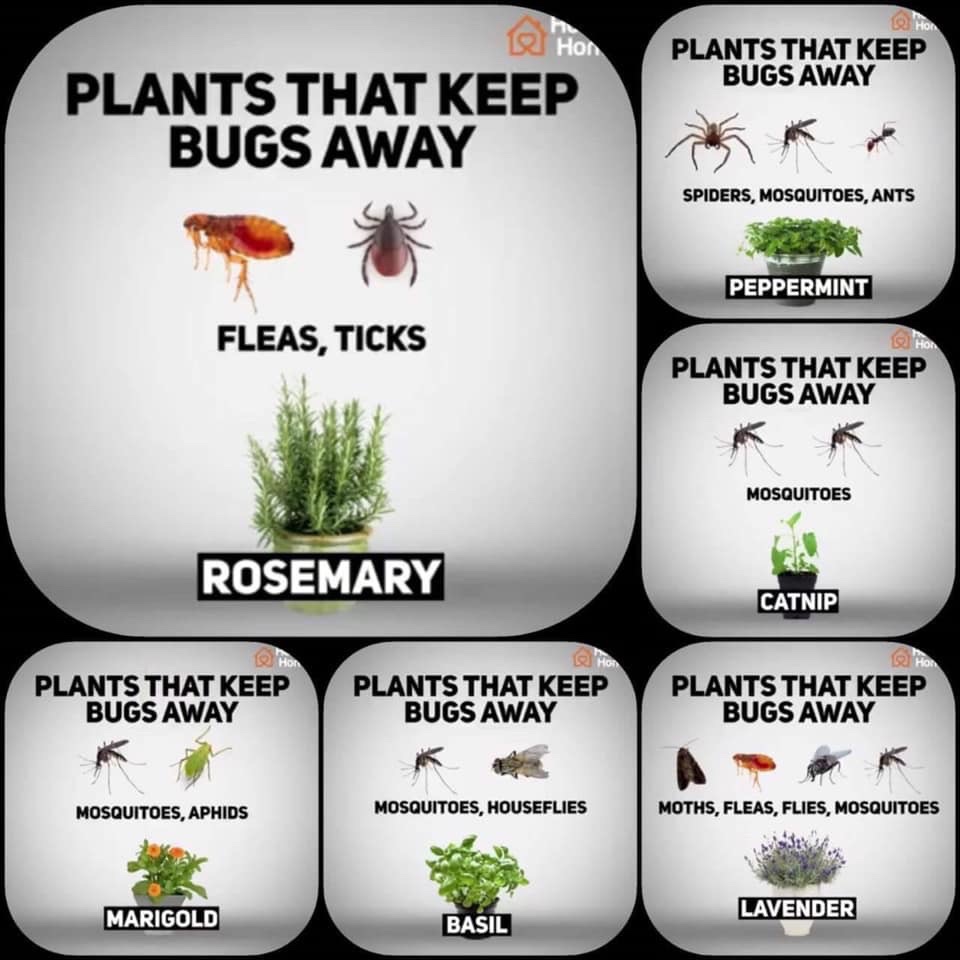
          DYK~ Plants That Keep Bugs Away