Jalapeno Popper Wontons/Recipe Share

jalapeno popper wontons


Jalapeno Popper Wontons

1 package refrigerated square wonton wrappers
1 8-ounce package cream cheese, softened
3 jalapenos, seeds and ribs removed, finely chopped
1/2 cup shredded cheddar cheese
Vegetable oil for frying
Coarse salt

1. In a bowl, combine cream cheese, jalapenos, and cheddar cheese. Arrange wontons in a single layer on a baking sheet.

2. Add 1 teaspoon of the filling to the center of each wonton (don’t overfill them). Dip your fingers in a bowl of water and run your wet fingers around all edges of each wonton. Fold the wontons over the filling, pinching the edges to seal to make a triangle and removing any air bubbles.

3. Fry wontons in batches in hot oil until browned and cripsy. Drain on paper towels and sprinkle with coarse salt. Serve warm.

Continue reading Jalapeno Popper Wontons/Recipe Share

One Pan Salmon, Brussels Sprouts and Squash/ Recipe Share

Ingredients:

  • 1 pound brussels sprouts, ends trimmed
  • 1 cup diced butternut squash, 1” cubes
  • 2 cloves garlic, minced
  • 1 tsp. salt
  • ½ tsp. fresh ground pepper
  • ½ Tbsp. dried sage
  • 1 Tbsp. and 1 tsp. olive oil, divided
  • ½ pound salmon, cut into two 4 oz. portions
  • 1 tsp. garlic powder

Directions:

  1. Preheat oven to 425 degrees F.
  2. Line baking sheet with aluminum foil, mist with nonstick cooking spray and set aside.
  3. In large mixing bowl, combine brussels sprouts, butternut squash, minced garlic, salt, pepper, dried sage and 1 tablespoon of olive oil.
  4. Spread brussels sprouts and squash on prepared baking sheet in single layer. Bake for 15 minutes and stir at the halfway point.
  5. Drizzle salmon with olive oil and sprinkle with garlic powder.
  6. Remove baking sheet from oven; rearrange brussels sprouts and squash to make room for 4 salmon filets. Bake for 10 to 12 minutes, or until salmon is cooked through.
  7. Remove from oven, let stand for several minutes and serve.

Tip for the week/Information Share

Outstanding-Household-Tips-and-Tricks-013-550x718.jpg

Prediabetes/Information Share

Prediabetes

What is prediabetes?

Prediabetes is a warning sign that you are at risk for getting type 2 diabetes. It means that your blood sugar is higher than it should be, but not high enough to be diabetes. Prediabetes is also called impaired glucose tolerance or impaired fasting glucose. Most people who get type 2 diabetes have prediabetes first.

What causes prediabetes?

The food you eat turns into sugar, which your body uses for energy. Normally, an organ called the pancreas makes insulin, which allows the sugar in your blood to get into your body’s cells. But when your body can’t use insulin the right way, the sugar doesn’t move into cells. It stays in your blood instead. This is called insulin resistance. The buildup of sugar in the blood causes prediabetes.

People who are overweight, aren’t physically active, and have a family history of diabetes are more likely to get prediabetes. Women who have had gestational diabetes are also more likely to get prediabetes.

What are the symptoms?

Most people with prediabetes don’t have any symptoms. But if you have prediabetes, you need to watch for signs of diabetes, such as:
• Feeling very thirsty.
• Urinating more often than usual.
• Feeling very hungry.
• Having blurred vision.
• Losing weight without trying.

How is prediabetes diagnosed?

A blood test can tell if you have prediabetes. You have prediabetes if:
• The results of your hemoglobin A1c test are 5.7% to 6.4%.
• The results of your fasting blood glucose test are between 100 and 125 milligrams per deciliter.
• The results of your oral glucose tolerance test (OGTT) are 140 to 199 mg/dL (2 hours after the beginning of the test).

How is it treated?

The key to treating prediabetes and preventing type 2 diabetes is getting your blood sugar levels back to a normal range. You can do this by making some lifestyle changes.
• Watch your weight. If you are overweight, losing just a small amount of weight may help. Reducing fat around your waist is particularly important.
• Make healthy food choices. Limit the amount of unhealthy fat you eat, such as saturated fat and trans fat. Try to cut calories and limit sweets.
• Be active. You can do moderate activity, vigorous activity, or both. Bit by bit, increase the amount you do every day. You may want to swim, bike, or do other activities. Walking is an easy way to get exercise.
Making these changes may help delay or prevent diabetes. You may also avoid or delay some of the serious problems that you can get when you have diabetes, such as heart attack, stroke, and heart, eye, nerve, and kidney disease.

You may need to take a diabetes medicine called metformin. It reduces the amount of sugar made by the liver in people who are insulin-resistant.

Scary Places#1/Share

BBNPCo2

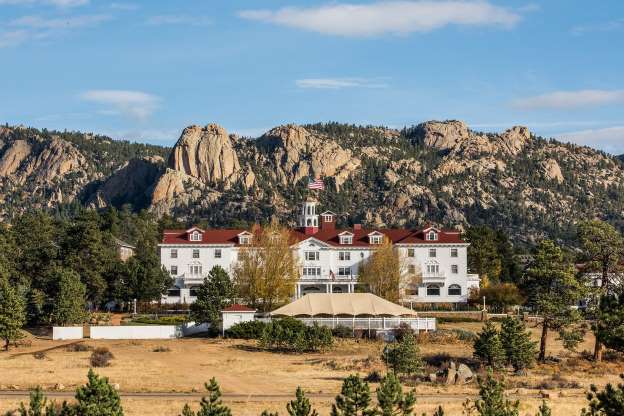
THE STANLEY HOTEL

Estes Park, CO
The Stanley Hotel is a sprawling and gorgeous hotel, boasting 142 rooms and views of the Rocky Mountains. It is here where author Stephen King, while on vacation with his wife, Tabitha, came up with the idea for his novel “The Shining.” The book tells the story of a family who comes to The Overlook, a similar Colorado hotel, to be its winter caretakers, only to learn the hotel is haunted by malevolent spirits. Following the popularity of “The Shining,” rumors of real-life hauntings swirled, leading the hotel to offer ghost tours. However, The Stanley Hotel does not appear in the film by Stanley Kubrick. Rather, the exteriors of the fictitious Overlook are actually The Timberline Lodge in Mount Hood, Oregon, in the 1980 horror classic


https://en.wikipedia.org/wiki/National_Register_of_Historic_Places.


The Stanley Hotel is a 142-room Colonial Revival hotel in Estes Park, Colorado, United States of America. Approximately five miles from the entrance to Rocky Mountain National Park, the Stanley offers panoramic views of Lake Estes, the Rockies and especially Long’s Peak. It was built by Freelan Oscar Stanley of Stanley Steamer fame and opened on July 4, 1909, catering to the American upper class at the turn of the century.[2] The hotel and its surrounding structures are listed on the National Register of Historic Places.[1]
The Stanley Hotel hosted the horror novelist Stephen King, serving as inspiration for the Overlook Hotel in his 1977 bestseller The Shining and its 1980 film adaption of the same name, as well as the location for the 1997 miniseries. Today, it includes a restaurant, spa, and bed-and-breakfast, and provides guided tours which feature the history and alleged paranormal activity of the site.


History
In 1903, the Yankee steam-powered car inventor Freelan Oscar Stanley (1849-1940) was stricken with a life-threatening resurgence of tuberculosis.[3] The most highly recommended treatment of the day was fresh, dry air with lots of sunlight and a hearty diet. Therefore, like many “lungers” of his day, Stanley resolved to take the curative air of Rocky Mountain Colorado. He and Flora arrived in Denver in March and, in June, decided to spend the rest of the summer in the mountains, in Estes Park. Over the course of the season, Stanley’s health improved dramatically.[2] Impressed by the beauty of the valley and grateful for his recovery, he decided to return every year. He lived to the ripe age of 91, dying of a heart attack in Newton, Massachusetts, one year after his wife, in 1940.
By 1907, Stanley had recovered completely. However, not content with the rustic accommodations, lazy pastimes and relaxed social scene of their new summer home, Stanley resolved to turn Estes Park into a resort town. In 1907, construction began on the Hotel Stanley, a 48-room grand hotel that catered to the class of wealthy urbanites who composed the Stanley’s’ social circle back east.[3]

The 4th Earl of Dunraven and Mount-Earl
The land was officially purchased in 1908 through the representatives of Lord Dunraven, the Anglo-Irish peer who had originally acquired it by stretching the provisions of the Homestead Act and pre-emption rights. Between 1872 and 1884, Dunraven claimed 15,000 acres (61 km2) of the Estes Valley in an unsuccessful attempt to create a private hunting preserve, making him one of the largest foreign holders of American lands. Unpopular with the local ranchers and farmers, Dunraven left the area for the last time in 1884 relegating the ranch to the management of an overseer.[2][3] Dunraven’s presence in Colorado had become so well known in the United States that his situation was parodied in Charles King’s novel Dunraven Ranch (1892) as well as James A. Michener’s Centennial (1974). His reputation was such that, when Stanley suggested “The Dunraven” as a name for his new hotel, 180 people signed a buckskin petition requesting that he name it for himself instead.
The structure was completed in 1909 and featured a hydraulic elevator, dual electric and gas lighting, running water, a telephone in every guest room and a fleet of specially-designed Stanley “Model Z” Mountain Wagons to bring guests from the train depot twenty miles away; all of this at a time when Estes Park was little more than a locale for hunters and naturalists. Originally, Stanley chose an ocher color for the hotel’s exterior with white accents and trim. The hotel was not equipped with heat until 1983 and closed for the winter every year. The presence of the hotel and Stanley’s own involvement greatly contributed to the growth of Estes Park (incorporated in 1917) and the creation of the Rocky Mountain National Park (established in 1915).
Stanley operated the hotel almost as a pastime remarking once that he spent more money than he made each summer. In 1926, he sold the Stanley to a private company incorporated for the sole purpose of running it. The venture failed and, in 1929, Stanley purchased his property out of foreclosure selling it again, in 1930, to fellow auto and hotel magnate Roe Emery of Denver. During Emery’s tenure as owner, the structures were painted white inside and out and most of the original electro-gas fixtures were replaced.

Seals and Croft, Castles in the Sand/Song share

Never heard this one before, but thought I would share!


“Castles In The Sand”

Every little thing you do makes me feel good.
And I could be your prince, babe, if I only would.
And I could take you places you think you’d like to go.
And I could show you secrets behind ev’ry closed door.

But it’s only the castles in the sand. I’ll never be your man.
Castles in the sand, they’ll never, never stand.
Like castles in the sand, I’ll never be your man.

Now every little thing you do makes me feel fine.
And I could be your daddy, if it’s on your mind.
And I could buy you diamonds and all them fancy clothes.
And I could give you lovin’ like nobody knows.
But it’s only the castles in the sand, love. I’ll never be your man.
Castles in the sand, they’ll never, never stand.
Like castles in the sand, I’ll never be your man.

Your eyes are dancing and saying to me in the sunlight, I want you so,
You are beautiful, a princess. But I’m like the sand when the wind blows.

It’s only the castles in the sand. I’ll never be your man.
Castles in the sand, they’ll never, never stand.
Like castles in the sand, I’ll never be your man.
Castles in the sand, castles in the sand, castles in the sand.
See the castles in the sand.

Scariest Places#2/Share

Slide 3 of 26: New Orleans, LANew Orleans' beautiful cemeteries are popular sights to see among the Big Easy's myriad tourist attractions, with many ponying up the money for tours and the chance to view the above-ground tombs. The St. Louis Cemetery is the oldest among them, dating back to the 1700s. The tombs and plots were not buried in precise rows and columns, giving a labyrinthian feel to the cemetery. Some claim the cemetery is haunted by several ghosts, including voodoo legend Marie Laveau and Henry Vignes, a sailor whose landlord cheated him out of his burial plot and whose spirit now has no place to rest.

ST. LOUIS CEMETERY

New Orleans, LA
New Orleans’ beautiful cemeteries are popular sights to see among the Big Easy’s myriad tourist attractions, with many ponying up the money for tours and the chance to view the above-ground tombs. The St. Louis Cemetery is the oldest among them, dating back to the 1700s. The tombs and plots were not buried in precise rows and columns, giving a labyrinthian feel to the cemetery. Some claim the cemetery is haunted by several ghosts, including voodoo legend Marie Laveau and Henry Vignes, a sailor whose landlord cheated him out of his burial plot and whose spirit now has no place to rest.


Saint Louis Cemetery (French: Cimetière Saint-Louis) is the name of three Roman Catholic cemeteries in New Orleans, Louisiana. Most of the graves are above-ground vaults constructed in the 18th and 19th centuries.

Wikimedia Commons has media related to St Louis Cemetery 1.

Saint Louis Cemetery No. 1 with newly renovated vaults
St. Louis Cemetery No. 1 is the oldest and most famous. It was opened in 1789, replacing the city’s older St. Peter Cemetery (no longer in existence) as the main burial ground when the city was redesigned after a fire in 1788.
It is 8 blocks from the Mississippi River, on the north side of Basin Street, one block beyond the inland border of the French Quarter. It borders the Iberville housing project. It has been in continuous use since its foundation. The nonprofit group Save Our Cemeteries and commercial businesses offer tours for a fee.
Famous New Orleanais buried in St. Louis No. 1 include Etienne de Boré, wealthy pioneer of the sugar industry and the first mayor of New Orleans; Homer Plessy, the plaintiff from the landmark 1896 Plessy v. Ferguson Supreme Court decision on civil rights; and Ernest N. “Dutch” Morial, the first African-American mayor of New Orleans.
The renowned Voodoo priestess Marie Laveau is believed to be interred in the Glapion family crypt. Other notable New Orleanians here include Bernard de Marigny, the French-Creole aristocrat and politician who founded both the Faubourg Marigny and Mandeville, Louisiana; Barthelemy Lafon, the architect and surveyor who allegedly became one of Jean Lafitte’s pirates; and Paul Morphy, one of the earliest world champions of chess. Delphine LaLaurie, the notoriously cruel slave owner, is also believed to lie in rest here. Architect and engineer Benjamin Latrobe was buried at St. Louis No. 1 after dying from yellow fever in 1820, while doing engineering for the New Orleans water works. In 2010, actor Nicolas Cage purchased a pyramid-shaped tomb to be his future final resting place.
The cemetery spans just one square block but is the resting place of many thousands. A Protestant section (generally not vaulted) lies in the northwest section.
Effective March 1, 2015, the Roman Catholic Diocese of New Orleans, which owns and manages this cemetery, has closed it to the general public, ostensibly because of the rise in vandalism there. However, in a controversial move, the diocese is now charging tour companies for access ($4,500 per year, or lesser amounts for short periods). Families who own tombs can apply for a pass to visit.

https://en.wikipedia.org/wiki/Saint_Louis_Cemetery

Six Word Story Challenge

https://jirogers-author.com/2018/10/05/six-word-story-challenge-g/

The challenge is to use the letter given in a six word story.

adult birthday birthday gift box
Photo by Porapak Apichodilok on Pexels.com

G-

Gracious girl gave gifts generously. Good going!

See the source image