Keeping the weeds at bay is an essential part of caring for your garden. If you’re looking for a quick and easy way to get rid of those unwanted plants, you’re probably turning to weed killer.
High Profile Green
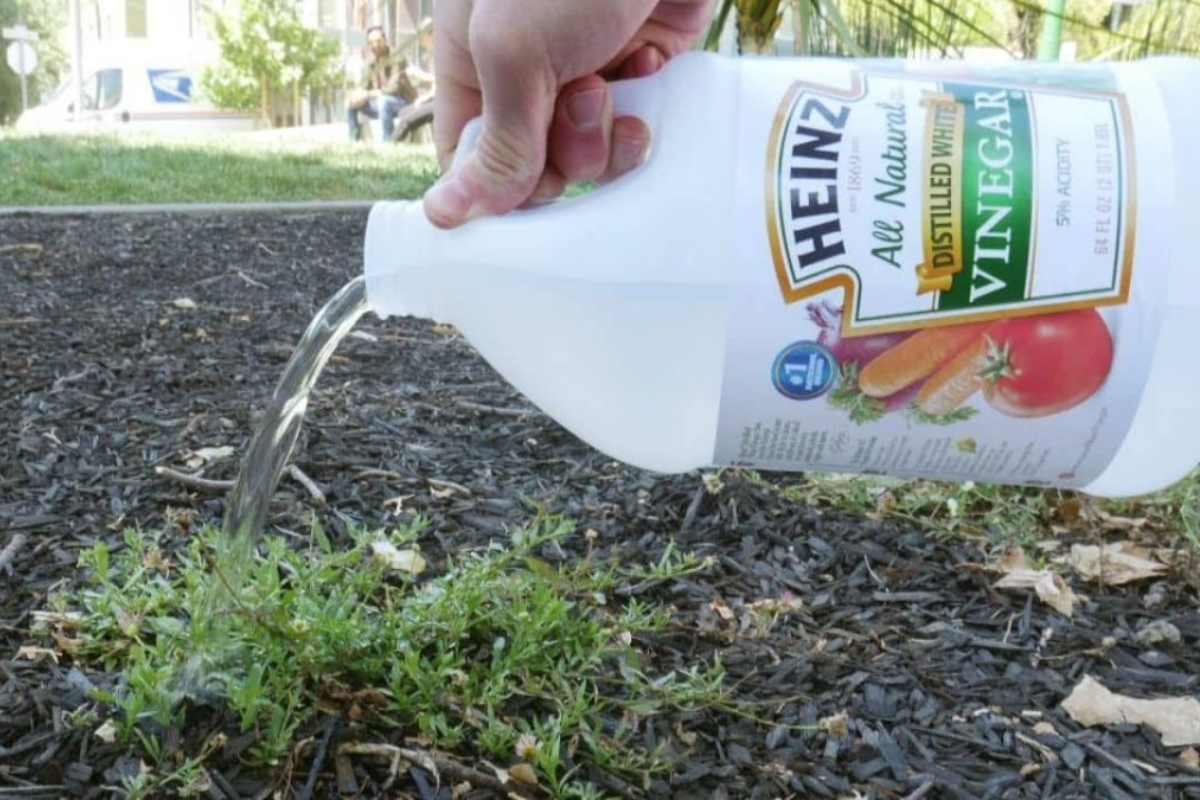
While store-bought weed killer is effective, it’s also filled with harsh chemicals that may damage your garden, rather than help it. Plus, the cost of weed killer can add up over time. To eliminate those problems, make your own weed killer at home using natural ingredients. Simply mix up a little dish soap, vinegar, and salt, pop it into a spray bottle, and watch those weeds disappear.
How To Use Aspirin In The Garden March 17, 2020 By Admin
How To Use Aspirin In The Garden
How To Use Aspiring In The Garden: Take 2-3 pills of aspirin and stir them in gallon of water. Allow it to dissolve completely, then add little amount of liquid soap in it. Now fill the solution in a sprayer, make sure it is completely dissolved.
How To Use Aspirin For Vegetables? Aspirin can be used to many vegetables like tomatoes, eggplants, basil etc. using it for your vegetables instead of fertilizers will increase the production. So use it for every three weeks, because salicylic acid in aspirin enhances the natural protection of plants along with growth rate.
Even according to a study of US department of agriculture showed that, fungal diseases of plants can be decreased using aspirin spray. It even helps in preventing infection by blight, which can easily turn them in to mouth.
How To Use It For Tomato Plants? A fungus is a major problem to deal with especially when growing tomatoes. Aspiring is a wonderful medicine to harvest healthy tomatoes. It even helps in removing diseases and increasing the yield.
Aspirin is also used as a rooting hormone for your tomato plants. To make rooting hormones, take a glass of water and put a tablet in it. Allow it to dissolve completely then coat it on the lower surface of the plant which is to the propagation and leave it for some time. Plant it later.
Growing golden euonymous shrubs (Euonymus japonicus ‘Aureo-marginatus’) bring color and texture to your garden. This evergreen offers forest-green foliage that is broadly trimmed in bright golden yellow, making the shrub ideal for bright hedges or accent plants. You’ll find another enticing reason to start growing golden euonymous shrubs if you learn just how easy golden euonymous care can be. Read on for more golden euonymous information. Golden Euonymous Information Golden euonymous information tells you that this is a very dense shrub with an oval shape if grown in full sun. The thick foliage makes it ideal for a privacy or even a sound hedge. The shrubs are really striking in the garden. The eyonymous leaves are leathery to the touch and grow up to three inches (7.5 cm.) long. The boldly variegated foliage is the star here. Most leaves are emerald green splashed liberally with buttercup yellow. But, occasionally, you’ll get branches where all of the leaves are solid yellow. Don’t expect showy flowers. The greenish-white blossoms appear in spring but you may not even notice them. They are inconspicuous. Golden euonymous shrubs can grow to 10 feet (3 m.) high and 6 feet (2 m.) wide. One alone can make a stunning statement in your garden. However, the dense foliage of these evergreen plants adapts readily to pruning and even shearing, so they are often used as hedges. How to Grow Golden Euonymous Shrubs If you are wondering how to grow golden euonymous shrubs, it isn’t very difficult. You’ll need to plant them in a sunny spot, provide weekly irrigation and fertilize them annually. Consider growing golden euonymous shrubs if you live in U.S. Department of Agriculture plant hardiness zones 6-9. When you start growing golden euonymous shrubs, you’ll do best to select a site with moist, fertile, well-drained soil. However, don’t worry too much about your soil type as long as it drains well. The bushes are tolerant and will accept almost any kind of soil. Caring for Golden Euonymous Shrubs Euonymous shrubs are not high maintenance. However, caring for golden euonymous shrubs requires more effort the year they are planted. They will require regular water – up to twice a week – until the root system has established. After that, a weekly watering is usually sufficient. Provide a balanced fertilizer in early spring. Use a slightly lower dose than recommended on the label to avoid burning the roots. If necessary, repeat in mid-autumn. Golden euonymous care includes an annual pruning if planted in a hedge or you want your garden to look neat and tidy. Left to their own devices, they may outgrow the space you have set aside for them.
If you’re looking for an easy-to-grow shrub that can provide coverage, Euonymus plant might be just what you’re looking for. The green-and-golden-leaved varieties provide a classic but colorful look for the garden. One of the most popular varieties of Euonymous is Wintercreeper, Euonymus fortunei. Eunonymous is an evergreen shrub that is part of the Celastraceae family and native to East Asia.
Wintercreeper’s scientific name, forutnei, comes from plant explorer Robert Fortune, while its common name indicates that it will creep higher and higher as it grows. Wintercreeper can climb up to 66 feet as a juvenile plant, if it has support, creeping high enough into the crowns of surrounding trees to get more light. However, it stops creeping as an adult. Without support, the vines can grow to between 5 and 15 feet. It can also be grown as a shrub (up to about 2 feet tall) or as a ground cover (less than 1 foot tall).
Botanical Name: Euonymous fortunei
Common Name: Wintercreeper
Plant Type: Evergreen shrub
Mature Size: 2 to 4 feet tall (shrub), 2 to 6 inches tall (ground cover), 5 to 15 feet tall (vine)
Sun Exposure: Partial sun to full sun
Soil Type: Moist, well-drained
Soil pH: Alkaline
Bloom Time: Summer
Flower Color: Flowers typically are ornamentally insignificant and often not visible
Hardiness Zones: 5, 6, 7, 8, 9
Native Area: China
How to Grow Euonymous Wintercreeper Plants
Wintercreeper is generally easy to grow and is tolerant of unfavorable conditions, such as poor soil, drought, and pollution, making it suitable for urban environments. However, because it’s technically an invasive plant, it can spread into surrounding lawns and garden areas, as well as climb adjacent trees if it is not kept in check.
Light
Wintercreeper thrives in full sun to part shade, but it can tolerate a significant amount of shade.
Soil
Wintercreeper grows easily in average, medium moisture, well-drained soil. It prefers alkaline soil but will tolerate many different soil conditions, including compacted soil, various pH levels, and dry (drought) soil conditions. It does not do well in wet soil.
Water
Water Wintercreeper when the top 3 inches of soil are dry. If the plant is already established, it can also tolerate drought conditions. If you live in a cold-winter climate, you can help prevent common winter problems, such as desiccation, by watering the plants well in fall, before the ground freezes.
Temperature and Humidity
Wintercreeper does well in a range of temperature and humidity levels, including USDA planting zones 5 through 9. Some other varieties of Euonymous are very cold-hardy, while others do best at the warmer end of the scale. In areas with harsh winters, Wintercreeper can suffer some winter damage from ice and dramatic temperature fluctuations. Wrapping plants in burlap can help minimize damage. Fortunately, this resilient plant is very good at recovering from the effects of winter.
Fertilizer
As an evergreen shrub with insignificant flowers, Wintercreeper may need no fertilizer for general health. If desired, you can feed it once a year, in fall, using a small amount of fertilizer and keeping it at least 2 inches from the plant’s trunk.
Varieties
There are three varieties of Wintercreepers:
Euonymus fortunei var. fortunei is native to China and Korea. This is the only variety that features the green-and-gold leaf pattern.
Euonymus fortunei var. radicans is native to Japan. This variety has plain green leaves.
Euonymus fortunei var. vegetus is native to northern Japan. Some experts say it’s not distinct from var. radicans.
Additionally, there are three cultivars, though not all will offer the emerald-and-gold coloring that many gardeners desire:
Emerald Gaiety has green and white leaves.
Emerald ‘n’ Gold has green leaves with wide yellow margins.
Emerald Surprise has green foliage with smaller yellow margins.
Toxicity
Fortunei is considered to be a toxic plant, but is it poisonous only if it is consumed in large quantities, so there’s no need to be too concerned.
Common Pests
One of the most common problems you may face with many types of Euonymous shrub is Euonymus scale, an armored insect that attacks the leaves and stems of infected plants. Treat for scale by pruning off infected branches and/or by applying a horticultural oil at the appropriate times of the growing season. In many areas, this is late May to early June and late July to early August, during the two hatches of the insect.
Comparing Wintercreeper to Japanese Euonymous
A similar species to Wintercreeper is the Japanese Euonymous (Euonymous japonicus), which is native to Japan, Korea, and China. Like the Wintercreeper, it’s an evergreen shrub that grows to be around 10 to 15 feet tall when grown as a vine. However, Japanese Euonymous is most commonly used as a hedge plant, growing 6 to 8 feet tall and 4 to 6 feet wide in its natural form. It has hardy, leathery foliage and dense growth, making it a good choice for a topiary plant.
There is a green and yellow cultivar of Japanese Euonymous, known as Bravo, while other cultivars—Albomarginatus, Latifolius Albomarginatus, and President Gauthier—have green and white leaves. There is also a dwarf variety, microphyllus, that’s about 2 to 3 feet high and is often used for edging.
Wondering how to start a garden? Find your confidence with these expert gardening tips.
Never gardened before? No problem. Make your grow-you-own dreams a reality with these 10 easy-to-follow tips.
1. Site it right.
Starting a garden is just like real estate it’s all about location. Place your garden in a part of your yard where you’ll see it regularly (out of sight, out of mind definitely applies to gardening). That way, you’ll be much more likely to spend time in it.
2. Follow the sun.
Misjudging sunlight is a common pitfall when you’re first learning to garden. Pay attention to how sunlight plays through your yard before choosing a spot for your garden. Most edible plants, including many vegetables, herbs, and fruits, need at least 6 hours of sun in order to thrive.
3. Stay close to water.
One of the best gardening tips you’ll ever get is to plan your new garden near a water source. Make sure you can run a hose to your garden site, so you don’t have to lug water to it each time your plants get thirsty. The best way to tell if plants need watering is to push a finger an inch down into the soil (that’s about one knuckle deep). If it’s dry, it’s time to water.
4. Start with great soil.
When starting a garden, one of the top pieces of advice is to invest in soil that is nutrient-rich and well-drained. Achieve this just-right blend by mixing 3 inches of Miracle-Gro® All Purpose Garden Soil into the top 6 to 8 inches of existing soil if you’re planning to plant in the ground. If you’re planting in a raised bed, use Miracle-Gro® Raised Bed Soil, which is the perfect weight and texture for raised bed growing.Display logoOff
5. Consider containers.
When space is at a premium, look to containers. You can grow many plants in pots, including vegetables, herbs, flowers, fruit trees, berries, and shrubs. When gardening in containers, use a pot that’s large enough for the plant it’s hosting, and fill it with Miracle-Gro® Moisture Control® Potting Mix. Not only is it specially formulated to help plants in pots thrive, but it also helps protect against over- and under-watering.
6. Choose the right plants.
It’s important to select plants that match your growing conditions. This means putting sun-loving plants into a sunny spot, choosing heat-tolerant plants in warm climates, and giving ground-gobbling vines like pumpkins and melons ample elbow room (or a trellis to climb). Do your homework and pick varieties that will grow well where you live and in the space you have. And to get a step up on success when growing veggies and herbs, start with vigorous young plants from Bonnie Plants® instead of trying to grow from seed.
7. Discover your zone.
Knowing your “hardiness zone” can help you choose the best plants. Simply put, it describes the coldest place a plant can grow. The higher the zone number, the warmer the climate. So if a plant is “hardy to zone 4” and you garden in zone 5, that plant will survive in your yard. If, however, you’re in zone 3, it’s too cold to grow that particular plant. Find out your hardiness zone.
8. Learn your frost dates.
Planting too early (or late) in the season can spell disaster for your garden. You need to know the last average spring frost date for your area so you don’t accidentally kill plants by putting them out prematurely. It’s also good to know your first average fall frost date so that you get your plants harvested or moved indoors before late-season cold damages them. Discover the average first and last frost dates for your area.
9. Add some mulch.
Apply a layer of mulch that’s 2 to 3 inches deep around each plant. This will help reduce weeds by blocking out the sun, and reduce moisture loss through evaporation, so you have to water less. For a polished look, put down a layer of Scotts® bagged mulch. Or, you can put down straw, shredded leaves, pine straw, or some other locally available material.
10. Feed plants regularly.
We’ve already talked about the importance of starting with great soil, but that soil works best in concert with regular boosts of high-quality nutrition for your plants. In other words, amazing soil + top-notch plant food = super garden success! So, a month after planting, begin feeding your garden with plant food like Miracle-Gro® Water Soluble All Purpose Plant Food. Be sure to follow label directions.
One last word of advice: Stock up on the basic tools you need to make it easier to grow. Get all the details in our Tools for Gardening article. Happy growing!
Plant Spacing Guide – Information On Proper Vegetable Garden Spacing
When planting vegetables, spacing can be a confusing topic. So many different kinds of vegetables need different spacing; it’s hard to remember how much space goes between each plant.
In order to make this easier, we have put together this handy plant spacing chart to help you. Use this vegetable plant spacing guide to help you plan how best to place vegetables in your garden.
To use this chart, simply find the vegetable you plan on putting into your garden and follow the suggested spacing for between the plants and between the rows. If you plan on using a rectangular bed layout rather than a traditional row layout, use the upper end of each between the plant spacing for your chosen vegetable.
This spacing chart is not intended to to be used with square foot gardening, as this kind of gardening is more intensive.
We hope this plant spacing chart will make things easier for you while you figure out your vegetable garden spacing. Learning how much space needs to be between each plant results in healthier plants and a better yield.










 Mws R Writings