Okay, So That Everyone Knows…CORONAVIRUS

FACTS THAT WE KNOW ABOUT THE CORONAVIRUS

  • The Coronavirus (CoV) is a large virus family with 7 known types.
  • Coronavirus got its name from the Latin word corona which means ‘crown’ or ‘halo.’
  • As a zoonotic virus, CoV can be transmitted among animals and people.
  • Coronavirus infections are rampant in the fall or winter seasons.
  • For now, the only treatment options for CoV patients are supportive care and symptom relief
  • From the 1960s, the identification of CoV is under human pathogens.
  • Coronaviruses in humans affect upper respiratory cells and gastrointestinal tract cells.
  • Around ⅓ of common cold cases traces its causes to coronaviruses.
  • Agricultural records showed that some CoVs also infected birds, cats, cattle, dogs, pigs, and rodents.
  • As per investigations, civet cats appeared to have transmitted SARS-CoV to humans.
  • Dromedary camels were the culprits of MERS-CoV transmission to humans.
  • Usually, general symptoms surface 2-14 days post-exposure.
  • To this date, vaccines for coronavirus protection are still not available.
  • As of February 3, 2020, the new nCoV has already killed over 360 people in China.
  • More than 17,000 patients suffer from the nCoV in over 25 countries.
  • A new strain called Novel Coronavirus (nCoV) has just been recently found in humans.
  • SARS-CoV, MERS-CoV, and nCoV are the human CoVs known to spread through contact from infected animals to humans.
  • In March 2003, the SARS-CoV was officially diagnosed as a global threat.
  • One known vital driver of SARS and MERS epidemiology is a nosocomial transmission
  • .
  • As of February 3, 2020, the source of infection of the nCoV is still unknown.

The most prominent symptoms of coronaviruses are respiratory symptoms.

Alongside it is breathing difficulties, cough, fever, and shortness of breath. However, severe cases could eventually lead to pneumonia, kidney failure, severe acute respiratory syndrome, and worst, death.

Respiratory droplets carry human coronaviruses from an infected person to people nearby.

By coughing or sneezing, an infected person could transmit the disease via close personal contact. Another way is when a person touched a contaminated object or surface and then touched the eyes or mouth afterward.
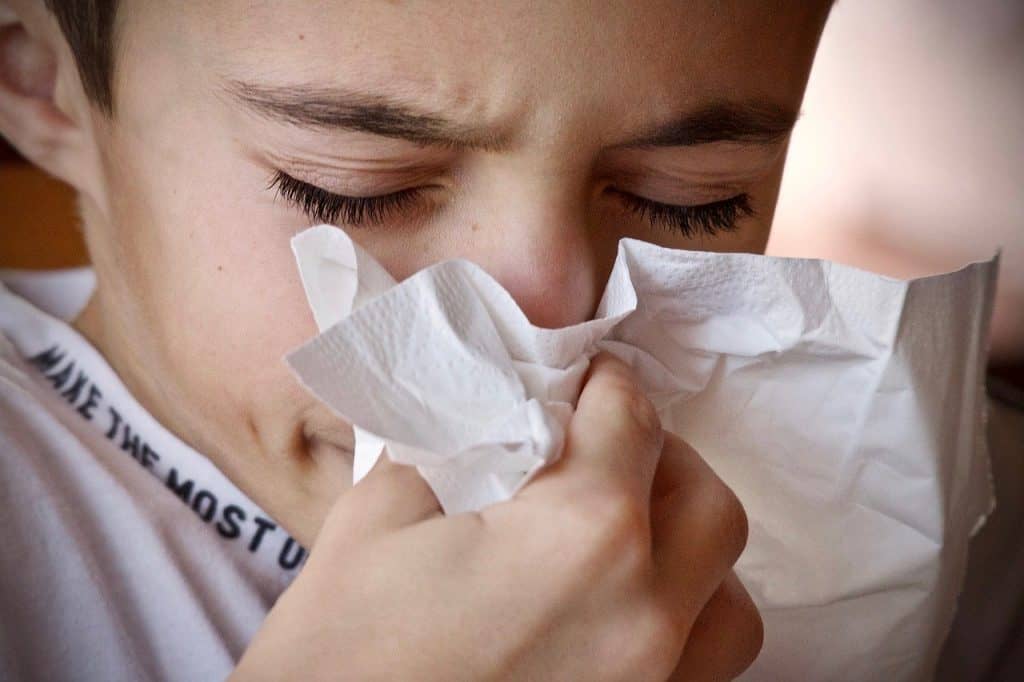
symptoms of coronavirus
Image by Luisella Planeta Leoni from Pixabay

It is advisable to avoid close contact with people who are showing symptoms.

Other preventive measures that you can do are covering your mouth and nose when sneezing and coughing, properly cooking eggs and meat, and washing your hands regularly.

Diagnosis of coronavirus infections requires special laboratory tests.

These tests involve blood or respiratory samples and are more ideal for people with severe symptoms. In cases of infection from uncommon CoV strains like MERS, the tests should also be recommended.

The Coronaviridae family has a subfamily named Orthocorinavirinae.

Further, this subfamily has four CoV genera classifications namely Alpha-, Beta-, Delta-, and Gammacoronavirus.

4 out of the 7 CoV types cause respiratory infection.

The KHU1, 229E, OC43, and NL63 are more common than you might think. Their effects could range from mild to moderate infections like that of the common cold.

2 out of the 7 CoV types can cause severe respiratory infections.

These are the Severe Acute Respiratory Syndrome coronavirus or SARS-CoV, and the Middle East Respiratory Syndrome coronavirus or the MERS-CoV.

The discovery of the 7th type was not until 2019.

The Novel Coronavirus or 2019-nCoV first appeared in Wuhan of Hubei Province in China. Until now, public health officials are still figuring out the recently discovered coronavirus and its corresponding infection.

SARS-CoV surfaced in China back in 2002.

The SARS-causing virus immediately spread to over 24 countries in Asia, Europe, North and South America. Thankfully, SARS cases dwindled until there are no longer reported cases from all over the world since 2004.

SARS-CoV most likely originated from bats.
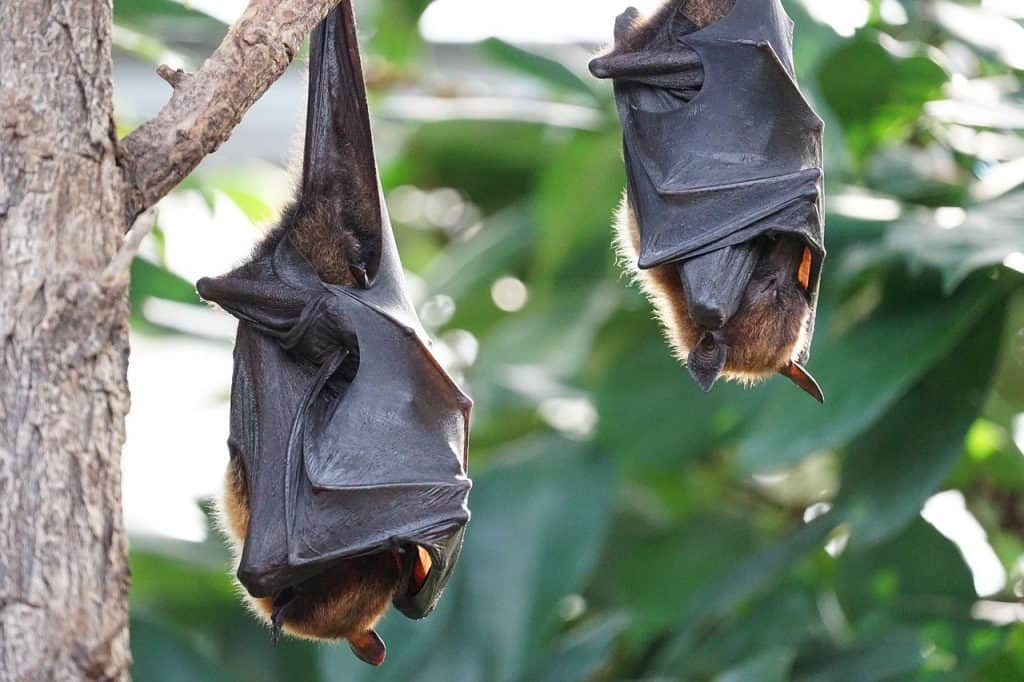
coronavirus from bats
Image by Salmar from Pixabay

However, it spread to Chinese ferret badgers, Himalayan palm civets, and raccoon dogs at the Guangdong wet markets. Handlers or consumers got infected as well, further spreading the virus via human-to-human transmission.

Bats reportedly contain a broad range of coronaviruses.

It is crucial in the evolution of viruses, particularly the alpha- and betacoronavirus lineages. Still, there are other animal species that serve as intermediate hosts and animal reservoirs.

MERS-CoV cases trace back to residence or travels in and near the Arabian Peninsula.

First discovered in 2012, this type of coronavirus infection recorded around 2,500 infected people.

The main source for MERS-CoV was dromedary camels.

These virus animal reservoirs served as the intermediate host source for human infections of the same strain. For MERS, there have been no documented human-to-human transmission or community outbreaks apart from close contacts.
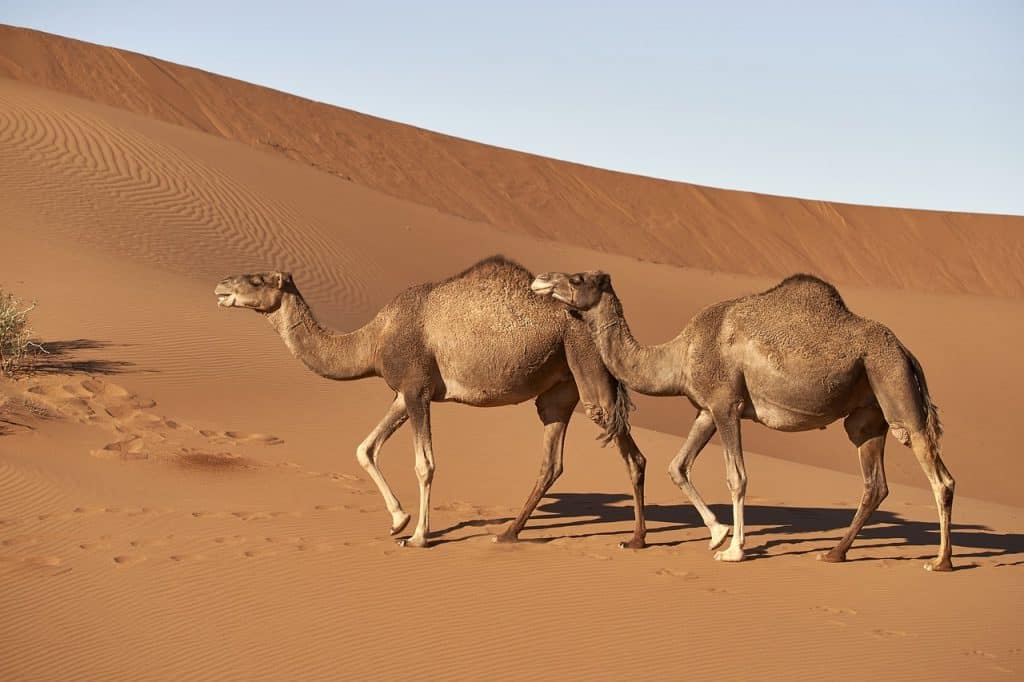
MERS-CoV from dromedary camels
Image by Wolfgang_Hasselmann from Pixabay

The majority of MERS-CoV cases sprung from human-to-human infections in healthcare settings.

Whether the transmission is airborne, ingestion or via droplet, the accurate routes are still unclear apart from close contact. Zoonotic infections reportedly came from the consumption of raw camel milk and other camel products.

MERS-CoV could thrive on plastic and metal surfaces for up to 48 hours.

It represents the universal environmental conditions in indoor spaces like a hospital ward, especially when at 20°C and 40% relative humidity. Also, bacterial culture from air and surfaces show that MERS could survive on surfaces even several days past contact with an infected patient.

The coronaviruses are sensitive to heat.

Ultraviolet light, non-ionic detergents, liquid solvents, and oxidizing agents also affect the virions adversely. Moreover, higher temperatures or increased levels of relative humidity also decrease viability.

The H5N1 or bird flu is another type of virus that humans acquire from animals.

As the name suggests, the bird flu is an influenza virus that causes severe respiratory disease in birds. The ‘avian influenza,’ as it is also called, is highly infectious. Occasional human bird flu cases occur, but the human-to-human transmission of the infection is difficult.
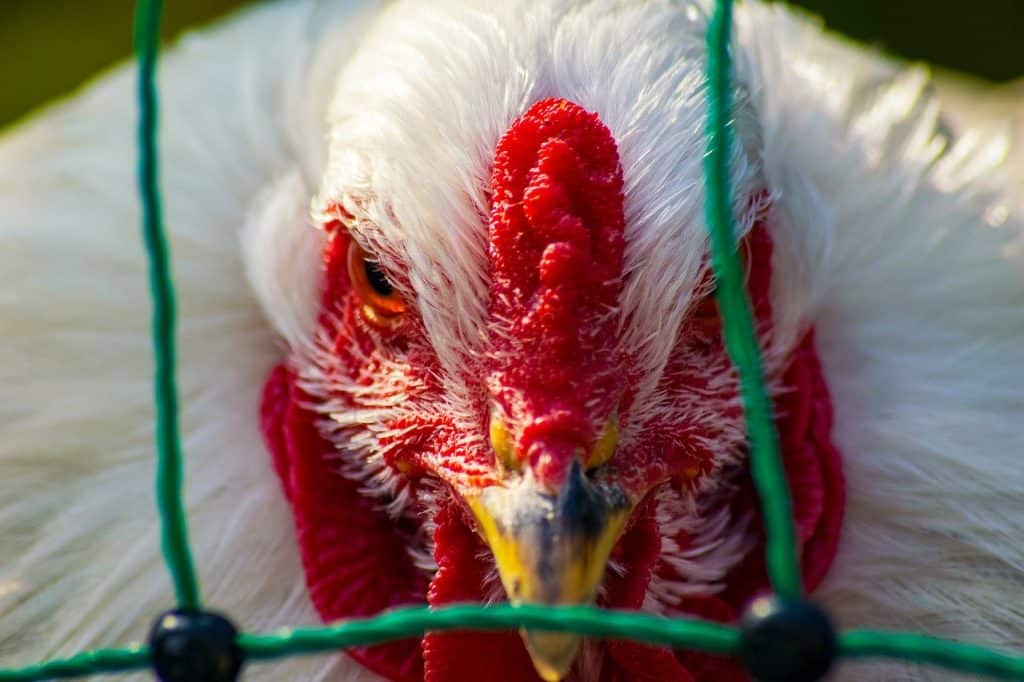
bird flu
Image by Bernd Focken from Pixabay

The U.S. government issued a traffic advisory at level 4 for the 2019-nCoV.

The World Health Organization declared the outbreak a public health emergency and an international concern. Hence, government officials advised residents not to travel to China.

Airlines from all over the world imposed a travel ban in an attempt to contain the spread of the 2019-nCoV from Wuhan.

Asian, European, and North American airlines canceled flights to China. Some of the institutions on the list are Air Asia, Air India, American Airlines, British Airways, Cathay Pacific, Finnair, IndiGo, Lufthansa, and United Airlines. While some either minimized or stopped flying to China entirely, others offered refunds to customers.

https://www.usatoday.com/story/news/nation/2020/03/02/coronavirus-live-updates-covid-19-death-toll-new-york-washington-florida-cases/4927183002/

Freeze What?

When it comes to dairy products, getting your money’s worth from them can seem like an impossible task. Too often that gallon of milk ends up down the drain once the expiration date hits. But there is hope — and it lies in your freezer. Value and convenience can be found in freezing certain foods, and to the surprise of many, milk is one of them. Learn how to safely freeze and thaw milk for later use so you can save money and reduce waste.

Can You Freeze Milk?

Good news! According to the Dairy Council of California, it’s perfectly fine to freeze milk for later use. You just have to make sure you do so before the expiration or “best by” date. If you find yourself always pouring out-of-date milk down the drain, this simple solution can save you money and reduce food waste.

How to Freeze Milk

You can actually freeze milk in its original container, so long as that container is plastic. If your milk comes in a glass or cardboard container, transfer it into a freezer-safe plastic container before you freeze. Milk will expand when frozen, causing glass or cardboard to break — and you don’t want that mess in your freezer. ADVERTISEMENT

Because milk will expand, it’s important that you don’t place a completely full jug of milk straight into the freezer. Leave one to two inches of headspace in each container, whether you’re freezing the entire jug or you’re separating it out into individual containers. Then simply reseal the lid, shake vigorously, and place in the freezer.

Write the date on the milk with a marker. Milk will save in the freezer for up to three months, although it’s best to use it sooner rather than later, as it can absorb odors from food stored nearby.

How to Thaw Milk

For safe consumption, milk will need to be thawed either in the refrigerator or in cold water. Do not thaw milk at room temperature, because this can risk the quality of the milk if it gets too warm.

To safely thaw milk, place it in the refrigerator to slowly thaw. To speed things up, you can also fill a sink or a large bowl with cold water and place the entire container in the water. Replace the water as it warms up.

You may notice the texture of the milk after it’s thawed is a bit grainy. This is because the fat separates. But fear not! A vigorous shake will help return the milk to its original texture. Thawed milk should be consumed within three to four days.

Girl drinking milk

Image Source/Getty Images

How Milk Changes After Freezing

Although thawed milk will retain its nutrients, you may notice a difference in its appearance. The fat may separate, causing the texture to be slightly grainy, which is why shaking it prior to use is necessary.

You may also use an immersion blender to mix the fats back into the milk. Because of their lower fat content, skim milk and low-fat milk freeze best.

Another change you might notice in your milk is the flavor, and not because the milk has gone bad. Storing milk in the freezer (even with a sturdy plastic container) can cause it to absorb odors from particularly pungent foods (looking at you, seafood). This is why you should try to use your frozen milk sooner rather than later, and avoid storing it next to foods with strong odors.

Dr. Seuss and who else’s Birthday is Today?

MINE!!!!

Today is my birthday. It is no secret that I love Dr. Seuss, who shares the same birthday. It wasn’t until I reached adulthood that I knew we shared the same birthday. So I am going to share some of his famous quotes!

Image result for dr. suess quotes
See the source image


Image result for Dr. Seuss Quotes About Life

Dr. Seuss
Photo: Gene Lester/Getty Images

Quick Facts

Dr. Seuss Birth Date March 2, 1904

Death Date September 24,


QUOTE

If you can see things out of whack, then you can see how things can be in whack.”—Dr. Seuss


Dr. Seuss Biography

(1904–1991 )Updated:Feb 28, 2020 Original:Apr 27, 2017

Throughout his career, cartoonist and writer Dr. Seuss published over 60 books. ‘The Cat in the Hat’ and ‘Green Eggs and Ham’ were among his most famous works.

Who Was Dr. Seuss?

Theodor Seuss Geisel, better known by his pen name Dr. Seuss, was a writer and cartoonist who published over 60 books. He published his first children’s book, And to Think That I Saw It on Mulberry Street, under the name of Dr. Seuss in 1937. 

Next came a string of bestsellers, including The Cat in the Hat and Green Eggs and Ham. His rhymes and characters are beloved by generations of fans.

Family, Early Life & Education

Geisel was born on March 2, 1904, in Springfield, Massachusetts. His father, Theodor Robert Geisel, was a successful brewmaster; his mother was Henrietta Seuss Geisel.

At age 18, Geisel left home to attend Dartmouth College, where he became the editor in chief of its humor magazine, Jack-O-Lantern. When Geisel and his friends were caught drinking in his dorm room one night, in violation of Prohibition law, he was kicked off the magazine staff, but continued to contribute to it using the pseudonym “Seuss.”

After graduating from Dartmouth, Geisel attended the University of Oxford in England, with plans to eventually become a professor. In 1927, he dropped out of Oxford.

Early Career as a Cartoonist

Upon returning to America, Geisel decided to pursue cartooning full-time. His articles and illustrations were published in numerous magazines, including LIFE and Vanity Fair. A cartoon that he published in the July 1927 issue of The Saturday Evening Post, his first using the pen name “Seuss,” landed him a staff position at the New York weekly Judge.

Geisel next worked for Standard Oil in the advertising department, where he spent the next 15 years. His ad for Flit, a popular insecticide, became nationally famous.

Around this time, Viking Press offered Geisel a contract to illustrate a children’s collection called Boners. The book sold poorly, but it gave him a break into children’s literature.

At the start of World War II, Geisel began contributing weekly political cartoons to the liberal publication PM Magazine. In 1942, too old for the World War II draft, Geisel served with Frank Capra’s Signal Corps, making animated training films and drawing propaganda posters for the Treasury Department and the War Production Board.


I just enjoy the fact that I was born on the same day as Dr. Seuss. He has and will continue to inspire the hearts of children and adults. That is something I wish I can do as well.

SO

HAPPY BIRTHDAY TO ME AND ALL THOSE WHO SHARE THE SAME DAY!


Another Year
Poet: Catherine Pulsifer, © 2017

Another year has passed
A birthday for you is in store
May you find this coming year
Be one with lots of open doors.

Follow your dreams
Remember you can achieve
All that you dream
Whatever your mind can conceive

So this poems brings
wishes for you
in hopes that the coming year
is filled with things you love to do.

Laugh Little

Make Your Own Cast Mold, Re-Usable

Two Ingredient Casting Mold

  • Silicone
  • Maizena or cornstarch

The Other Stuff

  • Whatever you want to mold. I used my shapely pear 😉
  • Plastic knife for mixing
  • Mixing container
  • Caulking gun
  • Sharp knife
  • Super Glue
  • Gloves
Check out how to make your own molds using two basic ingredients you probably have at home already. #mold #mould #concrete #DIY
https://acraftymix.com/blog/two-ingredient-mold/

Prepping the Form for Molding

Wash and dry the pear, or whatever you decide to cast. Since I’ll be filling the mold with concrete once it’s dry, I stuck a pen lid into the bottom of the pear. It helps keep the pear upright while the mold sets and will leave a hole that’s the right size for pouring in the concrete mix later.

Check out how to make your own molds using two basic ingredients you probably have at home already. #mold #mould #concrete #DIY

See what I mean about the cute pear butt 😉 I stuck the pen lid into a bit of polystyrene before mixing up the mold. It’s a trick I learned when painting polystyrene balls 😉

Mixing the Two Ingredient Mold

Put your gloves on and throw some cornstarch into a container. Cut the tip off of the silicone tube and put it inside the caulking gun. Squeeze some silicone into the cornstarch. Roughly the same amount. Then add some more cornstarch on top of the silicone and stir using the plastic knife. It’s probably best to do this outside. Silicone has an incredibly strong vinegary smell. When it looks like it’s almost mixed, start kneading the mixture until it forms a stiff paste that resembles bread dough.

Check out how to make your own molds using two basic ingredients you probably have at home already. #mold #mould #concrete #DIY

If the mixture is too tacky or sticky, add some more cornstarch. If it’s too dry and flaky, like in the piccy above, add more silicone. Once it’s ready, flatten it out a bit and wrap it around the shape you want to cast. About 7 to 10 mm thick is perfect. That’s about 1/4” to 3/8”. Make sure you squish it into all the nooks and crannies.

Check out how to make your own molds using two basic ingredients you probably have at home already. #mold #mould #concrete #DIY

Sit back and wait for it to dry, probably about ½ hour depending on the silicone you used. Use a sharp knife to cut the mold and remove your form. The two ingredient mold is very pliable so you can just peel it off. If you’re molding a pear, please don’t eat it. Rather wash it off again and add it to the compost heap.

Check out how to make your own molds using two basic ingredients you probably have at home already. #mold #mould #concrete #DIY

Use super glue and carefully glue the two halves back together again, and it’s ready for casting.

Check out how to make your own molds using two basic ingredients you probably have at home already. #mold #mould #concrete #DIY

Casting the two ingredient mold

You can either use concrete or plaster of Paris. I didn’t have to add any kind of release agent, I simply mixed up some concrete and poured it inside the mold. Just make sure you shake it around a little to get rid of any air bubbles. Once the concrete sets, carefully cut along the seam lines and remove your form.

Check out how to make your own molds using two basic ingredients you probably have at home already. #mold #mould #concrete #DIY

The two ingredient mold can be reused over and over again, just wash it off, and you’re good to go.

How to make your own molds using two basic ingredients you probably have at home already. It's reusable and really easy to make #mold #mould #concrete #DIY #acraftymix #2ingredient #concretemold

To finish the pear off, I used some copper paint to create that 5-star restaurant look and added a bent, rusty nail as a stalk. The leaf was cut from a piece of metal that’s been lying outside in the rain for a few months.

See out how to make your own molds using two basic ingredients you probably have at home already. #mold #mould #concrete #DIY

A little bit of rust always works for me.

Ever wanted to make your own silicone molds? All you need is two ingredients and you probably have them at home already. #mold #mould #concrete #DIY

The easy two ingredient mold works really well and can be reused over and over again. And I do so love that combination of concrete, copper, and rust.

Ever wanted to make your own silicone molds? All you need is two ingredients and you probably have them at home already. #mold #mould #concrete #DIY

Just a word of warning. Once you make your first mold, everything looks moldable 😀 We’ve turned an old broken doll into a garden ornament and even created our own Egyptian cartouche using the two-ingredient mold.

And if you like the idea, don’t forget to save it to Pinterest so that you can find it again!
How to make your own molds using two basic ingredients you probably have at home already. It's reusable and really easy to make #mold #mould #concrete #DIY #acraftymix #2ingredient #concretemold

Link-Hummingbirds

returntonow.net/2019/08/15/watch-out-for-hummingbird-nests-when-pruning-branches-us-fish-and-wildlife-service-urges-gardeners/

Ladybug- Did You Know?

Poem

If by MwsR

If I’d known it would have soon been your end
My badge of pride I would have made bend.
If my heart knew it would lose a piece of itself
My notes and letters would have left that shelf.
If you ever knew that I cared…I wonder.
If I’d been more vocal ….ah but that was my blunder.
If life could have been kinder to us
Maybe we would have had less fuss.
If you hadn’t let guilt drag you away
My life would have turned out another way.
If people knew the struggle we both shared
The consequences and actions we both dared.
If the rejected soul of mine had found a home
It would have changed my inner need to roam.
If lost and hopeless was how you felt… as I had
And sleepless nights thinking of all the bad.
If anything, we shared that and had the same dreams.
Longing to change the impossible
If only that would have been possible!
If dreams had made wishes come true…
It would never be without you.