https://www.facebook.com/share/1in3ZN4vH3SXPibr/?mibextid=WC7FNe

https://www.facebook.com/share/1in3ZN4vH3SXPibr/?mibextid=WC7FNe


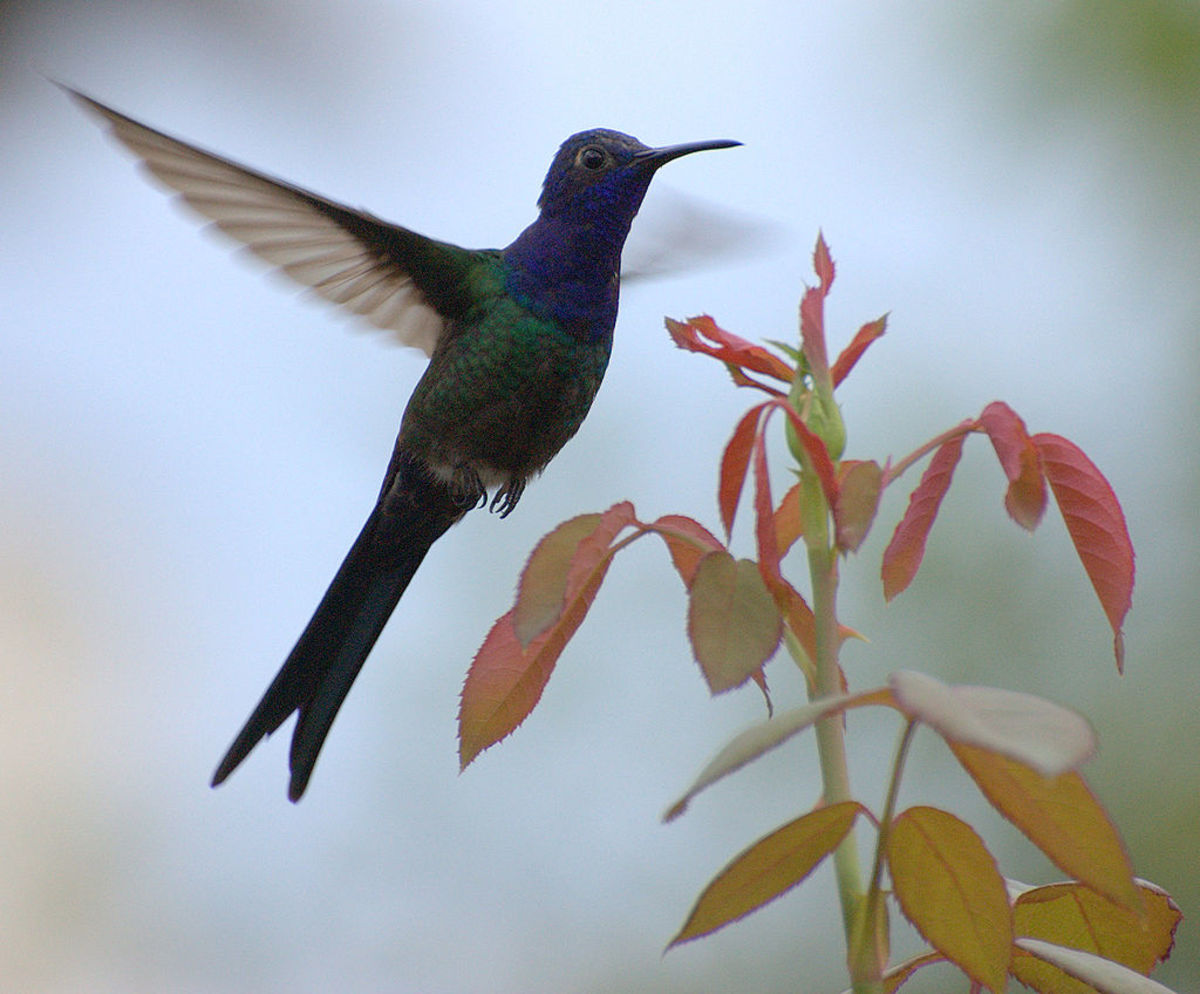
Scientific Name: Eupetomena macroura
Class: Aves
Habitat: Brazil
The swallow-tailed hummingbird lives in east and central South America. It prefers semi-open areas, sparse woodland, coastal regions, and gardens, but will avoid dense rainforest. It has a long forked tail that comprises half of the bird’s 16 cm length.https://www.youtube-nocookie.com/embed/ql-QPwTMJMQ?start=0
The swallow-tailed hummingbird has plumage that is a mixture of green, blue, and purple, and its wings flap at approximately 20 beats per second, allowing it to hover while feeding on flower nectar. They are aggressive towards other birds and will `dive-bomb’ or pester birds as large as hawks!
https://owlcation.com/
The 10 Most Beautiful and Majestic Animals in the World – Owlcation
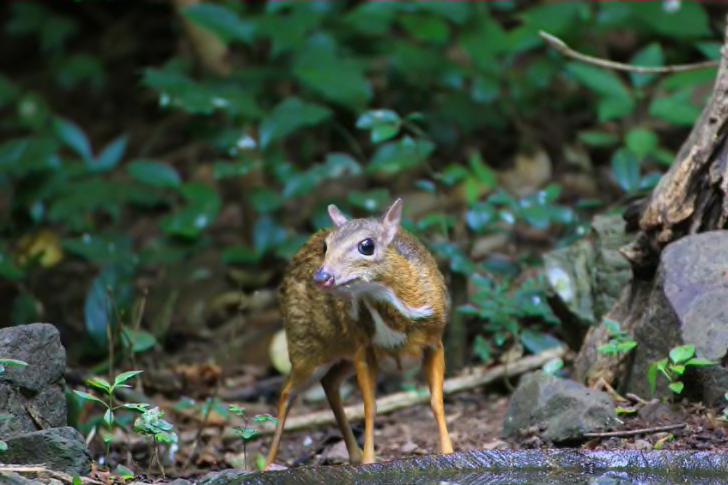
https://cdn.britannica.com/79/12979-004-E16CCFCC/Asiatic-chevrotain.jpg


Gasteracantha (known as spiny-backed orb-weavers, spiny orb-weavers, or spiny spiders) is a genus of orb-weaver spiders first named by Carl Jakob Sundevall in 1833.[2] The females of most species are brightly colored with six prominent spines on their broad, hardened, shell-like abdomens. The name Gasteracantha is derived from the Greek gaster (γαστήρ), meaning “belly, abdomen”, and akantha (άκανθα), meaning “thorn, spine”.[3] Spiny-backed orb-weavers are sometimes colloquially called “crab spiders” because of their shape, but they are not closely related to the true crab spiders.[4] Other colloquial names for certain species include thorn spider,[5] star spider,[6] kite spider, or jewel spider.
Members of the genus exhibit strong sexual dimorphism. Males are several times smaller than females, and they lack prominent spines or bright colors.[4][5][7]
Gasteracantha is distributed worldwide in tropical and subtropical climates. The genus is most diverse in tropical Asia, from India through Indonesia.[1] One species, G. cancriformis, occurs in the Americas.[4] Gasteracantha species are related to spine-bearing orb-weavers in several other genera (see Taxonomy and Systematics).[8]
Orb-weavers’ bites are generally harmless to humans.[9]
First described in 1798
This tiny, punky mammal can only be found in one place on Earth: Madagascar, off the coast of southeast Africa. These animals can grow up to 20 centimetres long (eight inches), weighing only 125 to 280 grams (four to 10 ounces). Its spines, like those of a porcupine, are detachable, providing a defence mechanism while foraging on the ground. This tenrec also uses its quills to communicate with other members of the species, rubbing them together to warn of a predator.

If you are wondering weather the tiny and cute creatures featured here are real, the answer is yes. They do exist. While the distinct honour of being the world’s largest monkeys go to the Mandrill Monkeys,( relatives of the baboons) , the tiny primates pictured here are the proud holders of the title, ‘the world’s tiniest monkeys’.
Aptly called Finger monkeys for their diminutive size, these teeny weeny monkeys are nothing more than 5-6 inches in size (not including the tail which can grow up to 8-9 inches. )They are said to be lighter than an apple,weighing only about 130-140 g: just 140 grams (0.3 pounds) for males and 120 grams for females.
Even though they are called Finger monkeys ,dwarf monkeys or pocket monkeys by many, their offical name is Pygmy marmoset (Callithrix pymaea).
These primates belong to the family Callitrichidae, species Cebuella and genus C. pygmaea.The marmosets are part of a primitive family of monkeys of the New World, including tamarins too.
Where are these adorable monkeys found? In the rain forests of Brazil, Peru, Bolivia, Ecuador and Colombia.In fact there are 22 species are found in Brazil and few in adjacent tropical countries.
They live in both dry and wet forests.They enjoy a view of the water and prefer forests that may have a riverfront view or else flood-plain.
Small is beautiful and indeed these tiny monkeys are baeutiful in their own way with furry bodies generally of tawny colouring with black flecks,large almond shaped eyes and fur around the head similar to a lion’s mane. they have either creamish or white underbellies and black rings on their tails .
These monkeys have claws, not nails. The claws enable them to climb the trees in the style of the squirrels, with an amazing skill and speed. Marmosets rarely descend on the ground and, in resting position, they stay lain on their belly, with the tail hanging. .

Their diet includes leaves, nectar of flowers, fruits, insects, spiders, small lizards, and sometimes, small reptiles.
Food habits also include drinking plant sap and eating gum from trees. They scramble about like squirrels in the deep rain forest and drink the sap of trees. Since they are so tiny they can climb very high up in the trees on slender branches to find untapped sources of food – the sap and gum of trees.
They spend most of the day making inch-deep holes in the bark of trees with the help of sharp, lower incisors and keep returning to the holes to gather and
eat gum produced by the trees. They also like to eat grasshoppers and some other insects when available. However, when the food source dwindles, the finger monkey shifts to another area. As these monkeys are highly social animals in the wild, they live in groups of 6-10 made of an adult pair and their offspring. They communicate with other members in the group by body language, scent marking, making high pitched sounds, and grooming each other.The communicating language includes high pitched clicks, squeaks, whistles and trills. In fact they can make noises that are so high pitch that humans can’t even hear them.
They do have a language of sorts, where certain types of calls and squeaks signify danger or other important monkey communications.
A female finger monkey can give birth every five months. Usually, the breeding female gives birth to twins and sometimes, to single babies and even twins, triplets and quadruplets, after around 135 days gestation (pregnancy period ). And can you imagine the size of a baby finger monkey at birth?! About half an ounce.

The responsibility of looking after the newborn is shared by both parents with the father finger monkey looking after the offspring for a couple of weeks after birth.
The parents are ably supported by the older offspring in the group.
The finger monkey is vulnerable to cats, snakes and birds of prey. When threatened, finger monkeys resort to either vocalizing, chasing or keeping still till the danger passes off. Unlike other primates, the species is not endangered, though loss of habitat is a concern. By the night, marmosets retreat in tree hollows.
These monkeys live in groups, in a well-established hierarchy.
Male pygmy marmosets may make displays of strength and prowess when confronted by other males and competing for territory.
They do this by raising and flattening their ear tufts, arching their backs and grimacing while eyeing each other.
Not only males fight for supremacy, but also females engage in aggressive disputes for the social rank.
The winner is the female who manages to deliver more slaps and scratches.
It is rather hard to observe them in the wild as they tiny are enough to be high-up in the trees on small branches. But up there, they have to be on the lookout for birds of prey.
Would you believe that these cute monkeys are able to jump more than 16 ft or 5 m? Quite a distance for such a small monkey.
Their lifespan in captivity and in the wild differs.
The average lifespan of a finger monkey is 11-15 years, however, some are known to live up to 25 years.



 Mws R Writings