1. Standing Side Kick Targets: Inner thighs, glutes, quadriceps, outer hips With feet hip-width apart and hands on hips, slowly extend right leg to the side at hip height in 3 full counts. Be sure to keep inner thigh parallel to the floor. Hold for 1 count, then take 3 counts to lower to floor. Do 15 times, then switch sides.
2. Side Jump Targets: Inner thighs, glutes, hamstrings, outer hips
Standing with hands on hips, hop 3 feet to your left, landing on your left foot with left knee slightly bent. Bring your right foot down to the floor. Repeat to the right and continue alternating for a total of 15 on each side.
3. Hip Raise Targets: Hip flexors, outer hips, outer thighs, glutes
Lie faceup with knees bent and feet flat on the floor. Slowly lift hips and extend left leg, pointing toes toward the wall in front of you. Hold for 1 count, then move your left leg out to your left side at 90 degrees. Hold for 1 count and return to center before lowering. Do 10 times; switch sides.
Stand with hands on hips and kick your right leg in an arc across the front of your body before bringing your foot to the floor in a squat. Step your left foot next to the right and come to a stand. Do 15 times, then switch sides.
5. Leg Raise Targets: Outer thighs, glutes, hip flexors Get on all fours, weight evenly balanced between your hands and knees. Lift your left leg out to the side, keeping knee bent 90 degrees and inner thigh facing the floor. Quickly kick your leg diagonally behind you, bringing your heel toward the ceiling. Return your left knee to the floor and do 10 times; switch sides.
If you have type 2 diabetes, regular physical activity should be an integral part of your overall care plan. Not only will a program of regular physical activity improve glycemic control, it is a an important part of maintaining a healthy weight and reducing your risk for cardiovascular disease (heart disease and stroke) and other health complications for which people with diabetes are at high risk. Physical activity also has long list of other benefits. It is a great way to lift your mood and spirits, improve your outlook, and improve your sleep. If you join a regular exercise group (for example, a walking group or a movement class) you can make your physical activity a fun, social experience, as well.1
What do studies tell us about the benefits of physical activity for people with diabetes?
The short-term and long-term benefits of physical activity for people with diabetes have been demonstrated in a variety of well-controlled studies.
Improved insulin sensitivity. In people with type 2 diabetes, one of the short-term benefits of physical activity is improved sensitivity to insulin. As a person exercises, muscles require glucose for energy. This has the effect of helping our bodies make better use of the insulin that we produce so that glucose can be made available to the muscle cells where it is needed.1,2
With type 1 diabetes, where people make very little or no insulin and insulin injections are required, physical activity can have different effects on blood glucose. The effect will depend on how much insulin is present in the body at the time of physical activity and the timing of the most recent insulin injection1,2
Improved glycemic control. A number of studies have shown the benefit of regular physical activity on glycemic control (blood glucose). An analysis of results from several studies measuring the effects of physical activity on people with type 2 diabetes found that a regular exercise program resulted in reductions in A1C values by 0.5% to 0.7% compared with a control group (a comparison group made up of people with type 2 diabetes who did not engage in exercise). 1,2
Results from some studies suggest that an exercise program that combines both aerobic and resistance training (see below for examples of these types of exercise) may achieve the greatest benefits in terms of glycemic control. For instance, in one study conducted in 252 adults with type 2 diabetes, the combination of resistance (weight training) and aerobic (running, walking) training had a greater reduction in A1C (almost 1% point compared with a control group that did not engage in exercise) than either type of physical activity alone.3
Overall health benefits. In the Look AHEAD Study, a 4-year randomized, controlled trial conducted in 4,503 adults with type 2 diabetes who had a body mass index (BMI) of 25 or higher, an intensive program of lifestyle modification, including a program of regular physical activity, resulted in a range of health benefits, including an increased likelihood of remission of type 2 diabetes to prediabetes, improved blood glucose control, improvements in blood pressure, lipids, improvements in quality of life, improved mobility and reduced muscle and joint problems, and decreased risk for a range of diabetes-related complications (e.g., kidney disease, retinopathy).4
Although regular moderate physical activity alone is probably not sufficient for achieving and maintaining weight loss, as part of a comprehensive program of lifestyle modification, including healthy eating and calorie restriction, physical activity can be an important part of achieving and maintaining a healthy weight.4,5
Other studies have also shown the significant benefits of physical activity in terms of cardiovascular health in people with type 2 diabetes. The Nurses’ Health Study, a large, health study conducted among nurses in the US, found that among 5,125 female participants with type 2 diabetes, those who engaged in moderate to vigorous physical activity for at least 4 hours per week decreased their risk of cardiovascular disease (including stroke and coronary heart disease) by 40%.6 In the Aerobics Center Longitudinal Study, a study conducted in 2,316 men with type 2 diabetes, risk of death from cardiovascular disease and other causes was 1.7 to 6.6 times higher among participants who were defined as low-fit compared with those who were high-fit.7,8
Before you start an physical activity routine
There are many physical activity options for people with diabetes, including walking, cycling, swimming, rowing, and running. Your healthcare provider will determine whether it is necessary to do a pre-exercise examination, depending on the intensity of the physical activity your are planning to engage in and other factors, such as your age and existing health problems. For most people, with type 2 diabetes who want to engage in low-intensity physical activity, such as walking, no pre-exercise examination is necessary. However, if you are an older person not used to physical activity, you will benefit from an assessment.1
Since physical activity affects blood glucose, you should get a sense of how your exercise routine affects your blood glucose by measuring levels before, during, and after your exercise routine. This will allow you to know how you will need to adjust your insulin dose (if you take insulin) or to develop a strategy for eating foods that will keep your blood glucose at a normal level during and after physical activity. Make sure to drink adequate amounts of liquids before, during, and after physical activity to avoid becoming dehydrated. In people with diabetes, dehydration can have a direct impact on blood glucose levels.9
Learn more about factors to consider before I start a training program.
Three basic types exercises you need
Type
Examples
Resistance Training
Weight training
Yoga
Resistance training
Endurance (aerobic) training
Running
Swimming
Cycling
Walking
Flexibility Training
Yoga
Stretching (passive and active)
Pilates
What are my options for physical activity?
The list of activities that you can engage in to get exercise is almost limitless. From swimming and jogging to yoga and dancing, there is a form of physical activity that is fun and rewarding for every person.
Learn more about different types of exercise options:
There are three basic types of exercise: resistance training, endurance (aerobic) training, and flexibility (range of motion) training. Ideally, you should combine all three to get the full benefit of a total workout. You’ll find that certain activities are sources for some or all of the three types of exercise you need. For instance, yoga and Tai Chi can be used to increase or maintain both strength and range of motion. Some water aerobics programs are designed to provide aerobic and strength training at the same time.
However you mix these forms of physical activity, you should aim to get 150 minutes per week of moderate- to vigorous-intensity aerobic training, spread out during at least 3 days per week, with no more than 2 consecutive days between training sessions.1 Aerobic training of moderate intensity involves getting your heart rate up to 65% of its maximum.
Learn some pointers on how to start an aerobic training exercise routine
A good sign that your endurance training is vigorous enough is if you sweat and feel an increase in your heart rate and breathing. A good tip for how hard you should extend yourself is to find a pace at which you are slightly short of breath, but can still carry on a conversation. Determining your target heart rate is also a way to make sure that you are working hard enough, but not overdoing it. Check out the simple target heart rate calculator to find out what you should be aiming for during your workout.
Figuring out your target heart rate (HR)
Subtract your age from 220 for your maximum HR
220 – YOUR AGE (example: 50) = 170
Subtract your resting HR from your max HR
170 – RESTING HR (example: 70) = 100
Multiply the answer by 0.7 and 0.5
0.7 X 100 = 70 (70% of max reserve HR)
0.5 X 100 = 50 (50% of max reserve HR)
Add your resting HR to each of these numbers to get your target HR range
70 + 70 = 140 beats per minute
50 + 70 = 120 beats per minute
While you are exercising your heart rate should stay between 120 and 140 beats
Begin by laying flat on the floor or mat and slowly raise the arms to meet the knees, forming a V.
Tighten your abdominal muscles, and rely on your core strength to keep you balanced in this position. Hold for as long as possible.
Repeat this move as many times as you can for one minute.
Bicycles
This is the #1 rated abs exercise for effectiveness in the world!
The only thing to watch out for is that you move too quickly throughout the movement. Go SLOWLY, and emphasize each rep.
Start with 3 sets of 35 repetitions on each leg. Work up towards 50 on each side.
Russian Twists
The biggest mistake people make with this exercise is not keeping their backs flat. Keep your back as straight as possible, and try not to hunch over.
Practice in front of a mirror if you aren’t sure.
Keep that back straight, and press your chest out. If this feels too “easy,” try holding a 5-10 lb weight in your hands.
Exercise: Start with 3 sets for 20 repetitions total (move slowly).
Toe Touch Crunches
This exercise should be felt in your lower and upper abs.
Hold your feet in the air with your lower back firmly against the mat. Remember that throughout this entire exercise, your lower back should stay on that mat. Reach up and try to touch those toes (it’s okay if you can’t, just go as high as you can), and come back down for one.
Repeat this move as many times as you can for one minute.
Supermans
Back fat is about as sexy as a pair of bright yellow crocks… So don’t neglect it, because it’s a part of your core.
Raise your arms and legs as high as you can at the same time for 30 seconds. If that is relatively easy for you, go up to 1 minute for each rep.
Exercise: Start with 4 sets for 10 repetitions total.
Jumping Planks
Start in the regular plank position, and simply jump your legs out to the sides while holding your feet together.
Keep alternating legs right, legs back, and legs left. Make sure to keep your abdomen tight and engaged throughout this exercise.
Repeat this move as many times as you can for one minute.
Toe Touch Variation
Start by laying flat on the floor.
Reach one arm up as you also raise the opposite leg up at the same time.
Keep the other knee propped up for support, and keep your abdominal muscles engaged.
Repeat this move as many times as you can for one minute.
Classic Crunches
I think we all know how to do a crunch… Make sure you tighten your abdominal muscles as you lift up.
Focus more on engaging your core rather than rushing this exercise to do as many as possible.
A slower crunch done properly is more effective than throwing yourself up as quickly as possible.
Repeat this move as many times as you can for one minute.
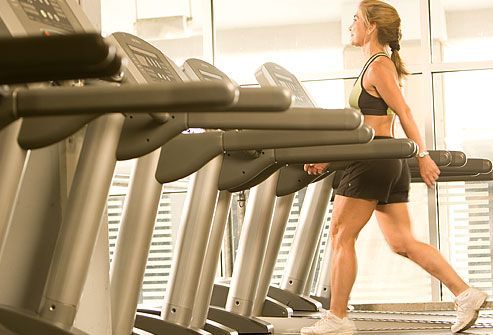
Why it’s a winner: You can walk anywhere, anytime. Use a treadmill or hit the streets.
How to: If you’re just starting to walk for fitness, begin with five to 10 minutes at a time. Add a few minutes to each walk until you get to at least 30 minutes per walk. Then, quicken your pace or add hills.
2. Interval Training
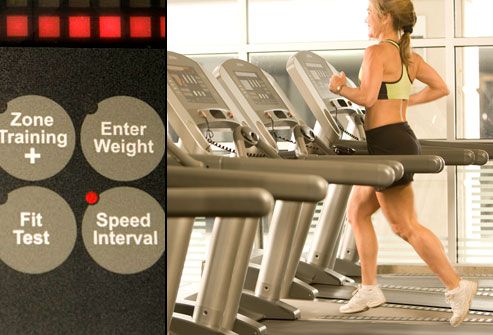
Why it’s a winner: Interval training boosts your fitness levels and burns more calories to help you lose weight. The basic idea is to vary the intensity within your workout, instead of going at a steady pace.
How to: Whether you walk, run, dance, or do another cardio exercise, push up the pace for a minute or two. Then back off for 2 to 4 minutes. How long your interval should last depends on the length of your workout and how much recovery time you need. A trainer can fine-tune the pacing.
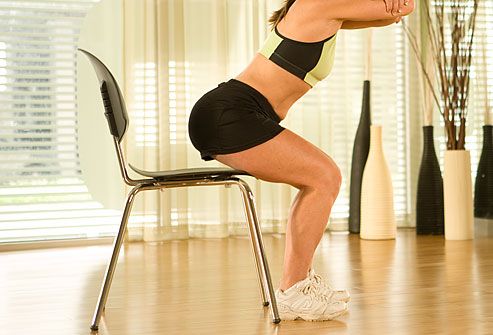
3. Squats
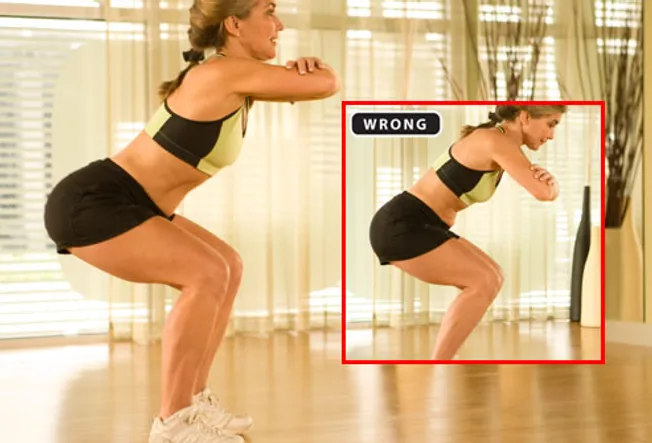
Why it’s a winner: Squats work several muscle groups — your quadriceps (“quads”), hamstrings, and gluteals (“glutes”) — at the same time.
How to: Keep your feet shoulder-width apart and your back straight. Bend your knees and lower your rear as if you were sitting down in a chair. Your weight should be evenly distributed on 3 points of your feet — heel, outaside ball, inside ball — that form a triangle. Your knees won’t stay in line with your ankles that way, but there will be less strain on other parts of your body. Add dumbbells once you can do 12 reps with good form.
4. Lunges
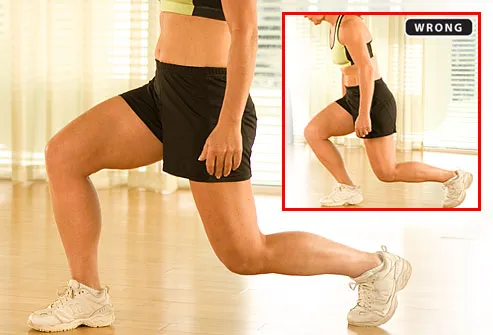
Why it’s a winner: Like squats, lunges work all the major muscles of your lower body. They can also improve your balance.
How to: Take a big step forward, keeping your back straight. Bend your front knee to about 90 degrees. Keep weight on your back toes and drop the back knee toward the floor. Don’t let the back knee touch the floor.
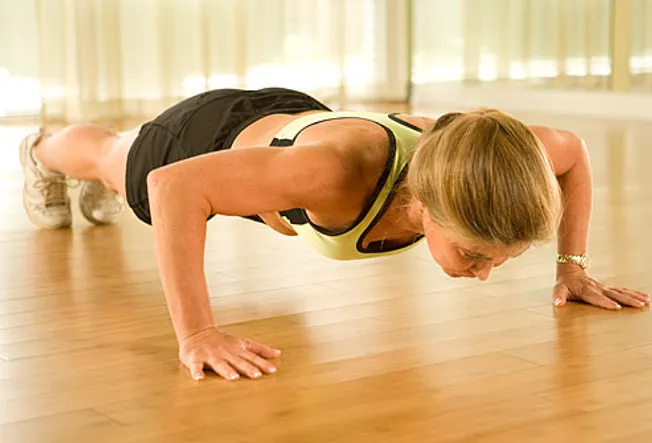
5. Push-Ups
Why it’s a winner: Push-ups strengthen your chest, shoulders, triceps, and core muscles.
How to: Facing down, place your hands slightly wider than shoulder-width apart. Place your toes on the floor. If that’s too hard, start with your knees on the floor. Your body should make a straight line from shoulders to knees or feet. Keep your rear-end muscles and abs engaged. Bend your elbows to lower down until you almost touch the floor. Lift back up by pushing through your elbows, Keep your torso in a straight line throughout the move.
How to: If you’re just starting to walk for fitness, begin with five to 10 minutes at a time. Add a few minutes to each walk until you get to at least 30 minutes per walk. Then, quicken your pace or add hills.
Swipe to advance
Why it’s a winner: Interval training boosts your fitness levels and burns more calories to help you lose weight. The basic idea is to vary the intensity within your workout, instead of going at a steady pace.
How to: Whether you walk, run, dance, or do another cardio exercise, push up the pace for a minute or two. Then back off for 2 to 4 minutes. How long your interval should last depends on the length of your workout and how much recovery time you need. A trainer can fine-tune the pacing. Repeat the intervals throughout your workout.
Swipe to advance
Why it’s a winner: Squats work several muscle groups — your quadriceps (“quads”), hamstrings, and gluteals (“glutes”) — at the same time.
How to: Keep your feet shoulder-width apart and your back straight. Bend your knees and lower your rear as if you were sitting down in a chair. Your weight should be evenly distributed on 3 points of your feet — heel, outaside ball, inside ball — that form a triangle. Your knees won’t stay in line with your ankles that way, but there will be less strain on other parts of your body. Add dumbbells once you can do 12 reps with good form.
Swipe to advance
Squats Done Right
Practice with a real chair to master this move. First, sit all the way down in the chair and stand back up. Next, barely touch the chair’s seat before standing back up. Work up to doing the squats without a chair, keeping the same form.
Swipe to advance
Why it’s a winner: Like squats, lunges work all the major muscles of your lower body. They can also improve your balance.
How to: Take a big step forward, keeping your back straight. Bend your front knee to about 90 degrees. Keep weight on your back toes and drop the back knee toward the floor. Don’t let the back knee touch the floor.
Swipe to advance
Lunges: Extra Challenge
Why it’s a winner: Push-ups strengthen your chest, shoulders, triceps, and core muscles.
How to: Facing down, place your hands slightly wider than shoulder-width apart. Place your toes on the floor. If that’s too hard, start with your knees on the floor. Your body should make a straight line from shoulders to knees or feet. Keep your rear-end muscles and abs engaged. Bend your elbows to lower down until you almost touch the floor. Lift back up by pushing through your elbows, Keep your torso in a straight line throughout the move.
Swipe to advance
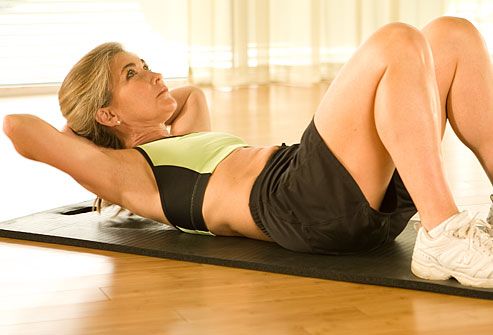
6. Crunches — Method A
Start by lying on your back with your feet flat on the floor and your head resting in the palm of one hand and the other hand reaching toward your knees. Press your lower back down. Contract your abdominal muscles (abs) and in one smooth move, raise your head, then your neck, shoulders, and upper back off the floor. Tuck in your chin slightly. Lower back down and repeat.
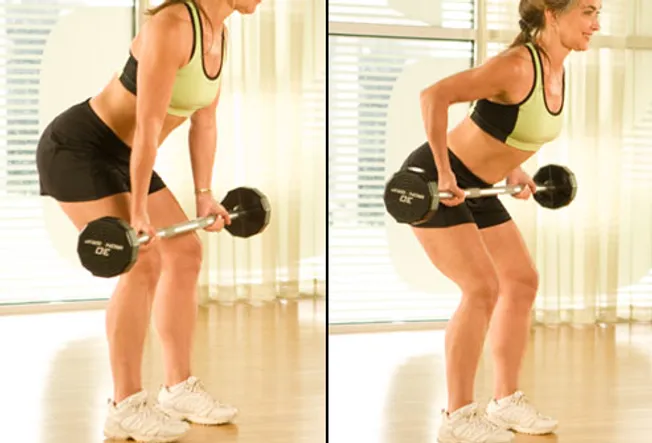
7. Bent-Over Row
Why it’s a winner: You work all the major muscles of your upper back, as well as your biceps.
How to: Stand with your feet shoulder-width apart, bend your knees, and bend forward at the hips. Engage your abs without hunching your back. Hold weights beneath your shoulders, keeping your hands shoulder-width apart. Bend your elbows and lift both hands toward the sides of your body. Pause, then slowly lower your hands to the starting position. Can perform with a bar or dumbbells.



 Begin by laying flat on the floor or mat and slowly raise the arms to meet the knees, forming a V.
 The biggest mistake people make with this exercise is not keeping their backs flat. Keep your back as straight as possible, and try not to hunch over.
 This exercise should be felt in your lower and upper abs.
 Back fat is about as sexy as a pair of bright yellow crocks… So don’t neglect it, because it’s a part of your core.


 Mws R Writings