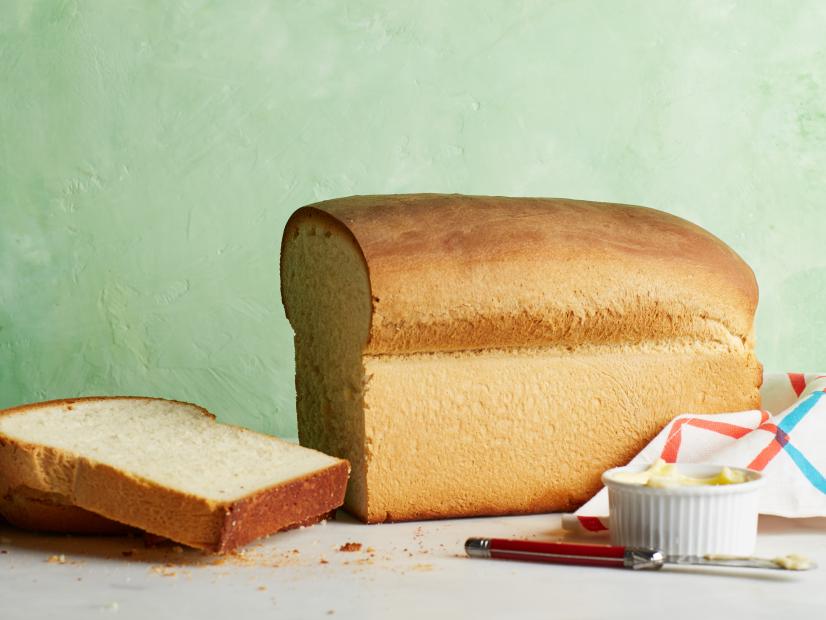
Today I looked up holidays that are observed around the world. Today was National Homemade Bread Day. I have been homeschooling for months, but we have not yet made any food. I was thinking of letting the kids make a simple homemade bread today. What do you think? It is with fond memories I recollect my own grandmother cooking in her kitchen and also helping her on occasion. This would be a good experience and so yes, I will celebrate National Homemade Bread Day and incorporate that into today’s learning. I can’t wait, after all, my favorite thing is BREAD!
MwsR
Below I am sharing some links for you to use to make your own bread with your homeschool kids.
The B vitamin complex includes eight vitamins. Vitamin B1, or thiamin, is an important one among them. Thiamin is a water-soluble vitamin and has important roles in metabolism
However, we do not wait for the tests to treat due to the potential serious nature of the deficiency. These patients are sick and have to be monitored and treated in hospitals, sometimes in an intensive care setting. Doctors decide on the dose of thiamin based on the child’s weight and age. In severe deficiency states, the initial doses are given intravenously, followed by oral supplementation.
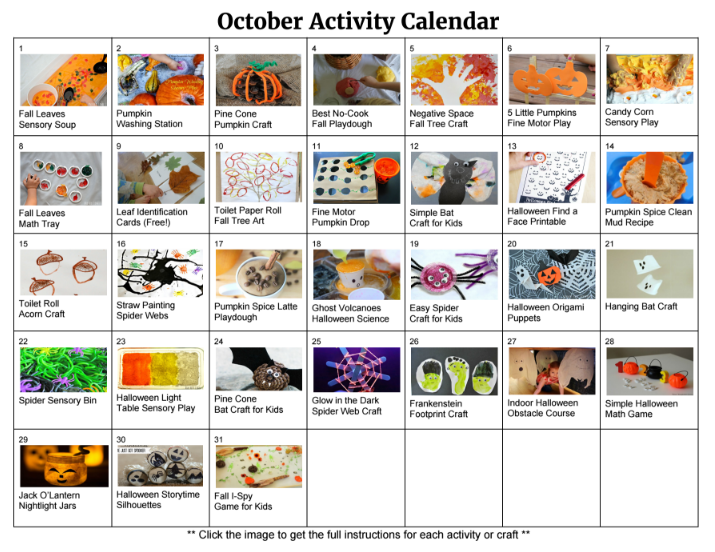
The great part about creating these fall leaf crafts is that they’re all so easy and cute! Who knew putting googly eyes on leaves can cause such happiness?!
This creative, fruitful season is a wonderful pretext for getting your crafty side out and beginning the long prolonged projects you were dyeing to try out. And because crafting together with family is always a more fun activity, we have gathered a few simple DIY fall crafts suitable for kids as well. Enjoy!
1. Kids will be more technologically savvy and computer literate
Does your 4-year-old now know how to un-mute himself? Is your budding Mia Hamm completely comfortable with Zoom soccer lessons? While we parents may look on in horror, the fact is that this pandemic will inevitably make our children more computer literate, and that’s not necessarily a bad thing.
Says pediatric phycologist Dr. Ann-Louise Lockhart, “Due to distance learning and less face-to-face time, younger children have learned how to use devices, apps and programs they didn’t previously have access or exposure to. And since we all have different learning styles, these different methods have hopefully shown them, along with their parents and teachers, how they learn best.” In other words, since the start of the pandemic, many kids have naturally adapted to new (virtual) ways to learn and socialize. And rather than seeing this as a crutch or impediment to “real” learning, we’re better off considering it as one more tool in their educational toolbox.
2. They will be more anxious and wary of social interaction
It’s no surprise that half a year of teaching our children to stay away from other people has made them more scared of other people. And doctors say this is translating to actual, diagnosable anxiety. Dr. Mary Ellen Renna, a pediatrician in Jericho, NY, has noticed “a rapid increase in anxiety disorders in children,” and notes that “the sudden changes of not being able to go to school or go out and see friends has an impact on us all, but especially the children who are too young to have an understanding of what is happening.”
Dr. Sara Kopple, a pediatrician in New Rochelle, NY, agrees: “Teaching kids that intimacy with your peers is bad and pathologizing it will be hard to undo,” she says, noting that she’s seen this anxiety manifest physically: “There’s been a real increase in bladder and bowel issues in my practice. I think it’s because it’s one of the few areas where small kids have complete control.”
What can parents do? Open communication, mindfulness, and generally reminding our kids that it’s our job to keep them safe. But, to some extent, the anxiety of 2020 is unavoidable. “Now that we’re asking so many schools and districts to open back up, there will be a lot of push-back, anxiety, and fear,” Dr. Lockhart maintains.
3. But they may have more meaningful relationships with family and friends
Yes, we’re all spending a lot of time together. And while this is beyond frustrating for parents, for many children, it’s actually a terrific time to bond and develop a sense of security, which can translate to increased self-esteem and happiness down the road. Says Dr. Lockhart: “I have personally experienced a closeness with my children I wouldn’t have when they were at school all day. I have seen my kids through a different lens, and I really like it.”
This may also mean increased closeness with extended family. (Weekly FaceTime with Great Grandma? Check!) Or stronger relationships with neighbors, cousins or pod-mates. Dr. Kopple, in fact, predicts a rise in mixed-age socialization, as children engage in outdoor play with neighborhood kids, as opposed to formal playdates. “That sort of relationship development is really sweet and valuable,” she says. “Big kids get a chance to practice being responsible and being in charge. Little kids do a lot of modeling from the big kids.”
4. Obesity and overeating might become larger problems
The Covid 15 is real people, and it’s serious when it comes to children’s health. Dr. Renna has noticed “many children who were very active pre-Covid, [and have now] become complacent with exercise…They lose the incentive to move and stay healthy.” And the science backs this up: According to a study out of the University of Buffalo, lockdowns across the world have negatively impacted diet, sleep and physical activity among kids. Dr. Renna elaborates: “Children who are at home on a continual basis start to eat out of boredom, which can become a dangerous habit that is hard to break and may be carried into adulthood with devastating consequences.”
5. On the flip side, kids (and schools) may get more comfortable with being outside all year
Ever heard the expression “There is no bad weather, only bad clothing?” Consider that your motto for 2020, as children and adults, find increasingly creative ways to be outdoors for exercise, socialization, and all-around mental health. Says Dr. Kopple: “Kids are fine, they do recess in the middle of the winter. It’s the parents who have trouble with it.” And as many schools embrace outdoor models, this may have a lasting impact on a generation, who will adopt not only a hardier outlook than their wussy parents (raises hand), but could see benefits like increased competence, lower stress, and improved retention, according to a German study.
6. They will become more flexible and adaptable
With our understanding of the virus changing daily, it can be nearly impossible to plan for life. (Just ask anyone trying to figure out their kids’ school year right now.) But the plus side is that all this uncertainty is probably making children more flexible and less beholden to the schedules, expectations and rigidity we foist upon them.
“Children are learning that life isn’t always easy, predictable or neatly planned,” says Dr. Lockhart. “As a result of this pandemic, I believe they will learn that it is OK to make plans and have goals but having flexibility and being adaptable are equally important. They will learn that it is OK to feel disappointment and then make small or very large changes as a result.”
Now let’s hope we can say the same thing of all the grownups in the room.
Easter is a time when we come together to celebrate family, friendship, and faith. And no matter what the Easter Bunny brings, you can always treasure the memories you and your loved ones make on this special holiday. From gathering around the table to catch up with everyone to discovering who in the family is best at Easter egg art, there are so many opportunities to cherish the day.
This year, make Easter Sunday extra special by taking part in a few festive Easter games that go beyond the traditional Easter egg hunt. Some of these Easter games take a few hours to set up, while others you can play on a whim. The best part? Anyone from toddlers to grandparents can join in the fun.
The Easter Egg Toss Game
Shutterstock
Though this is one of the simplest Easter games, it’s also a ton of fun. To prep, fill plastic Easter eggs with confetti, or, if you’re willing to play outside, water. Have players pair up and toss the eggs back and forth. If a duo drops their egg, they’re out. The last pair standing wins.
The best part about this game is that it can be adapted to any number of players (as long as you’ve got an even number) and works great for ages three and up. Just make sure that players stand closer together if there are younger kids partaking in the holiday fun. Afterward, you can watch one of these classic Easter movies.
The Egg Commands Game
Shutterstock
Here’s an Easter game that will have everyone laughing by the end. Before your party, write a few funny commands on slips of paper, i.e., “Hop like a bunny 10 times,” “Name five things you might find in an Easter basket,” or “Take all of the remaining eggs out of your basket one by one and then put them back.” Put each slip of paper inside a plastic egg, and divide the eggs evenly into two baskets.
To play, split your group into two teams and have them line up across the room (or yard) from the baskets. On the count of three, the first person on each team runs up to the basket, selects an egg, and performs the action inside that egg. Once they’ve completed the action, they run back and tap the next team member. The first team to finish their basket wins. You’ll want to have anywhere from six to twelve players, ages seven and up.
The Pile of Peeps Game
Shutterstock
This Easter game is just like Jenga, only with Peeps! To play, place a coaster in the middle of your table and put a Peep on it. (Make sure you buy the flat bunny Peeps, not the lumpy chick ones). Players take turns adding Peeps to the pile until the pile falls over. And, of course, the person who causes that to happen is out.
The Spoon and Egg Race
Shutterstock
No list of Easter games would be complete without this picnic classic. Each player places a hard-boiled egg on a spoon and holds it in their mouth. On the count of three, each player races to the finish line, trying to keep the egg balanced. The first person to make it to the finish line with their egg still intact wins. This is a great way to utilize all those eggs you dyed!
The Jellybean Scoop Game
Shutterstock
Jelly beans are the MVP of Easter candies, and they are perfect for playing all sorts of Easter games. For this game, each player gets one empty bowl, one bowl filled with jelly beans, and one spoon. The challenge: Put the spoon in your mouth and use it to move all of the jelly beans from the jelly bean bowl to the empty bowl. The first person to do that wins. (Of course, in the end, everyone gets to eat them.) This game can be played with kids ages four and up, in any size group (while jelly beans last).
Bocce Eggs
Shutterstock
This is a fun Easter twist on bocce ball that you can easily create at home. To prep, hard boil some eggs—you’ll need four for each player, plus one extra. (You can also use a set of wooden eggs from the craft store). Keep one of the eggs white and dye the others in colored sets of four. Roll (or toss) the white egg onto the lawn, and take turns rolling the colored eggs to see who can get the closest to the white egg without touching it.
The Easter Egg Puzzle Hunt
Shutterstock
This is an exciting twist on the classic Easter egg hunt. To play, buy an easy (this is key!) Easter-themed puzzle and some plastic eggs. Place one piece of the puzzle in each egg and hide them around the house or yard. Everyone searches for the eggs and puts the puzzle together as they find each piece. This game is great for kids ages seven and up.
The Carrot in the Basket Game
Shutterstock
Of course, every Easter Bunny needs a ton of carrots. But all you need for this cute game is two big Easter baskets and a pile of carrots. Divide your group into two teams and have them toss the carrots into the baskets. Whichever team gets the most carrots in their basket wins. This is one of those Easter games that’s great for younger kids, ages one to five.
The Bunny Nose Race
Shutterstock
This little game will get everyone in the family giggling. Each player gets a bowl full of cotton balls (or bunny tails, if you will). Everyone puts a small amount of Vaseline on their nose and tries to move the cotton balls out of their bowl with just their nose. Whoever moves all of the cotton balls out of the bowl first wins. For larger groups, you can split into teams and do it relay style. This Easter game is best for ages six and up, and works for any size group—just make sure you buy enough cotton balls!
Bunny Bowling
Shutterstock
It’s actually pretty easy to turn a regular set of toy bowling pins into bunny bowling pins (like these, by Handmade Charlotte). Set them up in your yard and see who can knock down the most. For an extra Easter twist, you could use dyed hard-boiled eggs instead of a plastic ball. The game is perfect for kids ages six and up and works wonderfully with groups of two to ten players.
Pin the Tail on the Easter Bunny
Shutterstock
This party classic is perfect for any Easter gathering. To play, hang a paper bunny on the wall. Players take turns being blindfolded and trying to pin the bunny tail on the Easter Bunny’s rump. You can buy a Pin the Tail on the Easter Bunny set, or, if you’re feeling creative, you can draw one of your own!
The Chalk Bunny Hop Game
Shutterstock
Here’s a great way to get everyone moving and grooving outside. Use a picture of a bunny and a piece of cardboard to make a chalk bunny template. Use sidewalk chalk and your template to draw a few bunnies all around your driveway or another safe concrete area. Start by having everyone hop from bunny to bunny. Then have everyone dance from bunny to bunny. Then have everyone skip from bunny to bunny. Take suggestions from the kids for more movement ideas—and don’t forget to put on some fun tunes to make this game even more exciting.
The Easter Egg Matching Game
Shutterstock
If you want your Easter games to be educational, this one is a winner. Take some plastic eggs and use a Sharpie to write uppercase letters on one half, and the corresponding lowercase letters on the other half. Twist the eggs to mix them up, and challenge your kiddos to match the letters together. It’s the perfect game for any youngster still learning their letters. The Alphabet Easter Egg Game is recommended for ages four to six and can be played with groups of one to five kids.
The Easter Egg Tower Game
Shutterstock
Once your Easter egg hunt is over, chances are you’ll have a bunch of empty plastic eggs leftover. That’s the perfect opportunity to have an Easter egg tower-building contest! Stack egg halves on top of each other, and see who can build the tallest tower without it falling down.
The Don’t Eat the Peep Game
Shutterstock
This printable game is easy as pie to set up. Print out the game boards and distribute them to players. Give each player a little bowl filled with jellybeans, cereal, or some other type of candy. Everyone puts one piece on each square of the board. One person is “it” and leaves the room. The remaining players decide which square is “the Peep.” Once that’s decided, the player who’s “it” comes back into the room; their job is to find “the Peep” by eating pieces of candy one square at a time. If they eat the piece of candy on the Peep square, everyone else yells “Don’t eat the Peep!” This is a great game for younger kids (ages three to seven) who will think yelling “Don’t eat the Peep!” is hilarious.
Bunny Bunny
Shutterstock
This is a classic improv game that is perfectly on brand for Easter. Have everyone form a circle. Each player pats their hands on their laps to a moderate beat, while saying “oomba” together. Then, on the beat, the first “leader” (select this person in advance) makes bunny ears with their fingers and points them toward themselves twice, and then (making eye contact) they point their bunny fingers toward another player, while saying “Bunny, bunny. Bunny, bunny.”
That player then becomes the leader, and repeats the motion, passing to another player. Once you’ve got the hang of passing the bunny fingers around the circle, add on a new twist. When the bunny fingers are passed to a new leader, the people on either side of the leader wave their hands and say “tokey tokey” along with them. Watch a video of the game being played to get the hang of it quickly. This game is best played in groups of four or more.
The Jelly Bean Guessing Game
Shutterstock
The jelly bean guess is one of the most popular Easter games out there, and there’s a reason why: Everyone loves it! Before the party starts, fill a mason jar with jelly beans. As your guests arrive, have them guess how many jelly beans are in the jar. The person whose guess is the closest wins the jar.
The Chubby Bunny Game
Shutterstock
Chubby Bunny is a classic (and the perfect excuse to eat more Peeps!). Each round, every player puts a Peep into their mouth and says “Chubby Bunny.” Once you’ve got so many marshmallows in your mouth that you can’t say “Chubby Bunny” articulately or with a straight face, you’re out. The last person standing wins.
You’ll want to make sure all your players are old enough to understand the concept of a choking hazard. Aside from that, this is one of those Easter games where you can have as many players as you’d like!
The Classic Egg Tapping Easter Game
Shutterstock
Egg tapping—or egg fight as some call it—is a classic Easter game tradition that dates back centuries. And fortunately, this Easter game is pretty simple. All you need to play is two hard-boiled eggs. One person holds an egg in their hand while the other player taps their egg against it, hoping to break their opponent’s egg without breaking their own. The first person to have their egg cracked loses. This game can be extended by having the winner continue to challenge new opponents—and the last one standing with an uncracked egg after everyone has been challenged wins.
The Paint-Filled Eggs on Canvas Activity
Shutterstock
This Easter game is less of a challenge and more about just having fun. You’ll need empty eggshells with the tops cut off so you can fill them with various colors of paint. Go for Easter pastels or vibrant colors—it’s your choice! Once you have your eggs filled, put tissue paper squares over each eggshell and use glue to carefully secure them, making sure they’re completely dry. After that, all you need is to go outside and start letting the little ones throw the paint-filled eggs at some blank canvases. It’s fun to do, and you’ll get some amazing pieces of art out of it!
The Egg Rolling Game
Shutterstock
An Easter twist on the classic horse race, this game is simple to execute, but still fun for the whole family. All you need is some kind of incline and a few hard-boiled eggs. Each person stands at the top of the incline and rolls their eggs down all at once. The first person to have their egg reach the bottom is the winner. The steeper the hill, the more entertaining.
The Swinging Basket Game
Shutterstock
This is another one of those Easter games that is all about aim and hand-eye coordination—a challenge the bigger kids will certainly enjoy. All you need is some rope, a basket, plastic Easter eggs, popcorn kernels, and tape. Fill your plastic eggs with popcorn kernels and tape them shut to give them a little weight. Then, after you hang your basket from a tree branch, line the children up and have them take turns trying to throw eggs into the basket. Once the kids get a hang of it, take up the difficulty by swinging the basket back and forth while they try to throw their eggs in.










 Mws R Writings