I have hopes that this year will bring more knowledge, more skill, and more interest in homeschooling for my grandchildren. I am adding another grandchild this year. He will be 6 in December. I also have the other two who are both in the Second grade. Challenging me this year will be teaching two separate grades. The youngest is in Kindergarten this year. I hope to have a great year. If you will send me your well wishes, I would greatly appreciate it. I also appreciate your prayers.
If you homeschool and have a page or website, please tell me in the comments. I would love to check out your site. I would also like to share your stuff on my own website and pages.
A New Year’s Gift is a story about infidelity and whether a woman’s risks for love match her lover’s loyalty. “I wished for a New Year’s gift–the gift of your heart.”
Gabriel Metsu, Man Writing a Letter, 1650s
Jacques de Randal, having dined at home alone, told his valet he might go out, and he sat down at his table to write some letters.
He ended every year in this manner, writing and dreaming. He reviewed the events of his life since last New Year’s Day, things that were now all over and dead; and, in proportion as the faces of his friends rose up before his eyes, he wrote them a few lines, a cordial New Year’s greeting on the first of January.
So he sat down, opened a drawer, took out of it a woman’s photograph, gazed at it a few moments, and kissed it. Then, having laid it beside a sheet of notepaper, he began:
MY DEAR IRENE: You must by this time have received the little souvenir I sent, you addressed to the maid. I have shut myself up this evening in order to tell you—-“
The pen here ceased to move. Jacques rose up and began walking up and down the room.
For the last ten months he had had a sweetheart, not like the others, a woman with whom one engages in a passing intrigue, of the theatrical world or the demi-monde, but a woman whom he loved and won. He was no longer a young man, although he was still comparatively young for a man, and he looked on life seriously in a positive and practical spirit.
Accordingly, he drew up the balance sheet of his passion, as he drew up every year the balance sheet of friendships that were ended or freshly contracted, of circumstances and persons that had entered into his life.
His first ardor of love having grown calmer, he asked himself with the precision of a merchant making a calculation what was the state of his heart with regard to her, and he tried to form an idea of what it would be in the future.
He found there a great and deep affection; made up of tenderness, gratitude and the thousand subtleties which give birth to long and powerful attachments.
A ring at the bell made him start. He hesitated. Should he open the door? But he said to himself that one must always open the door on New Year’s night, to admit the unknown who is passing by and knocks, no matter who it may be.
So he took a wax candle, passed through the antechamber, drew back the bolts, turned the key, pulled the door back, and saw his sweetheart standing pale as a corpse, leaning against the wall.
He stammered:
“What is the matter with you?”
She replied:
“Are you alone?”
“Yes.”
“Without servants?”
“Yes.”
“You are not going out?”
“No.”
She entered with the air of a woman who knew the house. As soon as she was in the drawing-room, she sank down on the sofa, and, covering her face with her hands, began to weep bitterly.
He knelt down at her feet, and tried to remove her hands from her eyes, so that he might look at them, and exclaimed:
“Irene, Irene, what is the matter with you? I implore you to tell me what is the matter with you?”
Then, amid her sobs, she murmured:
“I can no longer live like this.”
“Live like this? What do you mean?”
“Yes. I can no longer live like this. I have endured so much. He struck me this afternoon.”
“Who? Your husband?”
“Yes, my husband.”
“Ah!”
He was astonished, having never suspected that her husband could be brutal. He was a man of the world, of the better class, a clubman, a lover of horses, a theatergoer and an expert swordsman; he was known, talked about, appreciated everywhere, having very courteous manners, a very mediocre intellect, an absence of education and of the real culture needed in order to think like all well-bred people, and finally a respect for conventionalities.
He appeared to devote himself to his wife, as a man ought to do in the case of wealthy and well-bred people. He displayed enough of anxiety about her wishes, her health, her dresses, and, beyond that, left her perfectly free.
Randal, having become Irene’s friend, had a right to the affectionate hand-clasp which every husband endowed with good manners owes to his wife’s intimate acquaintance. Then, when Jacques, after having been for some time the friend, became the lover, his relations with the husband were more cordial, as is fitting.
Jacques had never dreamed that there were storms in this household, and he was bewildered at this unexpected revelation.
He asked:
“How did it happen? Tell me.”
Thereupon she related a long story, the entire history of her life since the day of her marriage, the first disagreement arising out of a mere nothing, then becoming accentuated at every new difference of opinion between two dissimilar dispositions.
Then came quarrels, a complete separation, not apparent, but real; next, her husband showed himself aggressive, suspicious, violent. Now, he was jealous, jealous of Jacques, and that very day, after a scene, he had struck her.
She added with decision: “I will not go back to him. Do with me what you like.”
Jacques sat down opposite to her, their knees touching. He took her hands:
“My dear love, you are going to commit a gross, an irreparable folly. If you want to leave your husband, put him in the wrong, so that your position as a woman of the world may be saved.”
She asked, as she looked at him uneasily:
“Then, what do you advise me?”
“To go back home and to put up with your life there till the day when you can obtain either a separation or a divorce, with the honors of war.”
“Is not this thing which you advise me to do a little cowardly?”
“No; it is wise and sensible. You have a high position, a reputation to protect, friends to preserve and relations to deal with. You must not lose all these through a mere caprice.”
She rose up, and said with violence:
“Well, no! I cannot stand it any longer! It is at an end! it is at an end!”
Then, placing her two hands on her lover’s shoulders, and looking him straight in the face, she asked:
“Do you love me?”
“Yes.”
“Really and truly?”
“Yes.”
“Then take care of me.”
He exclaimed:
“Take care of you? In my own house? Here? Why, you are mad. It would mean losing you forever; losing you beyond hope of recall! You are mad!”
She replied, slowly and seriously, like a woman who feels the weight of her words:
“Listen, Jacques. He has forbidden me to see you again, and I will not play this comedy of coming secretly to your house. You must either lose me or take me.”
“My dear Irene, in that case, obtain your divorce, and I will marry you.”
“Yes, you will marry me in–two years at the soonest. Yours is a patient love.”
“Look here! Reflect! If you remain here he’ll come to-morrow to take you away, seeing that he is your husband, seeing that he has right and law on his side.”
“I did not ask you to keep me in your own house, Jacques, but to take me anywhere you like. I thought you loved me enough to do that. I have made a mistake. Good-by!”
She turned round and went toward the door so quickly that he was only able to catch hold of her when she was outside the room:
“Listen, Irene.”
She struggled, and would not listen to him. Her eyes were full of tears, and she stammered:
“Let me alone! let me alone! let me alone!”
He made her sit down by force, and once more falling on his knees at her feet, he now brought forward a number of arguments and counsels to make her understand the folly and terrible risk of her project. He omitted nothing which he deemed necessary to convince her, finding even in his very affection for her incentives to persuasion.
As she remained silent and cold as ice, he begged of her, implored of her to listen to him, to trust him, to follow his advice.
When he had finished speaking, she only replied:
“Are you disposed to let me go away now? Take away your hands, so that I may rise to my feet.”
“Look here, Irene.”
“Will you let me go?”
“Irene–is your resolution irrevocable?”
“Will you let me go.”
“Tell me only whether this resolution, this mad resolution of yours, which you will bitterly regret, is irrevocable?”
“Yes–let me go!”
“Then stay. You know well that you are at home here. We shall go away to-morrow morning.”
She rose to her feet in spite of him, and said in a hard tone:
“No. It is too late. I do not want sacrifice; I do not want devotion.”
“Stay! I have done what I ought to do; I have said what I ought to say. I have no further responsibility on your behalf. My conscience is at peace. Tell me what you want me to do, and I will obey.”‘
She resumed her seat, looked at him for a long time, and then asked, in a very calm voice:
“Well, then, explain.”
“Explain what? What do you wish me to explain?”
“Everything–everything that you thought about before changing your mind. Then I will see what I ought to do.”
“But I thought about nothing at all. I had to warn you that you were going to commit an act of folly. You persist; then I ask to share in this act of folly, and I even insist on it.”
“It is not natural to change one’s mind so quickly.”
“Listen, my dear love. It is not a question here of sacrifice or devotion. On the day when I realized that I loved you, I said to myself what every lover ought to say to himself in the same case: ‘The man who loves a woman, who makes an effort to win her, who gets her, and who takes her, enters into a sacred contract with himself and with her. That is, of course, in dealing with a woman like you, not a woman with a fickle heart and easily impressed.’
“Marriage which has a great social value, a great legal value, possesses in my eyes only a very slight moral value, taking into account the conditions under which it generally takes place.
“Therefore, when a woman, united by this lawful bond, but having no attachment to her husband, whom she cannot love, a woman whose heart is free, meets a man whom she cares for, and gives herself to him, when a man who has no other tie, takes a woman in this way, I say that they pledge themselves toward each other by this mutual and free agreement much more than by the ‘Yes’ uttered in the presence of the mayor.
“I say that, if they are both honorable persons, their union must be more intimate, more real, more wholesome, than if all the sacraments had consecrated it.
“This woman risks everything. And it is exactly because she knows it, because she gives everything, her heart, her body, her soul, her honor, her life, because she has foreseen all miseries, all dangers all catastrophes, because she dares to do a bold act, an intrepid act, because she is prepared, determined to brave everything–her husband, who might kill her, and society, which may cast her out. This is why she is worthy of respect in the midst of her conjugal infidelity; this is why her lover, in taking her, should also foresee everything, and prefer her to every one else whatever may happen. I have nothing more to say. I spoke in the beginning like a sensible man whose duty it was to warn you; and now I am only a man–a man who loves you–Command, and I obey.”
Radiant, she closed his mouth with a kiss, and said in a low tone:
“It is not true, darling! There is nothing the matter! My husband does not suspect anything. But I wanted to see, I wanted to know, what you would do I wished for a New Year’s gift–the gift of your heart–another gift besides the necklace you sent me. You have given it to me. Thanks! thanks! God be thanked for the happiness you have given me!”
A New Year’s Gift was featured as The Short Story of the Day on Sat, Dec 29, 2018
1. New Year celebrations are not new. The concept actually dates back to 2000 BC. The Mesopotamians used to celebrate New Year!
2. 1st January as New Year was never a standard practice. Romans for instance celebrated March 1 as New Year. Some other cultures went for winter solstice or summer equinox.
3. The Roman Catholic Church was the one to adopt 1st January as New Year. Well, 1st January as New Year was marked by Georgian Calendar.
4. 1st January was accepted as New Year in 46 BC by Julius Caesar. England and the American colonies of England adopted the date long time later in 1752.
5. The month of January derives its name from a two-faced God named Janus. Janus’ one face looked forward while the other looked backward.
6. New Year is usually considered to be the best time for making resolutions. Resolutions usually mean people want to give up some bad habits and pick up some good habits but resolutions may not necessarily be about habits.
7. New Year gifts also date back to ancient times when the Persians used to gift eggs symbolizing productivity.
8. Whatever New Year traditions we speak of are actually meant for bringing good luck. For instance, eating black-eyed peas on the day of New Year is believed to bring good luck in several parts of the United States.
9. Speaking of traditions, we cannot miss out on the Estonian practice of eating 7, 9 or 12 meals on the eve of New Year. They believe that eating that many meals will give them the strength of that many people in the year that follows.
10. Finnish people have a weird tradition which goes by the name molybdomancy. This is all about telling fortunes. A small amount of led is melted in a small pan using a small stove. The melted metal is then thrown into a bowl full of cold water. The liquid metal solidifies and the resulting shape of the solid metal is then analyzed in candle light to tell the fortune of a person in the coming year.
Here are five interesting stats about New Year’s Eve for the traveler in all of us:
1. The top three places in the U.S. to visit and celebrate New Year’s Eve are Las Vegas, Disney World, and New York City. Airbnb has more than one million reservations on New Year’s Eve, 2015, including approximately 47,000 reservations in New York City alone.
2. The biggest international celebration is in Sydney, Australia. This celebration includes more than 80,000 fireworks set off over Sydney Harbour Bridge, with more than 1 million people in attendance to watch the show!
3. More than 360 million glasses of sparkling wine are consumed during the holiday season, and it’s the biggest day for champagne consumption.
4. Only 50 percent of Americans make New Year’s resolutions, and 25 percent of those give up their resolutions by the second week in January. The top New Year’s resolutions include losing weight, eating healthier, exercising more, quitting smoking, sticking to a budget, saving money, getting more organized, finding a better job, and being a better person.
5. Not all celebrations end happily. More vehicles are stolen on New Year’s Day than any other holiday according to the National Insurance Crime Bureau.
So for New Year’s Eve 2015, remember to not drive and drive, and to have plenty of fun. For more information, check out MarketResearch.com’s official website.







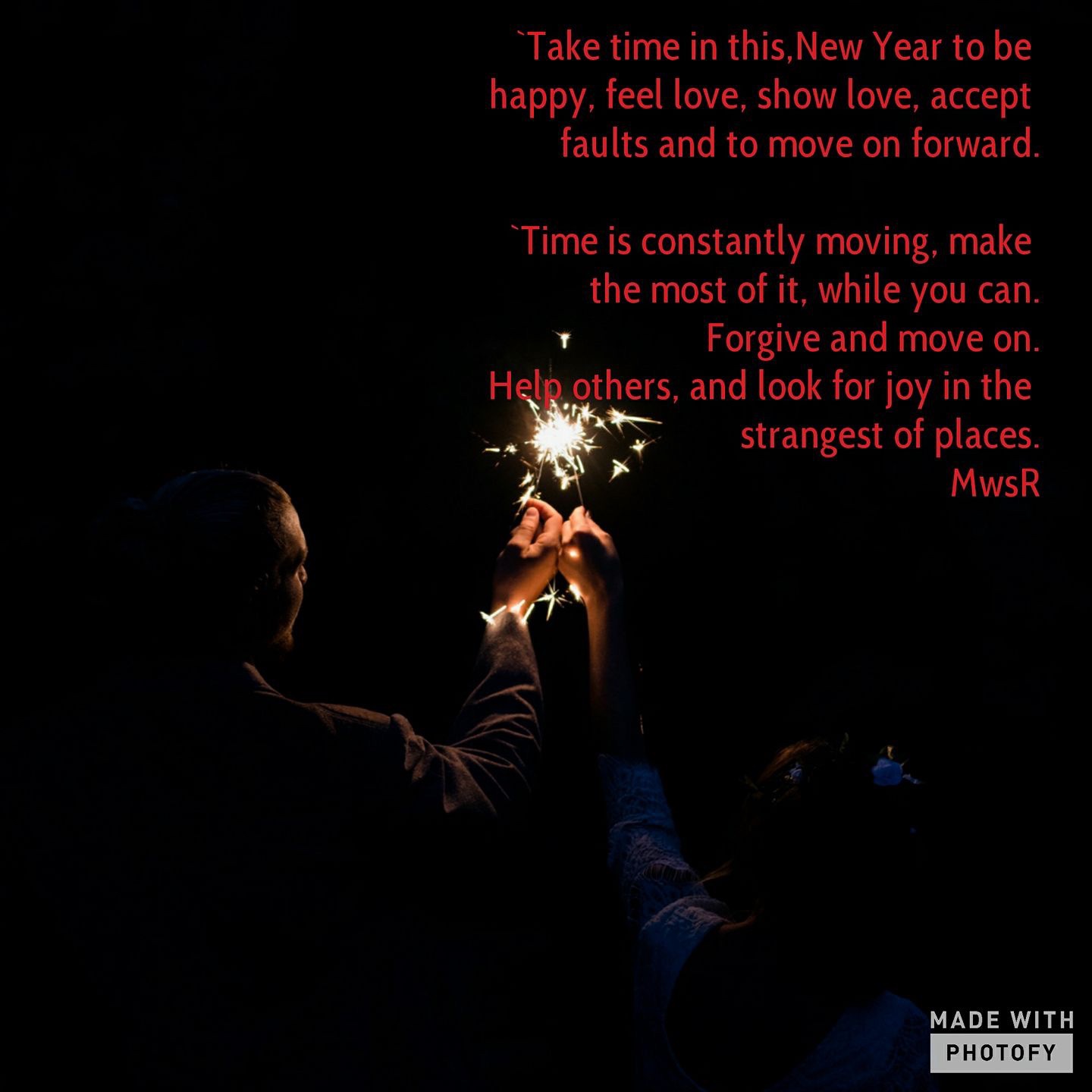


 Mws R Writings