Take this 60-second quiz to pinpoint your Alzheimer’s risk (and what to do NOW to prevent it)
Month: September 2019

MwsRWritings
“Let’s write about self image today”….MwsR
There is a link between your thoughts of yourself and how you look at another.
The saying that “you are going to love yourself because God made you is not the truth.”
First, you must look at yourself without those condescending, critical, goggles you have on! The truth is we can never love ourselves like God can to think otherwise is misleading yourself which will leave no room to change things…appearance or otherwise. Do you know what I am writing here this morning?!
Secondly, our human bodies were created to change…to grow old…and to diminish in appearance. Ain’t nobody able to stop that. So quit looking for that hidden youth serum or that latest procedure. There is exercise…healthy diets…supplements..vitamins..etc.
Thirdly, This ain’t Hollywood people. We don’t have airbrushes and computer experts able to change our appearance at a whim.
Do I want to look spectacular? Um, yes but I have faced reality. Not enough money or time or collagen at my doorstep. Anyhow the previous ideals would shock me back to the here and now.
Why is it we think true love of self is skin deep?
True love of self is knowing our intentions, our thoughts, our reasons and meanings to how we struggle, how we deal, how we treat, and how we live.
Do I totally love my body? Nope
Do I love gaining weight or wrinkles or clothes not fitting? Nope
But I think in God’s eyes I am perfect. I think God cares less about my body and more on what controls my thoughts and rules in my life.
Next time you wish you were better looking or skinnier…or HOT remember to God the only one who should matter…YOU ARE.
Can you improve? Certainly but don’t let it rule you. You might just begin to like you, you already are.
Also, you will be kinder to others. You will appreciate them for their heart…not their appearance. You won’t be a “fake”.:)

Quotes
“The weak can never forgive. Forgiveness is the attribute of the strong.”
― Mahatma Gandhi
“I think if I’ve learned anything about friendship, it’s to hang in, stay connected, fight for them, and let them fight for you. Don’t walk away, don’t be distracted, don’t be too busy or tired, don’t take them for granted. Friends are part of the glue that holds life and faith together. Powerful stuff.”
― Jon Katz

9/11


Poem ~ Perspective of the One left Behind by MwsR
When I think of you, it includes a lot of questions, so there!
Questions like “Why?” and “What Happened?”, “Was it really so unfair?”
Why is it that life proved so hard for you to bear?
I have had my share of things that weigh on my heart
Things that might, a lesser man, tear all apart.
I chose to stay
Learned it is okay to walk away.
Refused to be the one who never sees the sun again
The one who makes new friends
I chose to live and trudge right through,
Even when it gets neck high, which it often can do.
It got so hard a lot of times
But I turned that negativity around, if not it would of been a crime
A life given is an opportunity to impact,
How can you do that if you only “subtract”?
I will never be that far down, if the good Lord is willing
I will get rid of the blemishes, and all that is lacking
I wish I could of helped you, if you had been near me, possibly I would had
Instead, I found out, from the grieving relatives you made sad.
There was a feeling of helplessness, a feeling of shame
Because in a sense, our society is to blame
It takes a person’s walls and helps to make them taller
Society will make a person feel so much smaller
We walk by those of us that suffer and feel no sense of obligation
It is no longer help a neighbor, but turn the other way, leave someone in stagnation
Shame on us all, shame on the world.
Break the silence, break the stigma, help those who suffer, who feel alone
Or else this world will change so far from what we all know.
People will die and chose not to survive
If we don’t help give them a reason to live.

Upcycle~ Book Ends

How to make telephone bookends
These bookends are easy to put together. First find the 2 old phones you’d like to use. Remember, they don’t have to match.
Next take 2 pieces of thin metal 7.5″ long and 1.5″ wide. These will be the base that your phones stand on. Now drill a centered hole 1″ from the end of each metal piece. Then take a larger drill bit and screw another hole on top of the first, not quite all the way through. This creates a countersink which allows your screw to sit flush on the bottom of the metal strip.
The next step is optional, if you’d like you can spray paint your metal strips and allow them to dry.
Then take a cordless drill and screw the metal piece to the bottom of the phone after positioning it the way you’d like it to stand. Glue a felt strip to the bottom of the metal base with a a hot glue gun.
Finally position your books and prop them up with your new telephone bookends!

Does this remind anyone else of the 90’s tween board game Dream Phone?
Source: A Beautiful Mess


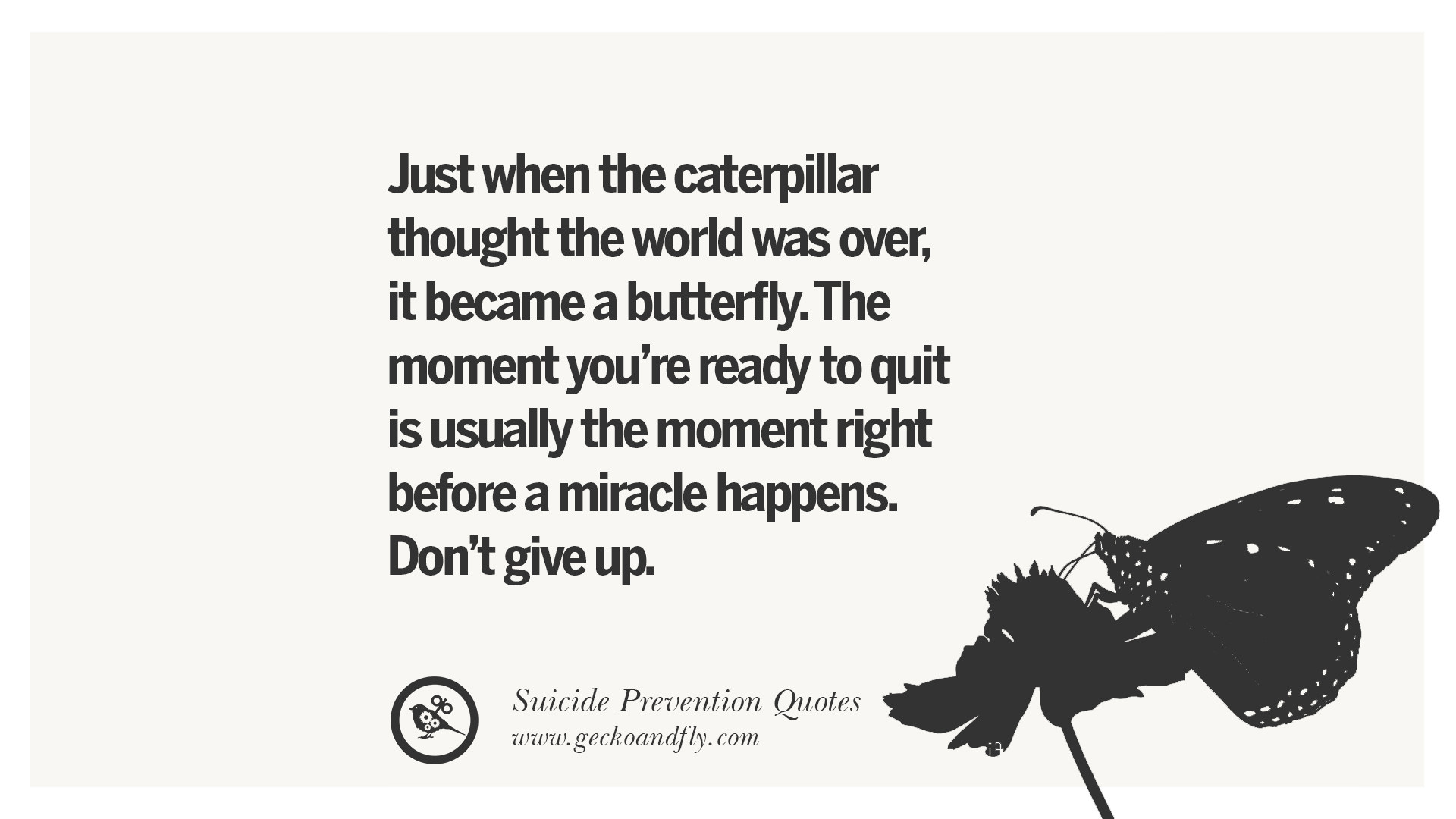
Quote~Suicide
Did You Know? Suicide
Facts About Suicide
- Suicide is preventable. Most suicidal individuals desperately want to live; they are just unable to see alternatives to their problems.
- Most suicidal individuals give definite warnings of their suicidal intentions, but others are either unaware of the significance of these warnings or do not know how to respond to them.
- Talking about suicide does not cause someone to be suicidal.
- Suicide occurs across all age, economic, social, racial and ethnic boundaries.
- Suicidal behavior is complex and not a response to one problem that a person is experiencing. Some risk factors vary with age, gender, or ethnic group and may occur in combination or change over time.
- Surviving family members not only suffer the trauma of losing a loved one to suicide, they may themselves be at higher risk for suicide and emotional problems.
National statistics
Statistics are based on the latest year for which we have national statistics, 2016.
U.S.A Suicide: 2015 Official Final Data
- Suicide is currently the 10th leading cause of death in the United States. This translates into an annual suicide rate of approximately 14 per 100,000 people dying a year by suicide (44,193 a year), out-ranking homicides (ranked as the 16th leading cause of death).
- The suicide rates decreased from 1990-2000 from 12.5 to 10.4 suicides per 100,000. Over the past decade, however, the rate has again increased. Every day, approximately 121 Americans die by suicide or approximately one person kills themselves every 12 minutes. (CDC)
- In 2015, there were 1,104,825 attempted suicide in the United States. Approximately one person attempts suicide every 31 seconds.
- It is generally estimated that there are 25 attempts for one death by suicide.
- Between 25 and 50 percent of people who kill themselves had previously attempted suicide. Those who have made suicide attempts are at higher risk for actually taking their own lives.
- Each suicide intimately effects at least six other people (estimated). In 2013, it was estimated that one in every 63 Americans became a suicide-loss survivor.
- The most commonly reported means of completing suicide, across all groups, was by firearm (49.8%), followed by suffocation or hanging (26.8%), poisoning (15.4), cutting (1.7%) and drowning (1.2%).
- Mental health diagnoses are generally associated with a higher rate of suicide. Psychological autopsy studies reflect that more than 90 percent of completed suicides had one or more mental disorders, most notably depression. (NAMI)
By age
- Rates of completed suicide are highest among those between the ages of 45-54, followed by an equally high rate for the elderly (age 80 and over).
- It is estimated that elderly adults have rates of suicide close to 50 percent higher than that of the nation as a whole (all ages).
- Suicide is currently ranked as the second leading cause of death for youth (15 to 24 years old) in the United States behind accidents/road traffic.
- Prevalence of Suicide in College Students:
- Available data suggests that suicide occurs at a rate between 6.5 and 7.5 per 100,000 among college students, approximately half the rate for nonstudent college-aged adults. (SPRC)
- 18 percent of undergraduate and 15 percent of graduate students have seriously considered attempting suicide in their lifetimes. Between 40 and 50 percent of these same students report multiple episodes of serious suicidal thoughts.(Drum, Brownson, Burton Denmark & Smith, 2009)
- Studies suggest that female graduate students are at a greater risk for suicide than male graduate students and younger students of both sexes. (Big Ten Student Suicide Study)
- 80 percent of students who die by suicide never contact mental health services. (NAMI)
By gender (from the CDC)
- Males take their own lives at nearly four times the rate of females and represent 77.9% of all suicides.
- Females are more likely than males to have suicidal thoughts.
- Firearms are the most commonly used method of suicide among males (56.9%).
- Poisoning is the most common method of suicide for females (34.8%)
By race/ethnicity
The Center for Disease Control and Prevention (CDC) reported the following statistics for 2001-2010 among White/Caucasian Americans:
- At 15.8 per 100,000, the suicide rate for Whites of all ages was the second highest rate among racial/ethnic groups and higher than the overall U.S. rate of 13.8. (Suicidology, 2015)
- Suicide was the 10th leading cause of death for Whites of all ages and the 2nd leading cause of death for young White males ages 15-34.
- The highest rate in the White population, 51.75 per 100,000, was found among adult males 85 and older.
- The lifetime prevalence of suicidal ideation and suicide attempts of Whites have been placed at 16.10% and 4.69%, respectively.
The CDC reported the following statistics for 2001-2010 among Black/African Americans:
- The suicide rate for all ages was 5.6 per 100,000, slightly less than half of the overall U.S. rate of 13.8. (Suicidology, 2015)
- Suicide was the 16th leading cause of death for Blacks of all ages and the 3rd leading cause of death for young Black males ages 15-24.
- Males ages 25 to 34 had the highest rate of suicide in the Black population, 16.43 per 100,000.
- The lifetime prevalence rate of suicidal ideation and suicide attempts of Blacks has been placed at 11.82% and 4.15%, respectively.
The CDC reported the following statistics for 2001-2010 among Hispanic/Latino Americans:
- The suicide rate for all ages was 5.85 per 100,000, slightly less than half the overall U.S. rate of 12.08.
- Suicide ranked as the 12th leading cause of death for individuals of Hispanic origin of all races and ages, and the 3rdleading cause of death for Hispanic males ages 15 to 34.
- The highest suicide rate in the Hispanic population, 30.58 per 100,000, was found among adult males 85 and older.
- The lifetime prevalence of suicidal ideation and suicide attempts of Hispanics has been placed at 11.35% and 5.11%, respectively.
The CDC reported the following statistics for 2015 among American Indians and Alaska Natives:
- The suicide rate for all ages was 19.5 per 100,000, much higher than the overall U.S. rate of 13.8 and the highest of all racial/ethnic groups. (CDC)
- Suicide ranked as the 8th leading cause of death for American Indians and Alaska Natives of all ages. Suicide ranked as the 2nd leading cause of death among youth ages of 10 to 34.
- The suicide rate among American Indian/Alaska Native adolescents and young adults ages 15-34 is 19.5 per 100,00, which is 1.5 times higher than the national average for that age group.
- Lifetime rates of having attempted suicide reported by adolescents ranged from 21.8% in girls to 11.8% in boys and from 17.6% of both sexes raised on reservations to 14.3% of both sexes raised in urban areas.
- Lifetime rates of suicidal ideation were significantly higher among youth raised on reservations (32.6%) compared to youth raised in urban areas (21%).
The CDC reported the following statistics from 2001-2010 among the Asian American and Pacific Islander population:
- The suicide rate was 6.19 per 100,000, approximately half the overall U.S. rate of 12.08.
- Suicide ranked as the 10th leading cause of death for all ages and the 2nd leading cause of death for youth ages 15-24.
- The highest rate in the Asian American and Pacific Islander population, 29.76 per 100,000, was found among adult males 85 and older.
- The lifetime prevalence of suicidal ideation and suicide attempts of Asian Americans and Pacific Islanders has been placed at 9.02% and 2.55%, respectively.
 Mws R Writings