There is so much to remember So much that it makes me limber It was another time It was another place With different things With different faces A mere shadow of me to come The one who chanced to love someone The part that made me dance The one others gave no second glance No second chance Strange yet all to close Nothing will ever rid me of all those ghosts A train track without an end Tracing steps like they’re an old friend Walking alone but really I’m never Seems it’s common for me to weather. Glass with a small crack The crack is always seen but never fixed I see this space It’s familiar It’s large enough to hold All I am It’s truly bold But its never released me. Not sure if I want to be. Staying in this space until all eternity.
I watched helplessly as a vibrant smart intelligent woman turned into a whole different person. This was over 20 years ago.
I really had watched this lady my whole life read her Bible every day, do crossword puzzles ridiculously fast, and she had a great personality.
She cooked some of the best breakfast. I loved how she put saltines in her coffee and claimed it took the bitter taste away. She had blondish red hair with curls that she imposed every night from rolling her hair in those foam curlers. She was tall and slender. She wore glasses that she hung on her neck with a chain. She was a modest dresser and loved wearing her socks over her pants while working in the garden. She said that would keep bugs from going up to her pants. Haha.
It seemed like in a blink of an eye that all that changed. Her ALZHEIMERS was a fast progressive kind. I watched her go from praising God to cussing like a sailor. I watched her ability to read, cook, garden and such things diminish away.
She went from being independent to being dependent.
Her Bible laid now, next to a portable potty chair. Her crossword puzzle books would now be torn and thrown around the room from one of her latest fits.
She was no longer kind and acted like a child. Never satisfied and turning on those who loved her most.
I remember her this way…and many other ways too.
It got worse the longer she went through this.
I miss my Great Aunt CAMILLE. I cared for her when no-one else could anymore. She impacted my life then more than I knew ay the time. She kept ALZHEIMERS for many years until one day her souls were at peace. I believe God took her to be with him. I was pregnant with my first child when I said my last goodbyes to her.
Someone mentioned God takes a person when replaced by another soul. I am not sure of this but it reminded me of Aunt CAMILLE. My firstborn came into the world a month after CAMILLE died. So who knows…
Forearm Plank Core muscle fibers tend to shrink and become less supple as we age, which can put more strain on your back. Planks are one of the best moves you can do to keep your core muscles strong. How to do it: Place your forearms on the floor with your elbows aligned below your shoulders and your arms parallel to your body about shoulder-width apart. Close your hands into fists. Push your toes into the floor and squeeze your glutes to stabilize the bottom half of your body. Be careful not to lock your knees. Neutralize your neck and spine by looking at the floor about a foot in front of your hands. Your head should be in line with your spine. Try to hold this position for 20 seconds. As you get more comfortable and your core gets stronger, hold the plank for as long as possible without sacrificing form or breath.Downward Dog Split with Knee Drive This is another great move for the core. It is particularly good for strengthening the obliques (the muscles on the sides of your core). How to do it: Start on your hands and knees with your wrists directly under your shoulders and your knees directly under your hips. Spread your fingers wide apart and press firmly through your knuckles and palms, distributing your weight evenly across your hands. Tuck your toes and lift your butt toward the ceiling as you extend your legs without locking your knees. Bring your body into the shape of an upside-down “V.” Then raise your right leg to move into the downward dog split. Bend your right knee and pull it toward your tummy and then toward your forehead. Then straighten and raise your leg back up toward the ceiling. Bend your knee and this time, bring it in toward your tummy and eventually toward your right elbow. Straighten your leg again, then bring your knee across your tummy and toward your left elbow. Repeat three times. Switch legs and repeat.Chair Dip
You’ll tighten weak and flabby triceps with this exercise. How to do it: Sit on a sturdy chair. Place your palms against the seat of the chair, next to your hips, and scoot your butt forward until it comes off the chair and you are supporting your body weight with your arms and legs. Bend your legs at a 90-degree angle. Bend your elbows back and slowly lower your butt toward the floor. Keep your elbows tucked in. Your body should just clear the seat. Push back up until your arms are extended straight, but don’t use your feet for help. Do 8 to 15 reps.Biceps Curl
Tone and strengthen your biceps, which will help you with independence and mobility as you get older. How to do it: Place a resistance band under your right foot. Hold one end of the band in each hand. Bend your elbows as you curl your hands toward your upper arms. Pull up for 2 seconds, breathing out as you raise the band, then release for 3 seconds. Make sure that you only move your arms, not your upper body. Do six reps, then switch to the left foot and do six more. For an added balance challenge, try standing on one leg while you perform the curls.
Squat
Squats are a fantastic way to tone your legs, glutes, and core muscles all at once. They help with balance and flexibility to prevent age-related falls.
How to do it: Stand with your feet flat on the floor. Push your butt back and bend your knees down into a squat, no farther than 90 degrees. As you lower, raise both arms forward. At your lowest point, your glutes should be back as if you were going to sit down in a chair and your weight should be on your heels. If you are in the proper position, you should be able to raise your toes off the floor and you should be able to see your toes. Return to starting position as you lower your arms to your sides.
Children with anxiety may experience some physical symptoms we typically associate with physical illnesses — like stomachaches and headaches, for example. It’s important to be aware of these physical signs of childhood anxiety because more and more children are affected by anxiety every day. According to the Centers for Disease Control and Prevention (CDC), in the U.S. alone, over 4.4 million children between ages 3 and 17 have diagnosed anxiety.
Here’s what our community shared:
1. Stomachaches and/or Vomiting
One of the most common symptoms of childhood anxiety is abdominal pain, or stomachaches, which can sometimes lead to vomiting. This is because the brain and gut are highly connected.
“If we think of the brain as a stereo receiver and speakers, it helps us understand how the gut-brain axis works. The gut reports pain to the spine, which relays the pain signals to the brain,” Nicole Sawangpont Pattamunch, Ph.D., director of general GI and GI education director at Seattle Children’s hospital said. “Children under stress, whether it be physical or emotional, will often have the volume dial turned up on their stereo receiver. How the brain receives and interprets the pain signal is highly tied to our emotional state.”
Awful stomachaches to the point where the nurse called my mother and said I was faking. I would be on the floor before school with such awful pains in my stomach. I went to so many stomach doctors and was told it was IBS, but now that I know how I feel when my anxiety is bad, I know that the doctors were wrong. None of them took a minute to think it could have been anxiety. — Amber A.
I vomit when I have severe anxiety. Did as a child growing up. — Deborah A.
A symptom of anxiety I had as a child was stomach aches. It got to a point where I needed ultrasounds to see why my stomach hurt, but as an adult I see it was because of anxiety. — Savannah W.
2. Headaches
Like adults, children can experience headaches as a result of anxiety or heightened stress. According to the Anxiety and Depression Association of America (ADAA), migraines and chronic daily headaches are also common in people who live with anxiety disorders.
Debilitating headaches that would last hours a day, nearly every day from middle school throughout high school. I got used to them because I had to, but they made everything so much harder to do. My mom would ask my doctors about them and they always blew them off, leaving me feeling like I was making them up and that they weren’t really as bad as they were. I never knew if they were tension headaches or migraines or what to call them. — Kimberly B.
3. Dizziness or Fainting
Dizziness in children is often linked to dehydration, but can also be due to anxiety. According to the Boston Children’s Hospital, a child who feels faint or dizzy might use terms like, “woozy,” “foggy” or “cloudy” to describe what they are experiencing.
Dizziness. I used to get so dizzy and convince myself I was going to faint. — Tracy K.
Was dizzy often and always scared. — Kellee S.
4. Heart Palpitations or Chest Pain
In adults, chest pain is often linked to cardiac problems, but in children, less than 2% of patients receive a cardiac diagnosis for their chest pain, according to a 2012 study. In the study, researchers found children with noncardiac chest pain reported higher levels of anxiety sensitivity.
Heart palpitations. I think every single time I’d have anxiety I’d feel my heart rev into gear and then go into full-blown panic. — Kristi A.
Left me with reoccurring chest pain throughout my adult life as an adult with anxiety. — Justine H.
Chest pain/heart palpitations and headaches/dizziness. I didn’t know it was anxiety at the time so I always thought I was going to die because of a heart issue or something. Missed so much class due to sick days and the times I was at school I remember hiding in the washroom trembling uncontrollably waiting for my panic attacks to end but wondering if/when I was finally gonna die. Not fun times. — Alicia C.
5. Hives
Ever notice when you get stressed, your skin starts to break out? Stress and anxiety can trigger acne breakouts or can even cause you to get hives on your skin. For children or adults who already have skin conditions like psoriasis, an autoimmune skin disease that causes red, scaly patches to appear on the skin, stress can trigger a flare-up.
I had hives on my arms and neck. — Katy K.
I broke out in hives constantly on my face as a child with anxiety. — Lisa D.
Severe blushing all over my body. At the time, I didn’t know it was related to anxiety. I just thought I was weirdly sensitive to heat and touch but now I know I was having severe panic attacks that would leave me bloodshot all over my body. — Mary T.
6. Loss of Appetite
Stress and anxiety sometimes suppress our appetites to help us deal with pressure. This can be true in cases of childhood anxiety. In many cases, once the stress resides, a child’s appetite will return.
I couldn’t eat. Started not eating at school and only at home. Eventually stopped eating at home as well. I was in second grade. It continued until fourth grade. I still periodically can’t eat due to nerves and nausea, but it’s nothing like it was. I didn’t know it was anxiety when I was small. I just knew I felt sick and couldn’t swallow food. — Melissa H.
7. Skin Picking or Other Body-Focused Repetitive Behaviors
According to the TLC Foundation for Body-Focused Repetitive Behaviors, body-focused repetitive behaviors (BFRBs) like scratching, compulsive skin picking or hair pulling are seldom self-harm. In most cases, people engage in BFRBs as a way to self-soothe or alleviate anxiety.
I have scarring on the inside of my mouth thanks to chewing my cheeks when I was anxious. — Amity L.
I used to pull out my hair, one strand at a time, until I had bald spots all over my scalp. It was so embarrassing, but I would do it without even recognizing what I was doing. — Jillian H.
Chewed on my fingers and nails and skin around my nails until they bled. If that wasn’t working I would, and still do, chew on the skin on my upper and lower lip. — Katherine S.
8. Shortness of Breath
Children who have difficulty breathing sometimes have health issues like asthma, lung disease or pneumonia, but in some cases, shortness of breath can be related to anxiety. Anxiety-reducing strategies like exercise and deep breathing may help a child with this symptom.
Shortness of breath. My pediatrician kept dismissing it as my asthma. I didn’t find out it was anxiety until I was 15 and went to a new doctor. — Arena G.
9. Gas and Diarrhea
Indigestion, gas and diarrhea can be common physical symptoms of anxiety in adults and children. Whether related to anxiety or a different physical condition, if you or a child in your life is experiencing gastrointestinal issues, it’s important to seek treatment.
My anxiety hit my gut resulting in cramps, gas and sometimes diarrhea which, as you can imagine, caused some pretty rough times in social situations. To make matters worse, the fear and anxiety of having those embarrassing moments, led to more intestinal irritation, so I was caught in a vicious cycle. Trying to go to college a few years ago (at age 56), the issues almost caused me to drop out. — Vicki L.
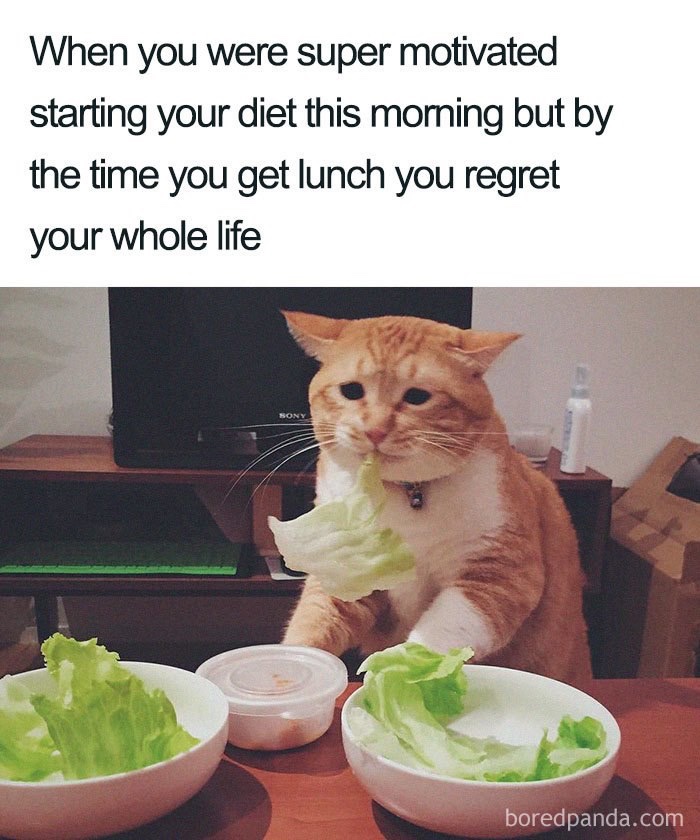
Every January, curious Googlers search for this elimination diet every January, which puts a 30-day ban on added sugar, soy, beans, peanuts, sweeteners, grains, dairy, almost all processed foods, and booze. (If you consume one of said substances, even on day 25, you have to start all over). The theory is that these things cause inflammation in your body, and skipping them will curb cravings and boost your metabolism.
But while slashing processed foods and alcohol is definitely not not good for you, there’s no evidence that following this plan will squash your chip cravings or spike the amount of cals you burn, says Jessica Cording, RD, author of The Little Book of Game Changers. As for the suggestion that this or any diet can “reset” your body…well, take that claim with a big grain of pink Himalayan salt, says Cording.
Going pegan
Created in 2014 by Mark Hyman, MD, this bb is a mashup of paleo (no processed foods, dairy, alcohol, added sugar, or grains) and veganism (no animal products). Yet some sustainably raised, grass-fed animal protein and fish and eggs are allowed, as are gluten-free grains and beans. So…? “It’s just a more restrictive version of the Mediterranean diet,” says Scott Keatley, RDN. “It’s heavy on fish and healthy fat, but it demonizes dairy and gluten, which are fine for most people.” FWIW, telling the average person that nutrient-rich foods are bad for them just encourages a shame-y relationship with eating. (Not the healthiest news, considering Pinterest searches for “eating pegan” skyrocketed 337 percent last year.)
Intermittent fasting
Okay, so this emotional roller coaster of a diet involves eating whatever you want—but only during certain hours or on certain days of the week. Then you go long periods (like, up to 16 hours) without ingesting anything. Google searches for this fad hit an all-time high last January and show no signs of stopping. But science is way less enthusiastic. Studies suggest that calorie restriction can increase life span in animals—but not, so far, in humans. And fasting does def cause some people to go HAM when they do eat. “We’re wired to consume more after restricting,” says Cording. So to repeat: This. Is. Pointless.
I’ve done Atkins and South Beach. I once dabbled in calorie counting before going raw vegan. When that left me exhausted, I tried paleo. For 10 years, I micromanaged everything I ate to the point of obsession. But no matter how diligent I was (or how long I lurked on diet message boards), all I thought about were cookies. I started dreaming of being a food writer because I was so passionate about bougie food—but turns out, I was just hungry. My new lifestyle: less effs, more carbs. Now, my appetite issues are healed. I sleep better, have more energy, and no longer obsess over pasta—I just eat it. And I finally feel like a human again.








 Mws R Writings