"If you are going to write, write from the heart." MwsR
"Life has not been the easiest, but it could have been worse!" MwsR
Life is about doing all you can to help others.
Don't go chasing rainbows, make your own pot of gold.
Love, Hope, Faith, the greatest of these is Love!
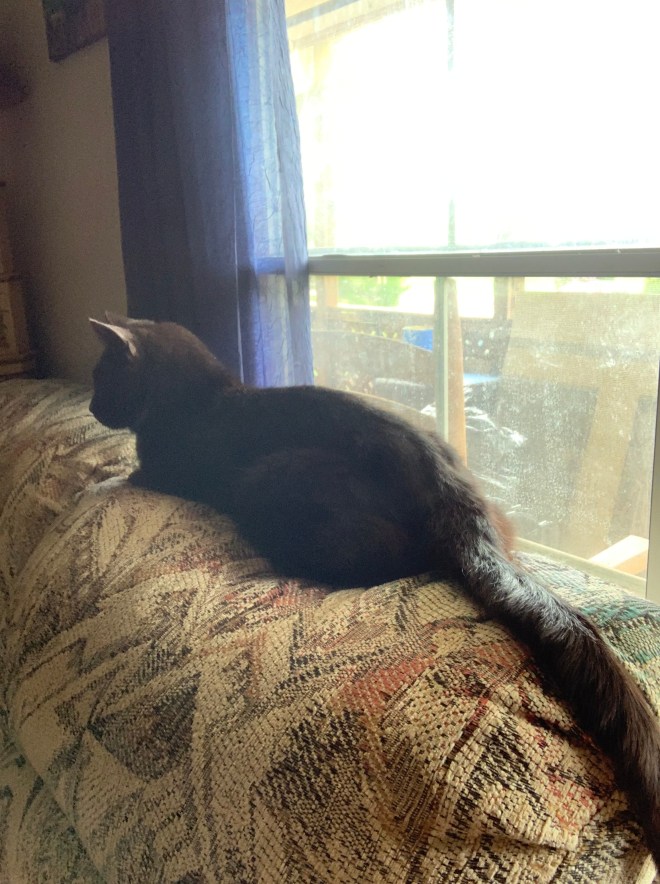
This is one of my oldest cats, Inky. He was found as a baby kitten, hiding on my back porch, under our grill.
I took him in and have loved him ever since. He is my ”black boy” full of love. He was enjoying a rest on my couch this morning. He usually stays on my screened in back porch.
I adore him. I think everyone should own a cat like Inky. He is beautiful and so sweet, almost black cats are.
1 can (14 ounces) water-packed artichoke hearts, drained and quartered
1 cup fresh spinach, torn
3/4 cup shredded Parmesan cheese
2 green onions, chopped
1 loaf (16 ounces) frozen garlic bread
Directions
Combine the first five ingredients in a bowl; transfer to a 1-1/2-qt. slow cooker. Cook, covered, on low, until cheese is melted, 2-3 hours. Meanwhile, prepare garlic bread according to package directions. Slice and serve with hot dip.
Test Kitchen tips
This is a thick, spreadable mixture. If you’d like it thinner, stir in milk a tablespoon at a time.
The artichokes dominate the flavor of this appetizer with just a hint of spinach.
Nutrition Facts
1/4 cup dip with 2 slices garlic bread: 222 calories, 15g fat (8g saturated fat), 35mg cholesterol, 395mg sodium, 15g carbohydrate (2g sugars, 1g fiber), 7g protein.
Originally published as Artichoke Spread for Garlic Bread in Simple & Delicious December/January 2019
Keep Your Roses Healthy and Blooming with These Pruning Tips
By Rosalie Davis
November 28, 2018
Pixabay
Sure, pruning roses can be a chore, but your efforts will be rewarded by a healthier, well-shaped plant that blooms abundantly and lives longer. Pruning out dead or diseased canes helps to increase air flow and sun penetration around living canes, which helps to ward off disease and encourage more flowering.
Rose Pruning Tips
Wear thick gloves and a couple layers of long-sleeve shirts while pruning to avoid the dreaded thorns.
Wear safety goggles (or sunglasses), too; branches can whip back unexpectedly.
For trimming thin canes and deadheading, hand pruners will get the job done, but loppers or a small hand-saw might be needed for bigger canes.
Make sure your pruning tools are clean and sharp. If they were previously used to prune a diseased plant, give them a quick wipe down with rubbing alcohol to sterilize. Additionally, after cutting out dead or diseased material from your rose, sterilize your pruning tool again before using it on a healthy cane.
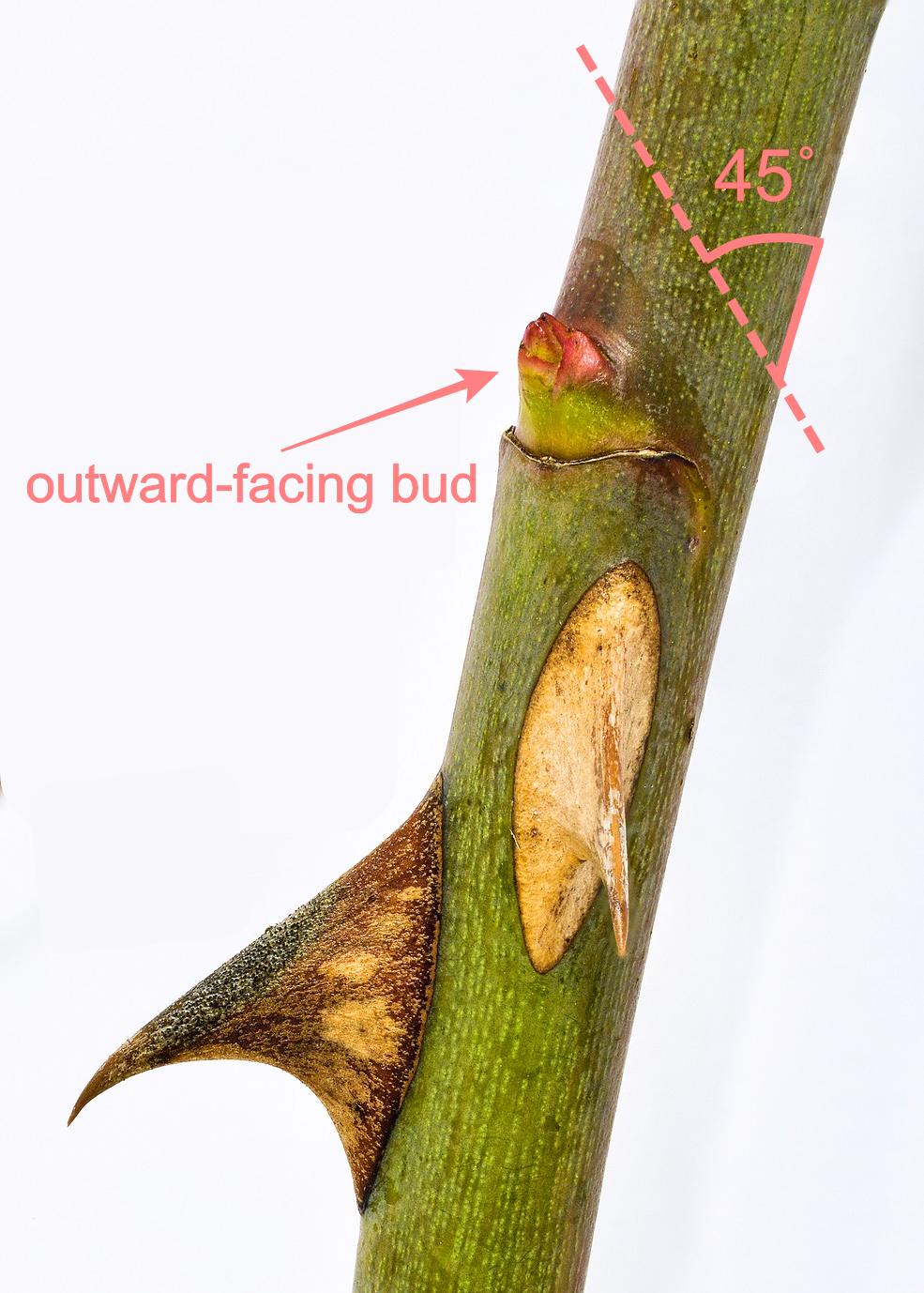
Always cut stems at a 45 degree angle just above (at least ¼ inch) an outward-facing bud. This will encourage the plant to grow outward, rather than in on itself.
Pruning Roses by Type
Hybrid and Floribunda Roses
These roses bloom more than once per season and generally bloom on new wood.
In late winter or very early spring, the roses need a good clearing out and cutting back before they start greening up and branching. About the time forsythias bloom, take out all the dead wood, crossing canes, and spindly growth. Then shape and prune back everything else, taking into account the style of the garden and the size and nature of the variety. Cut back old wood about 30 to 40 percent before growth begins. Always cut to a live bud pointing away from the center of the shrub to encourage outward growth. Start deadheading after the first flush of flower, and continue throughout the summer to encourage more blooms.
Species Roses, Old Roses, and Once-Blooming Shrub Roses
Generally hardier then other roses, these more primitive types bloom first on old wood mid-summer; re-bloomers repeat on the current season’s growth.
In early spring, remove diseased, broken, or dead branches. After flowering, prune lightly and selectively to shape the bushes and control growth.
Climbing and Rambling Roses
These roses tend to bloom on old wood.
It’s fine to remove winter-killed branches or otherwise damaged wood early in the year, but defer your annual pruning until summer, after the peak of bloom. Prune to remove undesirable canes and to shape and train growth. Side branches tend to flower more heavily than central leaders.



 It was the best of times

 Mws R Writings