Luckily, the path to cleaner indoor air is easier than you might think. Here are six indoor plants that will cure your asthma, bronchitis and more… simply by cleaning your air.
1. Snake plant (Sansevieria trifasciata)
In addition to providing a sensuous, sculptural flair to any living area of bedroom, snake plants are one of the most powerful ways to remove airborne pollutants from your home. In a 2014 study that compared the air-purifying abilities of 12 different indoor plants, snake plants turned out to be the most effective for removing the volatile organic compound (VOC) toulene.
And because toulene is a leading cause of asthma, a little less toulene in your air, thanks to snake plant, is definitely a good thing.
2. Spider plant (Chlorophytum comosum)
And while we’re on the topic of animal-themed plants, that same 2014 study showed that spider plant, another easy-to-grow indoor shrub, was the most efficient out of the 12 for ethylbenzene removal. Ethylbenzene is another toxic VOC which has been strongly linked to various forms of cancer, so there’s really no question as to whether you should invest a few dollars in a spider plant or two.
Spade-leaf philodendron was arguably one of the first indoor plants to be studied for its role in combating air pollution. In a series of studies conducted by NASA, spade-leaf philodendron was shown to efficiently remove large airborne concentrations of formaldehyde, benzene and carbon monoxide from indoor air… all of which can cause anything from cell mutations to sudden death.
Incidentally, philodendron is one of the easiest plants to grow. I have it growing all over my house, and it’s less about keeping it alive than from taking over the entire living room!
4. Aloe vera
Another common household plant that’s dynamite in ridding your home of toxic airborne pollutants is aloe vera. In addition to it’s wonderful uses as a home remedy, aloe vera has also been shown to filter pollutants like formaldehyde and benzene from indoor air.
5. Peace lily (Spathiphyllum wallisii)
Few would disagree that peace lily is one of the most calming, pleasant indoor plants to have around the house. But in addition to it’s a soothing aura and pleasant aesthetic, peace lily (a genus that includes around 40 different species) has also been scientifically proven to remove benzene, toleune, and n-hexane from indoor air. N-hexane is often found in lacquers and wood finishes and has been linked to sensory loss and general health issues.
6. English ivy
In a 2011 study that compared the formaldehyde-purifying capacity of four common indoor plants, English ivy emerged as the clear winner. As a well-known carcinogen and cause of conditions like chronic bronchitis, it’s surprising just how prevalent formaldehyde is in the average home — it can be found in household cleaners, particle board, furniture polish, glues, certain fabrics, plywood and more. So, setting up a few pots with English ivy around the home to combat this health hazard is definitely a good idea!
The Alternative Daily’s CEO, Jake Carney, feels his meditation practice, Kelee® meditation, has helped him improve his life. Wouldn’t you love to become a better person too, just by meditating? Well you can, and it’s easy to do.
The best thing about this meditation is, it doesn’t change you into someone you’re not. It helps you to let go of the parts you would like to let go of. It enhances the real you. You know, the good parts — the things you love about yourself — the things that make you, you. Doing this practice gives your thoughts clarity: your thoughts about what to do, and your thoughts about your life. This is something good to know in a world that seems filled with people telling us how we should be, and what we should do. If you could see clearly what is best for you, wouldn’t you do it?
Here are some ways Kelee meditation can help you:
You feel better physically
“When your mind lights up with a good thought, your physical body follows suit.” A quote from the book, The Mind and Self-Reflection by author Ron W. Rathbun.
While surfing, Jake, experienced this firsthand. He’d had “one of those days” at work and was out on the ocean but not “feeling the vibe.” He got a little frustrated, then decided to try and “drop into his mind,” right there on the water. So he dropped into his Kelee and detached from the thoughts bothering him. He waited patiently for the next wave, and it was one of the best rides of his life! Dropping into your greater Kelee, which is an opening to the mind, is not some abstract thought. It’s real, and you can use it to help yourself every day in your life.
You naturally become a better listener
A wise person observes more and talks less. Through this practice brain chatter lessens, and you naturally hear more of what others are saying.
You talk from your heart
Speaking from your heart means never having to apologize for saying something you didn’t mean. When you do Kelee meditation, you naturally speak from your heart, and your whole life gets simpler.
You mind your own business
Have you ever gotten into someone else’s business, then wish you hadn’t. We are responsible for ourselves. This meditation practice focuses you on your thoughts, and your life.
You become less dramatic
“If you make something an issue, it will be. Do you create issues for yourself or others, and why.” When you live from the harmony of mind, you don’t make issues. Being dramatic is really just a waste of everyone’s energy anyway.
You learn to say, “No, thank you”
When you learn to respect yourself more — your thoughts and your feelings — you respect your own space. From The Mind and Self-Reflection, “If you never learn how to say no thank you, people never learn to respect your space. Do you respect your space.”
You let others work out their problems
It doesn’t help to get involved in other people’s problems. Most people don’t want to be told what to do anyway. When you are in mind, you focus on your life. Isn’t that enough?
We recommend doing this meditation. It is a simple, five-minute meditation based on stillness of mind — and you can do it at home. For instructions, download this simple ebook, Kelee Meditation: Free your Mind, and begin becoming a better person today.
—Nikki Walsh
Nikki Walsh is a freelance writer and mom of two kids living in Southern California. She holds an MBA in marketing from University of California, Irvine and a bachelor’s degree in Biochemistry from UCSD. She has been practicing Kelee meditation for 19 years. When she is not writing she can be found out and about having fun with her kids.
If you’re feeling run down, lacking in energy, depressed or unhealthy, it’s possible that your chakras are out of alignment.
Maintaining a healthy body and mind that are perfectly in balance with one another is a difficult, near-impossible endeavor. This process, called homeostasis, can provide the means by which we achieve harmony between all the different chemicals, hormones, microorganisms and more. The further we move away from this harmonized state of being, the greater our chances of both physical and mental illness are.
Balancing your chakras provides an age-old mechanism with which you can return your body and consciousness back to homeostasis, and keep it that way.
What exactly are “chakras?”
Simply put, your chakras are the locations at which your spirit and physical body meet. Thought to have been officially standardized under eighth-century Buddhist Tantra teachings, ancient custom dictates that there are seven primary meeting points between the subtle (non-physical) energy channels of the body. These channels, known as “nadi,” are believed to be the channels in the subtle body through which your life force moves.
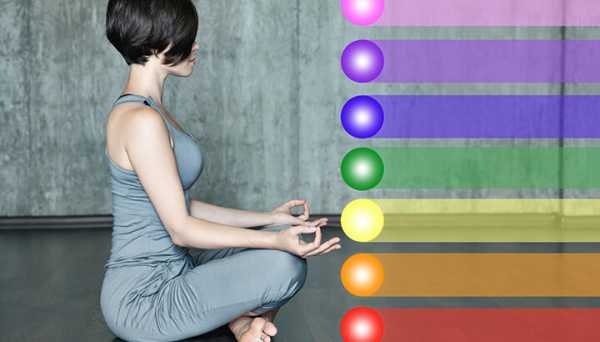
The word “chakra” is an ancient Sanskrit word meaning “wheel,” “circle” and “cycle.” This should help you to visualize how chakras are understood to operate. Your chakras are constantly moving bands of energy that circulate within specific zones of your body… like a moving wheel. While there are many chakras understood to exist within the body, most practitioners focus on the seven “major” chakras:
Root chakra
Located at the base of the spine, this is otherwise known as Muladhara, the earth chakra. Your root chakra is red in color. It is associated with feelings of safety and security.
Sacral chakra
Located below the belly button in the upper pelvic region, this chakra is known through ancient custom as Svadisthana. It’s orange in color. It is considered the water chakra (you’d think it’d be blue). It is associated with pleasure, acceptance and creativeness.
Solar plexus chakra
Located at the point where your ribs meet your abdomen, just above the naval, this chakra is known as Manipura, the fire chakra. Manipura is believed to be responsible for your digestion and diaphragmatic functions. It is associated with feelings of control and self-worth.
Heart chakra
Located, funnily enough, at the center of your chest, this is known as Anahata, the air chakra. Anahata is green. It is associated with feelings of love and inner peace.
Throat chakra
Blue in color, this chakra is known as Visuddha, the ether chakra. Responsible for your taste, speech and eating abilities, Visuddha’s purpose is to enable both inward and outward communication.
Third eye chakra
Located between your eyes, this chakra, otherwise known as Ajna, is that of the light. Indigo in color, Ajna enables physical sight and internal decision making.
Crown chakra
Thought to be either located at the top of the head or just above it, Sahasrara is the violet chakra, representing cosmic energy. Your crown chakra is responsible for maintaining mental peace and connectedness.
If this is all seeming a bit too hocus pocus for your taste, simply think of chakras as energy bands. The universe is energy — it’s a scientific fact. Therefore, it stands to reason that our own bodies are governed by certain energy wavelengths. A convenient way to enable understanding of these energy bands is through the system of chakras. There. Feeling better about the subject now?
Reasons to align your chakras
Whether you like it or not, your body and mind are heavily influenced by your own energy and the energy of others. Those energy fields, conveniently compartmentalized into distinct chakras, dictate whether you feel vibrant and full of life or lethargic and down in the dumps. Aligning your chakras so that they’re perfectly balanced and in tune with each other helps to get you feeling energized and whole once more. Here’s a number of reasons why you need to align your chakras.
Misaligned chakras can cause physical problems
Misaligned chakras are said to cause many issues, like digestive distress.
Often, if you’re suffering from certain ailments of the body but can’t for the life of you work out why, it may be due to an imbalance in your chakras. Here are some of the symptoms associated with chakras that are out of alignment:
Bladder and bowel issues
Breathing problems
Circulation issues
Dental issues
Digestive complications
Headaches
Immune disorders
Lower back pain
Low libido
Skin problems
Reproductive issues
Vision problems
Misaligned chakras can cause mental issues
Because the chakras represent your spiritual life force, they can arguably play an even more influential role in dictating your emotions and mental health. If you’re suffering from any of the following issues, it could be due to a problem with one of many of your chakras:
Addictions
Anger issues
Abusiveness towards yourself or others
Boredom (with life, others or your job)
Close-heartedness
Depression
Eating disorders
Indecision
Insecure
Jealousy
Lack of creativity
Lack of motivation
Lack of willpower
Moodiness
Resentment
Aligning your chakras can help you achieve overall balance
Together, your chakras represent your entire self: physical, spiritual and emotional. For this reason, they provide the means by which you can achieve overall balance in your life — that evasive homeostasis I discussed earlier. By devoting a little bit of time to actively visualizing and supporting each of your chakras, you help to improve each area of yourself. By taking a few minutes every day to focus your awareness on each of the seven chakras, you will subtly but surely promote the attributes it represents.
Aligning your chakras can increase self-awareness
This sounds like an inconsequential benefit, but it’s actually kind of a big deal! By developing an awareness of your chakras, you unlock the potential to become adept at self-diagnosing. Not in the sense that a doctor diagnoses you by asking what symptoms are (“cough now”) then prescribing some form of nasty medication, but in the sense that you can ascertain where you’re feeling weak or ill and focus your energy on that region to reattain homeostasis. Essentially, by looking for ebbs and flows in your chakras, you can pinpoint elusive problems in your health and resolve them… without knocking back vast quantities of drugs.
Aligning your chakras can help you to achieve well-being
Chances are, if you haven’t been living under a rock for the past couple of decades, you’ve heard of yoga. Yoga, as it happens, draws much of its mantra from the chakra system. In fact, many modern forms of meditation derive much of their essence from this understanding of energy flow between the major chakras. All acknowledge, in some way or form, that your consciousness is spread across all seven chakras, and that aligning them all brings a state of harmony and well-being. In this sense, aligning your chakras is like being in a state of meditation all the time, allowing you to achieve effortless calm and support a life rich in beauty and happiness.
How to align the chakras
Find a quiet spot to align your chakras.
There are plenty of ways in which you can go about achieving chakra greatness — just about everyone in the business has their own special method. But, as usual, simplicity is key and this method is an age-old way to align your chakras quickly and effectively:
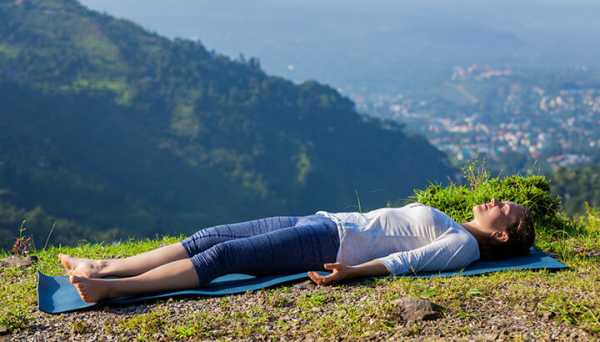
1. Lie down in a comfortable spot away from the hustle and bustle of life. This might be your bedroom or a quiet spot on the grass under the trees — whatever it takes to minimize disturbance from discomfort and the stresses of life.
2. Take a few minutes to just lie there and breathe deeply, clearing your mind of all that everyday fuzz and becoming centered with your body.
3. Now set an intention for balancing and aligning your chakras. Apparently, the energy listens to your intentions, so this actually makes a lot of sense!
4. Place one of your hands on your first chakra (the one at the base of your spine), and another hand on your second chakra (your sacral chakra, just below your belly button). You can physically rest your hands on these areas, or allow them to hover a few inches above the body — it’s your choice.
5. Keep your hands in this position until you feel the energy between the two chakras equalize. This may be a pulsating feeling, or simply a feeling that it’s time to move onto the next chakras. If you don’t feel anything conclusive, don’t worry — simply move on after a minute or two.
6. Move your hands to your second and third chakras, and repeat this process all the way up to the seventh chakra. After you’ve balanced all the chakras, take a few minutes to simply lie there and soak in the feeling of wholeness.
Make a point of doing this every day and you’ll not only kick stress right in the unmentionables, but you’ll become much more in tune with your own body. Goodbye, doctor. Hello, chakras!
3 tbsp baby oil (I normally use vegetable oil, but was out. Baby oil worked great and provided a lovely scent!)
3 tsp Cream of Tartar
purple and pink food dye
Directions:
Whisk 1 cup water, 1 cup flour, ½ cup salt, 1 tbsp oil, 1 tsp Cream of Tartar, and several drops of purple or pink dye in a saucepan. Heat the dough mixture until it forms a ball. Remove from the pan and knead well. Repeat 2 more times to make the other colors (for white, leave out the food dye). Twist the playdoughs together and roll into a ball to create a marbled effect!
U.S. President Harry S. Truman publicly announces his decision to support the development of the hydrogen bomb, a weapon theorized to be hundreds of times more powerful than the atomic bombs dropped on Japan during World War II.
Five months earlier, the United States had lost its nuclear supremacy when the Soviet Union successfully detonated an atomic bomb at their test site in Kazakhstan. Then, several weeks after that, British and U.S. intelligence came to the staggering conclusion that German-born Klaus Fuchs, a top-ranking scientist in the U.S. nuclear program, was a spy for the Soviet Union. These two events, and the fact that the Soviets now knew everything that the Americans did about how to build a hydrogen bomb, led Truman to approve massive funding for the superpower race to complete the world’s first “superbomb,” as he described it in his public announcement on January 31.
On November 1, 1952, the United States successfully detonated “Mike,” the world’s first hydrogen bomb, on the Eniwetok Atoll in the Pacific Marshall Islands. The 10.4-megaton thermonuclear device, built upon the Teller-Ulam principles of staged radiation implosion, instantly vaporized an entire island and left behind a crater more than a mile wide. The incredible explosive force of Mike was also apparent from the sheer magnitude of its mushroom cloud–within 90 seconds the mushroom cloud climbed to 57,000 feet and entered the stratosphere. One minute later, it reached 108,000 feet, eventually stabilizing at a ceiling of 120,000 feet. Half an hour after the test, the mushroom stretched 60 miles across, with the base of the head joining the stem at 45,000 feet.
Three years later, on November 22, 1955, the Soviet Union detonated its first hydrogen bomb on the same principle of radiation implosion. Both superpowers were now in possession of the “hell bomb,” as it was known by many Americans, and the world lived under the threat of thermonuclear war for the first time in history.












 Mws R Writings