We’ll show you how to color Easter eggs step-by-step using just a few inexpensive pantry staples. You should be able to make one dozen easy marbled Easter eggs in less than an hour.
Step 1: Create First Dye Color
In a glass bowl mix one cup of hot water, one teaspoon of white vinegar, and 5-10 drops of food coloring. The dye in this bowl will be the base color of your egg, so we recommend using a lighter shade of dye. Use a spoon to place a hard-boiled egg into each bowl, making sure the egg is completely submerged in the liquid. Let the egg sit in the dye for just one minute—this ensures you’ll have a shade light enough to show the marbleized pattern. Remove and place the colored egg on a paper towel to dry. The dyed Easter eggs will need to be completely dry before you dip them again.
Step 2: Prepare Oil Mixture
While the dyed eggs dry, prepare the oil mixture that will give your eggs a marbled look. Since the oil mixture adds a second color to the dyed egg, it will need to be quite a bit more saturated. In a new bowl mix approximately 20 drops of food coloring with one cup of warm water. Add one tablespoon of vegetable oil and use a spoon to gently mix.
Step 3: Create Marbled Easter Eggs
When the eggs are dry, use a spoon to add one colored egg to the vegetable oil mix. Gently roll the egg around in the dye bath and remove it when you notice a marbleized Easter egg effect. Keep in mind that if you leave the egg in the mixture too long, it will turn a solid color.
Step 4: Dry and Display
After removing the egg, lightly blot excess water and oil from the egg using a paper towel and let dry completely before displaying. For a touch of shine, rub the marble looking Easter eggs with oil. Try varying the color combinations and oil swirls to create a pretty display of dyed Easter eggs.
Orthodox Easter, also called Greek Easter is the principal festival of the Orthodox Church.
In the bible, it is the day when Mary Magdalene found that an empty tomb in the cave in which Jesus had been placed following his death by crucifixion on the Friday before.
It signifies the end of the 40 days of Lent, meaning Christians who gave up something during lent to signify Jesus’ time in the wilderness, can indulge themselves again.
In Egypt, Coptic Easter Monday is celebrated on the same day as Orthodox Easter Monday. The day forms part of a wider spring festival called ‘Sham El Nessim‘ and is a national holiday.
The date is different from Western Easter as the other Christian Churches base the date of calculating Easter on the Gregorian calendar, but the Eastern Orthodox Church still uses the earlier Julian calendar for calculating the dates of festivals, which also includes Easter.
Why is it called Easter?
The name Easter is derived from ‘Ostara’ or ‘Eostre’, a pagan goddess of fertility, whose feast was celebrated on the Vernal Equinox. The word East is also derived from her names, as is Oestrogen, the female hormone.
However, In most languages other than English and German, the holiday’s name is derived from Pesach, the Hebrew name of Passover, a Jewish holiday to which the Christian Easter is intimately linked.
Easter depends on Passover not only for much of its symbolic meaning but also for its position in the calendar. The Orthodox church uses the Julian calendar for the calculation of Easter, whereas the Western churches use the Gregorian calendar. This difference can often mean that Orthodox Easter falls later than Easter observed elsewhere. The earliest date it can fall is 4 April and the latest is 8 May.
Easter traditions
Easter Eggs
Modern Easter celebrations revolve around eggs. They may be painted, rolled down hills or eaten if they are of the chocolate variety. The Christian tradition of egg is aid to represent rebirth and resurrection – new life being born from the egg. It’s also been said that egg recalls the shape of the stone that rolled away on Easter Sunday form the tomb that held Jesus’ body.
This egg tradition is almost certainly a distillation of a much older pagan custom celebrating spring. The ancient Persians celebrated their new year at the time of the vernal equinox by painting eggs.
Its adoption into the Christian traditions would have been quite seamless, as eggs were banned during the period of Lent preceding Easter.
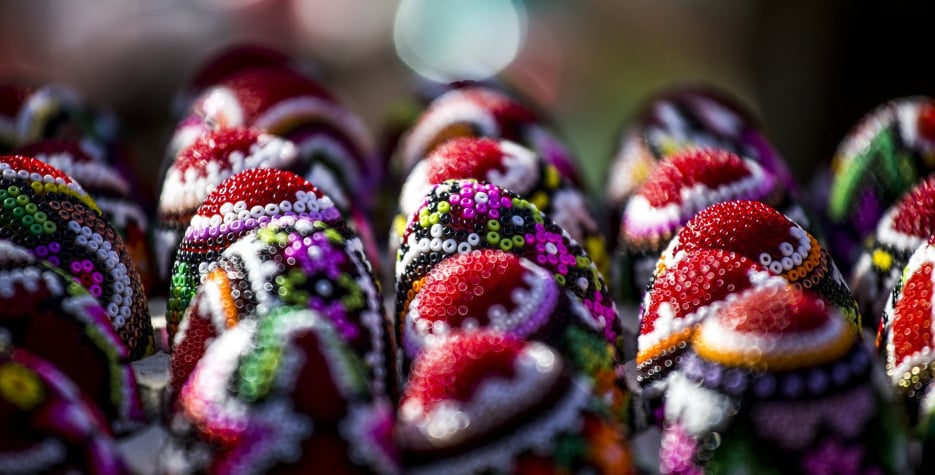
The custom of decorating eggs is perhaps most famous in Ukraine. Known as Pysanky eggs, they are painted when raw as the uncooked eggshell absorbs the colored dye better than when cooked.






 Mws R Writings
