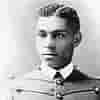
In 1877, the first African American cadet graduated from the U.S. Military Academy, and in 1976, the first female cadets were admitted. The academy is now under the general direction and supervision of the department of the U.S. Army and has an enrollment of more than 4,000 students.
Italy’s Renaissance period has a major, though little-known, dark side. Sailors returning from the New World brought with them a massive outbreak of syphilis, which spread through an entire French army. The troops then brought what would become known as “the great pox” to the rest of Europe. With no such thing as antibiotics back then, the disease was able to spread unchecked—and its effects were nasty.
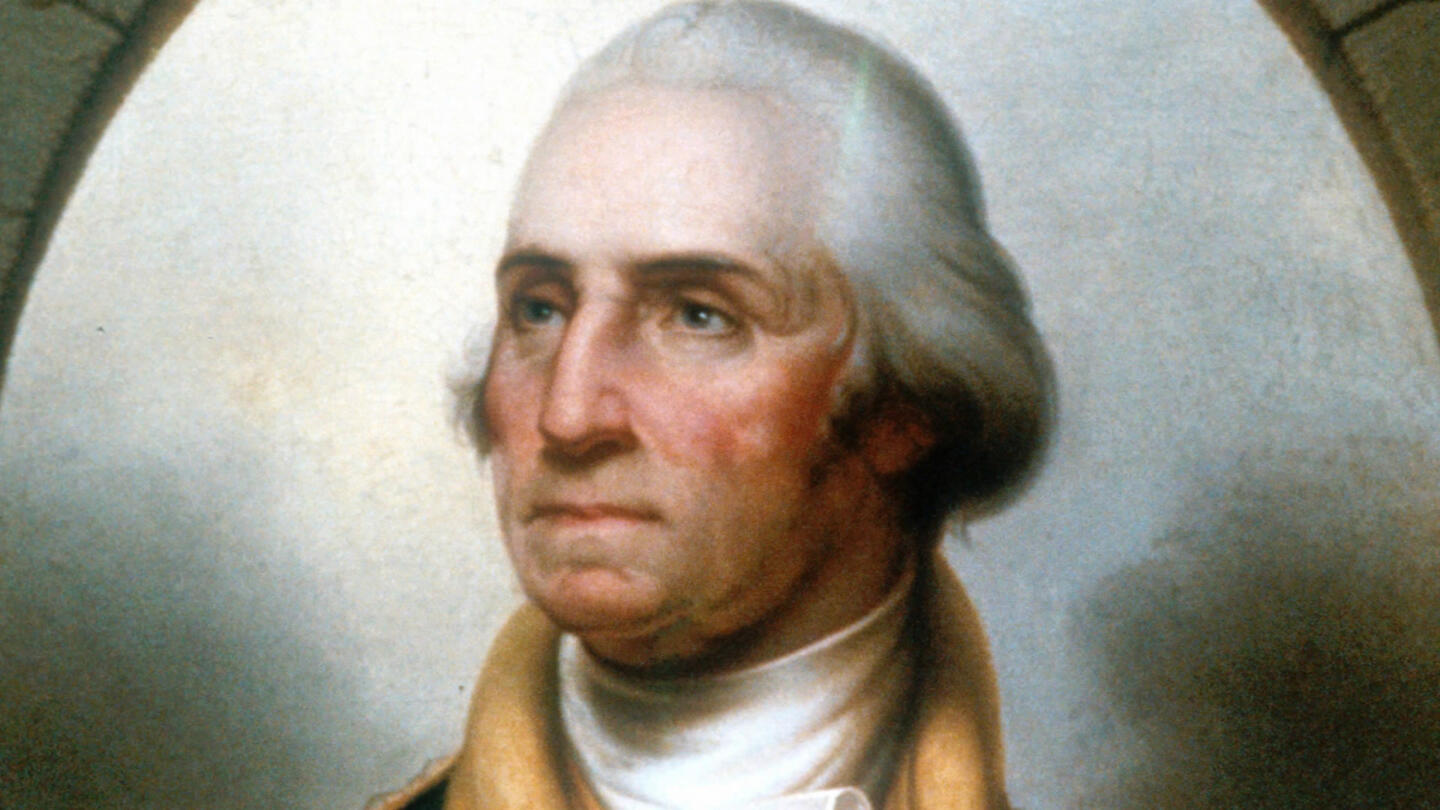
Congress sets January 7, 1789 as the date by which states are required to choose electors for the country’s first-ever presidential election. A month later, on February 4, George Washington was elected president by state electors and sworn into office on April 30, 1789.
The idea for Hispanic Heritage Month, celebrated throughout the latter half of September and the first half of October, began as a way to promote the history, culture, and contributions of Hispanic-Americans — specifically, those whose ancestors came from Spain, Mexico, the Caribbean, and Central and South America. Communities mark the achievements of Hispanic and Latino Americans with festivals and educational activities.
A special dateHispanic Heritage Month starts in the middle of the month to correspond with the independence of many countries like Costa Rica, El Salvador, Guatemala, Nicaragua, Mexico, and Chile.
Going strongHispanic and Latino Americans amount to an estimated 17.8% of the total U.S. population, making up the largest ethnic minority.
And the winner is…Oscar Hijuelos, author of “The Mambo Kings Play Songs of Love,” was the first Hispanic writer to win a Pulitzer Prize for Fiction.
English proficiencyThe Latinos in the U.S. who speak English proficiently is increasing.
Difference of opinionUnlike the U.S., chicken tacos are not popular in Mexico. There, they prefer to fill their tacos with steak, chicharron, and chorizo.
Hispanic Heritage Month is an annual celebration of the history and culture of the U.S. Latinx and Hispanic communities. The event, which spans from September 15 to October 15, commemorates how those communities have influenced and contributed to American society at large.
The term Hispanic or Latino (or the more recent term Latinx) refers to a person’s culture or origin—regardless of race. On the 2020 Census form, people were counted as Hispanic or Latino or Spanish if they could identify as having Mexican, Mexican American, Chicano, Puerto Rican, Cuban, or “another Hispanic, Latino, or Spanish origin.”
James Garrett/NY Daily News Archive via Getty Images
1542 Juan Rodríguez Cabrillo sets sail from the Mexican port of Navidad to explore the west coast of North America on behalf of the Spanish Empire
1693 1st women’s magazine “Ladies’ Mercury” published (London)
1743 War of the Austrian Succession: Battle of Dettingen: in Bavaria, King George II of Britain personally leads troops into battle. The last time a British monarch commanded troops in the field.
1929 1st color TV demo, performed by Bell Laboratories in NYC
1950 North Korean troops reach Seoul, UN asks members to aid South Korea, Harry Truman orders US Air Force & Navy into the Korean conflict
1954 1st atomic power station opens – Obninsk, near Moscow in Russia
678 St Agatho begins his reign as Catholic Pope
The 1358 Republic of Dubrovnik is founded
Some Famous Birthdays On This Day
From Way Back
1040 Ladislaus I, King of Hungary, born in the Kingdom of Poland (d. 1095)
1350 Manuel II Palaeologus, Byzantine Emperor (1391-1425) (d. 1425)
1462 Louis XII, the Just, King of France (1498-1515), born in Château de Blois, France (d. 1515)
1550 Charles IX [Carl], King of France (1560-74), born in Saint-Germain-en-Laye, France (d. 1574)
1615 Johann Paul Schor, German Baroque painter, born in Innsbruck, Austria (d. 1674)
1696 William Pepperrell, British colonial soldier, born in Kittery, Maine (d. 1759)
1717 Louis Guillaume Lemonnier, French botanist and contributor to the Encyclopédie ou Dictionnaire raisonné des sciences, des arts et des métiers, born in Paris (d. 1799)
1718 Wenzel Raimund Pirck, composer, born in Vienna, Austria (d. 1763)
1745 Johann Nepomuk Went, Bohemian composer, born in Vinařice, Czech Republic (d. 1801)
1787 Thomas Say, American naturalist and father of descriptive entomology, born in Philadelphia, Pennsylvania (d. 1834)
1789 Philipp Friedrich Silcher, German composer, born in Weinstadt, Germany (d. 1860)
1805 Stephen Elvey, English composer, born in Canterbury, Kent, England (d. 1860)
1806 Napoléon Coste, French guitarist and composer, born in Besançon, France (d. 1883)
1809 François Certain Canrobert, French marshal and parliament member, born in Saint-Céré, France (d. 1895)
1812 John Pike Hullah, English composer, born in Worcester (d. 1884)
1819 Carl Albert Löschhorn, German composer, born in Berlin, Germany (d. 1905)
1821 August Conradi, German organist, and composer, born in Berlin (d. 1873)
1828 Junius Daniel, Brigadier General (Confederate Army), born in Halifax, North Carolina (d. 1864)
1833 Władysław Zaremba, Ukrainian composer, born in Dunajowce, Ukraine (d 1902)
1838 Bankim Chandra Chatterjee, Indian novelist (Anandamath), born in Naihati, Bengal Presidency, British India (d. 1894)
1838 Paul Mauser, German weapon designer, born in Oberndorf am Neckar, Kingdom of Württemberg (d. 1914)
1842 Jamie Anderson, Scottish golfer (British Open 1877-79), born in St. Andrews, Fife (d. 1905)
1846 Charles Stewart Parnell, English-Irish Home Rule Party leader, born in Avondale, County Wicklow, Ireland (d. 1891)
1849 Harriet Hubbard Ayer, American cosmetics manufacturer and columnist, born in Chicago (d. 1903)
1850 Ivan Vazov, Bulgarian poet, novelist and playwright (Under the Yoke), born in Sopot, Bulgaria (d. 1921)
1850 Jacob Adolf Hägg, Swedish composer, born in Östergarn, Sweden (d. 1928)
1850 Lafcadio Hearn, American author (Glimpses of Unfamiliar Japan), born in Leucas, Greece (d. 1904)
1850 Jørgen Pedersen Gram, Danish mathematician (Gram–Schmidt process), born in Duchy of Schleswig, Denmark (d. 1919)
1859 Mildred J. Hill, American composer and musician (Happy Birthday To You), born in Louisville, Kentucky (d. 1916)
1862 May Irwin, Canadian comedienne and singer (Hot Time in the Old Town), born in Whitby, Ontario, Canada (d. 1938)
1869 Emma Goldman, American anarchist and publisher (Mother Earth), born in Kovno, Lithuania, Russian Empire (d. 1940)
1869 Kate Carew [Mary Williams], American caricaturist, born in Oakland, California (d. 1961)
1869 Hans Spemann, German embryologist (Nobel Prize in Physiology or Medicine 1935), born in Stuttgart, Germany (d. 1941)
1985 Nico Rosberg, German Finnish race car driver (F1 World Champion 2016), born in Wiesbaden, West Germany
1985 James Hook, Welsh rugby player, born in Port Talbot, Wales
Closer To Present Day
1986 LaShawn Merritt, American sprinter, born in Portsmouth, Virginia
1986 Drake Bell, American actor, voice actor, and musician, born in Newport Beach, California
1987 Ed Westwick, English actor (Gossip Girl), born in London, England
1988 Kate Ziegler, American swimmer, born in Fairfax, Virginia
1989 Matthew Lewis, English actor (The Syndicate), born in Leeds, West Yorkshire, England
1990 Aselin Debison, Canadian singer (Bigger than me), born in Glace Bay, Canada
1991 Madylin Sweeten, American actress (Everybody Loves Raymond), born in Brownwood, Texas
1999 Chandler Riggs, American actor (The Walking Dead), born in Atlanta, Georgia
QUIZ
In which country was the world’s oldest parliament established this week in 930 AD?
England
Italy
Iceland
United States of America
Who was the 1st African American to be nominated for US President?
Frederick Douglass
Booker T. Washington
James Weldon Johnson
Marcus Garvey
What medical advance was made available to the US public this week in 1960?
Polio Vaccine
Contraceptive pill
Ultrasound
Measles vaccine
Who is this British person, a major figure in WWI, and born this week in 1850?
John French
David Lloyd George
Horatio Kitchener
Douglas Haig
What is the American town of Yerba Buena, site of the 1st European building on the west coast now known as?
San Diego
Los Angeles
Seattle
San Francisco
Which classic sci-fi film directed by Ridley Scott and starring Harrison Ford was released this week in 1982?
Star Wars: The Empire Strikes Back
Alien
Blade Runner
Poltergeist
Which composer wrote the opera The Valkyrie, which premiered in 1870, featuring the famous “Ride of the Valkyries”?
Richard Wagner
Giacomo Puccini
Giuseppe Verdi
Igor Stravinsky
Who delivered their famous speech this week in West Berlin in 1963 by announcing “Ich bin ein Berliner”?
Angela Merkel
Nikita Khrushchev
John F. Kennedy
Harold Macmillan
What year did the US Supreme Court rule in favor of same-sex marriage?
2013
2014
2015
2016
Finnish author and artist Tove Jansson died this week in 2001, what series of books is she famous for?
Madeline series
Paddington Bear
Barbar the elephant
The Moomins
Your Score
People find this quiz a good challenge! Try Another Weekly History Quiz
A thousand pioneers head West as part of the Great Emigration
The first major wagon train to the northwest departs from Elm Grove, Missouri, on the Oregon Trail.
Although U.S. sovereignty over the Oregon Territory was not clearly established until 1846, American fur trappers and missionary groups had been living in the region for decades. Dozens of books and lectures proclaimed Oregon’s agricultural potential, tweaking the interest of American farmers. The first overland immigrants to Oregon, intending primarily to farm, came in 1841 when a small band of 70 pioneers left Independence, Missouri. They followed a route blazed by fur traders, which took them west along the Platte River through the Rocky Mountains via the easy South Pass in Wyoming and then northwest to the Columbia River. In the years to come, pioneers came to call the route the Oregon Trail.
In 1842, a slightly larger group of 100 pioneers made the 2,000-mile journey to Oregon. The next year, however, the number of emigrants skyrocketed to 1,000. The sudden increase was a product of severe depression in the Midwest combined with a flood of propaganda from fur traders, missionaries, and government officials extolling the virtues of the land. Farmers dissatisfied with their prospects in Ohio, Illinois, Kentucky, and Tennessee, hoped to find better lives in the supposed paradise of Oregon.
On this day in 1843, some 1,000 men, women, and children climbed aboard their wagons and steered their horses west out of the small town of Elm Grove, Missouri. The train comprised more than 100 wagons with a herd of 5,000 oxen and cattle trailing behind. Dr. Elijah White, a Presbyterian missionary who had made the trip the year before, served as guide.
The first section of the Oregon Trail ran through the relatively flat country of the Great Plains. Obstacles were few, though the river crossings could be dangerous for wagons. The danger of Indian attacks was a small but genuine risk. To be on the safe side, the pioneers drew their wagons into a circle at night to create a makeshift stockade. If they feared Indians might raid their livestock—the Plains tribes valued the horses, though generally ignored the oxen—they would drive the animals into the enclosure.
Although many neophyte pioneers believed Indians were their greatest threat, they quickly learned that they were more likely to be injured or killed by a host of more mundane causes. Obstacles included accidental discharge of firearms, falling off mules or horses, drowning in river crossings, and disease. After entering the mountains, the trail also became much more difficult, with steep ascents and descents over rocky terrain. The pioneers risked injury from overturned and runaway wagons.
Yet, as with the 1,000-person party that made the journey in 1843, the vast majority of pioneers on the trail survived to reach their destination in the fertile, well-watered land of western Oregon. The migration of 1844 was smaller than that of the previous season, but in 1845 it jumped to nearly 3,000. Thereafter, migration on the Oregon Trail was an annual event, although the practice of traveling in giant convoys of wagons gave way to many smaller bands of one or two-dozen wagons. The trail was heavily traveled until 1884, when the Union Pacific constructed a railway along the route.



 England
 Italy
Italy Iceland
 United States of America
 Frederick Douglass
 Booker T. Washington
 James Weldon Johnson
 Mws R Writings