While they won’t purify your air, houseplants are a great way to bring life into your spaces, whether it be a single potted plant on your shelf or a room full of foliage. But, when it comes to how to care for indoor plants, it can be easier said than done. Maybe you’re one of those plant parents, no matter what you do, can’t seem to keep your greenery lively and fresh.
What began as an annoyance (an extra pinch at the gas pump and the grocery store) has turned into a painful reminder that budgeting and saving may be even more important than anyone ever thought. And without a plan to deal with inflation’s effects, day to day and over time, your dollars can lose purchasing power.
In general, curly hair has a learning curve but once you get your styling methods down, you’ll be left with beautiful, bouncy curls – even when air-drying. “For curly hair, use a wide-tooth comb while hair is wet,” said Peverini. “Next, coat hair with a curl cream and twist your strands, alternating some forward and some backward into rope-like sections –– this will leave perfect curl formation.”The Best Way to Air-Dry Wavy Hair
Wavy hair is one of the easier hair types to air-dry because of your natural loose texture. “For wavy hair, you can use the rope-twist technique to enhance your wave, but twist hair in larger sections,” said Peverini. “Once dry, break the sections apart using a detangler comb and the results are soft waves.”The Best Way to Air-Dry Straight Hair
For straight hair, brush your hair out while still in the shower to remove any tangles before towel drying by scrunching hair upward. “Position your part and apply your favorite serum or mousse,” said Peverini. “As it begins to dry, shake the hair through the fingers lightly, but do not rake through. This will help give body to straight hair.”
Air-Drying Tip #1: Don’t Go to Sleep With Wet Hair
“It’s best to wash your hair a couple hours before bedtime, since you don’t want to go to bed with wet hair,” said Peverini. “This also saves time getting ready in the morning.” If you go to sleep with wet hair, you run the risk of sleeping on it which can lead to creases or flatness in the hair.
Air-Drying Tip #2: Use a Microfiber Towel
Your towel can be responsible for frizz if you’re not using the right material. “Use a microfiber towel to scrunch hair dry,” said Peverini.
Air-Drying Tip #3: Sleep on a Silk Pillowcase
No matter if you’re heat styling or air-drying your hair, a silk pillowcase can help eliminate frizz. When you sleep, you create friction by tossing and turning. The soft silk fabric allows hair to move without any tugging.
Air-Drying Tip #4: Create Volume With Clips
“If you want extra volume when air-drying, use a small hair claw at the top of the head while hair dries to give lift,” said Peverini. “These can also be placed around the head for more shape and root lift.
“Air-Drying Tip #5: If Hair Dries “Wrong,” You Can Fix It
If your hair air-dries with less than desirable results, you can have a do-over – without rewashing your entire head, that is. “Mist it with some water or a leave-in conditioner and then try to re-shape it,” said Peverini. Worst-case scenario, opt for a ponytail or messy bun.
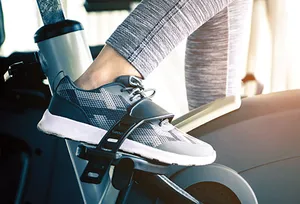
Warm-up for 5-7 minutes with easy cardio. This can be on any cardio machine of choice, or a walk around the neighborhood. If it’s too cold, try 5 minutes of a dance cardio video on YouTube, or walking or jogging in place while listening to your favorite warm-up song.SLIDESHOW
How to Start Strength Training
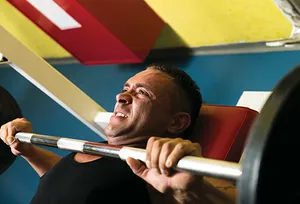
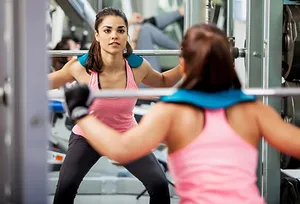
1/14Why Strength Training?It’s not just to get big muscles and look buff. Your bones will get stronger, too. And it can help your balance and coordination, which means you’re less likely to fall and hurt yourself. More muscle also means you burn more calories when you’re doing nothing at all, which can help keep off extra pounds. You’ll appreciate these benefits as you get older and start to lose muscle mass.2/14Do You Need Lots of Equipment?Not at all. Pushups, pullups, and other “bodyweight exercises” can help build up your muscles and make it easier for you to work out longer. Simple props like elastic resistance tubing and giant inflatable balls can help with some movements. And don’t be afraid to switch it up. More variety may help you get stronger. 3/14Free Weights”Free” doesn’t have to do with money. It means the weights aren’t attached to a machine. If you’d rather train at home, start small with a couple of hand dumbbells. You can always add weight or take it away. A larger barbell and weight bench put variety in your routine.Be careful, though. It’s easier to injure yourself with free weights than weight machines, so make sure you learn how to use them the right way.4/14Weight MachinesWhen you use one of these, you work one muscle group at a time. Though they’re usually safer because they’re better at keeping you in the right position, they may not provide as natural a motion as free weights. And weight machines generally cost more, whether you buy one to use at home or pay for a gym membership. 5/14Talk to a trainer it’s important to do your strength exercises the right way. It lets you get the most from your hard work and keeps you from hurting yourself. If you go to a gym, ask the experts there to watch you and make suggestions. If you like to work out at home, hire a certified professional trainer, who can check your technique and even help design your training routine.6/14How Often Should You Train?Your muscles need rest to grow. A good rule of thumb is to work each muscle group twice a week. For example, you could alternate your upper and lower body every day, or do a full-body workout 2 or 3 times a week.Just remember that your muscles need a full day’s rest before the next workout. It’s also a good idea to train all your major muscle groups. When one of them is much more developed or less developed, you can injure yourself. 7/14How to Choose a Starting WeightNo matter your age, take it slow when you begin training, so your body has a chance to get used to it. Don’t be afraid to start with just a bare barbell or dumbbell bar to learn the right motion. When you’ve got that down, you can put on weights. You should be able to do 8-15 repetitions in comfort. 8/14Add More Weight When You’re ReadyOnce you have your technique down, you’ll want to add weight slowly. For good results, you should feel like you can’t do anymore as you get to the end of a set of 12-15 repetitions.Check your form. If it breaks down with more weight, then you may be doing more harm than good. Take some off. When it gets easier, or you can do more than a full set with good form, add more weight.9/14BreatheYou may feel like you want to hold your breath when strength training. Don’t do it. Try to breathe out as you lift the weight and breathe in as you lower it. It will improve your performance and may help stop injuries like a hernia. If it’s hard to breathe, you may be using too much weight. 10/14Dodon’t Skip a WarmupYou can injure your muscles more easily when they’re cold. So warm up with 10 minutes of jogging or biking. Even a brisk walk should do it. You can combine that with some simple exercises, like jumping jacks and lunges.11/14Learn How to Bench-PressLots of folks make this part of their fitness routine. Keep your shoulders back and down against the bench. If you pull them forward when you lift, you’ll get less of a chest workout and you may hurt your shoulders.Some other tips: Keep a natural arch in your lower back — not too much or too little.Use your stomach muscles as you work out.Try not to lock your elbows into full extension when you lift.Relax your neck.12/14Try Some SquatsIt’s best to work with an expert to learn this one and start with little or no weight. You should feel the biggest effort from your legs and lower yourself as if sitting down. Try not to round your back.Follow this style: Turn your feet slightly out and keep them at shoulder width. Pull your shoulders back and down, and keep them above your hips.Push your chest out.Try to keep your knees from moving past your toes as you get lower.13/14Do a Wall PushupYou won’t need any equipment besides a sturdy wall. It can help strengthen your chest, shoulders, and arms.Face the wall, a bit more than arm’s length away, feet flat on the floor.Keep feet and hands shoulder-width apart. Lean forward with palms against the wall at shoulder height. Slowly lower your upper body toward the wall, bending at the elbows.Hold for about a second.Breathe out as you slowly push yourself back up.14/14Get Your Doctor’s ok if you’re not used to exercising and you’re middle-aged or older, check with your doctor before you start strength training. Also, talk to him if you smoke, have a health condition, or you’re overweight. Stop an exercise or lower the weight you’re lifting if it causes pain. If it doesn’t go away, see your doctor or a training specialist.
Complete 2-3 sets of 15 reps for the following exercises. (For example, You’ll do 15 biceps curls. Wait a few seconds to recover, and do 15 more biceps curls. If you’d like, do the third set. Then move onto the next exercise.)
Biceps curls. Hold the weights so that the palms of your hands are facing forward. Keep your elbows close to your torso, a tight core, and a slight bend in your knees. Flex at the elbow, bringing the weight all the way up (aiming towards your shoulder, lifting up through your chest as you go ). As you release, try to resist the weight, and go for a nice full extension at the bottom of the movement.
Sit to stand. Hold 1 dumbbell (with both hands, one at each end of the dumbbell)at your chest and stand about 2 feet in front of a couch or sturdy chair. Place your feet just under your shoulders with toes slightly angled out. Keep your chest lifted and a tight core as you sink back and down into your squat. Tap your booty to the chair, like you’re sitting down for a second. Make sure that your body weight is in your heels (you should be able to lift your toes). Exhale to rise.
Good mornings. Hold the dumbbells in your hands and cross your arms at your chest. Stand with your feet underneath your hips with a slight bend in the knee. Keep your back flat as your hinge from your hips, like you’re folding your body like a book. Stop when your chest is parallel to the floor. Squeeze your glutes and exhale to stand.
Overhead press. Stand with legs hip-width apart, core engaged. Hold a weight in each hand, at shoulder level, with palms facing inward. Inhale to bring the weights up to 90 degrees and exhale to press up overhead. Lower down with control to 90 degrees and repeat.
Lunge. Hold the weights at your sides, palms facing inward, and stand with feet hip-width apart. Take one huge step forward, and keep your feet in line with your hips. Try to keep your torso perpendicular to the floor as you sink down into your lunge. As you lunge, watch the front knee to make sure it stays stacked above the front ankle. As you rise, actively think about trying to squeeze your legs together. Switch sides. For this exercise, you’ll do 8 lunges on the right side and 8 on the left for a full set.































 Mws R Writings