“The best day of your life is the one on which you decide your life is your own. No apologies or excuses. No one to lean on, rely on, or blame. The gift is yours – it is an amazing journey – and you alone are responsible for the quality of it. This is the day your life really begins.”
Many people believe that malnutrition is not a problem in developed worlds, including the U.S. The country has an abundant food supply that could help meet the population’s nutritional needs.
However, studies showed that not all residents of “well fed” communities are healthy. Nutrient deficiencies are also common in the U.S.
One research conducted in 2018 under the National Health and Nutrition Examination Survey (NHANES) suggested that both children and adults in the country have high cases of vitamin deficiencies.
Researchers found that 31 percent of the entire population was at risk for one vitamin deficiency. Many Americans have been following diets high in calories but low in nutrients.
Heather Moday, an allergist and immunologist from Moday Center for Functional and Integrative Medicine, has been treating many patients who experienced deficiencies. But she noted Americans lack three common vitamins due to Western diets. And they are as listed below:
Magnesium
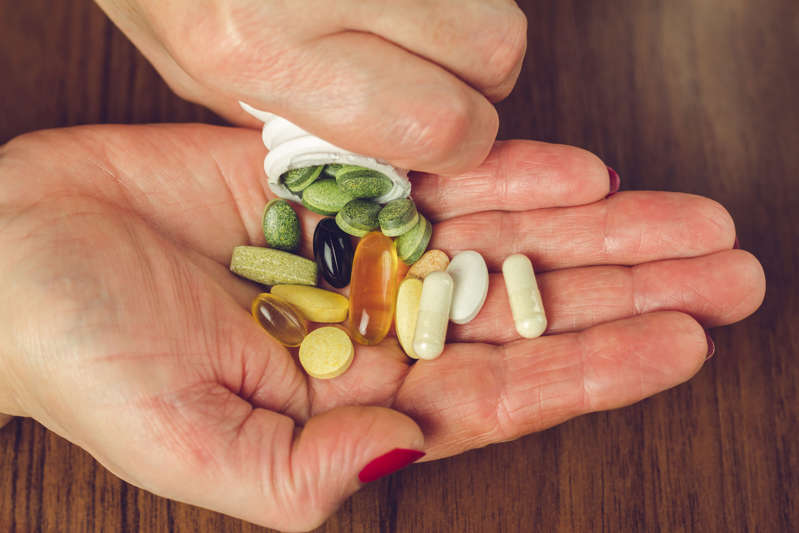
It plays an important role in the body and supports 300 biochemical reactions. Moday recommended that people consult their doctors to take some supplements.
“It’s an electrolyte that we don’t readily get back into our bodies, and we don’t find it a lot naturally in foods,” she told mindbodygreen. “So that one I tend to supplement a lot with.”
Video: 3 Signs You’re Not Getting Enough Magnesium (Reader’s Digest)Click to expand
Vitamin B
Moday said many of her patients lacked vitamin B. This could be surprising since people can get all forms of B vitamins from plant- and animal-based foods.
She explained that the body easily loses the vitamin because it supports multiple functions, including the nervous system, detoxification system and immune system. However, the Western diet might not provide enough amounts of vitamin B to meet the body’s needs.
Moday said problems with gut health might also contribute to vitamin B deficiency.
Zinc
Moday said zinc is one of the most common vitamins not available in the diet plans. Zinc mainly supports the immune system and helps the body prevent the spread of potentially harmful bacteria and viruses.
“If I had to pick a deficiency that a lot of people have outside of vitamin D, it would be zinc,” she said.
Moday said eating more seafood could help treat the vitamin deficiency. Some zinc-rich foods are oysters and mollusks.
Why…by MwsR It can hurt, It’s unbearable for sure The heartbreak one individual has to endure. Sudden it can come The very thing we find ourselves running to escape That part of life that becomes our fate. Turning a corner In search of relief for just a while or two If you don’t find it soon it will tear you into. Putting faith in things that don’t matter Things that are useless and void Instead of being smart and unmoved we let ourselves stay annoyed. Why must we let our own selves down When we don’t need to, ever. We can’t live like this forever.
Just one plastic teabag can release billions of tiny plastic particles into tea, scientists have discovered. The research, which “shocked” the team, suggests we may be consuming far more mircroplastics than we currently realize—with potential impacts on our health.
Steeping a single, empty plastic teabag at 95 degree Celsius releases around 11.6 billion microplastics and 3.1 billion plastic nanoparticles into the water, according to the authors of the study published in the journal Environmental Science and Technology.
Microplastics range in size from 100 nanometers (nm) to around 0.2 inches, while nanonplastics measure at 100nm or less—1,000 times smaller than the thickness of human hair.
In the study, the team emptied the contents from four different types of plastic tea bags bought in Canadian stores, thoroughly rinsed them, then steeped them in hot water.
The scientists examined the water to find out whether it was contaminated by tiny bits of plastic.
It is unclear whether the minuscule pieces of plastic are harmful to humans. However, the researchers conducted preliminary tests on water fleas and found the particles didn’t kill the bugs—but they did change their behavior and trigger developmental problems.
Plastic teabags are a relatively new invention which move away from traditional paper bags, the authors of the research wrote.
Study co-author NathalieTufenkji, from the Brace Center for Water Resources Management at McGill University, Canada, told Newsweek: “I was sitting in a shop enjoying a cup of tea when I looked down at my cup and noticed that the teabag seemed to be made of plastic. I immediately asked myself whether it could be releasing plastic particles into the tea.”
Past studies have found microplastics in table salt, fish, as well as tap and bottled water, she said.
Table salt, for instance, contains approximately 0.005 micrograms of plastic per gram, on average. “Then we see that a cup of tea contains thousands of times greater mass of plastic—16 micrograms of plastic per cup of tea,” Tufenkji said.
First author Laura Hernandez, from the department of Chemical Engineering at McGill University, told Newsweek: “We were shocked to see the high number of plastic particles released into the beverage. We found that billions of particles are released into the tea versus only thousands found in other foods or beverages, such as bottled water.
“This study shows that some foods or drinks can contain a considerable amount of microplastics,” she argued.
Tufenkji added: “More research is needed to understand the potential human health impacts of consuming micro- and nanoplastics.”
Malcolm Hudson, associate professor in environmental science at the University of Southampton, who did not work on the study, told Newsweek follow-up research is needed to confirm the findings.
He said the study featured only a “small number of tea bags” and argued it would be useful to repeat the study with more types of tea bags. Hudson also said the figures the team came up with are “quite rough estimates—at best no more than a ball-park figure.”
Hudson said he avoids using plastic teabags regardless of the possible health consequences because they are an unnecessary single use plastic. “There are other ways of brewing tea that don’t involve using plastic,” he said.
Earlier this month, a separate team of scientists who studied human feces found people inadvertently ingest thousands of microscopic plastic particles each year. The findings were published in the journal Annals of Internal Medicine.
When you’ve done the best you can And never shamed another man Peace is yours. When you’ve given to those in need And in love, made them believe Peace will be yours. When in the wrong you’ve apologized And are able to learn from others being agonized Peace shall be yours. When at your knees you humbly fall And risking ridicule for it all Peace should be yours. When others leave you And yet you stay true Peace is inside of you.








 Mws R Writings