Compost It!

Composting 101

Maybe you first heard about composting from a local farmer. Maybe your neighbor is a gardener. Or maybe a nearby restaurant boasts that it composts food scraps in a green space outback. Whether you’ve known about composting since childhood or just started looking into it for yourself, there’s always more to learn. If you’re willing to put in a bit of thought and effort, there’s good to be done by simply changing the way you get rid of your trash. Find out more ways to go green in the kitchen.2 / 12
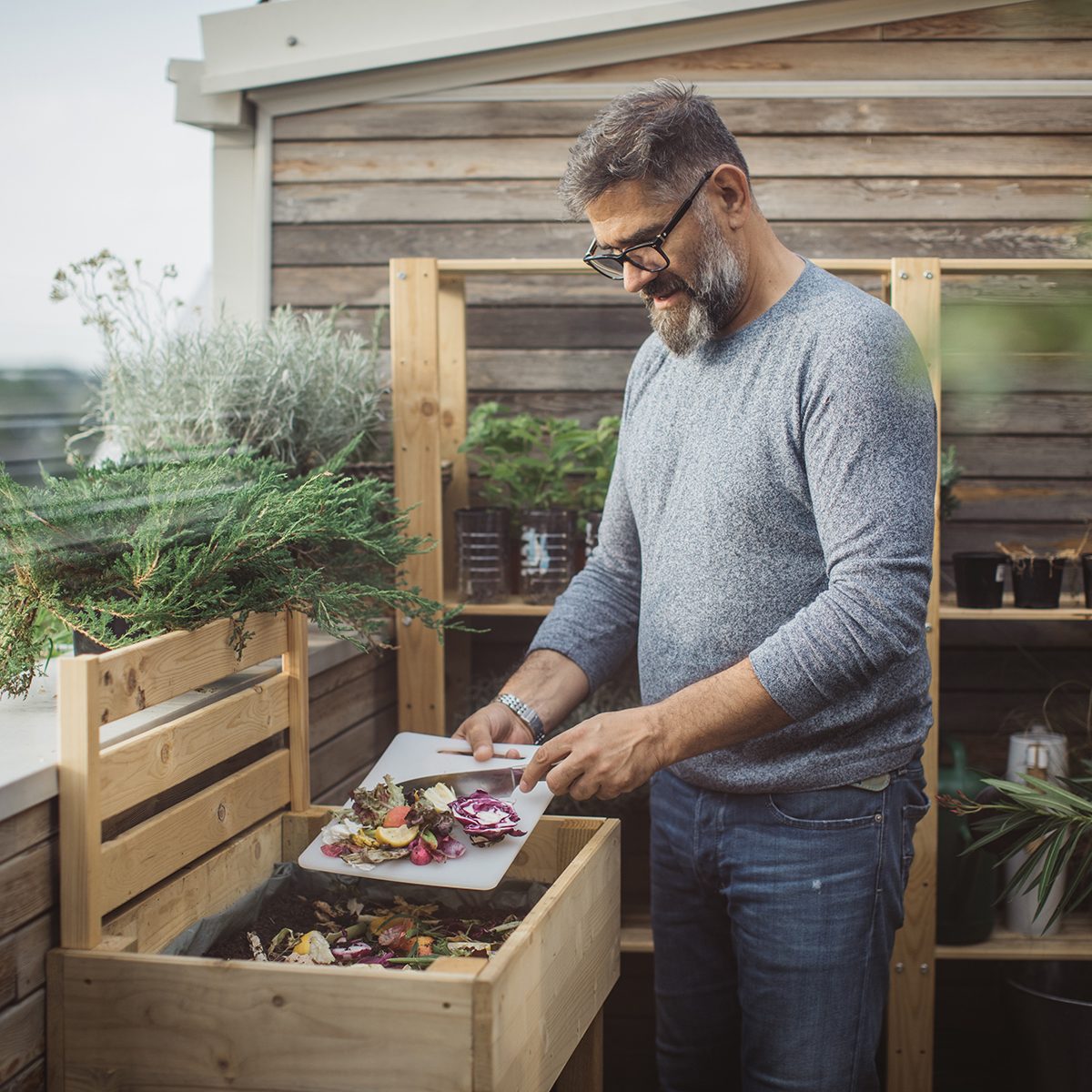
After preparing vegetable meal for cooking, mature men making compost from leftovers.

SVETIKD/GETTY IMAGES

What is composting?

Natural decomposition is the basis of composting. Composting vegetation already fills our parks, forests and other un-manicured outdoor spaces. “Compost is organic material that can be added to soil to help plants grow,” according to the Environmental Protection Agency (EPA). When you choose to use a compost pile or compost bin at home to cut back on trash services or use nature’s own recycling method, you’re composting. So, really, composting is simple: It means you’re separating your organic waste (food scrap, yard clippings, and other once-living things) into a special spot for composting instead of adding it to the recycling bin or trash can. Look at 8 easy composting tips.

3 / 12
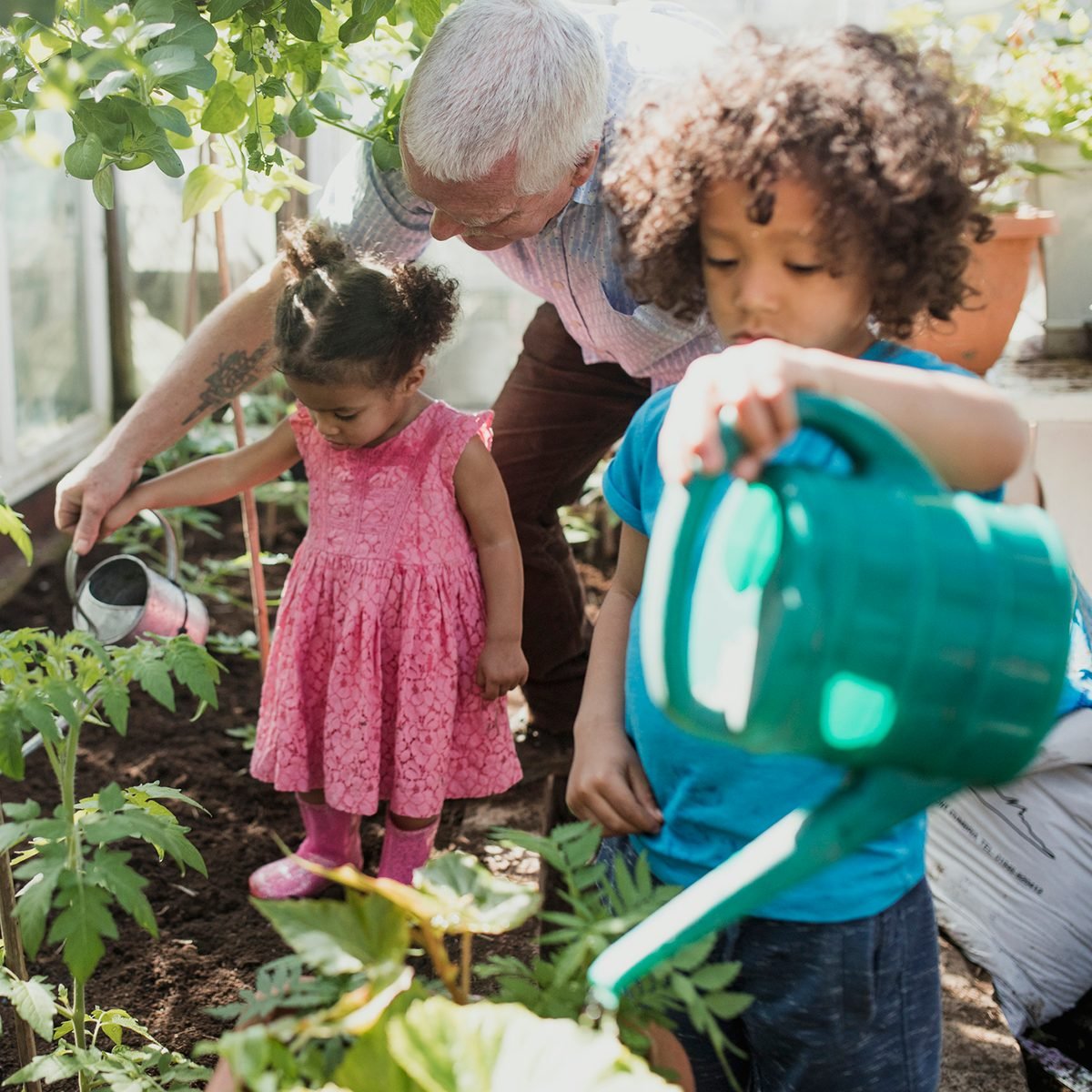
Senior man is teaching his grandchildren how to do gardening in his greenhouse.

SOLSTOCK/GETTY IMAGES

Why is composting earth-friendly?

Composting your organic waste helps the environment in two big ways. First, compost enriches soil so that it can give precious nutrients to plants that are still growing. If you have a garden or even potted plants or flowers, you can eventually use your composted soil to help plants grow more quickly and vibrantly. Secondly, composting keeps food scraps out of the landfill. Though landfills and compost piles look similar at face value, food decomposes more quickly—and in a more earth-friendly way—when composted. “Waste sent to landfill breaks down anaerobically—that is, without any oxygen present. It is squashed down then capped with soil and clay… As the rubbish breaks down over time, it emits methane, a greenhouse gas that is 21 times more powerful than CO2,” an article by the Guardian explains. Food scraps also decompose slower in a landfill. Learn the truth about common “going green” myths.  TOP ARTICLES2/5Sour Patch Kids Jelly Beans Are Here to Make Your Easter Basket SO Much Better4 / 12
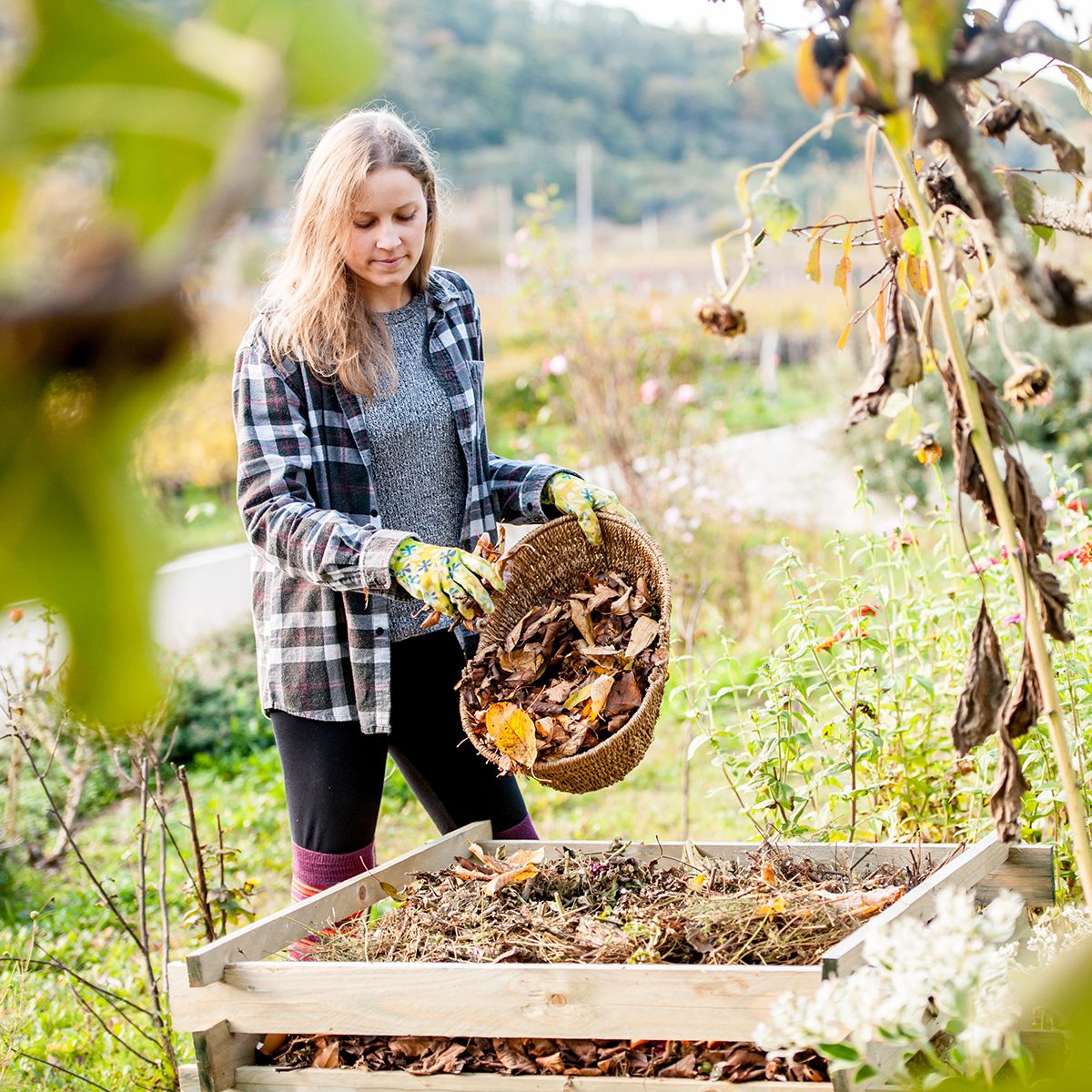
Smiling Young Woman Putting Leaves on Compost.

CASARSAGURU/GETTY IMAGES

Why does it help the environment?

If everyone in the United States started composting, it would reduce 30 percent of the trash sent to landfills and incinerators, suggests a report published by U.S. Public Interest Research Groups (U.S. PIRG). Composting keeps food waste out of landfills, which are notorious for releasing a combination of methane and carbon dioxide (CO2), aka greenhouse gases, reports the EPA. These greenhouse gases, in turn, trap radiation from the sun, keeping our planet warm. As humans burn more fossil fuels and keep piling trash onto landfills, the swell of greenhouse gases contributes to global warming. So when you compost, you’re actively helping to prevent global warming! These are some ways green living can make you healthier.5 / 12
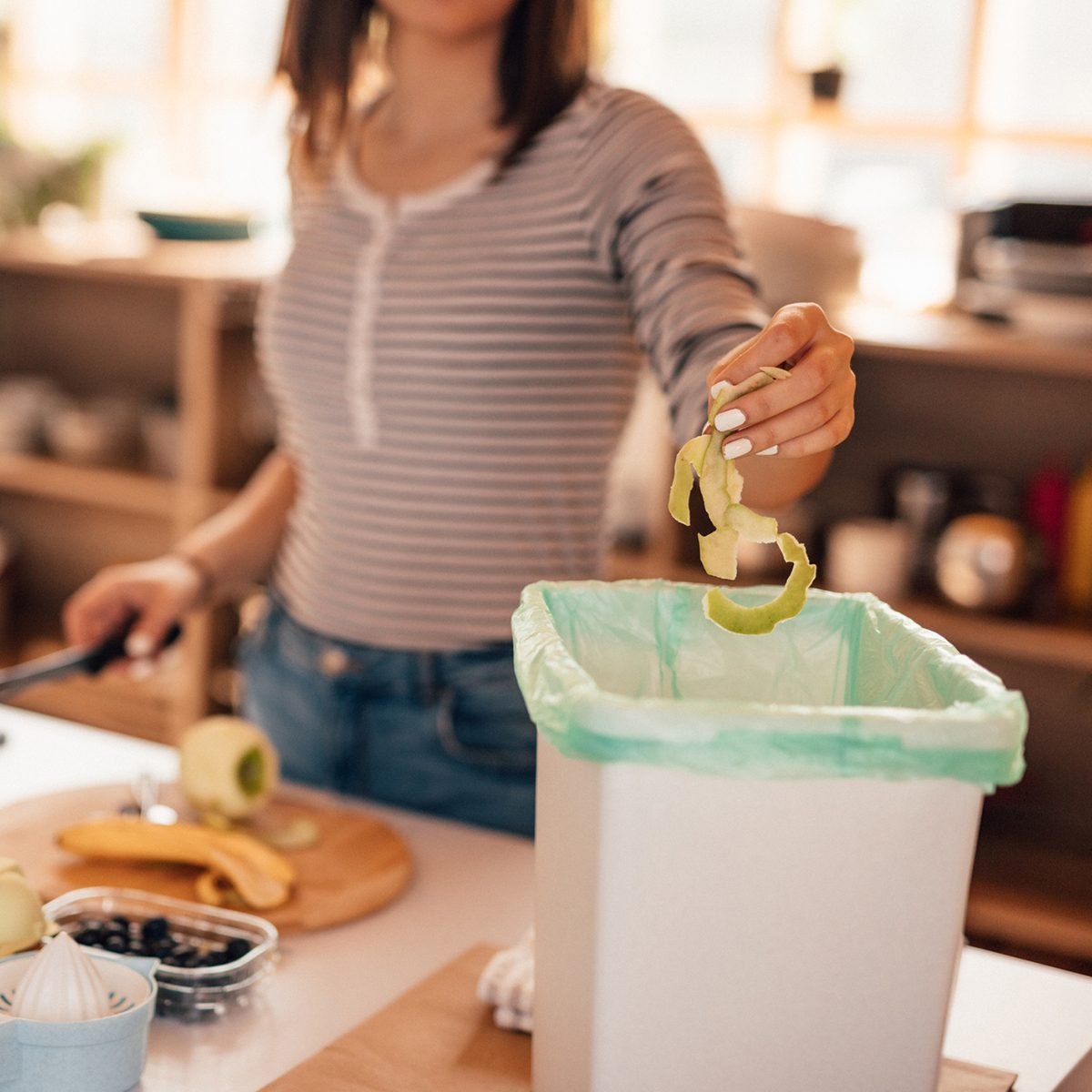
Millennial woman putting organic waste in compost bin

ANCHIY/GETTY IMAGES

How many people compost?

Americans landfilled or incinerated over 50 million tons of compostable waste in 2015, according to U.S. PIRG. But there’s good news, too. Six states—California, Connecticut, Massachusetts, Oregon, Vermont and Washington—have various mandates or legislation for collecting or composting food scraps instead of sending them to the landfill, the U.S. Composting Council reports. The United States lags behind many other countries in terms of waste disposal and recycling. Maybe your state doesn’t have any regulations surrounding organic waste disposal, but it’s always best to start with the one person you can control: yourself. Read about the things you can and can’t recycle.

6 / 12
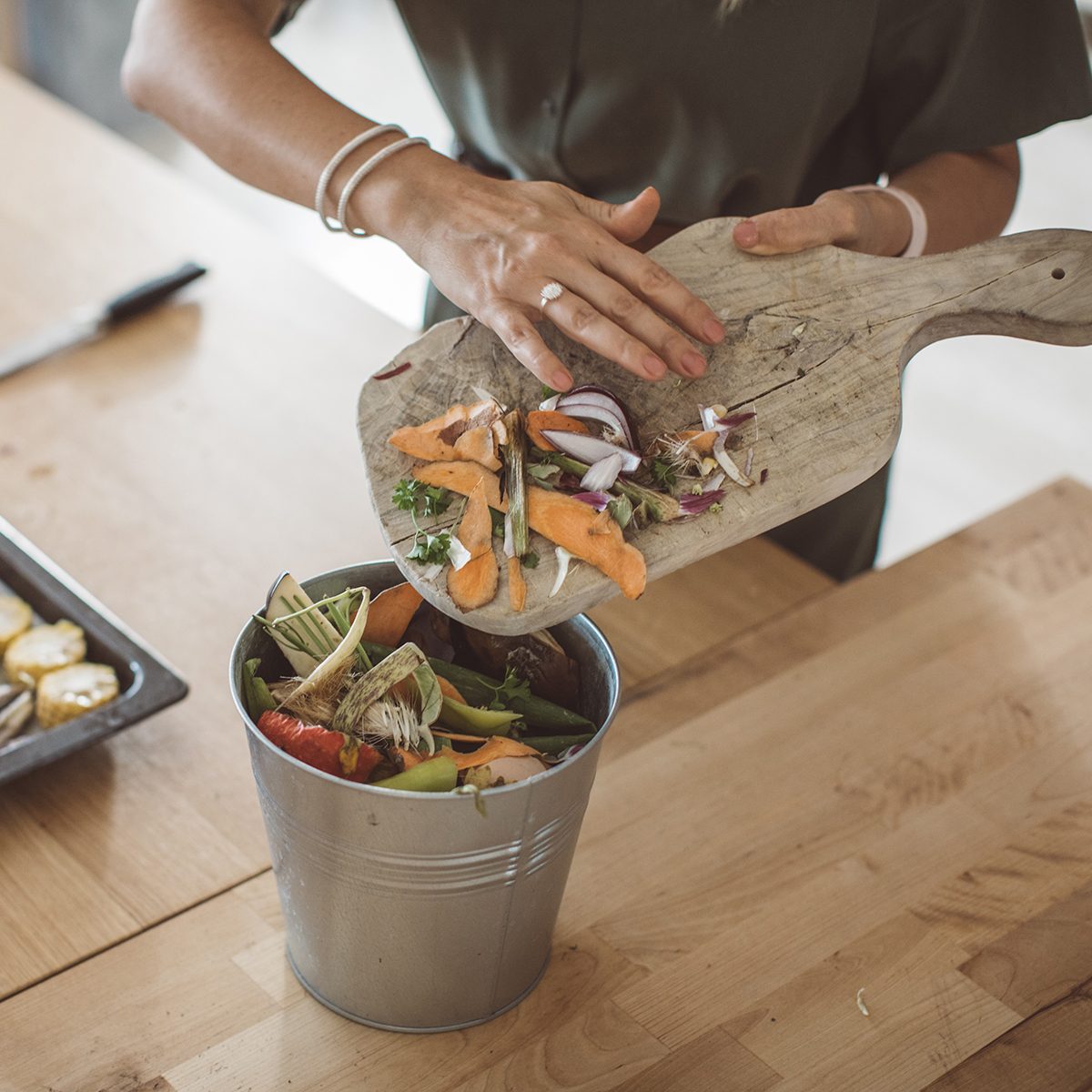
Women preparing vegetable meal for cooking, everything is so green, healthy and freshly harvested from garden. Making compost from leftovers.

SVETIKD/GETTY IMAGES

How can you compost at home?

You can start by making or buying a compost bin to keep your decomposing waste contained, ideally in a shady corner of your yard. It’s important to constantly add water and mix up the waste with a shovel, pitchfork or another yard tool. Some people cover outdoor compost bins with a tarp to hold in moisture and promote decomposition.

So what about indoor composting? The process is the same but on a smaller scale. Keep a small, kitchen-friendly compost bin on your countertop or next to your trash can. If you want to try indoor composting, it is important to maintain the correct ratio of waste types so that you don’t attract bugs. The good news is that even if you don’t have the capacity to compost in your own home, you may be able to bring food scraps to your local farmer’s market for collection. New York City, for example, has drop-off sites around the city. If you’re worried about scraps beginning to rot before you can take them to the farmer’s market, freeze your waste. This stops the decomposition process in its tracks. Get more info on how to start composting here.7 / 12

inside of a composting containerCURTOICURTO/GETTY IMAGES

What can you compost?

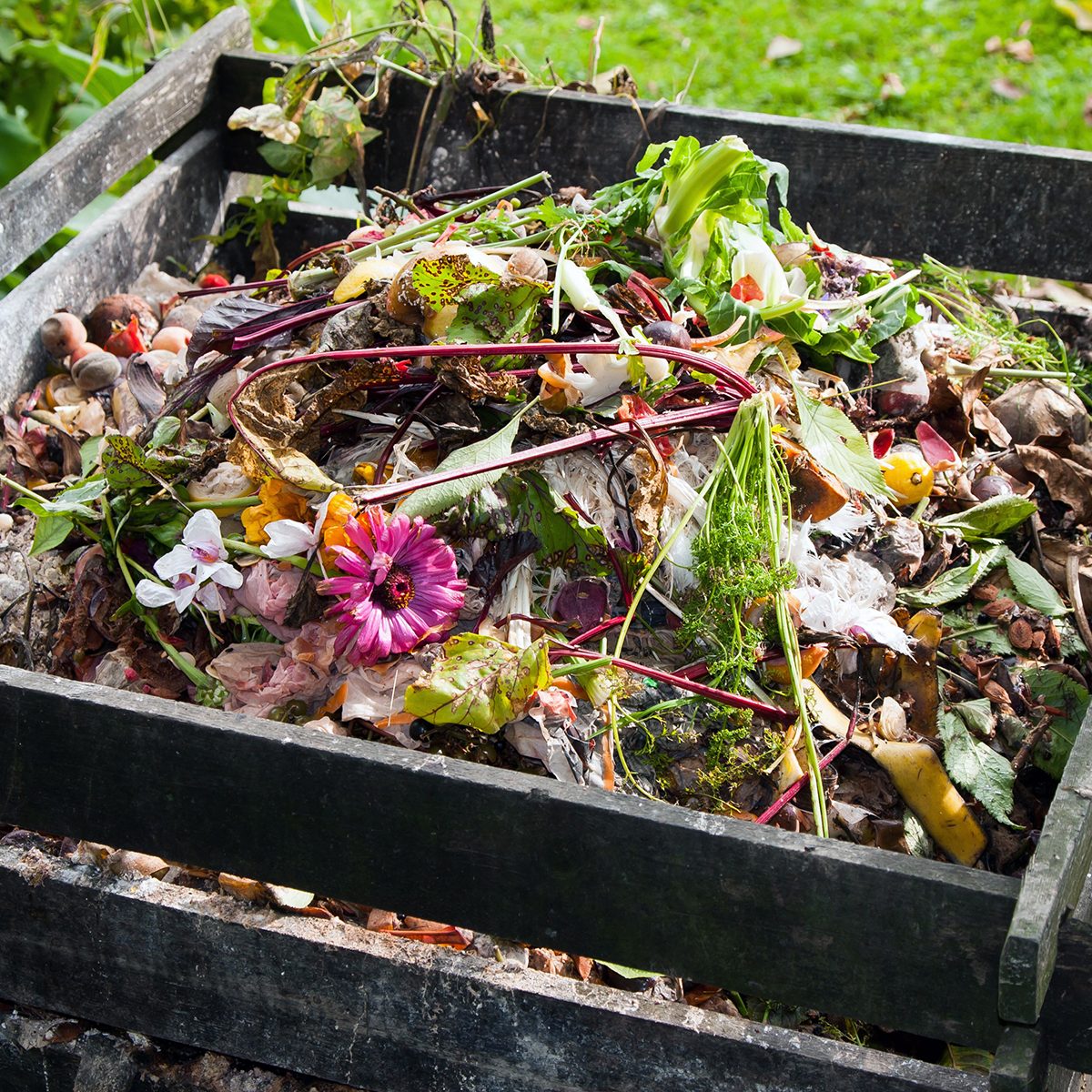
It’s tempting to compost anything that seems like it could decompose naturally, but you might end up with a compost pile infested with insects or rodents. So carefully consider what you compost. Remember, it’s always easier to add more to the compost pile than remove stinky waste. Per the EPA, the following items are OK to compost:

  • Grass clippings and tree leaves
  • Vegetable and fruit scraps
  • Eggshells
  • Plain rice or plain pasta (no oil or butter)
  • Coffee grounds
  • Teabags and tea leaves
  • Black and white newspaper or plain white printer paper
  • Unprinted cardboard
  • Vegetarian animal feces (e.g. cows, horses, rabbits, hamsters, etc.)
  • Sawdust or wood shavings
  • Hair clippings
  • Cut flowers
  • Dryer lint
  • Ashes (make sure they’re completely cool before adding to your pile.)

Find out the food scraps you didn’t know you could eat.8 / 12
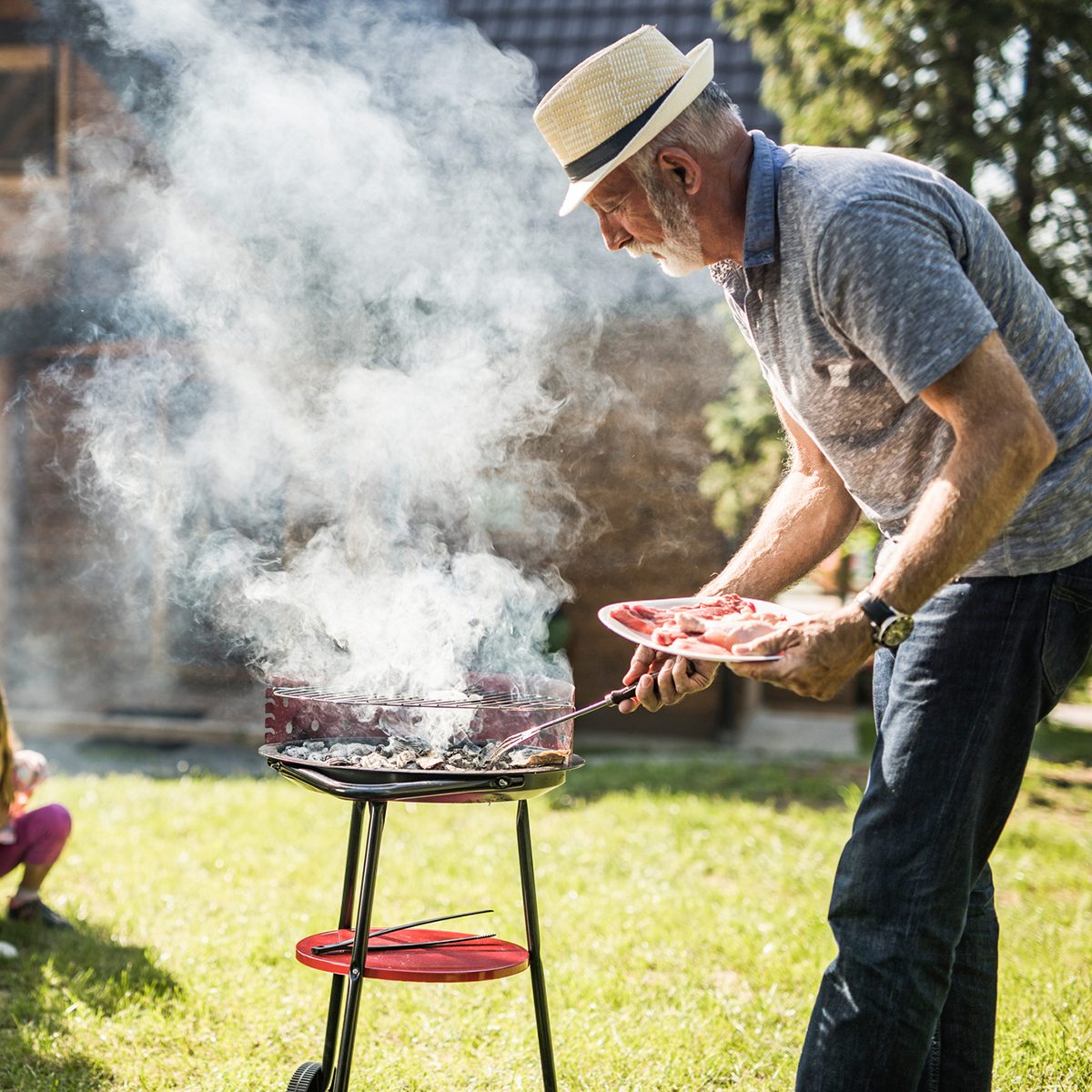
Senior grandfather preparing meat on barbecue grill for lunch with his grandkid in the back yard.SKYNESHER/GETTY IMAGES

What can’t be composted?

Any waste that seems unhealthy or dangerous in your house is also dangerous in your compost pile. For instance, if you have a houseplant that dies of insect infestation or plant disease, don’t compost the leaves. You should also skip composting these items:

  • Anything dairy
  • Food scraps that include dairy, oil or meat (these foods attract rodents and bugs)
  • Whole eggs
  • Charcoal or coal ashes
  • Meat
  • Dog or cat waste

9 / 12

Compost bin in the garden

PIOTR_MALCZYK/GETTY IMAGES

How to keep a balanced compost pile

Healthy compost piles have a 50/50 mix of browns and greens—brittle dead things and organic scraps, according to the EPA. Brown waste supplies carbon and it comes from twigs, dried leaves or even broken branches. Green waste, including food scraps, grass clippings and coffee grounds, supplies nitrogen. Your compost pile requires one other key ingredient: water. Keep your compost pile moist, but not saturated with water. Stir it up often to mix the green and brown scraps. Find out how to cut back on food waste.10 / 12
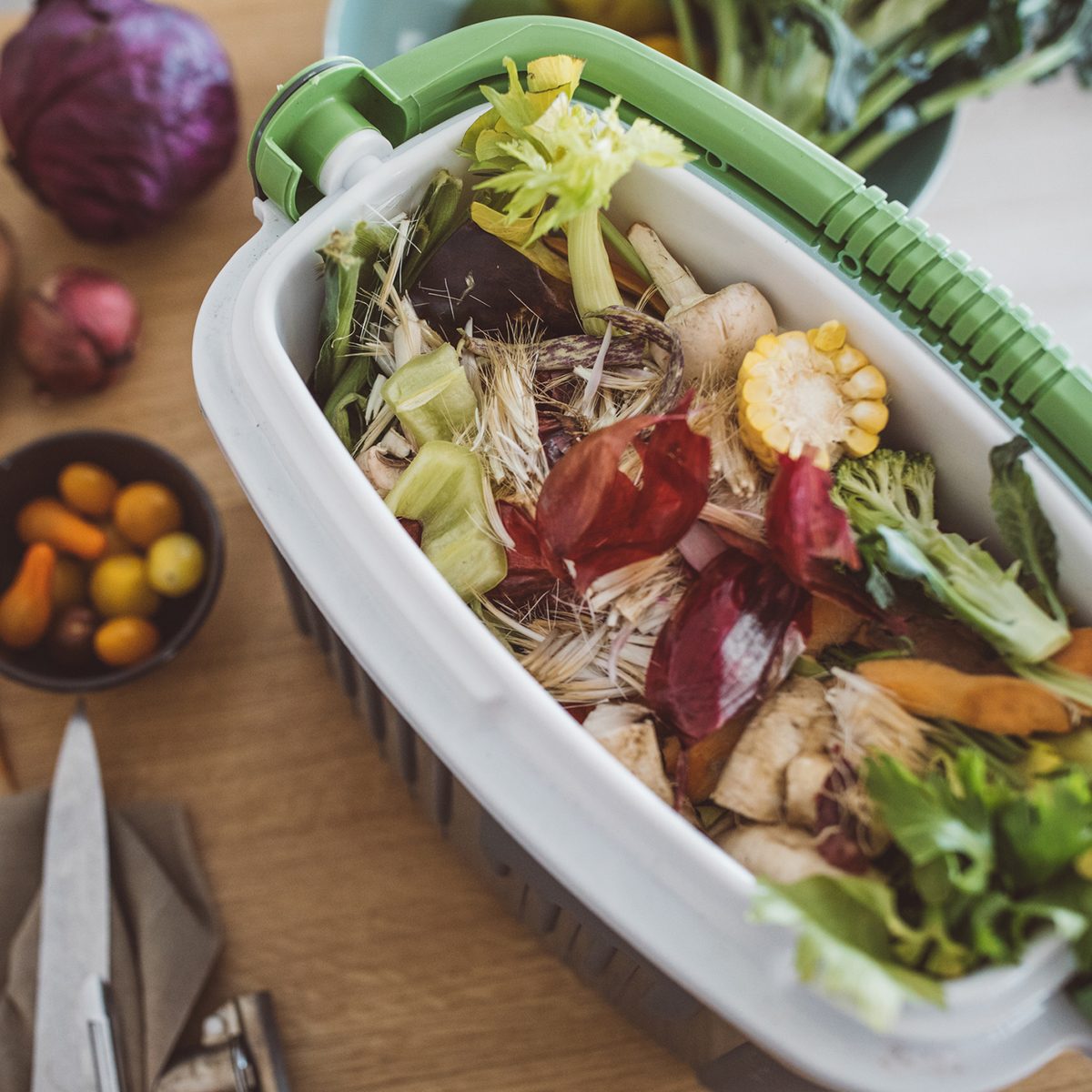
Women preparing vegetable meal for cooking, everything is so green, healthy and freshly harvested from garden. Making compost from leftovers.SVETIKD/GETTY IMAGES

What tools make composting easier?

Composting is easy and cheap; you only need a bit of shade, water, and the right mix of organic waste. But composting can seem a little messy, which is where these tools come in.

  • Some outdoor composters prefer using an aerator instead of a shovel to turn the soil.
  • pretty compost bin keeps the process neater and you won’t mind having it sit out on your kitchen counter.
  • compost microbe additive starter can jumpstart the process.
  • Live composting worms eat their own body weight in organic waste each day, aerating the compost and adding fertilizer to the soil, which can help speed up decomposition.

Find out how to get the most out of your gardening tools.11 / 12

wooden compost bin kings heath park birmingham west midlands uk

GYNANE/GETTY IMAGES

How to avoid bugs in your compost

Though composting is easy once you get the hang of it, there are several common issues many beginning composters struggle with for a while. Some composters overwater their piles, creating a slimy sludge, while others don’t water enough, growing a dusty pile of dirt. But one of the most common annoyances about composting is the insects. The UC Master Gardeners of Monterey Bay have a few tips for dealing with pests: “Raise the heap’s temperature to above 120°F…Turn the pile over and rebuild it, watering it well as you go. If it contains lots of leaves or straw, mix in a nitrogen source like blood meal, manure or shellfish shells. It should start heating soon, and when it does, those bugs will depart for a more comfortable place.” By the way, here’s how to revive a nearly dead plant.

12 / 12
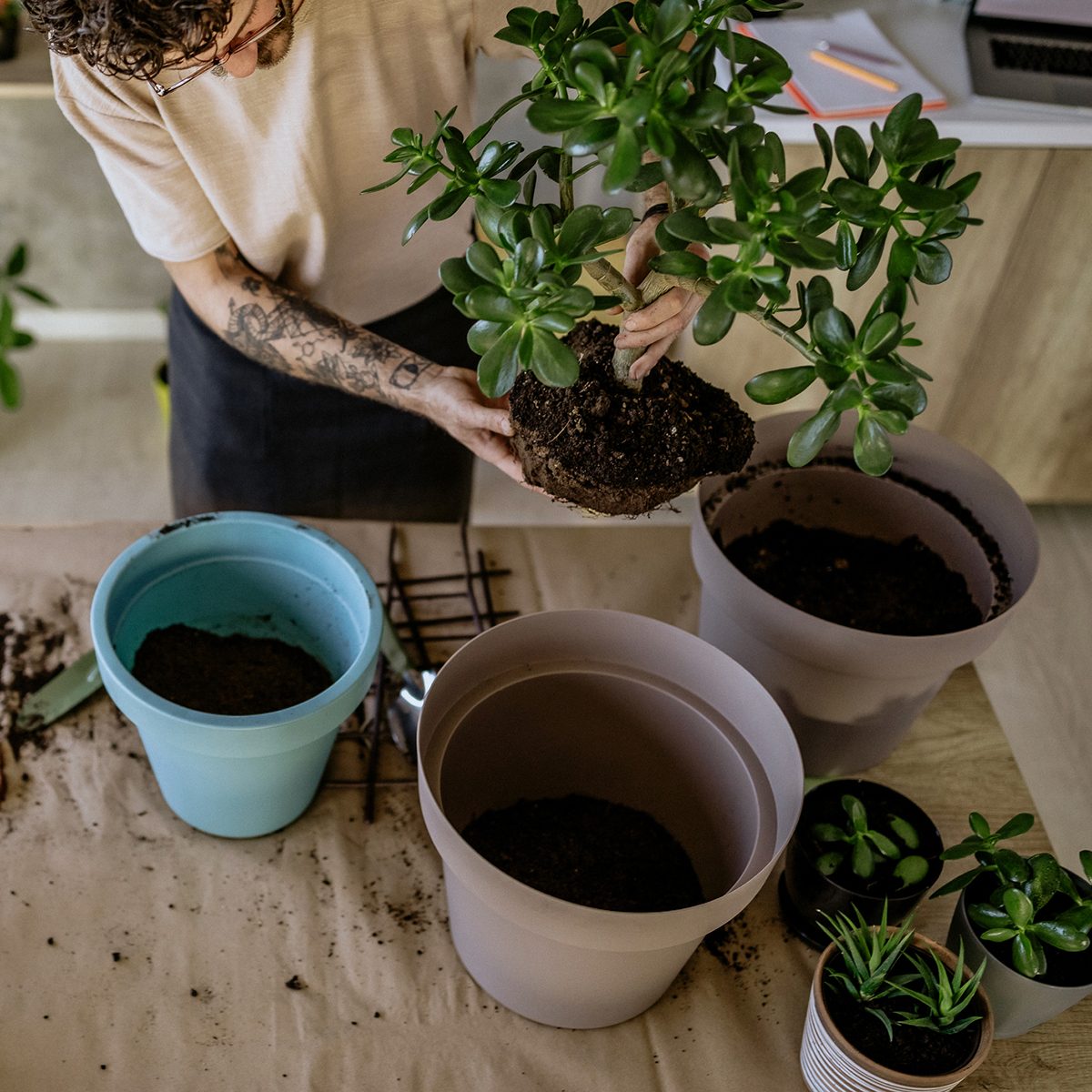
Florist Man Seedling Plants in His Flower Shop

What to do with finished compost

So you’ve successfully turned your first batch of food scraps until they’ve turned into a beautiful dark brown soil—congrats! Now, what should you do with the fruits of your labor? The Minnesota Pollution Control Agency recommends spreading compost over the low spots in your yard. This is a cheap, effective way to level your lawn. You could also use the compost for re-potting plants or mulching around bushes or outdoor gardens. Read on for the backyard trends you should try this season.

Companion Plants!


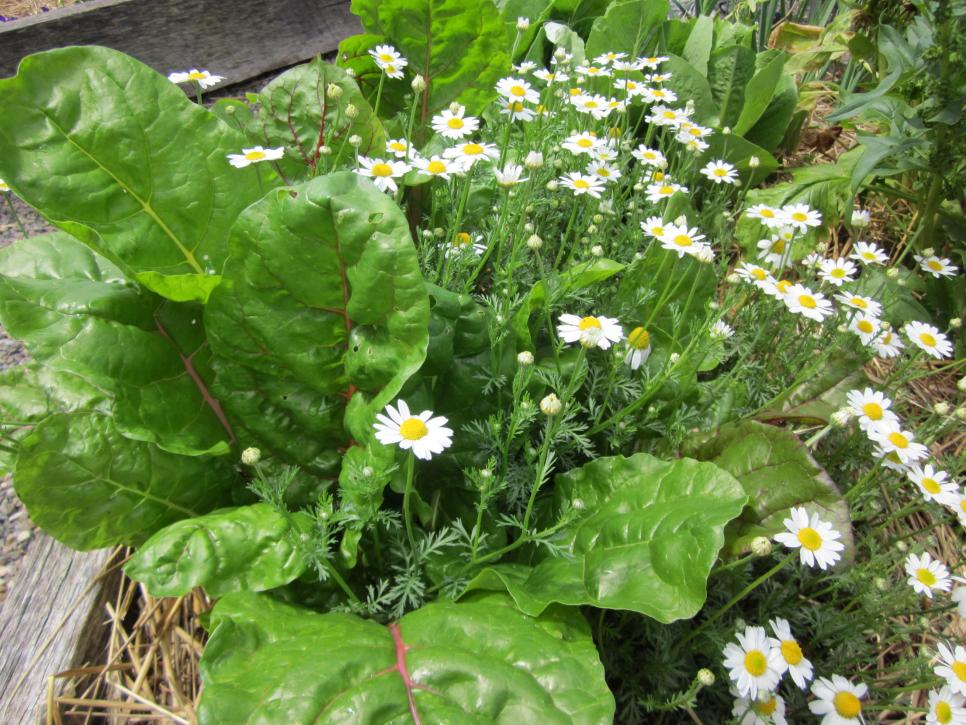
Swiss Chard And Chamomile
Companion planting is the practice of placing plants in the garden so that they help one another in some way, such as growing better, fighting pests or sheltering or supporting one another. Many herbs, including chamomile, attract beneficial insects like parasitic wasps or hoverflies. These insects attack chard pests, such as aphids. Other good chard companions: lettuce, beans, peas, cabbage. Do not plant with beets or spinach.


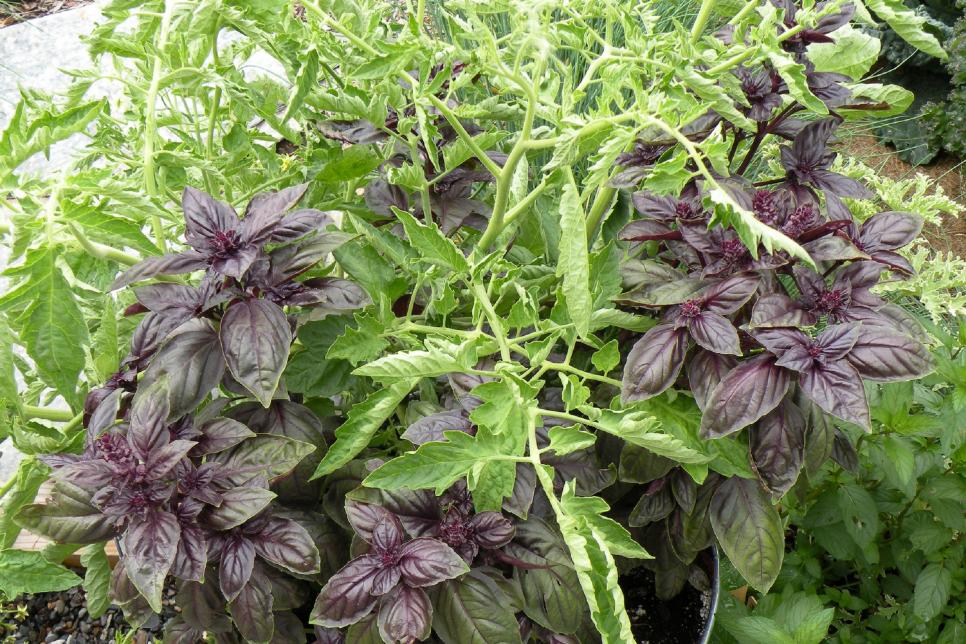
Tomato And Basil
Tomato and basil are a classic companion planting, with basil said to repel pests and diseases. Basil, especially in flower, attracts beneficial insects, including various wasps, which prey on caterpillars like the tomato hornworm. Plant basil on the edges of tomato rows, not between plants, so they get enough sun, or place pots of basil and tomato side by side on a patio. Other good tomato companions: lettuce, chives, garlic, borage and marigold. Do not plant with corn, dill, fennel, peas, potato or cole crops.

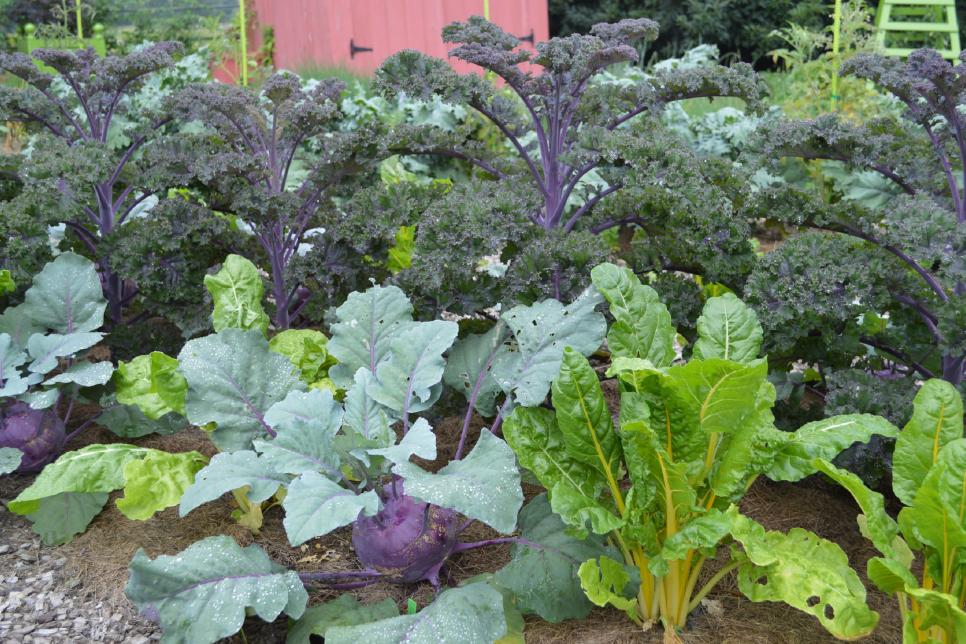
Swiss Chard, Kohlrabi And Kale

Swiss chard (in the beet plant family) is a great companion plant for cabbage family members, including kohlrabi and curly purple kale. The plants also stage a beautiful edible planting with contrasting colors and leaf textures. Other good cabbage family companions: lettuce, carrots, rosemary, oregano, marigold, nasturtium. Do not plant with beans, tomato, pepper or strawberry.

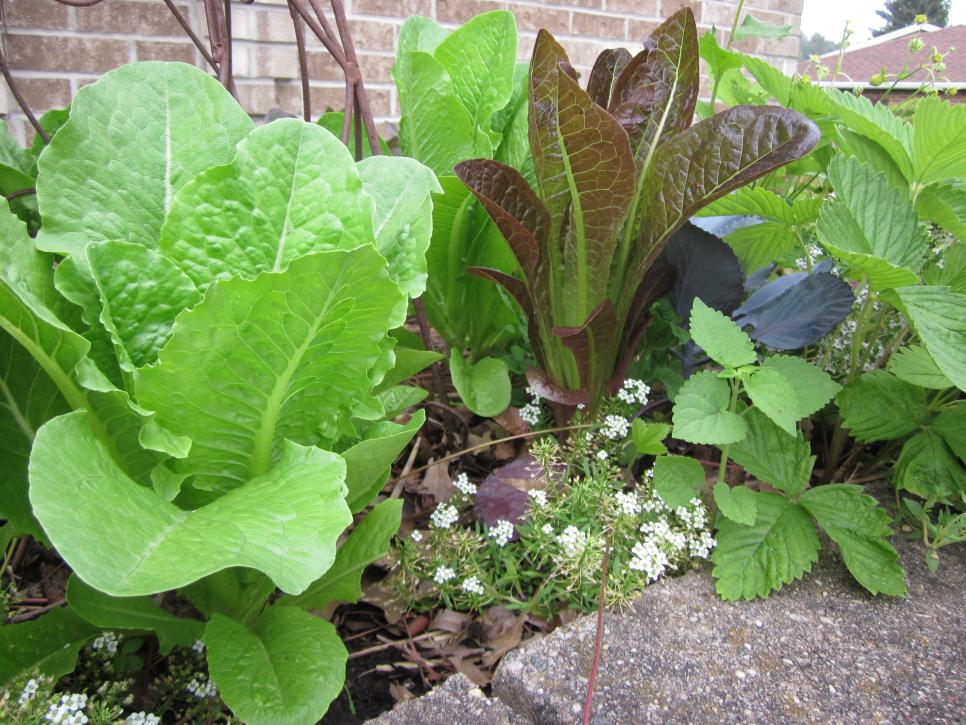
Leaf Lettuce And Sweet Alyssum

Small-flowered plants like sweet alyssum and thyme are great companions for leaf lettuce. The blooms attract beneficial insects, which feed on aphids, a common lettuce pest. Lettuce pairs well with many different plants. Other good lettuce companions: carrot, onions, garlic, radish, broccoli, beans, mint. Do not plant with parsley.

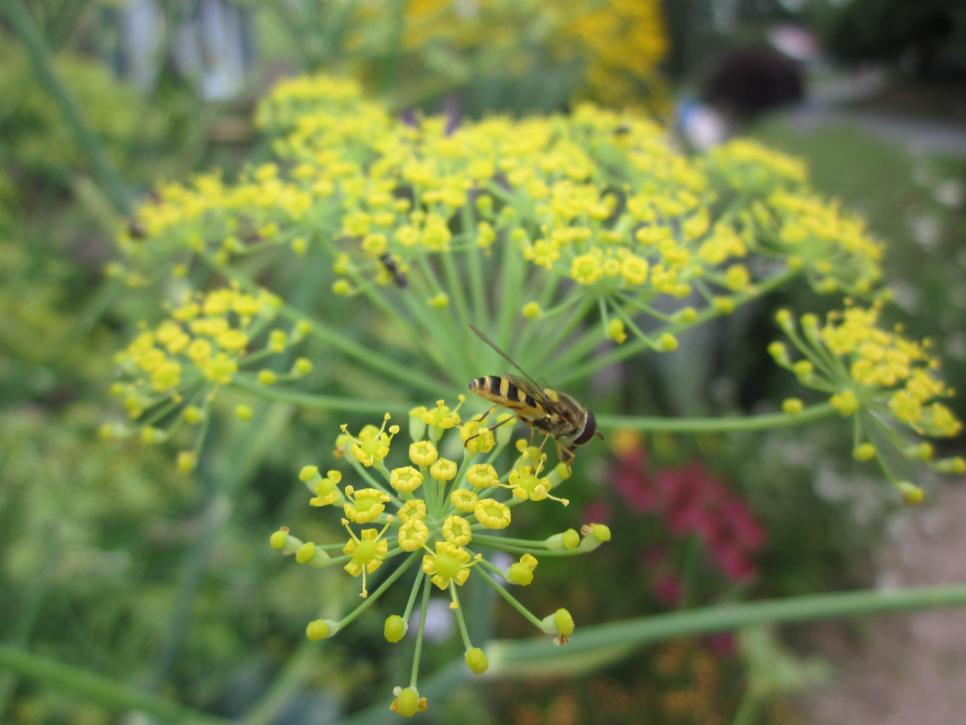
Syrphid Fly On Dill

Dill is a helpful plant in the vegetable garden because its small flowers attract beneficial insects, including hoverflies and ladybugs (both prey on aphids), wasps of all sorts (prey on caterpillars and other insects), spiders and pollinating bees. Other good dill companions: cabbage, onion, cucumber, corn and lettuce. Do not plant with fennel, tomato, carrot or cilantro.

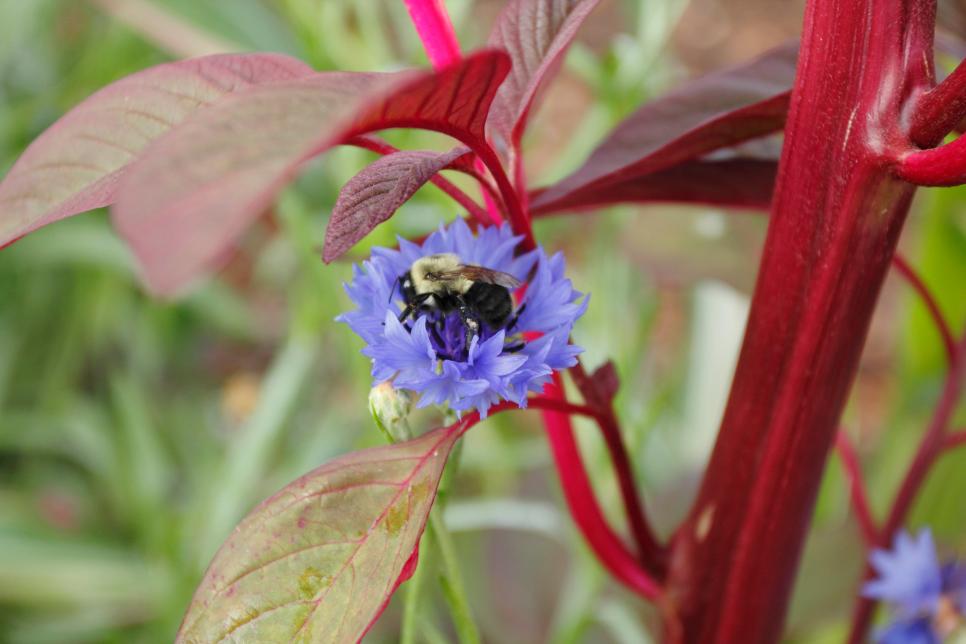
Bumble Bee On Bachelor’s Button

Include flowers planted among your vegetables to lure in pollinators, like bumble bees. Arrange flowers in drifts or clusters. Some of the best bloomers to use include calendula, sweet pea, cosmos, alyssum, bee balm and nasturtium. Bachelor’s button makes a great companion for corn, which helps to shade the bloomer as summer heat arrives.

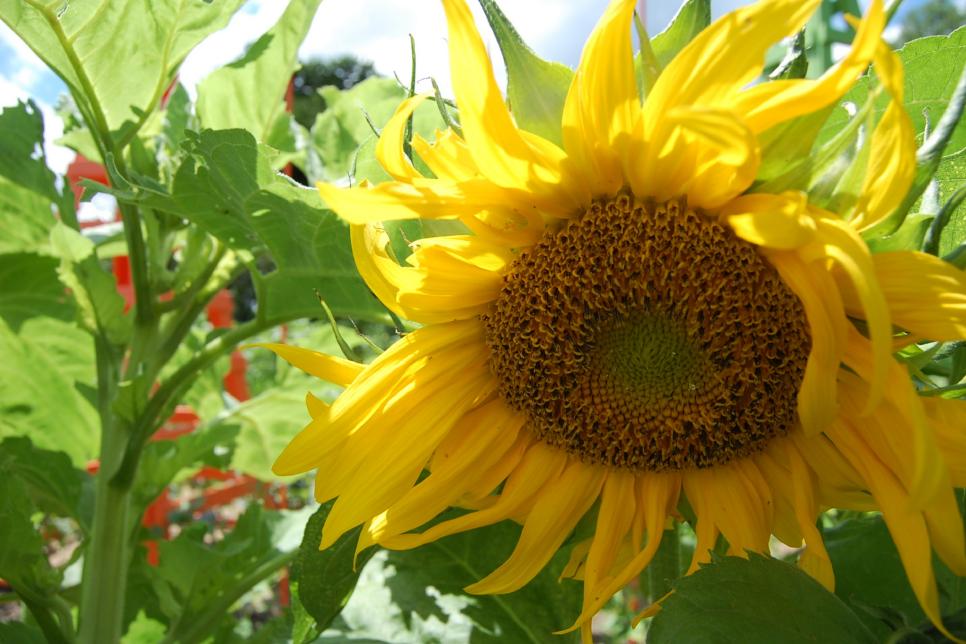
Sunflower In Vegetable Garden

Add sunflowers to your vegetable garden to beckon bees of all types, which help pollinate squash, pumpkin, peppers, cucumbers, and melons. These sunny flowers also lure ladybugs, which prey on aphids. Other good sunflower companions: corn, cucumber, watermelon. Do not plant with potato.

https://www.diynetwork.com/how-to/outdoors/gardening/10-ways-make-your-yard-buzz-worthy-and-help-the-bees-pictures

Recycle, Build Your Own Bee House

Make Your Own Little Bee Houses

Materials: (suggested)

  • a few scrap boards/planks
  • a log or two
  • Nails and Hammer
  • Drill or Drill Press
  • Some kind of Chop, Miter, Slide, or Circulating Saw to cut the boards. A good hand saw, if that’s all you have, will do. 
  • Sandpaper, if you want it to look nice

Step 1: Materials

Materials

     For this project, you can pretty much use any chunk of wood you have lying around. Other than than that, you need a few flat boards, such as shingles, and some board to attach it to. I’m pretty sure the shingles don’t actually make the bees want to move in any more than without them, but they make the finished project look kind of cute. 

     I figure the best way to do this is to have your bee house attached to something solid such as a post or tree, although I have seen ones that are meant to hang from something, but that seems like it wouldn’t be so good in the wind. You can choose either way, but I go with attaching them to something solid with a backboard. 

Step 2: Cutting Your Blocks to Size

Cutting Your Blocks to Size

2 More Images

    Since you can really get any deeper than what you drill bit can reach, that’s about how long the logs should be. Just eyeballing the first  one, it pretty much just needs to be cut in half, same as the one to the right, the block to the left being pretty good size already.

Remember, safety first! Ear protection is a must when operating loud saws! Feel free to use eye protection as well. 

I went ahead and cut the split log on the slide saw that I usually use, but the round log was too large a diameter, so I used my chop saw on it. 

Now I have 5 pieces to choose from to start my bee house. 

Step 3: Drilling the Holes

Drilling the Holes
Drilling the Holes
Drilling the Holes
https://www.instructables.com/id/Make-your-own-little-Bee-Houses/
Drilling the Holes

Now it’s time to drill the holes, which is half of the project in itself. An electric hand drill would work as well, but I found my drill press to be much more suitable. I drilled down as far as I could with the bit and my press, which was around 3-4 inches. The split log took a bit longer since it’s some kind of semi-hardwood, but I eventually got it done. For something this size, a minimum of 16 holes seems good. 

Now, there are a few things I chose not to do here. The first, I did not make any kind of markings as to where I wanted the holes, I just drilled in a more or less organized fashion. The spacing is important, so I kept them far enough apart, but the overall layout doesn’t really matter to the bees nor to me. The second, I did not use any other size bit, only a 3/8 bit, so there might be some bees that might not be able to live here. I might use other bits in the future, but not this time. 

I encourage everyone to do their own research on this, as I am only covering the simplest way possible to make a bee home. 

Step 4: Fitting the Shingles

Fitting the Shingles

3 More Images

Since this is supposed to resemble a small house, the shingles will be used for the ‘roof’.

First, I just stood them up about how they needed to be, and marked about how long I wanted them. After that, I went and cut them both on the slide saw, which I didn’t get a picture of. Next, you just nail them on real quick. I just used these little nails, four of them for each side.
The shingles were a bit to wide for the split log piece, so I had to chop them up a bit; I’m sure you can compensate for whatever for you use. 
After you get the shingles marked, cut, and nailed on, you should have a block of would that hopefully now resembles a small house. Very enticing to those Mason bees that need homes. 

Do your best not to put the nails into the holes you drilled. 

Step 5: Attaching the Backboard

Attaching the Backboard

Next, I just laid the house on the board I planned to cut up for the backboard and once again, eyeballed about where to cut, and measured to the nearest inch. I marked it, and cut a few lengths to use. Attaching them is easy, just turn it over and pound a few nails in there. The little nails seemed good enough for this too, so I didn’t bother looking for longer ones. Again, try not to nail into the holes. 

Planting Tips

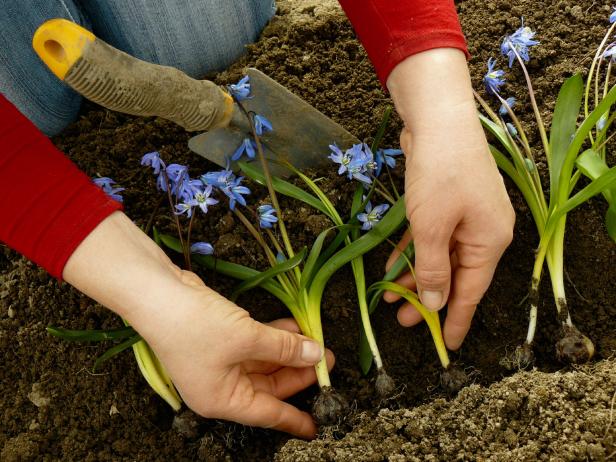
planting siberian squill

Denis and Yulia Pogostins

Get your garden off to a good start by planting your perennials at the right time and handling them the right way. One guiding philosophy: Perennial plants are all about the roots. Keeping the roots strong and healthy is the number one consideration when planting perennials. It’s those roots that will keep the plants coming up year after year. Here’s what you need to know about planting perennials to give them what they need to grow up and be beautiful.

Fall or Spring?

Knowing when to plant perennials is essential. Spring is generally the best time to plant, for obvious reasons. The soil is warming, the sun is shining, the days are lengthening and the rain if falling. Spring is also a good time to divide existing perennials that have gotten bigger and better and plant the smaller pieces in other locations.  
 
Fall is a good planting time for perennials that bloom in the spring or summer. Fall planting gives them time to grow strong roots to prepare for the big flower show the following year. Another plus to fall planting: Nurseries are cutting prices on perennials at the end of the season, so you can save a lot of money. 

Do not plant in the summer. It’s too hot, the days are too long and rain is unreliable in many climates. There’s too much stress for a new plant to thrive. And winter? No. Just, no. 

How Do I Plant?

New plants come in three forms. Knowing how to plant perennials correctly depends on which form you’re planting.

Container-grown perennial plants are the ones you buy at a nursery or plant center, already growing in a pot. They’re the easiest to transplant successfully. Dig a hole twice as wide as the container but no deeper. Pull the plant out of the pot, gently loosen the roots and place in the hole. Fill the hole with soil mixed with compost and water well. Fertilize a week after planting.

Bare-root perennial plants are less expensive than the container-grown ones, but they’re a little trickier. They are just as billed: a clump of plant roots. They’re not for beginners. Soak them in water before planting them in the ground. Add compost to the soil at time of planting and pamper them till they sprout leaves.

Seeds are the least expensive way to start a garden of perennial plants. Growing from seed takes more skill and patience than transplanting container-grown perennial plants. Perennials are slow growing, so if you sow seeds directly in the ground after the last frost you won’t have adult plants till late in the season. Best to start them in the winter, indoors, in small pots and pamper them until they are large enough to transplant outdoors.
Citrus Plants~ Grow Them Yourself

Grow Citrus Plants from Seed

Can you save seeds from citrus fruit and grow them into plants? Yes. And it really is easy.

Whether the fruit came from a grocery store or farmer’s market, if it has seeds, you can grow them.

Orange, lemons including Meyer lemon, tangerine, clementine, mandarin, lime, kumquat, and grapefruit with seeds are all candidates.

The steps (below) show you how to prepare the seeds, germinate them, and plant them pots.

While citrus is a tropical plant, it can be grown in colder climates as a potted houseplant, spending summers outdoors and winters indoors.

Will they grow fruit?

Yes, it is possible. But only if the plant has just what it needs.

Citrus plants are slow-growing, so it will take several years with good growing conditions to flower and then fruit. Some may never flower.

Most of the citrus fruits we enjoy are hybrids. Grapefruit is a good example. It was an accidental hybrid created from sweet orange (C. sinensis) and pomelo (C. maxima) cross-pollinating.

And that means, while any viable citrus seeds you sow can become beautiful, productive plants, hybrid plants—if they produce fruit—the fruit will not be the same in taste or appearance as the one it came from. This isn’t necessarily a bad thing, it’s just different.

Satsuma tangerines are one of the few citrus plants that bears fruit similar to the parent when grown from seed.

To me, growing a plant from seed all the way to the fruiting stage is a big, fun accomplishment regardless of the taste.

How do commercial growers do it? How do they get the same fruit over and over again?

They use grafted plants. Cuttings are taken from the desired plant (scion) and attached to a rootstock from another citrus variety. This is cloning and it’s essentially the same plant making more fruit.

If you want to be sure your citrus tree grows fruit true to the parent, start with a grafted tree, or use species seeds (not hybrids).

TIP: Winter is a good time to germinate citrus seeds so you have the warmth and light of spring and summer to get the plants established.

Can’t I just toss seeds in some soil and get a plant that way?

Yes, absolutely! But, if you want a 100% success rate—and know ahead of time that the seeds will germinate and do so quickly—instead of waiting many weeks to discover it’s not going to work—do the extra steps listed (below).

How big will a potted citrus tree grow?

It’s up to you. Citrus trees in-ground get quite large but, by growing in containers, growth is somewhat inhibited.

As your plant grows, you can repot it into the next size container until it’s as large as you want it.

Often the weight of the container determines the stopping point because it gets too heavy to lug around.

Once the plant is as large as you want (years from now), you can root prune it to keep it healthy. This is just how it sounds: you remove the plant from the container, trim back the roots, replenish the potting mix, and repot it.


How to Sprout Citrus Seeds


Supplies

  • Citrus fruit (choose varieties that have seeds)
  • Plant tags and binder clips
  • Sieve (for rinsing seeds – optional)
  • Paper towel
  • Nail clippers
  • Food storage container or food bags
  • Small cups or plant pots with drainage holes
  • Potting mix (see options, below)
  • Fertilizer for citrus plants

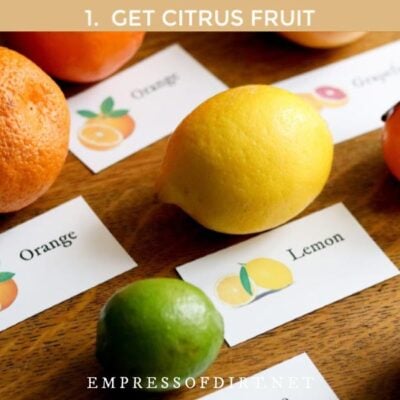
1  Get Citrus Fruit

Citrus fruits including oranges and lemons with plant tags.


Depending on the time of year and your location, you may have quite a variety of fruit to choose from at the store.

When I first tested this out, I bought one of everything because I had never really paid attention to the seeds before.

Be sure to get the ID stickers that come with the fruit in many stores (they have the SKU barcode on them). You want to know exactly what the name of the fruit is, where it’s from, and have this info to further research it (if desired).

Some citrus fruit has nice, plump seeds—that we may not like for eating but work great for germinating.

Others have odd, flat seed-like shells, seemingly devoid of any real growing power. Those are not likely to germinate.

Either way, the next steps will get this sorted out.


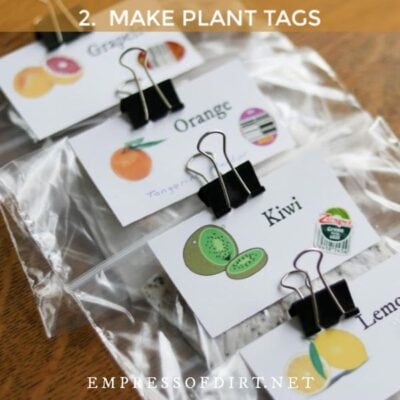
2  Make Plant Tags

Plastic bags labelled with citrus fruit names with seeds germinating inside.
Kiwi? No, it’s not citrus but you can sprout those seeds too!

It’s always helpful to know what you’re growing and keep that info with the seed/ plant for future reference.

I had some old nametag cardstock (Avery nametags 5390) for my printer  so I made labels. You can email me to request a copy of my Word template if you want to use mine.

If possible, make the tags water-resistant (so the ink doesn’t run) and get some binder clips to attach them to your seed / plant containers.

I put the SKU stickers on the tags for future reference.


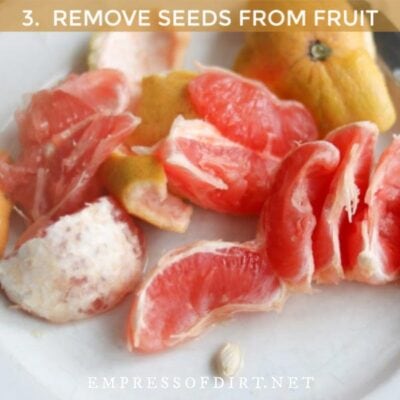
3  Gather Seeds

Pink grapefruit with one seed.


Cut the fruit in half, top to bottom (if top navel is visible). This avoids damaging too many seeds with the knife, as many seeds tend to form around the middle horizontally.

Gently remove all seeds and set fruit aside.

Discard any seeds that look strange—small, flat, empty shells, etc.

Some fruit has a lot of seeds, others may have few. The grapefruit (photo, above) had just one seed total but it was a good one and grew into a tree.


4  Test for Seed Viability

Place seeds in a small cup of water.

If they sink to the bottom, they should be viable.

If they float, they are not (discard them).

If seeds have jelly-like coating, rinse in a strainer and gently push it off with soft towel.


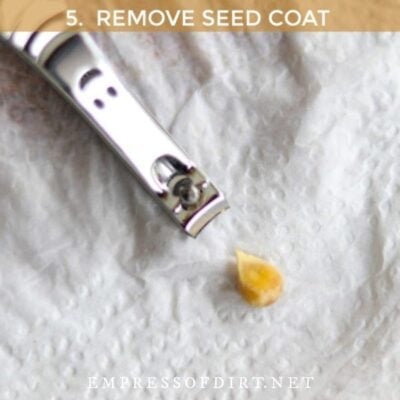
5  Remove Seed Coat

Nail clippers and a citrus seed.


This step can significantly speed up the germination time.

Seeds naturally come with outer protection that prevents unwanted germination. It’s super smart.
For citrus, the seeds have both a hard seed coat (made of two half shells sealed together), protecting the tender seed inside, and there may also be gel around the seed, to provide an additional barrier.

That’s why the seeds don’t sprout in the fruit—the moisture can’t reach them—it’s very cool!

To make germination go faster, we can remove both that gel coat (Step 3) and the hard shell.

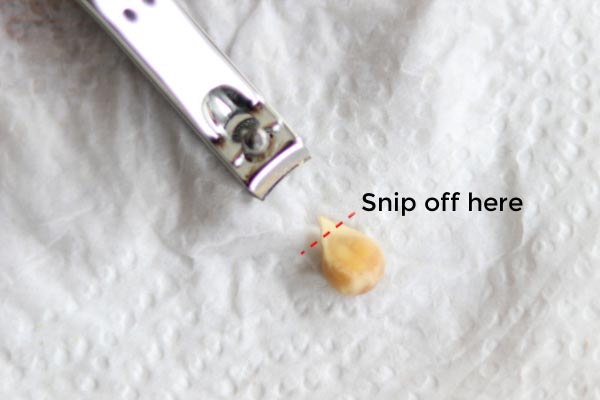
Look for the hard, flat pointed end of the seed shell and snip it off with nail clippers, careful not to damage the actual seed inside.

Nail clippers and citrus seed.

Gently slide your fingernail between the two shell pieces to pry them open/apart and remove them (break them apart).

There are also skin-like layers inside which I leave alone (the seed will grow fine with the skin there). Don’t worry if some skin falls off.

Now you’ve got the soft seed. Be gentle with it!


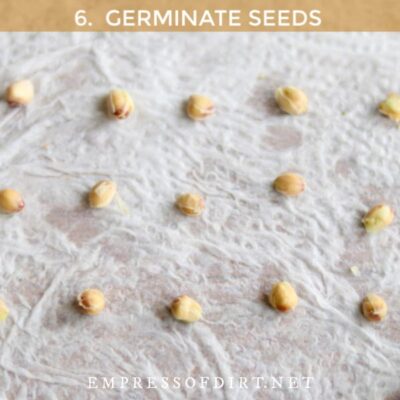
6  Germinate the Seeds

Plastic food bag with orange tag and binder clip.


Moisten a few sheets of paper towel and place the seeds on it, at least an inch apart in all directions to leave room for root growth.

Cover with another layer of moist paper towel and place in a food storage tub with lid or food storage bag.

You want the seeds in contact with warm moisture ongoing. Not too damp. And don’t let them dry out.

Attach your plant tag with a binder clip and place everything in a warm, dark location. I put them in a kitchen cupboard.
I put reminders in my phone to check on them every 2-3 days. Occasionally I forget and weeks later find this crazy-good thing growing in my cupboard!


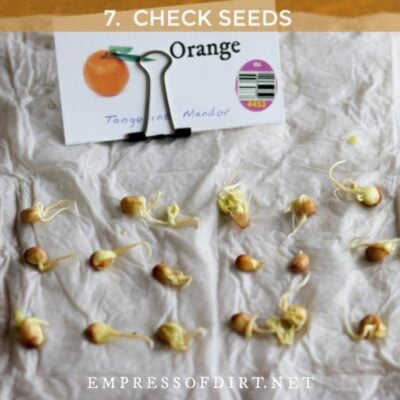
7  Check on the Seeds

Newly sprouting orange seeds.


Check the seeds every few days.

If needed, spritz the towel to keep it moist. You want it moist, not dry or soaking wet.

Some will sprout really fast! Others may take weeks. Some will be duds.

Wrap it back up and put it back in the cupboard. We want roots at least an inch long before planting.


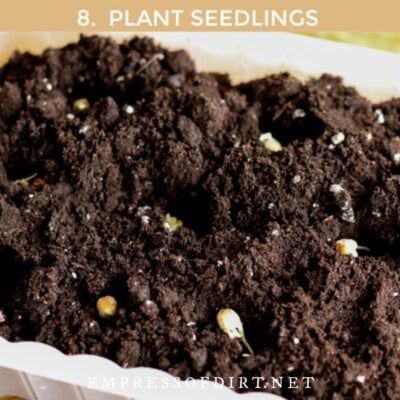
8  Plant Seedlings

Citrus seedlings in potting mix.


When there is at least an inch of roots, you can sow the seedlings in potting mix.

The roots often look thick and off-white, like bean sprouts.

In some cases, the plant stem may also start growing.

Plant the sprouted seed in a small cup, pot, or other container with drainage holes.

A regular organic potting mix is good for clay and other non-plastic pots. You could also use a cacti potting mix with plastic pots because they retain more moisture.

I prefer to use separate little pots but sometimes I have limited room for lighting so I will put them all in one container for the first few months.

Young citrus plant seedlings.

Position the roots just below the soil surface. Any other growth can be above soil level. Gently press the potting mix around the plant so it’s snugly in place.

Water thoroughly, top up potting mix if needed, and gradually transition plant to a warm, sunny location over a few weeks.

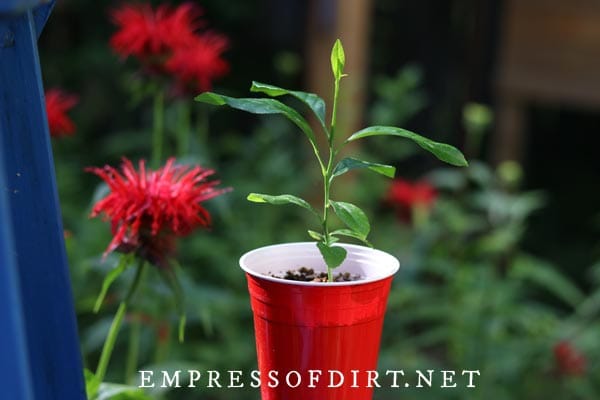
Citrus plant growing in small cup. This one is a lemon tree.

9  Grow a Citrus Tree

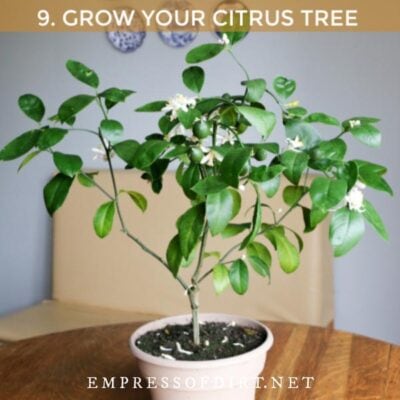
Grafted lemon tree in a pot with flowers and fruit forming.


How long will it take to grow my citrus plant?

Citrus trees are slow-growers and heavy feeders, doing best with 8-12 hours of sunlight per day.

The less light, the slower the growth.

I started several different hybrids from seed and after 5 months (from the day I removed the seed from the fruit) they range in size from 4 to 7 inches tall.

Keep in mind that reduced light and warmth in winter (indoors) will slow or stall growth.

It may be 3-5 years before flowers form, then pollination can occur (you can help it), and fruit forms.

Small fruit may ripen over several months, larger fruit can take much longer.

You can help the plant grow faster by using supplemental grow lights.

Use fertilizer specifically for citrus plants and follow the application instructions on the label.

Basic Citrus Tree Care Tips – Container Growing

1. Provide 8-12 hours of sunlight each day. Avoid direct, burning sun.
2. Ensure pot has good drainage.
3. Use a slow-release fertilizer for citrus plants as directed.
4. Keep outdoors until temperatures reach 40°F (4°C), then bring inside for winter.
5. Transition the plant (over days or weeks) gradually to avoid shock.
6. Do not allow soil to dry out. Moderate, even moisture is best. Use a moisture meter to be sure.
7. Most citrus plants are self-pollinating; some benefit from pollination assistance (you or insects).
8. Treat spider mites with neem oil spray.
9. Remove mealybugs with rubbing alcohol.

Reblogging~ Gardening in November

https://wordpress.com/read/feeds/5846253/posts/2478015662

https://www.gardeningchannel.com/ thank you!

Gardening Tips~Watering

Vegetables go through stages when they are at their most sensitive to water for good growth and development. When your veggies are in this phase of growth, be sure to water. Always water thoroughly so that the water soaks in deeply and encourages the roots to follow.

BeansFlowering until harvest
CucumbersFlowering until harvest
EggplantFlowering until harvest
PeppersFlowering until harvest
Sweet peasFlowering until harvest
TomatoesFlowering until harvest
MelonsFlowering until a few days before harvest
BroccoliHeading
CabbageHeading (which is just about all the time)
CauliflowerHeading
LettuceAll stages
SpinachAll stages
OnionBulb enlargement
Sweet PotatoesPotato enlargement

Fall Gardening Hacks

Gardening Tips For the Fall

Leave a Comment

Follow these tips in your garden this fall
Gardening tips for fall
CC flickr photo by mjmonty

In the fall, after harvest, most gardeners are content to close up shop and consider the gardening season over with. Besides growing extra crops, which is possible in the fall (including many lettuces, cabbages, potatoes, and so forth), the fall also offers the conscientious gardener an opportunity to prepare for the next season and get a jump-start on garden maintenance.

Pick

Obviously, your garden will need to be “picked clean” so you can prepare it for next year. This means pulling all plants that are no longer productive and removing any fruits and vegetables that may have been left behind.

Clean

Thoroughly cleaning the beds of debris and leftovers has several advantages. First, it clears them for easy cover crop planting (see below). Next, it removes any vegetable matter that could be potentially carrying disease that can over-winter in the organic matter until spring. Third, it goes a long way towards aesthetics and gives you a chance to look closely at your soil after the season is done.

Fall Composting

Obviously, everything organic you pull from your soil and garden beds should be composted. (The only exception is diseased plants or weeds with seeds that could survive and come back to haunt you in the spring.) Compost is gardener’s gold and the more you have, the better off you are. Many gardeners who are not planting cover crops (and even some who are) like to till compost that is almost finished decaying into the soil so it can complete its nutrition release by spring. Another method is to add compost (without tilling) and add mulch on top.LEARN MORE:  Bells Jars in the Garden

Leave Seeds for Birds

Any seeds you’re not going to use should be thrown to the birds. If you aren’t planting cover crops, seeds on the bare soil or mulch can encourage birds to spend time there. Their leavings will enhance your garden, even if only a little. Any is better than none.

Garden Notes

Be sure to complete your gardener’s notes for the season and to fill in what you did during the fall. Your notebook is your record of what was planted where, how it did, and what you did or didn’t do that might improve it next time. It also gives you something to do to keep your green thumb active during the winter months. Here’s a really great gardening journal.

Minimize Pests

Crop rotation, cover crops (see below), and amendments (see below) can all help treat current and future pest infestations. Some pests are only abundant in the fall, such as late-appearing grasshoppers or the caterpillars of spring butterflies that fatten up before winter. If these are a problem for your area, there are many options for fall treatments.

Fall Cover Crops

Likely the most overlooked option for fall gardening, cover crops (or cool weather crops) can greatly enhance your garden’s health and vitality. Several options are available, depending on your climate zone, and crops can be tuned to do anything from providing extra organic matter in the spring to adding nitrogen to your soil.

Soil Amendments

As mentioned above in composting, soil amendments in the fall are a great way to enhance your soil’s health before spring planting comes around. Check your local garden center for available options. Many amendments are specifically meant for fall addition and are best added when no food crops are present. Lime is a good example of this.LEARN MORE:  Growing Edible and Cut Flowers in The Home Garden

Fall Planter Maintenance

If you have window or porch planters, now is the time to clean them out and prepare them for storage. Leaving the soil in them over the winter, exposed, is generally a bad idea and the soil in containers should be replaced (or heavily amended) annually anyway. Often the best solution is to add the soil to your winter compost heap.