A dam in Rayong, Thailand.
In the rainy season, the Dam is used to irrigate crops.
Photo by Anan Charoenkal.

In the rainy season, the Dam is used to irrigate crops.
Photo by Anan Charoenkal.
With its shielded head and torso, this 4-inch nocturnal pink armadillo uses those crazy claws to basically swim through sand just below the surface
The popularity of plastic, which began rising in the 1950s, is growing out of control—18.2 trillion pounds of plastic have been produced around the world, according to a study published in the journal Science Advances, a publication of the American Association for the Advancement of Science. And there’s no sign of slowing down, considering scientists say that another 26.5 trillion pounds will be produced worldwide by 2050.
“Every piece of plastic that has ever been created will remain in the environment in some form, but once we conveniently throw out our trash at home, wind and runoff carry our waste from landfills and streets down the sewer and directly to the ocean,” says Mystic Aquarium’s chief clinical veterinarian Jennifer Flower, DVM, MS. “With the average American throwing away 185 pounds of trash per year and globally producing over 320 million tonnes of plastic annually, the marine environment is taking a big hit from our daily disposal of plastic. Our plastic consumption is directly affecting the marine life in the ocean including fish, which is a main source of food for humans as well. Often our society is so focused on making our lives more convenient in the short term, but in the long run, our health and the health of marine life are at the expense of those everyday conveniences.”
BPA (bisphenol A) is a chemical that has been used in the production of plastics since the 1960s and often comes into direct contact with food, including plastic packaging, kitchenware, and the inner coatings of cans and jar caps. Studies show that BPA interacts with estrogen receptors and play a role in the pathogenesis of several endocrine disorders, including female and male infertility, early puberty, breast and prostate cancer, and polycystic ovary syndrome (PCOS). There’s a reason you see so many products being marketed as BPA-free these days.
As a known endocrine disruptor, BPA can interfere with normal endocrine system functioning, including the serum levels of hormones that regulate metabolism. There is growing evidence that BPA may play a role in the development of obesity both in utero and later in life.
Thyroid hormones, which regulate energy in the body, are also altered by BPA. In November 2016, the International Journal of Environmental Research and Public Health published evidence linking BPA with autoimmune thyroid disorders (such as Hashimoto’s disease). Lab tests measuring BPA exceeded measurable detection limits in 52 percent of individuals with elevated thyroid antibodies. The toxic levels of BPA had caused their thyroid gland to be under autoimmune attack.
A new study has found evidence that BPA may negatively impact women’s reproductive systems and cause chromosome damage, birth defects and miscarriages. Researchers from Washington State University and the University of California, Davis, found that monkeys exposed to BPA in utero experienced reproductive abnormalities that increased their risk of giving birth to offspring with Down syndrome or even suffering a miscarriage.
A report issued by the US Endocrine Society indicates that exposure to endocrine-disrupting chemicals (EDCs)—like BPA—can raise your risk of diabetes. The group pointed to numerous studies, including a long-term epidemiological study which tied EDCs to type 2 diabetes
Large pieces of plastic break down into microplastics. A recently released study tested 259 water bottles from 11 brands sold across nine countries, including the United States. The findings? A whopping 93 percent of those tested contained microplastic contamination—at an average of 10.4 plastic particles per liter of water. That’s double the plastic contamination found in tap water. Of these plastic particles, 65 percent were “fragments” of plastic, including the plastic used to make the bottle caps.
According to Harvard medical experts, when food is wrapped in plastic—or placed in a plastic container and microwaved—BPA and phthalates may leak into the food. They note that migration is likely to be greater with fatty foods, such as meats and cheeses. “Heated plastic leaches chemicals 55 times faster, so whether you’re reheating a plate in the microwave, putting hot food in a storage container, or using a plate that’s been run through a hot dishwasher, you’re upping your chance of chemical leaching,” says Casper. If you want to microwave leftovers, choose a glass dish like Pyrex and leave the BPA-free lid off just to be safe.
“Plastic promotes the formation of toxic brain proteins linked to the development of Alzheimer’s disease,” says Jennie Ann Freiman MD, author of The SEEDS Plan, a book inspired by her own mother’s Alzheimer’s disease. “The brains of people with Alzheimer’s disease are riddled with plastic deposits. Anyone with brain fog or impaired thinking should take note.”
Bits of plastic get into your food from containers through a process called leaching, and when plastic is scratched, it speeds up the leaching process. For that reason, be sure to throw out worn plastic items (such as food storage containers). To further avoid this toxic transfer, eat less canned food and more frozen or fresh food. Also, avoid using bottles and plastic containers that are made from polycarbonate (often marked with a number 7 or the letters PC) and phthalates (marked with a number 3 or PVC).
Did you know that plastic bags, straws, and coffee cups aren’t even recyclable? For instance, National Geographic cites the problem with recycling a coffee cup: While the outside of a coffee cup is made of paper, there’s a thin layer of the plastic inside (to protect you from getting burned and to insulate the cup from cooling too quickly). Those two different materials would need to either be separated by hand or with a special machine, and that practice is too time-consuming and expensive.
No matter how clean you think your house is, a Heriot-Watt University study reveals that you could be swallowing more than 100 tiny plastic particles with every meal. So where is it coming from? The soft furnishings and synthetic fabrics all-around your house, which mix with dust and then fall on your dinner plate. The scientists concluded that the average person swallows up to 68,415 potentially dangerous plastic fibers a year simply through eating.
Water bottles are made of completely recyclable polyethylene terephthalate (PET) plastic, which means they are 100 percent recyclable. However, of the approximately 50 billion plastic water bottles Americans used in 2006, we recycled just 23 percent; essentially, we toss 38 billion water bottles a year into landfills. Current statistics show that 1 million plastic bottles are bought around the world every minute and that number is expected to rise another 20 percent by 2021. So ditch single-use plastic bottles and invest in a reusable bottle, like Simple Modern that is made entirely from stainless steel—even the lid.
According to Greenpeace, all known species of sea turtle, 54 percent of all marine mammal species, and 56 percent of all seabird species have been affected by entanglement (mostly by plastic rope and netting) or ingestion (mostly by plastic fragments and microplastic) of marine debris. This includes an estimated 58 percent of seals and sea lions, plus whales, dolphins, porpoises, and manatees.
A study published in PLOS One found that some of the most common plastics release the greenhouse gasses methane (the primary component of natural gas) and ethylene (a hydrocarbon gas) when exposed to sunlight. Researchers noted concerns over the scale of plastic production and waste, as these could contribute to greenhouse gas emissions over time—and these can impact climate change.
There are more single-use plastic products to consider in your daily life beyond straws, water bottles, and grocery bags. For instance, more than 80 billion plastic bottles are being disposed of around the world every year just from shampoo and conditioner alone. This is why environmentally conscious packaging is an important and growing trend. Companies dedicated to sustainable beauty practices, like Ethique (the French word for ‘ethical’), have prevented the manufacture and disposal of more than 350,000 plastic containers worldwide. They’re the world’s first completely zero-plastic, zero-waste beauty brand; their concentrated face, hair, and body products last two-to-five times longer than their traditional bottled counterparts, and dissolve completely—even the sleeves they arrive in are 100 percent dissolvable and compostable, meaning zero consumer waste.


When laundry time comes around, do you find yourself hanging damp clothes all over the house? We thought so. Rebecca Kuenzi needed somewhere to hang-dry her clothes without taking over her small laundry room. She immediately found the perfect use for an old wooden ladder she had wanted to put to use. She cut the ladder in half, painted it turquoise and screwed four hooks into the top. She then added chain links and hung it directly from the ceiling. To hang her clothes from the ladder, she added multiple shower curtain hooks to each rail. Now clothing can be hung with ease and the drying rack can stay out of the way when not in use.
If you have a slow metabolism, trying to lose belly fat can be disheartening to say the least. Good news: it’s still achievable. But there’s also a reason why losing weight is challenging when you have a slow metabolism.
To explain that, let’s first define what your metabolism actually is. When we say “metabolism,” we’re actually referring to metabolic rate, which is the way your body turns what you eat and drink into usable energy, and how it stores that energy so you can use it later on. Your metabolic rate is tied to your body composition and muscle mass, said Elizabeth Lowden, MD, bariatric endocrinologist at the Northwestern Medicine Metabolic Health and Surgical Weight Loss Center at Delnor Hospital. Specifically, you can boost your metabolism by increasing your muscle mass and lowering your body fat.
But, your slow metabolism makes it difficult to lose the fat, but the fat makes it difficult to speed up your metabolism. It’s a frustrating conundrum, said Holly Lofton, MD, director of the Medical Weight Management Program at NYU Langone Health. “We have to break that cycle somewhere,” she told POPSUGAR.
“Those with smaller body frames, who are shorter and may have difficulty holding on to muscle mass, tend to have lower metabolisms,” Dr. Lowden told POPSUGAR. How can you tell if that’s you? Get your metabolism tested, Dr. Lofton said. You can do this at weight management centers as well as some gyms and dietitians’ offices, and you have a few different options to choose from.
The first is called indirect calorimetry, which determines your metabolic rate by measuring your oxygen consumption and carbon dioxide production. The second option is bioelectric impedance, which measures your fat mass, muscle mass, and water percentage – and from those, your metabolism – by way of a painless electrical impulse that passes through your body.
If neither testing option is available to you, Dr. Lofton said, you can also get a rough estimate of your metabolic rate from an online calculator. “Keep in mind that these only base off height and weight, and will have some error depending on one’s fat mass,” Dr. Lofton cautioned. Here are a few other ways to determine if you have a slow metabolism.
If you have a slow metabolism and want to lose belly fat, the first priority is to eat fewer calories, Dr. Lofton told POPSUGAR. You want to be in a slight caloric deficit, which means consuming fewer calories than you burn. “Weight loss always comes down to energy balance,” Dr. Lowden explained. Dr. Lofton recommended cutting about 250 calories a day to start. Here’s exactly how to get into a caloric deficit, if you’ve never done it before.
Decreasing your food intake slightly has two positive effects. For one thing, you’ll start to lose fat. Maybe not necessarily from your belly; now is a good time to remember that you can’t spot-reduce fat, but by reducing your body fat as a whole, you’ll start seeing results around your belly. And when you lower your body fat percentage, you’ll also start to boost your metabolism, Dr. Lofton said.
While you’re lowering your caloric intake, Dr. Lofton also recommended getting more exercise. Building muscle through strength training is actually the best way to boost your metabolism, but when your overall goal is to lose belly fat, Dr. Lofton actually recommended starting with cardio. “The body loses fat efficiently by doing intense physical activity,” Dr. Lofton explained. Both cardio and strength training are important for your overall health and weight loss, but initially upping your cardio while reducing your caloric intake will lead to faster results.
Any kind of exercise will be helpful to start: walking more, taking the stairs, getting up and moving throughout the day. But the best weight loss results will come when you’re really upping your heart rate, “huffing and puffing, exerting yourself to the point where it’s difficult to hold a conversation, but still possible,” Dr. Lofton said. “That’s the level of intensity you want to get to.”
High-intensity interval training is one option to try that’s been proven to help with fat loss, especially when it comes to visceral fat, Dr. Lowden told POPSUGAR. Visceral fat is the fat around your organs, as opposed to the subcutaneous fat under your skin, which is the kind you can see. (Here’s more on the difference between the two.) Visceral fat is actually the more dangerous kind, Dr. Lowden said, leading to metabolic health issues like abnormal blood sugar, heart disease, high blood pressure, and fatty liver disease. So doing HIIT actually benefits you in multiple ways: it’ll help you lose fat overall and dangerous visceral fat in particular. We recommend this 45-minute bodyweight HIIT workout for weight loss as a good place to start.5/7 SLIDES© Getty / mihailomilovanovic
When you’re about halfway to your goal weight, Dr. Lofton recommended starting strength training to increase your metabolism further. A caloric deficit and cardio workouts should help you lose fat, which improves your metabolism; now, putting on lean muscle mass will rev it up even more. Muscle increases your basal metabolic rate, explained Dr. Lowden, which means that your body burns more calories at rest. “Higher levels of muscle mass can also increase the number of calories you burn during activities and exercise,” she added. Basically, muscle equals a higher metabolism all-around. Get started with this four-week weightlifting workout plan that’s tailored for beginners.
Healthy fats and protein take longer for your body to digest, and you actually expend more energy digesting them than you do other foods, said Dori Arad, PhD, director of the Mount Sinai PhysioLab, in a previous interview. Though building muscle is the best way to increase your metabolism, eating more of these foods can give you a small boost. Protein has the added bonus of helping you build muscle, too. And when it comes to losing weight and working on your metabolic rate, every little bit counts!
Go for healthy fats like:
And choose lean sources of protein, such as:
Having a slow metabolism and trying to lose weight can be incredibly frustrating, for all the reasons we’ve discussed, but it’s not an impossible task. The difference between a “fast” and “slow” metabolism is less than you might think, Dr. Lowden told POPSUGAR, and it can be overcome with consistent lifestyle changes. “Lower basal metabolic rates mean that patience and consistency are important,” she said. “It may take longer to make the right changes and see the results you are looking for, but it does not mean you will fail.”Increase Physical Activity, Especially Intense Cardio Exercise While you’re lowering your caloric intake, Dr. Lofton also recommended getting more exercise. Building muscle through strength training is actually the best way to boost your metabolism, but when your overall goal is to lose belly fat, Dr. Lofton actually recommended starting with cardio. “The body loses fat efficiently by doing intense physical activity,” Dr. Lofton explained. Both cardio and strength training are important for your overall health and weight loss, but initially upping your cardio while reducing your caloric intake will lead to faster results.
Any kind of exercise will be helpful to start: walking more, taking the stairs, getting up and moving throughout the day. But the best weight loss results will come when you’re really upping your heart rate, “huffing and puffing, exerting yourself to the point where it’s difficult to hold a conversation, but still possible,” Dr. Lofton said. “That’s the level of intensity you want to get to.”
High-intensity interval training is one option to try that’s been proven to help with fat loss, especially when it comes to visceral fat, Dr. Lowden told POPSUGAR. Visceral fat is the fat around your organs, as opposed to the subcutaneous fat under your skin, which is the kind you can see. (Here’s more on the difference between the two.) Visceral fat is actually the more dangerous kind, Dr. Lowden said, leading to metabolic health issues like abnormal blood sugar, heart disease, high blood pressure, and fatty liver disease. So doing HIIT actually benefits you in multiple ways: it’ll help you lose fat overall and dangerous visceral fat in particular. We recommend this 45-minute bodyweight HIIT workout for weight loss as a good place to start.
Is Celery Juice a Super Food ?
https://wellnessmama.com/418201/celery-juice/
Although celery does contain many health benefits, celery juice is not meant to replace a healthy diet and lifestyle. Drinking lots of celery juice won’t fix a poor diet or lack of exercise. In fact, there are no single remedies or foods that eaten or taken alone can have a huge improvement on health. That’s just not how the body works.
A well-rounded diet (that includes a variety of superfoods) and other healthy lifestyle choices are the best way to live a healthy life. Celery juice is a superfood that can be included in a healthy diet and lifestyle for its many health benefits.
The celery juice movement was started by a book, Celery Juice: The Most Powerful Medicine of Our Time Healing Millions Worldwide by Anthony William (he calls himself the Medical Medium). This book recommends drinking 16 ounces of celery juice every morning on an empty stomach to relieve many health issues including weight loss and high blood pressure.
Unfortunately, there isn’t a whole lot of scientific evidence to support William’s claims about celery juice. However, there is evidence that celery has health benefits but we have to look at it in terms of the whole diet and lifestyle.
Celery leaf, seed, and extract have been popular remedies in traditional plant medicine practices for centuries. A 2017 review published in the Journal of Evidence Based Complementary and Alternative Medicine states that celery:
Celery has many uses as a medicinal plant, but it also has several general health-promoting properties that everyone can benefit from. We try to use a fair amount of celery in traditional ways: filled with nut butter, diced in chicken salad, etc., but it’s hard to get a large quantity of celery in. (Plus all that chewing!)
That’s where juicing comes in.
We have heard a number of times that celery is a negative calorie food because it takes more energy to digest than it provides. But I think this is looking at celery in the wrong way. I’m not one for counting calories, as they are not all equal, so I don’t care about how many calories celery has or doesn’t have. Celery’s nutrient content is much more important to me and is proving to be a great addition to a healthy diet.
Celery is a highly nutritious food. The review listed above also suggests that celery is a sought-after vegetable for its health benefits because it contains a large amount of vitamin C as well as retinoids and carotenoids (precursors to vitamin A). Celery also contains:
It’s always better to get vitamins and minerals from food when you can, and celery packs a nutritional punch!
Antioxidants like flavonoids fight disease-causing free radicals that build up in the body and lead to acute and chronic health problems. According to the review, celery contains this antioxidant line-up:
These powerful antioxidants support the body in reducing inflammation and fighting off disease.
Along with antioxidants, celery contains other promising compounds that fight inflammation. This has researchers looking into the benefits of celery for individuals that struggle with chronic illness. A 2017 study in the Journal of Asian Natural Products Research shows that certain compounds in celery can alter the processes of inflammatory-producing molecules, reducing inflammation in the body.
Celery is an excellent vegetable to support a healthy heart. A 2015 study in the Avicenna Journal of Phytomedicine shows that celery decreased cholesterol and blood pressure in rats that received a celery leaf extract. And a 2013 study backs it up, reporting that celery has properties that help to relax the cardiovascular system and may be a potential treatment for those with hypertension.
All of these benefits make it easy to see why celery is considered a superfood. Eating raw celery, juicing and cooking with it provides the body with many positive health benefits.
Celery obviously has many benefits when included in the diet, so many people wonder why juicing is necessary. The reason celery juice may be a better health choice than eating celery whole is that celery juice has the fiber removed. Celery juice contains all of the vitamins, minerals, and other compounds of celery, but is easier to consume large amounts of it.
Fiber is very important for a healthy diet and lifestyle, but removing it to make vegetable juices may be a good way to get the most nutrition with less bulk.
Juicing is not always a good idea though, like in the case of fruit. Fruits are high in sugar but when eaten whole the sugars are balanced fairly well by the fiber. Fruit juice, with the fiber removed, may cause blood sugar spikes so I don’t recommend drinking large amounts of fruit juice (even freshly squeezed!).
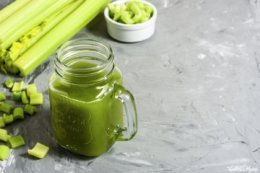
The easiest way to make celery juice is by running celery stalks through a juicer. But I’m going to show you how to make celery juice using a blender, as well. Both methods make excellent juice. Course Beverage Cuisine American Prep Time 10 minutes Author Katie WellsThe ingredient links below are affiliate links. Click here to read my affiliate policy.
Serving: 2cups
Surprisingly, science shows that organic and non-organic produce contain quite similar levels of nutrients. A 2012 review found that organic foods were not significantly more nutritious than non-organic foods.
However, there are benefits to eating (and juicing) organic produce that go beyond just the levels of nutrients in the food. The review I mentioned above also states that choosing organic food reduces exposure to pesticides and antibiotic-resistant bacteria.
When I’m choosing between organic and non-organic produce, I use the Environmental Working Group’s (EWG) Shopper’s Guide to Pesticides in Produce. They put out the Dirty Dozen (12 fruits and vegetables with the highest levels of pesticide residue) and the Clean Fifteen (15 fruits and vegetables with the lowest levels of pesticide residue).
Celery is listed in the Dirty Dozen category. Because of that, I usually buy organic celery. If purchasing organic is not in the budget, buy non-organic and clean the celery with an all-natural produce wash before juicing. Eating a whole food diet with non-organic produce is still healthier than highly-processed, sugary junk food.
Getting kids to eat (and drink) healthy can be a challenge. But it is possible! Try these tips:
Celery certainly doesn’t only belong in juice. The health benefits of celery can be obtained by adding more of this crunchy veggie into your diet on a regular basis. It goes great in soups, stews, chopped up in salads, and even tastes good dipped in almond butter for a midday snack.
Celery is versatile and makes a great snack for kids (and adults). A friend of mine encourages her kids to eat celery by calling it “celery smiles” rather than just plain, old celery. Sometimes the simplest tricks have the biggest impact when it comes to kids!
Have you tried juicing celery? What do you think about it?
Sources: