Next time you’re enjoying a hot cuppa joe from your favorite coffee spot, instead of tossing the paper container, take it home to repurpose into a homemade candle. Use leftover wax candle ends, along with a sprinkling of used coffee grounds, and you’ve got a fun and eye-opening candle to scent your home or give as a gift.
What You’ll Need:
Small paper coffee cup
1 to 2 tablespoons used coffee grounds
Paper towel
1 cup wax candle remnants
Candle wick
Scissors
Small saucepan
Small metal or glass mixing bowl
Directions:
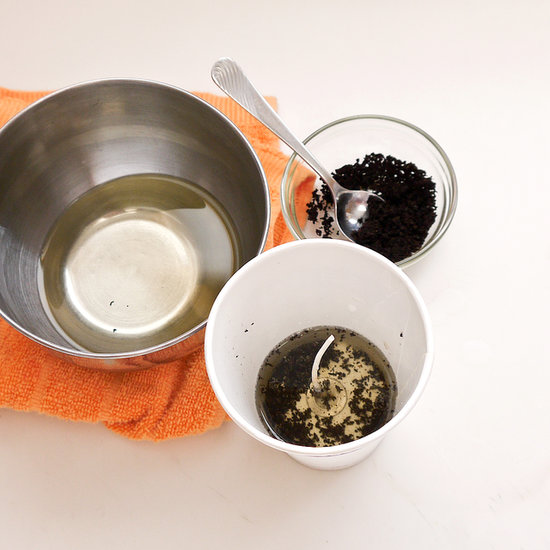
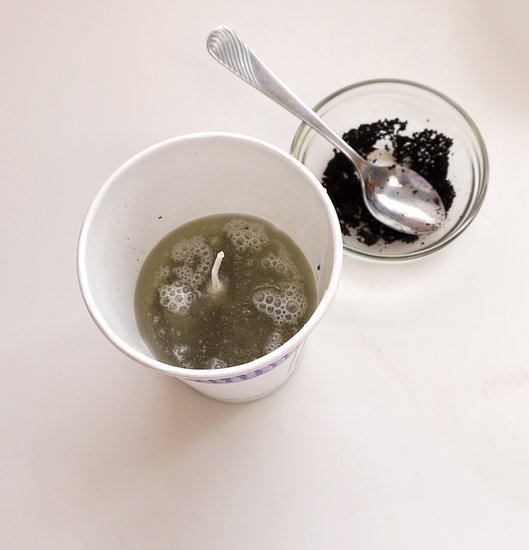
To create the base of the candle, add 1 cup of wax candle remnants to a small metal or heat-safe glass bowl, and place over the top of a small saucepan filled halfway with water, creating a double boiler. Bring the water to a simmer and watch closely until the wax has melted, which takes about 5 minutes.
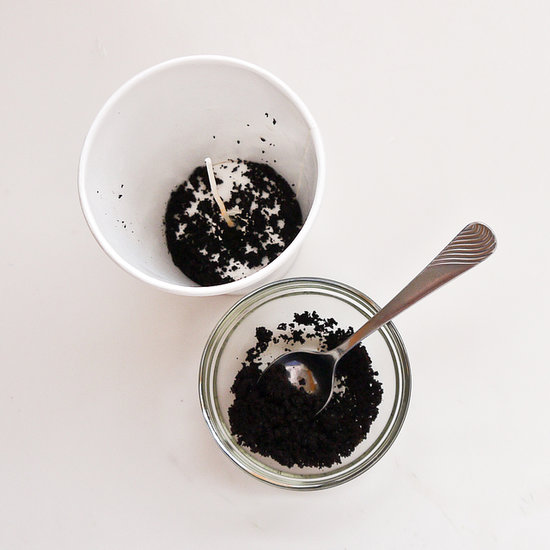
Give the paper coffee cup a good cleaning, and wipe to make sure it’s dry. Place the coffee grounds in a paper towel, and squeeze to release any extra liquid. Position the wick in the center of the cup, and sprinkle a layer of the coffee grounds at the base. You can find candle wicks at your local craft store.
Carefully pour half of the melted wax over the coffee grounds, reserving the rest of the wax for the top of the candle. Let the wax harden for 20 minutes.
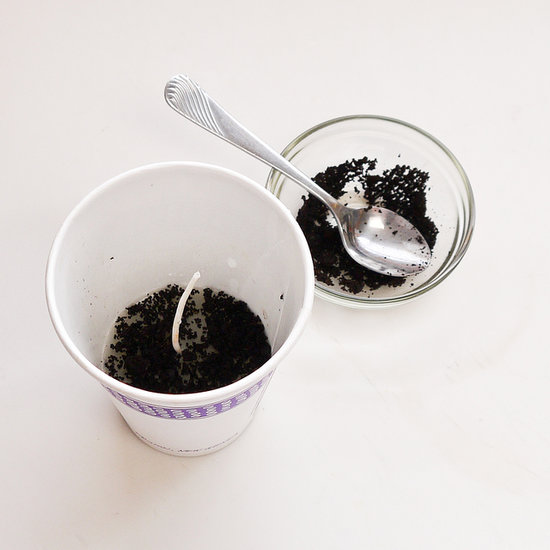
To create the second layer of the candle, sprinkle the cooled wax with another spoonful of coffee grounds. Rewarm the wax in the double boiler, and top off the candle.
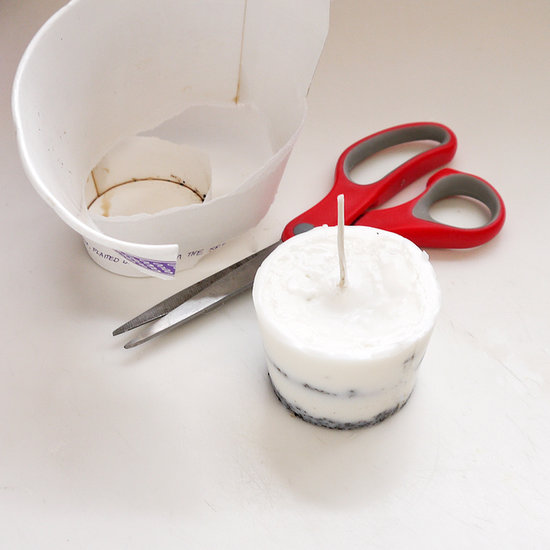
Let the candle cool for at least an hour, and then cut away the coffee cup to reveal the finished candle. If needed, smooth the edges with a paper towel, and trim the end of the wick to fit the candle. Find the perfect spot to display your candle, and enjoy the subtle coffee scent.
Cats can have 8 times as many rod cells than humans, allowing them to see much better in low light. They’re elliptical pupils and a structure called “tapetum lucidum” help collect more light back to the retina for better night vision. It’s because of this that cats are some of nature’s best nocturnal hunters!
When your cat gazes at you with its eyes half closed or blinks slowly, it’s a sign of trust! It means they are relaxed and content around you. These slow blinks can be thought of as kitty kisses!
3. The Oldest Known Pet Cat is From 9,500 Years Ago
Most people think the Egyptians domesticated cats, but the oldest record of a pet cat is from 9,500 years ago in Cyprus, Greece. This predates egyptian cats by 4,000 years!
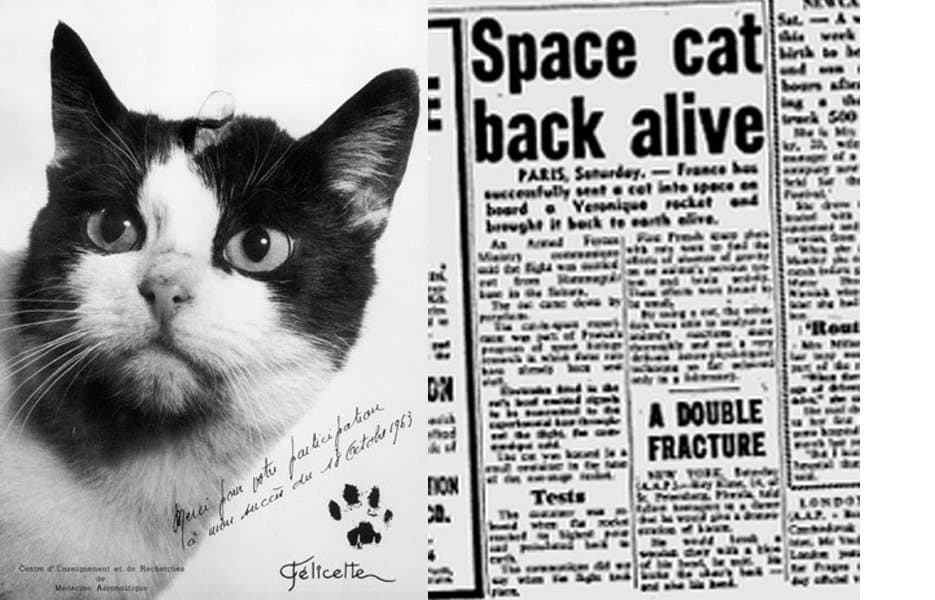
Félicette, also known as “Astro Cat” was the first and only cat to visit outer space. Electrodes wired in her brain sent signals of neurological activity back to earth. Her mission was in 1963 and she made it back safely!
Cats can hear two octaves higher than humans and 1 octave higher than dogs. An article posted on animal planet’s websitesays that cat ears are “like a sophisticated satellite dish turning to pick up a signal.”
In ancient Egypt, the family of a deceased cat would mourn by shaving off their eyebrows and having a burial ceremony. They would mummify the cat along with some mice to keep them company in the afterlife.
7. Cat Brains are More Similar to Human Brains than Dog Brains
Human brains and cat brains have a very similar structure. Cats and humans have identical regions of the brain responsible for emotion. They even have the capacity for short-term and long-term memory, just like humans.
Some cats in hot climates like to cool off by taking a dip. For example, Turkish Vans love to swim and hunt fish. Most cats don’t like water because their fur is not water resistant, but the Turkish Van has a water resistant coat.
Cats don’t have sweat glands all over their body like humans do. Instead, they sweat through their paws. A sweaty cat may leave behind wet paw-prints! Since their paws have very little surface area, they take extra steps to stay cool like finding a shady spot or laying down on cool surfaces.
10. Cats Can’t Taste Sweet Things
Cats are the only known mammals who do not have taste receptors for sweetness. A 2005 Monell Chemical Senses Center study in Philadelphia found that cats lack the amino acids needed to make the sugar detector gene. This is true for all cats- lions, tigers, and leopards included.
15 things you should never eat or drink if you want a flat stomach
Stomach bloating is natural, but certain foods are more likely to cause it than others.Examples include lentils, beans, Brussels sprouts, broccoli, onions, dairy, apples, and grains.Many of these foods have nutrients that our bodies can’t digest, so they’re instead fermented by bacteria, which can lead to gas and bloating.
Stomach bloating is unfortunately a normal and natural part of life.
But some foods cause more bloat than others.
That’s because many of these foods contain nutrients that our bodies can’t digest, like lactose, a natural sugar that’s found in dairy.
FODMAPs are another example. These short-chain carbohydrates can’t be digested by the small intestine, so instead they end up in the large intestine, which is where they’re fermented by bacteria. This fermentation process causes gas and bloating.
While not eating or drinking the foods and beverages listed in this slide show won’t help you lose weight or get washboard abs, it will help you avoid bloating, and will thus have you looking leaner.
Dairy
Dairy products like cheese and milk can cause digestion issues – especially if you’re lactose-intolerant or sensitive. Lactose is a natural sugar that’s found in dairy products, and those who are lactose intolerant don’t have the enzymes needed to break down this sugar.
Luckily, there are plenty of dairy substitutes out there, like soy or almond milk, which are ideal for those who are lactose intolerant or just looking to avoid dairy.
Cruciferous vegetables
Broccoli, cauliflower, Brussels sprouts, and kale all fall under the category of cruciferous vegetables. These foods are high in a number of nutrients like folate, vitamin C, and fiber. They’re even thought to help prevent cancer.
But they also contain raffinose, a type of carbohydrate that our bodies can’t break down because we lack a certain enzyme to do so. Instead, raffinose is fermented by bacteria, a primary cause of gas and bloating.
If you don’t want to give up these vegetables, try roasting or steaming them to make them easier to digest.
Foods high in sodium
Most Americans consume more salt than the recommended daily amount. Our bodies’ natural reaction to eating too much salt is to retain water, and when the body holds on to water, it bloats.
As a guideline, most healthy people should be capping their sodium intake at 2,300 mg per day. Those who have diabetes or high blood pressure, or who are over 50, should only be consuming 1,500 mg per day.
Packaged and processed foods, like canned soups, deli meats, and pre-made sauces, commonly contain large amounts of sodium
Alcohol
Just like high-sodium foods, alcohol causes the body to retain water, leading to puffiness and bloating. Drinking can also trigger constipation, which leaves people feeling bloated as well.
Watermelon
It might be hard to believe that watermelon could do anything to your body, considering it’s mostly water. But it contains plenty of fructose, a natural sugar that gives the fruit its sweetness. Many people are unable to absorb fructose, which is why watermelon can lead to bloating.
Legumes
Legumes refer to plants that grow fruit in the form of a pod. Examples include beans, peas, lentils, and soybeans. These foods are all high in fiber and protein, which is what makes them good for you, but also what makes them hard to digest.
Because legumes are packed with fiber that our bodies can’t absorb, our gut bacteria goes to work on them instead, which causes gas and bloating.
To avoid this, try eating legumes with whole grains that are easy to digest like rice or quinoa, or soak dried beans overnight, which helps to break down non-digestible fiber.
Yogurt
When it comes to yogurt, it all depends on what kind you’re consuming. Plain yogurt can actually help your stomach because it contains probiotics, which are known to regulate digestion.
However, if you’re eating flavored yogurt that’s high in sugar, you’ll have more fermentation going on in your body, which means more gas and bloating.
Grains
Grains like rye and wheat contain fructan, a carb that many people have a hard time digesting.
According to multiple gastroenterologists, people often think gluten is irritating their stomachs when really it’s the fructan. When a carb can’t be absorbed, it’s instead fermented by gut bacteria, which leads to gas and bloating.1
Carbonated beverages
No matter if it’s soda or sparkling water, any sort of fizzy beverage can lead to bloating. That’s because the bubbles present in these drinks cause your stomach to inflate.
Onions
Surprisingly, onions contain carbs. More specifically, they contain the same carb that’s found in grains: fructan.
Fructan is not only hard for your body to absorb, but also leads to more water being stored in the intestine. This, in turn, can cause bloating.
Artificial sweeteners
Many people gravitate toward artificial sweeteners because they have no calories. But calories aren’t everything, and sweeteners like xylitol and sorbitol take a long time for the small intestine to digest, which is why substances like these can lead to bloating.
The five artificial sweeteners that the FDA has approved – and therefore some of the most common – are: saccharin, acesulfame, aspartame, neotame, and sucralose.
Popcorn
There isn’t anything specific in this popular snack that causes bloating; it’s simply the volume of popcorn that most people eat which causes your stomach to expand more than usual.
One serving of popcorn is anywhere from three to four cups. One cup is about the size of a tennis ball, which is a lot of popcorn for your stomach to hold.
Sugar-free gum
As stated earlier, artificial sweeteners are a big culprit when it comes to bloating. Because sugar-free gum contains these sweeteners – mostly sugar alcohols – it can also cause gas and bloating.
Plus, the actual act of chewing gum isn’t great for your stomach either, because you swallow a lot of air doing that.
Apples
Apples contain three things that contribute to gas and bloating: fiber, fructose, and sorbitol. Fructose and sorbitol are natural sugars – although sorbitol is often used as an artificial sweetener in foods – that many people can’t tolerate.
Other fruits that contain sorbitol include peaches, pears, prunes, and plums.
Coffee
While coffee is a diuretic, it’s also acidic, which is why it can lead to a swollen and irritated stomach for those who are sensitive.
And if you’re lactose-intolerant or even sensitive, adding milk to your coffee will only make things worse.
Visit INSIDER’s homepage for more.Stomach bloating is natural, but certain foods are more likely to cause it than others. Examples include lentils, beans, Brussels sprouts, broccoli, onions, dairy, apples, and grains.
Many of these foods have nutrients that our bodies can’t digest, so they’re instead fermented by bacteria, which can lead to gas and bloating.
Stomach bloating is, unfortunately, a normal and natural part of life. But some foods cause more bloat than others. That’s because many of these foods contain nutrients that our bodies can’t digest, like lactose, a natural sugar that’s found in dairy. FODMAPs are another example. These short-chain carbohydrates can’t be digested by the small intestine, so instead, they end up in the large intestine, which is where they’re fermented by bacteria. This fermentation process causes gas and bloating. While not eating or drinking the foods and beverages listed in this slide show won’t help you lose weight or get washboard abs, it will help you avoid bloating, and will thus have you looking leaner
Paying attention to pre-diabetes warning signs could save you from an A&E visit – and prevent you from ever developing full-blown diabetes. Here are the top silent alarms.
1. You know what the bathroom looks like at night.
Because you visit often. As blood sugar levels go up, diabetes symptoms like frequent urination worsen.
“If 4 months ago you were getting up once in the middle of the night to pee and now you’re getting up three times, that’s a clue you need to get checked out,” says Andrew Bremer, M.D., Ph.D., program director at the National Institute of Diabetes and Digestive and Kidney Diseases.
This may also be a symptom of prostate issues (such as an enlarged prostate). Either way, it’s best to bring the issue up with your doctor so he can rule out potential causes.
2. Your skin looks dirty.
You notice dark patches of skin on the back of your neck, but no matter how hard you rub, they won’t come off.
How come? Insulin resistance can cause a condition called acanthosis nigricans, which may appear during pre-diabetes.
The dark, velvety patches can ring your neck and also appear on your elbows and knees. Once you get your glucose under control, the patches will likely fade away.
3. You’re having trouble reading.
Having high blood sugar levels in the long term damages the tiny blood vessels in your retina, blurring your vision in one or both eyes. The medical term is diabetic retinopathy.
While a decade ago doctors thought only those with type 2 diabetes could develop the condition, they now know it can happen sooner.
In fact, nearly 8 percent of pre-diabetic people have diabetic retinopathy. Along with keeping your blood sugar under control to prevent progression of the disease, see an optometrist or ophthalmologist at least once a year for a dilated eye exam, suggests the American Diabetes Association.
4. Your pants are getting loose.
Normally it would be pretty awesome to shed a few pounds and still enjoy a diet of pizza and beer, but unexplained weight loss can signal diabetes.
“I’d be concerned if you’re eating more and losing weight,” says Dr. Bremer.
It’s a sign that your body isn’t utilising calories effectively and you’re simply peeing out those nutrients.
5. Your blood pressure is creeping up.
The last time you had your BP checked, it was 140/90mmHG or above. That’s considered high blood pressure, and it puts you at a higher risk for developing diabetes. Left unchecked, the dynamic duo can damage your kidneys over time.
DON’T GET DIABETES
These symptoms alone won’t diagnose you with pre-diabetes. The only way to know is to go to your doctor and have your blood glucose levels measured, says Dr. Bremer.
If your doc delivers the bad news, do something about it. If you don’t? Well, 15 to 30 per cent of people with pre-diabetes develop the real thing within 5 years, according to the CDC.
Your first step: Lose weight via lifestyle changes like improving your diet and ramping up your activity levels. Pre-diabetics who lost at least 10 percent of their body weight over 6 months reduced their risk of developing diabetes by 85 percent, shows a study in the Journal of General Internal Medicine.



















 Mws R Writings