Things That Happen When Your Diabetes Goes Untreated

When you hear “diabetes,” your mind likely jumps to problems with producing insulin and regulating blood sugar. And that’s definitely a key part of this chronic disease, which affects nearly 1 in 10 Americans, according to the Centers for Disease Control and Prevention (CDC). But that’s also just the tip of the iceberg.

“Diabetes is like termites, in that it causes slow, hidden, but significant damage in the body,” says Osama Hamdy, M.D., Ph.D., director of the Inpatient Diabetes Program at the Joslin Diabetes Center in Boston. “Most patients with type 2 diabetes die from a heart attack,” Dr. Hamdy says, “but because the disease doesn’t have many symptoms, people tend to take it lightly.”

And evidence continues to mount that diabetes affects every system in the body, wreaking havoc if it’s not well managed. Learn more below about the side effects of diabetes and how you can protect yourself from complications. (The good news: Most can be avoided by following the treatment plan set out by your doctor.)

1) High blood pressure and cholesterol

When you have type 2 diabetes, your body can’t properly use insulin, a hormone that regulates blood sugar. In turn, your HDL (or “good”) cholesterol lowers, and your levels of harmful blood fats called triglycerides rise. Insulin resistance also contributes to hardened, narrow arteries, which in turn increases your blood pressure.

As a result, about 2 of 3 people with diabetes also have hypertension—a risk factor for stroke, heart disease, and trouble with thinking and memory. Failing to control high blood pressure and high cholesterol, either with diet and exercise alone or by adding medications, accelerates the rate at which all your other complications progress, says Robert Gabbay, M.D., Ph.D., chief medical officer at Joslin Diabetes Center in Boston.

2) Brain health issues

“It appears that people with diabetes have some abnormalities of blood flow control to the brain,” explains Helena Rodbard, M.D., an endocrinologist based in Maryland. “And this appears to be correlated with a more rapid loss of mental function with age,” she says, including the ability to plan, organize, remember things, prioritizes, pay attention, and get started on tasks.

To protect your brain health, you’ll want to stay active physically and mentally, logging at least 30 minutes of exercise a day and keeping your mind stimulated. “Read, socialize, work, and play games that challenge your intellect,” Dr. Rodbard says. “Keep a positive, optimistic attitude—don’t permit yourself to become depressed.”

3) Gum disease

People with diabetes are more likely to develop periodontal disease, an infection of the gum and bone that can lead to painful chewing problems and tooth loss. “This is due in part to elevated blood sugar that modifies the collagen in all of our tissues,” Dr. Rodbard says. “It’s also due to a slight increase in susceptibility to infections of all kinds.”

On the other hand, gum disease—specifically inflammation of the gums or development of deep abscesses—can raise blood sugar and make diabetes harder to control, according to Dr. Hamdy. To prevent periodontitis, brush and floss daily and consider using a mild antiseptic mouthwash to knock out any lingering plaque.

4) Sex difficulties

Many men with diabetes will experience some level of erectile dysfunction (ED) in their lifetime. “ED can be psychological or due to reduced testosterone,” Dr. Hamdy says, noting that low testosterone is common among people with diabetes, especially if they’re obese. “However, in patients with a long duration of diabetes, changes in blood vessels and nerve supply to the penis could be the cause.” If you have diabetes, are over age 40, and have been having trouble with your male equipment, see your doctor.

Middle-aged and older women with diabetes also tend to have sexual issues, according to a study of nearly 2,300 women published in Obstetrics & Gynecology, likely because nerve damage can impair lubrication and the ability to achieve orgasm.

5) Hearing loss

While we all lose some hearing as we age, hearing loss is twice as common in people with diabetes compared to those without the condition, according to the CDC. Diabetes may lead to hearing loss by damaging the small blood vessels and nerves in the inner ear, the CDC says.

The best way to protect your hearing is to keep your blood sugar levels in check, Dr. Rodbard says. In fact, in a study from Henry Ford Hospital in Detroit, older women with uncontrolled diabetes had more hearing loss than women the same age who had well-controlled diabetes. The CDC also suggests getting your hearing checked every year and avoiding other causes of hearing loss, like exposure to loud noises, when possible.

6) Skin infections

Having diabetes spikes your risk for all kinds of skin issues, including bacterial infections such as boils and urinary tract infections, fungal infections, and itching. “Fungal infections, especially yeast infections, are so common that they may even be the first sign of diabetes in someone who hasn’t yet been diagnosed,” Dr. Hamdy says.

In some cases, skin infections can be tied to obesity, because there are “moist places between skin folds that may breed bacteria and fungi, including candida,” Dr. Rodbard says.

Unfortunately, several diabetes medications increase the risk of fungal infections of the genitalia, Dr. Hamdy says, because they enhance glucose excretion in urine, fueling the growth of bacteria and fungus. Controlling blood sugar levels helps with prevention, but once you have an infection, seek out the usual treatments: over-the-counter antifungal vaginal creams and suppositories, to be used as directed.

7) Obstructive sleep apnea

This potentially serious sleep disorder, in which the throat muscles intermittently relax and block the airway during sleep, affects around 50% of people with diabetes, Dr. Hamdy says, especially those who are obese and have a collar size of more than 17 for men and 16 for women.

The most obvious sign of obstructive sleep apnea (OSA) is audible snoring. Unfortunately, like gum disease, “sleep apnea may worsen diabetes control,” Dr. Hamdy says, possibly because the two conditions share risk factors. Treatment for OSA may involve using a device to keep your airway open at night or wearing a mouthpiece that thrusts your jaw forward. In severe cases, surgery can help by altering the structure of the nose, mouth, or throat.

8) Vision problems

Roughly 1 in 3 people with diabetes older than age 40 have diabetic retinopathy or damage to the light-sensitive tissue at the back of the eye. This happens because elevated blood glucose levels over time harm the eye’s delicate blood vessels, a process that can begin as early as 7 years before diagnosis.

The good news is, treating these problems early can reduce the risk of blindness by 95%, per the National Institute of Diabetes and Digestive and Kidney Diseases (NIDDK).

9) Kidney failure

Over time, high blood glucose thickens and scars the nephrons, tiny structures within the kidneys that filter your blood. About 7% of the time, you’ll already have protein leaking into your urine—an early sign of kidney problems—by the time you receive a type 2 diabetes diagnosis.

About half of those who don’t take steps to control their diabetes will sustain kidney damage within 10 years, and 40% of those will progress to kidney failure, a condition requiring either dialysis or a kidney transplant, says Betul Hatipoglu, M.D., an endocrinologist at the Cleveland Clinic.

10) Neuropathy

About half of people with type 2 diabetes will develop neuropathy, the most common diabetes complication. At first, you might have no symptoms or feel a mild tingling or numbness in your hands or feet, says Dr. Gabbay. But eventually, this form of nerve damage can cause pain, weakness, and digestive troubles as it strikes the nerves that control your gastrointestinal tract.

In addition to managing your blood sugar, being physically active, eating a healthy diet, and keeping up with recommended medications can help prevent diabetes-related nerve damage, the NIDDK says.

https://www.msn.com/en-us/health/medical/10-unexpected-things-that-happen-to-your-body-if-diabetes-goes-untreated/ss-BBMFPNi?ocid=msedgntp#image=11

Pre-existing Conditions Will…

MAKE IT HARDER TO FIGHT CORONAVIRUS

Early data from China, where the new coronavirus COVID-19 first started, shows that some people are at higher risk of serious health complications from the new coronavirus. Per the Centers for Disease Control and Prevention (CDC), this includes people who have serious chronic medical conditions like heart disease, diabetes, lung disease, and mental health conditions such as depression and anxiety. 

Here’s why these conditions increase the risk for COVID-19 complications—and what you should do if you’re affected. 

Heart disease

People with heart disease tend to have other underlying conditions like high blood pressure, elevated cholesterol, diabetes, and lung disease, which weaken the body’s health defense systems (including the immune system) against viral infection, William Li, MD, physician-scientist, and author of Eat To Beat Disease: The New Science of How Your Body Can Heal Itself, tells Health.

“The fever associated with COVID-19 puts additional strain on the body’s metabolic demands, stressing out the already weakened heart,” explains Dr. Li. “Pneumonia, which is commonly seen with COVID-19, makes it harder for the lungs to oxygenate the blood. This puts further stress on the heart.” Plus, inflammation caused by the infection can damage the lining of blood vessels through which the heart pumps blood. 

In February, the American College of Cardiology issued a bulletin to warn patients about the potential increased risk of COVID-19 that included additional precautions to take. The bulletin recommends that people with cardiovascular disease stay up to date with vaccinations, including for pneumonia, and get a flu shot to prevent another source of fever. 

Dr. Li advises regular exercise (while social distancing, of course) and a healthy diet to help strengthen the heart during the COVID-19 era. 

Chronic respiratory disease

Chronic respiratory diseases (CRDs), which include asthma and pulmonary hypertension, are diseases of the airways and other parts of the lung. People with CRDs need to be especially vigilant about the coronavirus because one of the possible complications is pneumonia. “Pneumonia compromises the lung, which brings oxygen to the body,” explains Dr. Li. “In patients who already have a chronic respiratory disease, it can be lethal.” 

Besides following the CDC guidelines for handwashing, social distancing, and other coronavirus preventive steps, The COPD Foundation has issued further advice for people with chronic obstructive pulmonary disease (such as chronic bronchitis or emphysema). As reported in Pulmonary Advisor, this includes having at least a 30-day supply of all required medications on hand. If a patient requires an oxygen supply, they should contact their supplier to find out how to prepare for a COVID-19 outbreak in their area. 

Diabetes

Last week, actor Tom Hanks revealed on Instagram that he and his wife, Rita Wilson, tested positive for COVID-19. Hanks previously shared that he has type 2 diabetes, which means he’s at an increased risk of serious illness from the new coronavirus. 

What makes the coronavirus so dangerous for people with diabetes? First, because the immune system is compromised, it’s harder for the body to fight off the coronavirus, states the International Diabetes Foundation (IDF). Viruses also may thrive when blood glucose levels are high. 

People with diabetes have heightened levels of inflammation throughout their bodies, which is another risk factor. “If you have a viral infection, that can turn into pneumonia easier, because diabetes itself is an inflammatory disease,” Maria Pena, MD, director of endocrine services at Mount Sinai Doctors Forest Hills, previously told Health. “It’s also important to note that when a person has diabetes, episodes of stress, like a viral infection, can increase blood sugar levels, which can also lead to complications.”

Everyone should be taking precautionary measures during the COVID-19 outbreak (whether they have preexisting health conditions or not), and the IDF says it’s even more crucial for those living with diabetes. That means washing your hands thoroughly and frequently, avoiding touching your face as much as possible, cleaning and disinfecting frequently touched surfaces, and avoiding close contact with those showing symptoms of a respiratory illness.

The IDF also recommends additional precautionary steps for those with diabetes. Monitoring blood glucose levels should be a priority, because any kind of infection can raise blood sugar levels. This increases the need for water, so it’s important to have an adequate supply. To prepare for a quarantine, make sure you have enough medication, testing supplies, and food to last for at least a month. 

People with diabetes should be particularly careful about social contact. “As a diabetic, I would avoid supermarkets or other public gatherings,” Dr. Pena said. 

Depression and anxiety

COVID-19 doesn’t only affect people with pre-existing physical conditions—it can have a serious impact on those with mental health issues, like anxiety and depression, even if you are not infected with the coronavirus.

“Fear of the virus and all the changes it’s causing are driving anxiety levels up for everyone, but for people who have an anxiety disorder it’s so much worse,” Gail Saltz, MD, associate professor of psychiatry at the NY Presbyterian Hospital Weill-Cornell School of medicine and host of the upcoming Personology podcast from iHeartRadio, tells Health. Dr. Saltz warns that people who have managed their disorder may relapse, and those actively struggling may be much more symptomatic. 

“Anxiety also worsens depression, particularly those whose depression is of the ‘agitated’ variety, a subtype of the illness characterized by jittery, anxious, irritable behavior,” she adds. 

People with anxiety or depression who are at home with someone who has COVID-19 may find the burden of caregiving to cause their mental health to deteriorate further. “Caregiving is very stressful,” says Dr. Saltz. “In many cases it’s a 24/7 role and for those already struggling, it can be overwhelming.” She adds that social distancing, quarantining, and losing the structure of work or school can also increase symptoms of both anxiety and depression by increasing feelings of loneliness. 

By actively focusing on mental health, however, those symptoms can be reduced. Dr. Saltz recommends exercising for 30 minutes each day and trying relaxation techniques like deep breathing and mindfulness to help keep anxiety at bay.

It’s also important to have a structure in your day, even if you’re self-isolating or in quarantine, she says. This means getting up at the same time as you normally would, taking a shower, getting dressed, creating and sticking to a schedule, and maintaining normal sleep. If you work from home, make a dedicated workstation. 

If you need professional help, it’s still there for you even if you can’t get to the doctor’s office. “Most therapists are moving to online sessions to accommodate their patients,” says Dr. Saltz. If you take medication for your mental health, make sure you have a 30-day supply. 

Loneliness is an issue for people in all age groups, and even if you don’t have mental health issues yourself, you probably know someone who does. “Check in with those you know who are also self-isolating,” says Dr. Saltz says. “Talking to and supporting others is likely to make you feel better as well.” 

The information in this story is accurate as of press time. However, as the situation surrounding COVID-19 continues to evolve, it’s possible that some data have changed since publication. While Health is trying to keep our stories as up-to-date as possible, we also encourage readers to stay informed on news and recommendations for their own communities by using the CDCWHO, and their local public health department as resources.

MwsR Poem

Poem

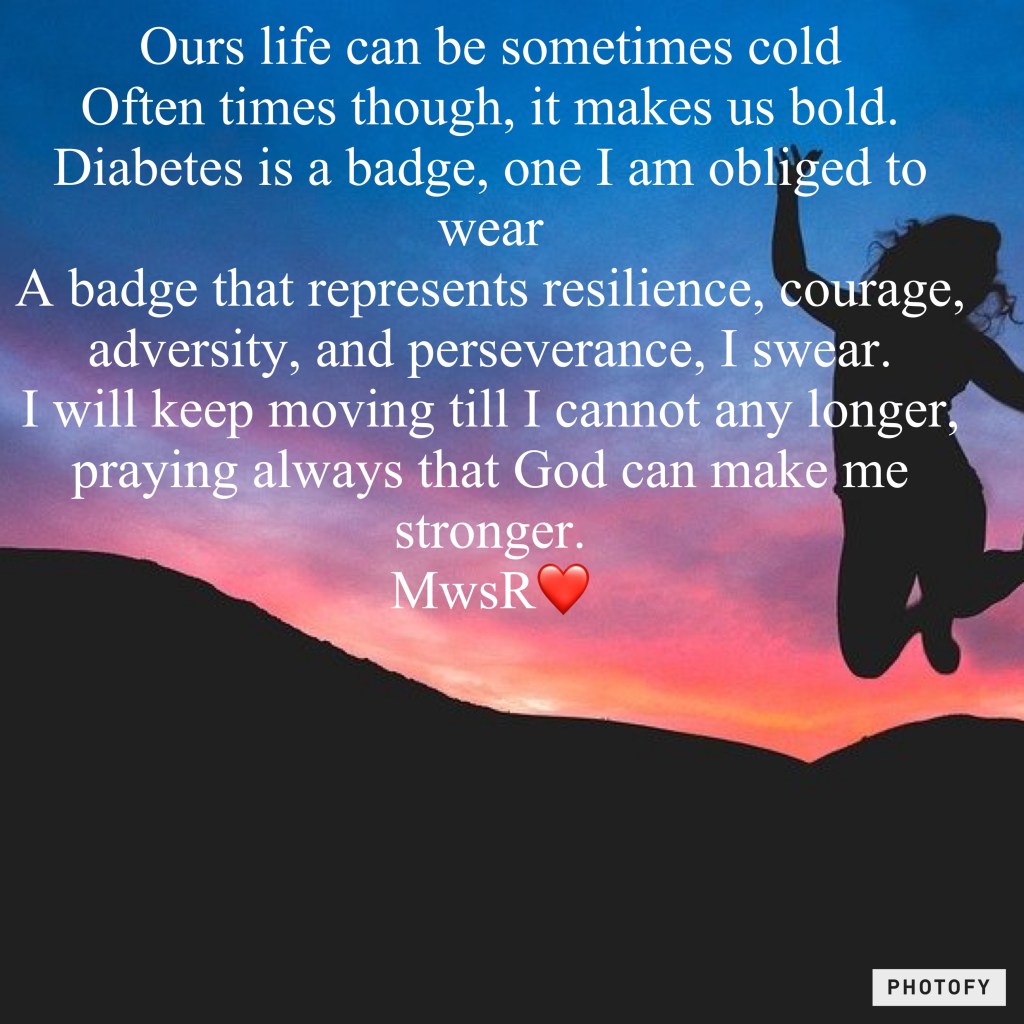
Notorious Diabetes. By MwsR

Silently it works in me
Even if I have just one sip of sweet tea.
I don’t know how it will work from day today
Sometimes…most times I wish it to just go away.
When I am sad or mad it quickly reacts
Like a sting from stepping on a thumbtack.
Why does it want me anyway?
I didn’t ask for it when I would pray.
I wanted a less complicated life
One without any physical strife.
Sometimes though regardless of wishing
We go through things that are just not uplifting.
Instead of peace, I get a constant reminder
And a disease that throws up lots of blinders.
A disease that hates me
It is the notorious Diabetes.

Diabetic Tips

Diabetes Daily Fact

Diabetes Awareness Month Day 2

Diabetes Fact

Diabetes Awareness Month Day 19