Did you know these 19 facts about the Christian holiday turned commercial powerhouse?
1. The tallest Easter egg chocolate was made in Italy in 2011. It stood at 10.39 meters and weighed an astounding 7,200 kg.
2. In the US, only 12 of the 50 states recognize Good Friday as a holiday.
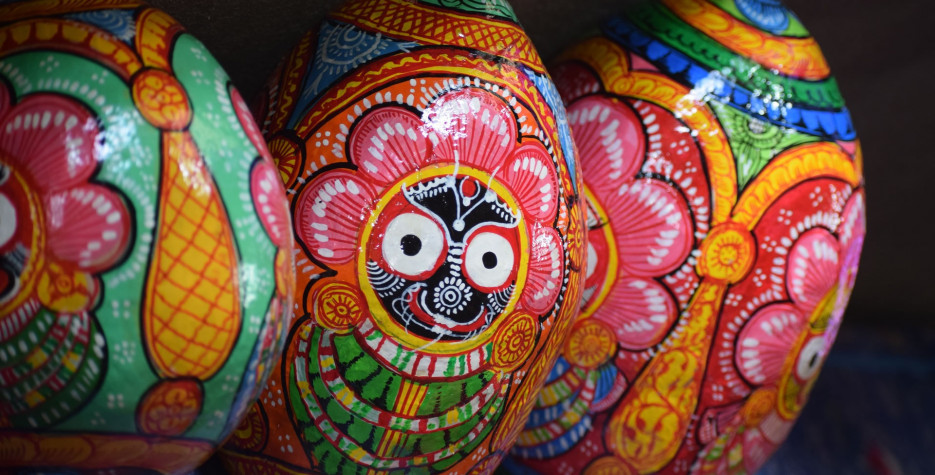
3. The art of painting eggs is called pysanka, which originated in Ukraine. It involves using wax and dyes to color the egg.
4. The term Easter gets its name from Eastre, the Anglo-Saxon goddess who symbolizes the hare and the egg.
5. The exchange or giving of Easter eggs actually dates to before Easter and the giving of eggs is actually considered a symbol of rebirth in many cultures.
6. There used to be a tradition churches observed that resembled the game of “hot potato.” Here, the priest would toss a hard-boiled egg to one of the choir boys.
The boys would toss the egg amongst themselves and when the clock struck 12, whomever had the egg was the winner and got to keep the egg.
7. Peep peep… did you know Americans buy more than 700 million marshmallow Peeps during Easter? This makes Peeps the most popular non-chocolate Easter candy.
8. Americans consume more than 16 million jelly beans during this holiday. That is enough jelly beans to circle the globe not once, not twice, but three times.
9. Are you an ears, arms or tail person? Seventy-six percent of people eat the ears on the chocolate bunny first, 5 percent go for the feet and 4 percent for the tail.
10. During the holiday, more than 90 million chocolate bunnies, 91.4 billion eggs and 700 million Peeps are produced each year in the United States alone.
11. Next to Halloween, Easter is the biggest candy-consuming holiday of the year. Good thing they are almost six months apart, perfect for your yearly dentist check-ups!
12. An estimated $14.7 billion is spent in total for Easter in the US.
13. The Easter egg is said to symbolize and represent joy, celebration and new life.
14. Easter is the celebration of the resurrection of Christ; it is the oldest Christian holiday and one of the most important days of the year.
15. Half the states in the United States banned the dyeing of chicks on Easter; however, Florida recently overturned this law and now prevents the dyeing of all animals.
16. Not only did Florida overturn the dyeing of animals, but the state also held the largest Easter egg hunt, where 9,753 children searched for 501,000 eggs.
17. The White House of tradition of the Easter Egg Roll started back in 1878, with President Rutherford B. Hayes!
18. Workers in Birmingham, who make the famous Cadbury Creme Egg, produce more than 1.5 million egg delights a year.
19. The idea of the Easter bunny giving candies and eggs is said to have originated in Germany during the middle ages.
No matter how old you are or where you are in the world, Easter is a fun family tradition that never gets old.
From the Easter egg hunts to the taking your first bite into that chocolate bunny, it is not only a special religious holiday that marks an end to Lent, but one that represents the resurrection of Christ, too.
For those who aren’t so religious, Easter marks a long weekend, filled with fun.
Onions contain an antioxidant called quercetin, which blocks the production and release of histamines (compounds released by cells in response to allergic and inflammatory reactions). It’s likely that onions already show up in your home cooking quite a bit but make them the star of a meal by roasting them with other root vegetables and olive oil or making Quick Pickled Red Onions.
Turmeric
Known for its anti-inflammatory properties, turmeric also inhibits the release of histamines, thus limiting the allergic response and symptoms associated with it. Enjoy turmeric in curries and stir-fries, use it to liven up an omelet, or enjoy golden milk—a trendy turmeric latte that’s similar to chai.
Salmon
Along with other fatty fish like mackerel and trout, salmon are rich in omega-3 fatty acids, which are heavily lauded for their anti-inflammatory activity. One study found that individuals who took an omega-3 fatty acid supplement experienced lower markers of airway inflammation. Aim to eat two 3-ounce servings of fish per week. If you’re not a fan of fish, nuts and seeds are a great choice—the specific type of omega-3s, alpha linoleic acid, has also been found to reduce allergy symptoms.
Pineapple
It’s rich in an enzyme called bromelain and that gives pineapple anti-inflammatory properties that have been shown to reduce nasal swelling. Add pineapple chunks to a cup of plain Greek yogurt for a double dose of allergy-fighting probiotics and bromelain.
Fruits and Vegetables
Most produce contains a moderate to high amount of vitamin C, one of the most well-known vitamins for immune system health. Vitamin C is another nutrient that prevents the formation of histamine. Its effects are enhanced when it’s paired with bioflavonoids, which happen to be found in the skin of fruits and vegetables—so as long as it’s edible, keep the skin on when you eat fruits and vegetables!
Welcome to the third month of the year—or, if you were born before 150 B.C., the first! According to the oldest Roman calendars, one year was ten months long, beginning in March and ending in December. It may sound crazy, but you can still see traces of this old system in our modern calendar: because December was the tenth month, it was named for the number ten in Latin (decem), just like September was named for seven (septem). So, what about January and February? They were just two nameless months called “winter,” proving that winter is literally so awful it doesn’t even deserve a spot on the calendar. Check out these vintage photos that prove winter was way worse in the past.
2. It’s the best month for basketball (but worst for productivity)
For civilians, on the other hand, March is known for one thing above all others: brackets. March Madness, as the NBA calls it, runs from March 11 to April 2 this year, and the safest bet you can make is that lots and lots of people will be distracted. One number-crunching firm predicted last year that American companies would lose $1.9 billion in wages paid to unproductive workers spending company time on betting pool priorities. (Suffice it to say, March is not a productive month—this is the single most productive hour and month of the year.) How to recoup these costs? Go into gambling. According to the American Gaming Association, fans wagered more than $2 billion on March Madness brackets for the 2015 tournament. Each one of those 70-million-or-so brackets has a one in 9.2 quintillion (that’s 9 followed by 18 zeroes) chance of predicting the correct winners of every game. Good luck!
3. It’s also the best month for vasectomies
March Madness is a cherished time to reacquaint oneself with the couch, especially during the early tournament days when dozens of games unfold consecutively. In other words, it’s the perfect week to recover from a vasectomy!
According to doctors at the Cleveland Clinic, the number of vasectomies surges by 50 percent during the first week of March Madness. Why? Patients typically need “at least a day with ice” to keep swelling down, says urologist Stephen Jones, MD, “So if they’re going to spend a whole day doing nothing, it’s not hard to figure out that they’d want to do it on a day they’d like to be sitting in front of the television.”
Smart clinics even offer incentives, like the Cape Cod urologists who offered a free pizza with every vasectomy in March 2012. That deal is certainly a cut above the rest!
4. March was named for war—and lives up to its title
So, if so many months were named for their Latin numbers, why wasn’t March called… unumber? Firstly, because that sounds ridiculous, and secondly, because the Gods had dibs on it. March was actually named for the Latin Martius—aka Mars, the Roman God of war and a mythical ancestor of the Roman people via his wolf-suckling sons, Romulus and Remus. With the winter frosts melting and the ground becoming fertile for harvest again in the Northern hemisphere, March was historically the perfect month for both farmers to resume farming, and warriors to resume warring.
Incidentally, the Pentagon still seems to agree with this Roman tradition: with the exception of the recent War on Afghanistan, almost all major US-NATO led military operations since the invasion of Vietnam have begun in the month of March. You can see a full list here, but to name a few: Vietnam (initiated March 8, 1965), Iraq (March 20, 2003), and Libya (March 19, 2011) all follow the trend.
5. Beware The Ides of March unless you’re a cat
We’ve all heard it uttered, but what does “beware the Ides of March” actually mean? On the Roman calendar, the midpoint of every month was known as the Ides. The Ides of March fell on March 15th. This day was supposed to correlate with the first full moon of the year (remember, winter didn’t count then) and marked by religious ceremonies, but thanks to Shakespeare’s Julius Caesar we know it for another reason. Supposedly, in 44 BC, a seer told Julius Caesar that his downfall would come no later than the Ides of March. Caesar ignored him, and when the fated day rolled around he joked with the seer, “The Ides of March have come.” The seer replied, “aye, Caesar; but not gone.” Caesar continued on to a senate meeting at the Theatre of Pompey, and was summarily murdered by as many as 60 conspirators. Ironically, the spot where Caesar was assassinated is protected in today’s Rome as a no-kill cat sanctuary.
So, if someone tells you “beware the Ides of March,” they are probably just being a jerk, or letting you know they’ve read Shakespeare. Don’t miss more facts about the Ides of March you should know.
Need more reasons to love March? Here are a dozen.
6. March 1: As the saying goes, March comes “in like a lion, out like a lamb.” That was certainly true on March 1st, 2007, when a detachment of 170 Swiss infantrymen accidentally invaded neighboring Liechtenstein when they got lost on a training mission.
7. March 2: NASA astronaut Scott Kelly returned from space after one full year, setting a new record for the longest uninterrupted trip to space.
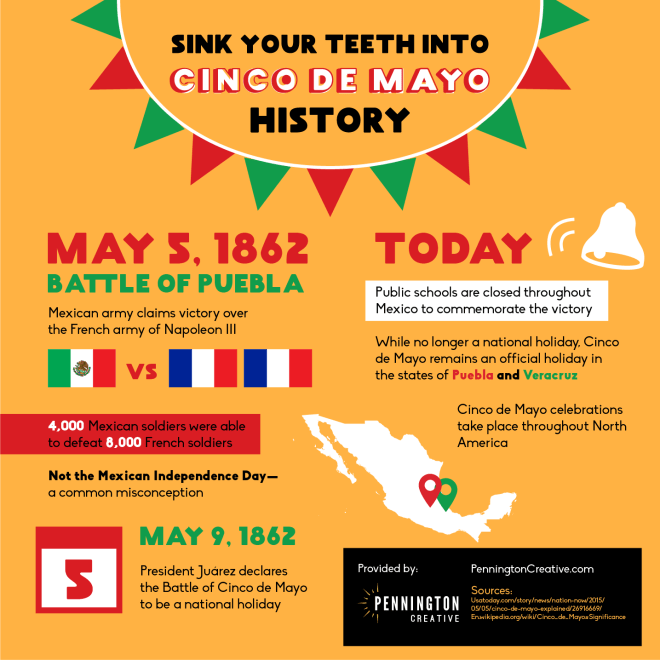
8. March 5: Thirsty bros observe Cinco De Marcho, initiating a 12-day drinking regimen for anyone who wishes to “train one’s liver for the closing ceremonies on St. Patrick’s Day.” By the way, this is why we wear green for St. Patrick’s Day.
9. March 6: The Day of The Dude encourages participants to honor The Big Lebowski by takin’er easy all day, man.
10. March 13: Daylight saving time begins, freeing American city-dwellers from the constant refrain of “it’s dark before I even leave work.” Don’t miss these other daylight saving time facts you probably didn’t know.
11. March 14: Pi Day celebrates the annual occurrence of 3/14 with math jokes, pi-reciting competitions, and (of course) freshly baked pie.
12. March 17: St. Patrick’s Day turns the Chicago River green, and too many livers cirrhosis-damage-brown. (You’ll want to check out these St. Patrick’s Day “facts” that are actually false.) And on this day in 1973, Pink Floyd’s “Dark Side of The Moon” first hits the Billboard Top 200 chart at number 95. A mere 14 years later (736 chart weeks, to be exact), it finally leaves the top 200 for the first time, setting a still-unbroken world record. (You’ve got a long way to go, Adele.)
13. March 20: The sun shines on the equator for the Vernal Equinox, giving us a near 50-50 split of day and night.
14. March 21: The 10th anniversary Twitter founder Jack Dorsey inaugurating the social media site with its profound first tweet: “just setting up my twttr”
15. March 27: Easter Sunday
16. March 28: Gorge Yourself on Discount Easter Candy Monday
St. Patrick’s Day, also known as St. Paddy’s Day is the national holiday of Ireland, which celebrates Saint Patrick the patron saint of Ireland, and is one of Christianity’s most widely known figures. St. Patrick’s Day is celebrated worldwide by Irish people and increasingly by people of all backgrounds. Celebrations worldwide include people dressing up, wearing of the color green, cities dyeing rivers green, shamrocks everywhere, drinking of alcohol, and large parades. See the History of St. Patrick’s Day for more on St. Patrick’s Day customs and celebrations.






 Mws R Writings