Home alone with a lot of energy? Deep cleaning will make you feel like you’ve achieved something and leave you more at ease in your own home.
I’m not talking about a standard clean like you’d do every week. Sure, you’ll probably need to do that too, but when you’ve got a few spare hours, try tackling the stuff that never gets done.
Clean the fridge. Dust the skirting boards. Soap down the walls and get rid of those grubby marks and fingerprints.
Sort out the things you’ve become blind to but that are subconsciously getting on your nerves.
You’ll be sure to feel far more comfortable in your home environment.
2. Clean the windows
Whether or not you see this one as a metaphor for life, it’s an incredibly satisfying job. One that you’ll reap the benefits of for weeks.
Pay someone to do the outside as, let’s be honest, no one has the time, patience, or necessary tools for that, but the inside of your windows is down to you… and it’s probably been a very long time since you cleaned them.
You’ll need plenty of elbow grease and time to do a good job.
3. Have a clear out
Overflowing cupboard? More shoes than you can shake a stick at? Bookshelf stuffed to bursting point?
Our modern society is far too concerned with stuff, and the rate at which we accumulate it can quickly leave us feeling like we’re drowning in it.
Pick one thing to sort through, like your kitchen cupboard or your underwear drawer. Get rid of anything you don’t need or is past its best, and then organize what’s left.
4. Fix something
You know the thing that broke last year and you still haven’t fixed? Now’s the time!
If it’s something serious, you might want to consider leaving it to a professional, and using your free time to look up and contact one. But if it’s something you can do by yourself – perhaps with YouTube’s help – give it a go.
5. Do the laundry
You might think you’re bored, but I wouldn’t mind betting there’s a pile of unwashed clothes that could really do with your attention.
You’ll be thankful you dealt with them when you suddenly find yourself so busy there’s no time for hanging clothes out to dry.
Treat Yourself
1. Have a bath
Is there a bath in your house? Run those taps and dig out the bubble bath from the back of the cupboard. Go all out. Stick on some music, or your favorite podcast. Light candles and incense.
Grab a book, if you can trust yourself not to drop it. Hey, you could even treat yourself to some chocolate or wine… or both. Use this time to utterly pamper yourself and relax those tense muscles.
2. Body maintenance
Let’s face it, we all have times when we let our personal grooming slide a little, whatever our gender.
Life gets busy, and we have a million and one things to do. So, that one time you find yourself kicking your heels, have a maintenance session.
Shave, wax, pluck, exfoliate, moisturize… do whatever it is you want/need to do. It will empower you and boost your confidence.
3. Face mask
This isn’t just one for the women amongst you. Guys, if you’ve never tried a face mask before, now’s the time to start.
As well as working wonders for your skin, there’s something incredibly relaxing about the sensation of a face mask.
If you’ve not got a shop-bought one to hand, don’t panic! There’s still no need to leave the house. You can make all kinds of face masks from things you already have in your fridge and kitchen cupboards.
My personal favorite is mashed up avocado with a dash of lemon juice and olive oil.
4. Call a friend
Is there someone that doesn’t live nearby and you hardly ever see, but always puts a smile on your face? Call them, or FaceTime them. Spend a few hours catching up and putting the world to rights.
5. Take a nap
We’re pretty much all sleep-deprived these days, with our hectic work and social lives. And it’s bad news for our mood.
So if you have a few hours to spare, why not make up for all those days you’ve burnt the candle at both ends?
Work On Yourself
1. Meditation
Time to yourself? Well, that means you’ve got no excuse not to try meditation at long last.
Meditation means actually taking the time to listen to your mind and body, quietening all the thoughts that rush around your head every second of every day.
It can be incredibly beneficial for anyone, but especially for those who are going through a tough time in life or feel like happiness is eluding them.
Try a guided meditation video, or one of the many apps that are out there.
2. Start a course
Is your brain in need of a workout? There are all kinds of free courses available online which will expand your horizons and open your mind to a whole new world of knowledge.
Use your free time to find a course that interests you and get started with it whilst you’re excited about it!
3. Learn a language
Okay, so this isn’t something you can do in just a few hours, but you can find a method that suits you and get started.
Commit to spending a certain amount of time learning a new language from scratch, or refreshing your memory of one you’re already familiar with.
4. Read a book
We all spend far too much time looking at screens these days, and not enough time looking at pages. Not that you can’t read a book on a screen, of course.
If it’s been a while since you’ve read a book, or you don’t normally read at all, try spending a few hours submerged in a story.
Sit in a comfy chair with a cup of tea in hand and get lost in another world. Whether it’s an old favorite or a brand-new adventure, nothing comes close to the feeling of being absorbed in a good book.
5. Read the news
With the state of the world these days, it’s very easy to bury your head in the sand and just refuse to engage, but it really is important to keep up to date with what’s going on.
See what’s been happening in the last week, or take a deep dive and educate yourself about a situation you’ve never quite understood.
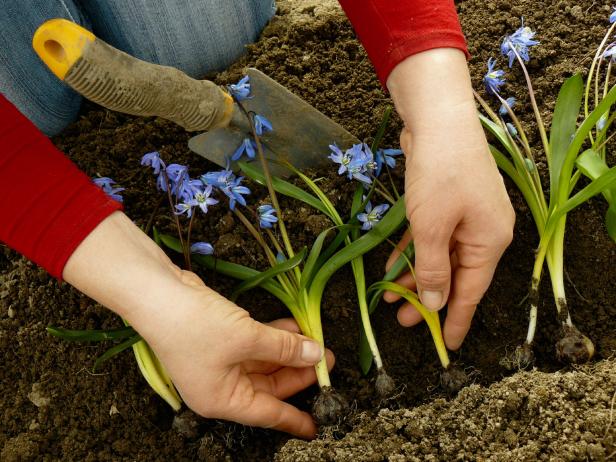
Get your garden off to a good start by planting your perennials at the right time and handling them the right way. One guiding philosophy: Perennial plants are all about the roots. Keeping the roots strong and healthy is the number one consideration when planting perennials. It’s those roots that will keep the plants coming up year after year. Here’s what you need to know about planting perennials to give them what they need to grow up and be beautiful.
Fall or Spring?
Knowing when to plant perennials is essential. Spring is generally the best time to plant, for obvious reasons. The soil is warming, the sun is shining, the days are lengthening and the rain if falling. Spring is also a good time to divide existing perennials that have gotten bigger and better and plant the smaller pieces in other locations.
Fall is a good planting time for perennials that bloom in the spring or summer. Fall planting gives them time to grow strong roots to prepare for the big flower show the following year. Another plus to fall planting: Nurseries are cutting prices on perennials at the end of the season, so you can save a lot of money.
Do not plant in the summer. It’s too hot, the days are too long and rain is unreliable in many climates. There’s too much stress for a new plant to thrive. And winter? No. Just, no.
How Do I Plant?
New plants come in three forms. Knowing how to plant perennials correctly depends on which form you’re planting.
Container-grown perennial plants are the ones you buy at a nursery or plant center, already growing in a pot. They’re the easiest to transplant successfully. Dig a hole twice as wide as the container but no deeper. Pull the plant out of the pot, gently loosen the roots and place in the hole. Fill the hole with soil mixed with compost and water well. Fertilize a week after planting.
Bare-root perennial plants are less expensive than the container-grown ones, but they’re a little trickier. They are just as billed: a clump of plant roots. They’re not for beginners. Soak them in water before planting them in the ground. Add compost to the soil at time of planting and pamper them till they sprout leaves.
Seeds are the least expensive way to start a garden of perennial plants. Growing from seed takes more skill and patience than transplanting container-grown perennial plants. Perennials are slow growing, so if you sow seeds directly in the ground after the last frost you won’t have adult plants till late in the season. Best to start them in the winter, indoors, in small pots and pamper them until they are large enough to transplant outdoors.
The word “pandemic” stems from the Greek words “pan” (meaning “all”) and “demos” (meaning “people”). Thus, a pandemic is a widespread infectious disease, bacteria, or virus that sickens a large number of people worldwide. When a disease or illness is isolated to one region or country, it’s called an “epidemic.”
Throughout history, humans have experienced a number of pandemics, some of which have killed tens of millions of people. These pandemics include cholera, smallpox, measles, yellow fever, tuberculosis, malaria, and Ebola.
One of the most devastating and well-known pandemics is the Black Death, also known as the Plague, which swept across Europe and Asia during the mid-1300s. It’s estimated that the Plague killed 30% to 60% of Europe’s population or 75 million to 200 million people.
The influenza virus has been the cause of many pandemics. In 1918, a strain of the virus called the “Spanish flu” swept the world. The Centers for Disease Control (CDC) estimates that this virus sickened up to one-third of the world’s population (around 500 million people) and killed more than 50 million people. Some died within hours of symptom onset.
The 2019 – 2020 Coronavirus Outbreak
The World Health Organization (WHO) first learned of the 2019 to 2020 coronavirus outbreak on Dec. 31, 2019. According to NPR, experts believe the virus, named COVID-19, originated in the Hunan Seafood Market, a live-animal market in the Chinese city of Wuhan.
Coronaviruses are a family of viruses that cause a range of illnesses, from the common cold to severe acute respiratory syndrome (SARS) and Middle East respiratory syndrome (MERS). The coronavirus family is zoonotic, which means they can spread between animals and humans through close contact. The CDC reports that they also spread in similar ways. Infected people transmit MERS and SARS through the air by coughing or sneezing.
And according to experts interviewed by The New York Times, the current outbreak is increasingly likely to become a global pandemic. It’s easily transmissible through the air, and cases are spiking rapidly, especially in China, where testing kits are in short supply and there’s a backlog in hospitals and labs.
How the Coronavirus Spreads
Much is still unknown about exactly how the new coronavirus spreads and how quickly it infects others.
The CDC states that the virus spreads by respiratory droplets produced when a person coughs or sneezes. Transmission is similar to other coronaviruses, such as SARS and MERS, and the CDC believes that COVID-19 spreads as easily as the common flu virus.
Some important questions, such as whether or not a person can infect others when they show no symptoms (called “asymptomatic”), remain unanswered. However, a 2020 study published in the New England Journal of Medicine states asymptomatic transmission can occur.
Coronavirus Symptoms
COVID-19 presents a serious global public health threat and can be fatal.
The CDC believes symptoms of COVID-19 can manifest between two and 14 days after initial exposure, based both on early data and the incubation period for SARS and MERS. Symptoms for the current novel coronavirus include:
Fever
Shortness of breath
Cough
So far, people who are most at risk of developing severe complications from the novel coronavirus are the elderly and those with preexisting medical conditions like diabetes and heart disease.
Overall, the WHO estimates that the mortality rate for COVID-19 is between 2% and 3%, although that could change as the situation develops. That’s much lower than SARS, which the WHO estimates has a mortality rate of around 9.6%, and MERS, which the WHO estimates has a 34.4% mortality rate.
How to Protect Yourself From the Coronavirus
The WHO and CDC recommend you take simple steps to keep yourself and your family safe and healthy during the outbreak.
Wash your hands with soap and water for at least 20 seconds whenever you return home, after coughing or sneezing, after caring for the sick, before eating, after using the toilet, and after handling animals or animal waste.
When coughing or sneezing, use the crook of your arm to cover your mouth or use a tissue. Throw the tissue in a closed bin, and then wash your hands.
Avoid touching your eyes, nose, and mouth with unwashed hands.
Avoid close contact with people who are sick. The CDC believes the virus can spread within 6 feet, so keep at least that much distance between yourself and someone showing symptoms.
Clean and disinfect frequently touched objects and surfaces.
Follow the same guidelines for preventing other illnesses, such as the common cold and seasonal flu virus.
Pro tip: If you’re planning on traveling over the next few months, you might consider an insurance policy through Allianz Travel Insurance.
Finding Trustworthy Information on the Current Outbreak
There is plenty of misinformation online. False information quickly fuels panic and can lead to fear and hoarding behaviors, such as stockpiling face masks and food, that do more harm than good. At its worst, hoarding can lead to shortages that put medical staff at risk, such as a shortage of medical supplies.
The best way to get trustworthy, up-to-date information on the current outbreak is through the WHO’s situation reports, which they publish daily. The WHO also has a “myth busters” page where it uses scientific information to debunk ongoing myths and hoaxes about the virus.
You can also get reliable information about the outbreak occurring in the United States from the CDC.
It’s prudent to stay informed about any new outbreak. However, while media reports on the new coronavirus look and sound frightening, it’s essential to put the outbreak in perspective. For example, the CDC reports that so far this season, between October 2019 and January 2020, the seasonal flu has sickened over 19 million people in the United States, killed over 10,000 people domestically, and led to over 180,000 hospitalizations. We’re at a much higher risk of catching the flu than the new coronavirus.
How to Prepare for a Pandemic
According to Harvard Business Review, current models suggest that a pandemic might sweep the globe in three distinct waves, each lasting from a few weeks up to three months. This means that you and your family should be able to survive on your own, at home, for a significant amount of time if you have to.
Preparing for a pandemic is an important part of disaster planning and requires many of the same steps. However, there are some additional precautions you need to take in order to keep your family safe.
Pro tip: If you don’t currently have health insurance, make sure you sign up for a short-term health plan through AgileHealthInsurance. This will make sure you’re protected financially if someone in your family gets sick.
1. Be Prepared to Treat at Home
Healthcare workers will face an ethical and moral dilemma during a pandemic. Do they report to work and help care for the sick, putting themselves (and their families) at risk for infection, or do they stay home and help ensure their loved ones don’t fall ill?
According to a survey conducted by CIDRAP, almost half of healthcare workers admit that they would stay home during a pandemic. Another study, published in the journal BMC Public Health, found that 28% of healthcare professionals agree it would be acceptable to abandon their workplace during a pandemic in order to protect themselves and their families.
Even if only 10% of healthcare professionals opt to stay home during a pandemic, and another 10% fall ill themselves, that’s still a conservative 20% reduction in the medical labor force at a time when hospitals and doctor’s offices will be flooded with patients. There’s a chance that some patients won’t be able to get in to see a doctor at all.
Medication could also be hard to obtain. According to a 2006 study conducted by the Harvard School of Public Health, 43% of people believe they would have difficulty obtaining medicine should they have to stay home during an epidemic. During the 2017-2018 flu season, which turned out to be only slightly more severe than normal, the LA Times reported that pharmacies in California had medicine shortages.
Supply disruption is also a real possibility during a pandemic. In order to save on storage space and costs, most hospitals and pharmacies only keep enough medicine on hand for a few days, depending on daily deliveries to keep their supplies stocked. In addition, many life-saving medicines are now made in Asia. If a pandemic occurs, there’s a good chance that deliveries will be interrupted or halted entirely. Stores are also likely to sell out of over-the-counter medication quickly.
Stocking up now means you’ll already have what you need should a pandemic occur, and you’ll be less likely to have to leave the house for supplies, potentially exposing yourself to the virus. Consider stocking up on over-the-counter medication like:
Over-the-counter medication can be expensive, especially when you’re trying to buy it in large amounts. To save money, look for sales and coupons and only buy what you need when the price is discounted. Make sure to keep your medication rotated so it doesn’t expire by checking expiration dates every few months.
You should also have a well-stocked first aid kit in your home and know how to administer emergency first aid like stopping traumatic bleeding and administering CPR. Remember, during a pandemic, hospitals will be overcrowded, and an ambulance might not be available to take you or your family member to a hospital should you break a leg or have a heart attack, so you should be prepared to deal with these emergencies yourself. Knowing first aid is an important survival skill and could save the life of someone in your family.
Also, consider stocking up on face respirators so you’re protected if you do have to go out in public. The U.S. Food and Drug Administration recommends using an N95 respirator during public health emergencies, which you can purchase inexpensively on Amazon. The “N95” designation means that the respirator blocks 95% of tiny (0.3-micron) airborne particles.
Keep in mind that a good fit is important for adequate protection, and N95 respirators are designed for adults, not children. You will need to purchase child-sized respirators (which you can also find on Amazon) to protect your children during an outbreak.
2. Plan for a Sick Room
The CDC recommends that during a pandemic, the sick should stay in a dedicated “sick room” and use a dedicated bathroom that no one else will use.
Start thinking now about which room in your home would work best as a sick room. If the room doesn’t have a door, have an extra plastic shower curtain on hand to partition it from the rest of the house. If someone does fall ill, quarantine them to the sick room and clean the room daily with bleach.
3. Stock Up On Food, Water, & Household Supplies
The Department of Homeland Security recommends that families have at least a two-week supply of water and food to prepare for a pandemic. Supplies for a month or more are even better. Typically, you’ll need one gallon of water per person, per day, for drinking and hygiene.
Building a long-term food storage pantry means you won’t have to put yourself at risk of infection by going to the store, and you’ll be insulated from the food shortages that could very well occur during the panic of a pandemic.
So, what should you stock up on? Focus on shelf-stable foods that your family already eats and enjoys. This might include:
Rice
Dried beans, lentils, or peas
Protein bars, granola bars, or fruit bars
Canned soups, fruit, and vegetables
Peanut butter and jelly
Coffee, tea, and hot chocolate
Powdered drink mixes
Nuts and dried fruits
Beef jerky
Pasta
Instant soup mixes
Flour
Baking essentials (such as baking soda, salt, and yeast)
Sugar
Pickled vegetables
Dried milk
Evaporated or condensed milk
Trail mix
Applesauce
Comfort food (such as cookies, candy bars, and chocolate)
Oils (such as olive oil, vegetable oil, and coconut oil)
Crackers
Oats
Pancake mix
Cereal (including hot cereals like Cream of Wheat)
Chicken, beef, and vegetable bouillon cubes
Liquid seasonings (such as soy sauce, vinegar, and Sriracha)
Liquid sweeteners (such as honey, maple syrup, chocolate syrup, and agave syrup)
Spices (such as salt, onion flakes, cinnamon, and ginger)
Packaged foods (including macaroni and cheese and instant potatoes)
Canned meats (such as tuna, sardines, oysters, chicken, turkey, pork, sausage, and Spam)
Formula or baby food (for very young children)
You should also stock up on the supplies you’ll need to stay healthy at home. These items include:
Hand soap and sanitizer
Bleach or other surface cleaners
Toilet paper
Kleenex
Prescription medication
Fluids with electrolytes (like Gatorade and Pedialyte)
Garbage bags (for medical waste disposal)
Plastic gloves
Diapers (for very small children)
Again, it can get expensive if you hit the stores to stock up on all of these items at once. Instead, purchase items slowly, over time, and only when they go on sale or you have a coupon. Don’t forget to stock up on food and supplies for your pets too.
Pro tip: Make sure you download the Ibotta app before shopping for food and supplies. You will receive a $20 welcome bonus just for downloading and using the app.
Although the chance of an outage is remote, it is possible that utilities and power supplies might be interrupted or stop entirely if a large portion of the working population falls ill or has to stay home to care for sick family members. Have enough supplies to survive without power for several days or weeks, including flashlights, lanterns, a hand-crank or solar-powered radio, and the ability to cook food without electricity, such as with a solar oven cooker.
4. Make an Emergency Plan
If a pandemic is suspected, the CDC reports that it’s likely schools will close early to prevent the spread of the disease – and they could be closed for weeks or even months. How would you care for your children if you were still expected to report for work? Under what circumstances would you stop attending work in order to protect yourself and your family from illness? Do you have enough in savings to stop working for a period of time if necessary?
It’s important to ask yourself these questions before a pandemic occurs. With a plan in place, you won’t have to worry about what you’re going to do if the worst should happen.
Start thinking now about who might be able to care for your children during such an emergency. Consider other family members, friends, neighbors, or members of the community. Talk to these people beforehand to find out how you could help each other during a pandemic.
Next, find out how your company might handle work absences during a pandemic. Do you have the ability to telecommute? If not, what would you need to get started?
You should also make a list of community organizations you can contact to receive help in the form of information, medical assistance, food, and other supplies. A good place to start is the Red Cross. You might also want to talk to local officials about how they would distribute emergency assistance in your community during a pandemic.
Last, make sure you have enough in your emergency fund to survive for a period of time without a regular income.
Pro tip: If you don’t currently have an emergency fund set up, start now. Ideally, you want to have enough money to cover several month’s worth of expenses but start at $1,000. Place these funds in a high-yield savings account or somewhere like Bask Bank where you can earn valuable travel rewards. This way you’ll have easy access to the money if needed.
5. Explore Natural & Herbal Medicines
While it’s important to have over-the-counter medications on hand to treat symptoms, it’s just as important to have an herbal medicine kit in your home to complement commercial medicine. Some herbal remedies are a great frugal flu treatment and can even be more effective than store-bought medicine.
Herbs such as elderberry and oregano oil are very effective in preventing illness, as well as lessening the severity and length of an illness once it starts. They’re also great natural remedies to keep your kids healthy during a prolonged illness.
6. Practice Prevention Now
Several simple actions can dramatically reduce your risk of catching (and spreading) an infectious disease. The CDC recommends that you:
Wash your hands for at least 20 seconds with hot soapy water whenever you come back from any public place or have been around anyone who is sick.
Keep your hands away from your face, particularly your eyes, nose, and mouth.
Cover your coughs and sneezes with a tissue.
Stay home when you’re sick, and don’t go out until you’ve been fever-free for 24 hours without the use of fever-reducing medications.
Clean frequently touched surfaces and objects.
Start practicing these actions with your family today, especially if you have younger children. If you get into these habits now, they’ll be second-nature to you should a pandemic occur, reducing the risk that someone in your family will get sick.
Final Word
It can be frightening to think about experiencing a severe pandemic. Plenty of movies like “Contagion” and “Outbreak” play on these fears and show us, in terrifying detail, what it might be like if a pandemic ever became a reality. Preparing in advance is one way to alleviate some of these fears.
If you have the ability to take care of your family at home for a significant period of time, you won’t have to worry about going to the store and exposing yourself to the virus. You also won’t have to worry as much about packed waiting rooms at the doctor’s office or hospital. The more you prepare now, the more in-control you’ll be should the worst occur.
Do you have enough supplies to care for your family at home during a pandemic? What areas do you need to work in order to be prepared?
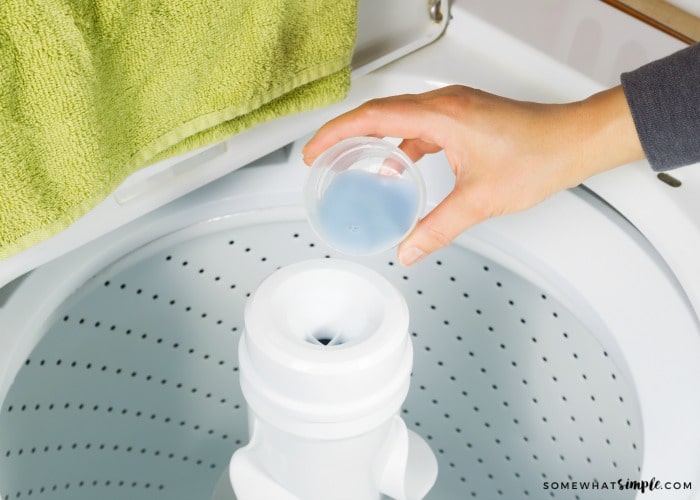
It’s recommended that you clean your washing machine at least once a year, so it’s a great task to add to your Spring Cleaning list! Our step-by step tutorial will make the process fun and stress-free! (Promise!)
We all know that cleaning a microwave can be a daunting task. It’s a time consuming, smelly task and can require a lot of elbow grease to get the job done. But if you Steam Clean your Microwave it will be left smelling great and grime-free in no time!
If you’ve ever had to change a duvet cover, you know what a pain it is. But after watching this video on How to Put on A Duvet Cover from Crane and Canopy, you’ll wash your duvet ten times more often! This seriously changes everything!
Here is a simple trick on how to clean your vents AND make them super easy to clean in the future.
Cleaning your stove can be a daunting task, but one that can really set the mood for your entire kitchen! Here is how to clean your stove in a simple way that involves ZERO chemicals and not even a whole lot of elbow grease!
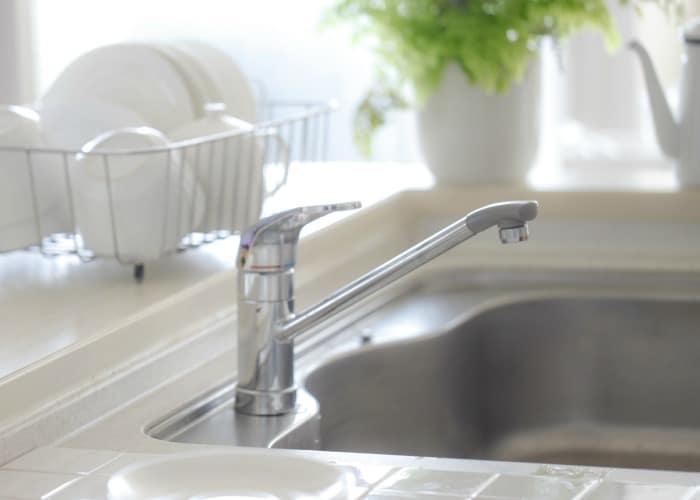
Rub wax paper over your faucets to keep them shinier and water-spot free!
Cleaning ceiling fans can be a real pain! It typically involves covering the entire bed or couch with a sheet so the dust doesn’t fall all over, then vacuuming again and again (and again!) to make sure it gets picked up… I seriously HATE it! Problem solved completely by using a pillowcase to clean ceiling fans. (Tip from Real Simple)
Toss your Legos in a mesh bag and then put the mesh bad in your washing machine. The easiest, least painful way to get them all clean fast!
Clean your mattress by sprinkling baking soda over the top of it. You can add some lavender drops to make it smell pretty too!
Clean your blinds with a sock! Mix equal parts vinegar and warm water in a bowl. Put your hand inside the sock, then wet it with the vinegar mixture. Wipe the dust and dirt off your blinds and watch as it cleans the top and underside the same time!
Keeping your pantry neat and organized is a must when trying to organize your kitchen. Try taking a day to pull everything out and check expiration dates. Pitch anything that is outdated or that you are not going to ever use. Store all baking supplies in clearly labeled containers with lids that seal well. Having everything in categories like baking, breakfast, quick meals and cans can make finding items a lot faster and easier.
-Have a place for everything and keep everything in its place as soon as you finish using it. Keep all of your mixers, toasters in a central location that has plenty of space and easy to grab when you are ready to use them. It may be easier when trying to organize your kitchen to use labels inside the cabinet to help you and your family remember where each item needs to go. Make sure that you put each item back in its home immediately after using it. Soon enough you won’t have to think about it anymore…..you will have developed a new habit. 🙂
-Take time each week to clean and organize your refrigerator and freezer. There is nothing more time consuming than digging in the fridge every 5 minutes to find a missing item. Pick a day that works best for you and quickly pull everything out and wipe it down. Keep all your condiments in one centralized location like in the door or on a Lazy Susan in your fridge. These items can tend to get scattered all over your fridge making it hard to find other items. Keeping leftovers on the same shelf in clear easily identified containers will make it easier to find and helps keep waste down. Nobody likes to find a leftover science project in the back of the fridge!
Keeping your refrigerator door cleaned off and cabinets wiped down can do wonders for making your kitchen look better. Try organizing your notes or children’s artwork in another room of the house. It is beautiful but can make your kitchen look a little less tidy. Try hanging them in old picture frames in the living room for a beautiful display. If you wipe up spills that have made their way onto your counters and cabinets immediately it will take you half the time to clean them up. It’s much easier than letting the gunk dry and then trying to scrub it off.
-World renowned chefs have said many times over the years that it is important to create “stations” in your kitchen. What this does is groups items together that you would use for certain tasks and keeps you from walking back and forth across your kitchen a million times. Here are some ideas to get you started.
Cutting station – Keep items in here that you use when cutting, chopping or dicing. This station is best located near your sink and trash can. Items like knives, food processor, cutting boards and grating utensils.
Baking station – You baking station should be kept near your stove and house items like your baking pans, mixing bowls, spatulas and measuring cups keeping everything close and ready for all your baking needs.
Cooking station – This one is another that is best kept near your stove. You can store all of your pans, baking dishes, spoons, spatulas and pot holders here and ready to go.











 Mws R Writings