Pressure Cooker Cheddar Bacon Ale Dip/ recipe share

Pressure Cooker Cheddar Bacon Ale Dip

Pressure-Cooker-Cheddar-Bacon-Ale-Dip_EXPS_THN16_207886_C06_16_2b-3-696x696Ingredients

  • 18 ounces cream cheese, softened
  • 1/4 cup sour cream
  • 1-1/2 tablespoons Dijon mustard
  • 1 teaspoon garlic powder
  • 1 cup beer or nonalcoholic beer
  • 1 pound bacon strips, cooked and crumbled
  • 2 cups shredded cheddar cheese
  • 1/4 cup heavy whipping cream
  • 1 green onion, thinly sliced
  • Soft pretzel bites

Directions

  • In a greased 6-qt. electric pressure cooker, combine cream cheese, sour cream, mustard and garlic powder until smooth. Stir in beer; add bacon, reserving 2 tablespoons. Lock lid; make sure vent is closed. Select manual setting; adjust pressure to high, and set time for 5 minutes. When finished cooking, quick-release pressure according to manufacturer’s directions.
  • Select saute setting, and adjust for normal heat. Stir in cheese and heavy cream. Cook and stir until mixture has thickened, 3-4 minutes. Transfer to serving dish. Sprinkle with onion and reserved bacon. Serve with pretzel bun bites.

Test Kitchen tips

  • Your favorite ale will also work in this recipe. The Test Kitchen loved the flavor of New Belgium Fat Tire.
  • To lighten this up, use reduced-fat cream cheese, light sour cream, half-and-half and reduced-fat shredded cheese. Serve with fresh celery and carrot sticks.
Originally published as Slow Cooker Cheddar Bacon Ale Dip in Cook It Fast, Cook It Slow

Want to buy some recipes and books about Paleo,

Click link below


Want to find some books with slow cooker recipes,

Click link below


Want to save all your recipes in something?

Click link below

Did You Know?/ News on Health,Share/Aspirin

Low-dose aspirin has no effect, causes harm in some older people, study finds

If you are a healthy older person and take a low-dose aspirin every day, it may be more harmful than you think.

A large clinical trial involving participants in Australia and the United States found a daily low-dose aspirin had no effect on prolonging life in healthy, elderly people. It also showed a higher rate of suffering from a major hemorrhage.

Results from the trial were published in the New England Journal of Medicine.

Over a four-year span starting in 2010, the trial enrolled more than 19,000 people in Australia and the U.S. who were 70 and older, or 65 for African-American and Hispanic participants because their risks of dementia or cardiovascular disease are higher. Also, the participants did not have cardiovascular disease, dementia or a physical disability.

Roughly half of participants were given 100 mg of low-dose aspirin, while the rest were given a placebo.

The results showed the aspirin had no impact on whether people would suffer from dementia or a disability. The trial found 90.3 percent of the people who took aspirin remained alive with no persistent physical disability or dementia, compared with 90.5 percent of people on the placebo. Rates of people who suffered from disability and dementia were nearly the same.

Word of the Day

cul·tu·ra·ti

[ˌkəlCHəˈrädē]

NOUN
culturato (noun)
  1. well-educated people who appreciate the arts.
    “the yuppies and the culturati get fashionable shows that suck up to them”

    synonyms: intellectuals · intelligent people · academics · scholars · learned people · literati · culturati · men and women of letters · cognoscenti · illuminati · highbrows · bluestockings · thinkers · ·

    [more]

    · brains · the intelligent · eggheads · boffins

    antonyms: masses
ORIGIN
1980s: blend of culture and literati.


Like the Word of the day?

Click Link below

Email Share/ Information on”Night Shades” vegetables and fruits

https://www.livestrong.com/article/367949-list-of-nightshade-vegetables-fruits/

List of Nightshade Vegetables & Fruits

by  ERICA KANNALL
Erica Kannall is a registered dietitian and certified health/fitness specialist with the American College of Sports Medicine. She has worked in clinical nutrition, community health, fitness, health coaching, counseling and food service. She holds a Bachelor of Science in clinical dietetics and nutrition from the University of Pittsburgh.
List of Nightshade Vegetables & Fruits

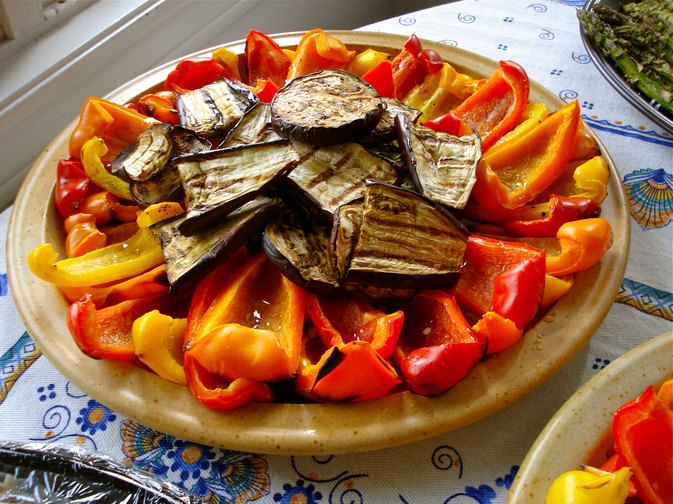
Red Peppers, yellow peppers and eggplant are all members of the nightshade family. Photo Credit: Judy Bishop – The Travelling Eye/Moment/Getty Images

Nightshade fruits and vegetables belong to the family of Solanaceae plants of the Solanum genus. This group of plants contains more than 2,500 species that are widely used as food and medicine, according to Encyclopaedia Britannica. Some people have a sensitivity to nightshade plants and are unable to digest them fully. If you have a sensitivity, you may experience diarrhea, gas, bloating, nausea, painful joints, headaches and depression from consuming nightshades.

1. Potatoes
<!–

–> <!– <!–

–>

Potatoes belong to the nightshade family

Potatoes belong to the nightshade family

Potatoes are part of the nightshade family. This includes white, red, yellow and blue-skinned potato varieties. Sweet potatoes and yams are not nightshades, however, according to The Weston A. Price Foundation. If you have sensitivity to members of the nightshade family, You need to avoid foods made from potatoes, such potato salad, french fries and mashed potatoes. Also, be sure to read ingredient lists on all processed foods to avoid potatoes and potato starch.

<!–

–> <!– <!–

–>

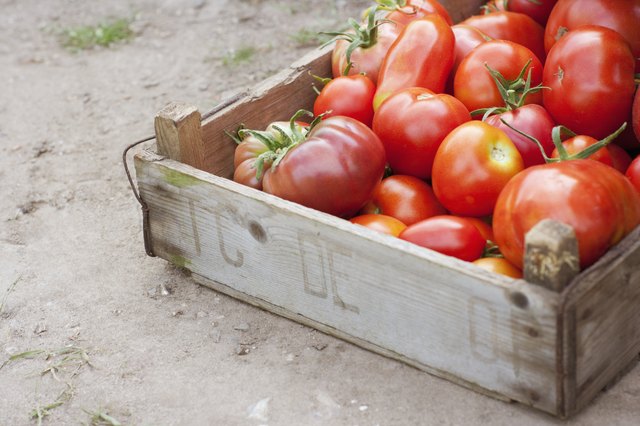
Tomatoes are also part of the nightshade family

Tomatoes are also part of the nightshade family Photo Credit: Sam Edwards/OJO Images/Getty Images

Another widely consumed member of the nightshade family are tomatoes. Although the culinary world refers to tomatoes as vegetables, scientifically, they fall into the category of fruit. Stay away from all raw tomatoes and also from cooked ones in other preparations such as in tomato sauce and ketchup. Be sure to read the ingredient lists on soups and condiments such as in salsas, hot sauces and marinades, because they often contain tomatoes.

3. Peppers

<!–

–> <!– <!–

–>

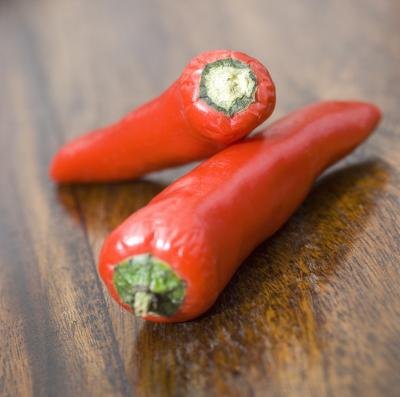
All peppers belong to the nightshade family

All peppers belong to the nightshade family

All peppers belong to the Solanaceae family, as well. This includes bell peppers, jalapenos, habaneros, cayenne peppers and paprika. Paprika, a spice made from ground, dried peppers, is used in a variety of cuisines. Be sure to read labels and communicate well with servers and chefs when eating out to avoid it. Peppercorns are not a member of the nightshade family, even though they contain the word “pepper” within their name.

4. Eggplant

<!–

–> <!– <!–

–>

All varieties of eggplant are nightshade vegetables

All varieties of eggplant are nightshade vegetables Photo Credit: Evan Sklar/The Image Bank/Getty Images

Eggplant appears in Italian, Thai, Indian and other ethnic cuisines, and even though you need to avoid eating eggplant if you have a nightshade sensitivity, you can easily avoid dishes such as eggplant Parmesan. If you are ordering a meal which states that it contains mixed vegetables, be sure to communicate that you cannot eat eggplant and other nightshades. When in doubt, avoid a food altogether.

5. Tomatillos

<!–

–> <!– <!–

–>

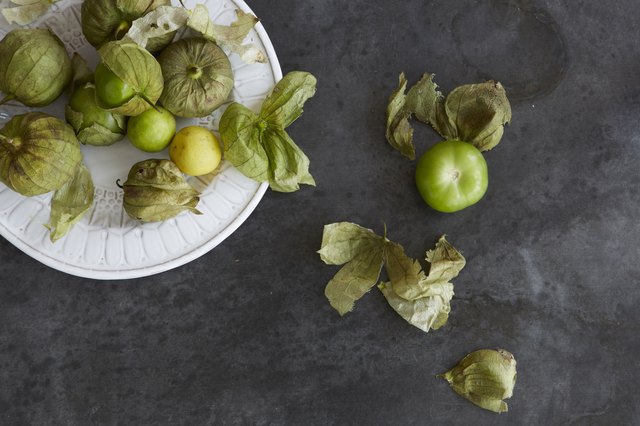
Tomatillos are another member of the nightshade family

Tomatillos are another member of the nightshade family Photo Credit: Ryan Benyi Photography/Image Source/Getty Images

Tomatillos, another member of the nightshade family, are often found in Mexican cuisine. The fruit grows well in warm climates and can be found as a wild weed in parts of Mexico, according to Organic Gardening. Tomatillos have a papery husk and hang like small round paper lanterns from the plants. When ripe, they’re either pale yellow or purple and have a slightly citrus like flavor. Most often, you’ll find tomatillos in sauces and salsas, such as salsa verde.

6. Goji Berries and Other Berries

<!–

–> <!– <!–

–>

Goji Berries fall into the nightshade family

Goji Berries fall into the nightshade family

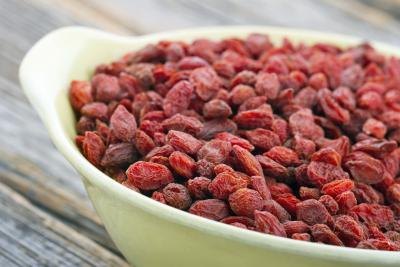
Small, red goji berries fall into the nightshade family. These slightly sweet berries, sometimes called wolfberries, are native to Asia. They can be eaten raw, dried or made into a juice. They’re easy nightshades to avoid, but do read ingredient lists of all juices, smoothies, teas and nutritional supplements to be sure they don’t contain goji berries. Other berries that are nightshades include garden huckleberries, ground cherries and cape gooseberries, but not normal gooseberries nor blueberries.

<!–

–>

https://24sevenwellness.com/2018/09/06/so-are-certain-vegetables-actually-bad-for-you/

If you are concerned about inflammation you may have read at one time or another that certain vegetables in the nightshade family can cause inflammation. Obviously, if you are trying to reduce inflammation in your body then eliminating these vegetables would make sense wouldn’t it? But should you be saying goodby to all tomato products  forever? Are nightshades actually bad for you? Should you eliminate them all?

Well, here’s the lowdown on nightshades.

Firstly, what are nightshades?

Nightshades are members of the Solanaceae family which includes both edible and non-edible plants. Edible nightshades include:

  • Potatoes (not sweet potatoes or yams)
  • Tomatoes
  • Eggplant
  • All peppers (not peppercorn), including hot peppers, chili peppers, sweet peppers and paprika
  • Ashwaganda
  • Gogi berries
  • Cape gooseberries (not normal gooseberries)
  • Ground cherries

I can literally hear many of you groan when reading the above list. After all anyone eating a varied healthy diet is going to be including at least two thirds of that list every week. In fact it would seem that nightshades are fundamental to our modern day diet. It’s not just the actual tomatoes we are eating but consider pizza, marinara sauce (in fact most pizza sauces) ketchup, barbecue sauce ……. The list could go on and on! Potatoes are also another household staple in the form of baked potatoes, French fries, chips, mashed and roasted potatoes. I think we all eat peppers at least once a week these days in salads or roasted.

So we know we like them, we know we consume them often and we probably thought they were good whole foods we should be including in our diet.  So what are the potentially problematic aspects of nightshades?

Alkaloids

Nightshades contain substances called alkaloids, which can cause inflammation and stress. One type of alkaloid in nightshades, Solanine, has been studied for its ability to block cholintesterase, an important enzyme in nerve cells. The ability of this alkaloid to inhibit cholintesterase often results in joint stiffness and joint pain.

Calcitrol

Another harmful substance in nightshades is calcitriol, a hormone that signals the body to update calcium from the diet. Although adequate dietary calcium supports hormones, excess calcitriol causes too much calcium in the blood. This results in calcium deposits in soft tissues, such as tendons and ligaments.

Lectins

Nightshades are high in lectins, a substance produced in all plants as a natural pesticide. Lectins are “sticky” molecules that tend to attach to the walls of the intestine. The action of lectins on the small intestine lining can cause or exacerbate leaky gut. Leaky gut occurs when things like undigested carbohydrates or lectins create little gaps between the cells of the small intestine, allowing undigested food particles to escape into the blood stream.

So should you be eating nightshades at all?

Unfortunately, as with most things in life there is not one definitive answer, it really depends on the individual. However, there are a few medical issues that eating nightshades could exacerbate:

  • Autoimmune diseases
  • Arthritis
  • Gout
  • Osteoporosis
  • Ongoing inflammation

Also some of us are more sensitive to the lectin and alkaloid content of nightshades.

Often the only way to find out if you do have a sensitivity to nightshades is to eliminate them for approximately 30 days and introduce them back one by one and monitor your response. Or maybe contact your health care provider or nutritionist and arrange a food sensitivity test.

f you are not suffering with one of the above listed medical issues and feel that you do not have a severe sensitivity to nightshades then there are some tips to help you keep it that way.

How to eat nightshades

  • Choose ripe nightshades, since solanine levels are highest in unripe ones. For example, choose red tomatoes over green tomatoes and red peppers over green peppers.

  • Cook nightshades, cooking them reduces the alkaloid content up to 50%. Lectins are also degraded, to varying levels, with cooking.

  • Use moderation and variety. Ensure you are not eating them every day and reduce the how many you eat. Remember it is just not the whole food variety but the sauces and condiments you may be using.

Slow Cooker Bananas Foster/Recipe Share

Slow-Cooker Bananas Foster

Staff Writer
Slow-Cooker Bananas Foster
Bananas Foster
Taste of Home

The flavors of caramel, rum and walnut naturally complement fresh bananas in this classic dessert made easy!

— Crystal Bruns, Iliff, Colorado


Ingredients

  • 5 medium, firm bananas
  • 1 Cup packed brown sugar
  • 1/4 Cup butter, melted
  • 1/4 Cup rum
  • 1 Teaspoon vanilla extract
  • 1/2 Teaspoon ground cinnamon
  • 1/3 Cup chopped walnuts
  • 1/3 Cup flaked coconut
  • Vanilla ice cream or sliced pound cake

Directions

Cut bananas in half lengthwise, then widthwise; layer in the bottom of a 1-1/2-quart slow cooker.

Combine the brown sugar, butter, rum, vanilla, and cinnamon; pour over bananas.

Cover and cook on low for 1-1/2 hours or until heated through.

Sprinkle with walnuts and coconut; cook 30 minutes longer. Serve with ice cream or pound cake.


Pressure Cooker Cheddar Bacon Ale Dip/ recipe share

Slow Cooker Baked Apples/Recipe Share

Poem share

Inward…
Battles rage
Forever…
They will fight
As…
Long as there is a wrong and a right.

MwsR❤

We Forget/ poem share by MwsR

We Forget

In self-inflicted blindness we forget all the ones that are in pain

Then we turn and look over our shoulders never accepting the blame.

Onward we keep going, forever clueless in our own little bubble

Looks like we should access while we are down in the rumble,

But we don’t and then we deceive ourselves into thinking that all is right,

Even when we toss and turn way into the night.

What is it that makes a person truly at peace?

Is it knowing that others we can deceive, if they only believe?

It’s like a game of chance that we are willing to partake of

Not caring who we step on or who we shove.

Selfish we enter this world,selfish we leave it.

It’s not just me thinking this and you better believe it.

Why can’t we stop fooling ourselves,

Stop hurting others because they let us, themselves.

We need to acknowledge that we all play a part in this world together.

God didn’t create us to be alone, especially forever.

To care about others we give parts of ourselves away,

For as long as it takes, maybe a year, maybe for just a day.

Anyone worthy of love, is worth the learning

When others come first , in actuality we come alongside them.

No, we can’t be always good or right, but we can bring things up and together, just like a seamstress’ hem.

MwsR❤

Quote Share

author-quote-1.jpg