Easter is a Christian holiday that celebrates the belief in the resurrection of Jesus Christ. In the New Testament of the Bible, the event is said to have occurred three days after Jesus was crucified by the Romans and died in roughly 30 A.D. The holiday concludes the “Passion of Christ,” a series of events and holidays that begins with Lent—a 40-day period of fasting, prayer and sacrifice—and ends with Holy Week, which includes Holy Thursday (the celebration of Jesus’ Last Supper with his 12 Apostles), Good Friday (on which Jesus’ crucifixion is observed), and Easter Sunday. Although a holiday of high religious significance in the Christian faith, many traditions associated with Easter date back to pre-Christian, pagan times.
When Is Easter?
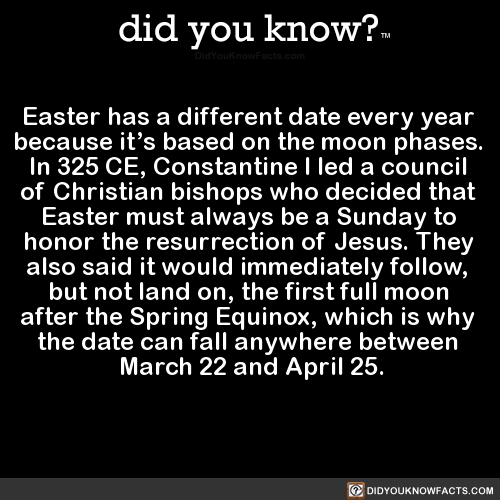
Easter 2019 occurs on Sunday, April 21. However, Easter falls on a different date each year.
Easter Sunday and related celebrations, such as Ash Wednesday and Palm Sunday, are considered “moveable feasts,” although, in western Christianity, which follows the Gregorian calendar, Easter always falls on a Sunday between March 22nd and April 25th.
In Eastern Orthodox Christianity, which adheres to the Julian calendar, Easter falls on a Sunday between April 4th and May 8th each year.
In some denominations of Protestant Christianity, Easter Sunday marks the beginning of Eastertide, or the Easter Season. Eastertide ends on the 50th day after Easter, which is known as Pentecost Sunday.ADVERTISEMENTThanks for watching!
In Eastern Orthodox branches of Christianity, Easter Sunday serves as the start of the season of Pascha (Greek for “Easter”), which ends 40 days later with the holiday known as the Feast of the Ascension.
Despite its significance as a Christian holy day, many of the traditions and symbols that play a key role in Easter observances actually have roots in pagan celebrations—particularly the pagan goddess Eostre (or Ostara), the ancient Germanic goddess of spring—and in the Jewish holiday of Passover.
Religious Tradition of Easter
The resurrection of Jesus, as described in the New Testament of the Bible, is essentially the foundation upon which the Christian religions are built. Hence, Easter is a very significant date on the Christian calendar.
According to the New Testament, Jesus was arrested by the Roman authorities, essentially because he claimed to be the “Son of God,” although historians question this motive, with some saying that the Romans may have viewed him as a threat to the empire.
He was sentenced to death by Pontius Pilate, the Roman prefect in the province of Judea from 26 to 36 A.D. Jesus’ death by crucifixion, marked by the Christian holiday Good Friday (the Friday before Easter), and subsequent resurrection three days later is said, by the authors of the gospels, to prove that he was the living son of God.
In varying ways, all four of the gospels in the New Testament (Matthew, Mark, Luke, and John) state that those who believe in Jesus’ death and resurrection are given “the gift of eternal life,” meaning that those of faith will be welcomed into the “Kingdom of Heaven” upon their earthly death.
Passover and Easter
Notably, Easter is also associated with the Jewish holiday of Passover, as well as the exodus of the Jews from Egypt, as described in the Old Testament. These links are clearly seen in the Last Supper, which occurred the night before Jesus’ arrest and the sufferings Jesus endured following his arrest.
The Last Supper was essentially a Passover feast. However, the New Testament describes it as being given new significance by Jesus: He identified the matzah (or bread) he shared with his 12 apostles as his “body” and the cup of wine they drank as his “blood.”
These rituals would come to symbolize the sacrifice he was about to make in death, and became the basis for the Christian ritual of Holy Communion, which remains a fundamental part of Christian religious services.
As Jesus’ arrest and execution were said to have occurred during the Jewish observance of Passover, the Easter holiday is often close to the former celebration on the Judeo-Christian calendar.
Easter Traditions
In western Christianity, including Roman Catholicism and Protestant denominations, the period prior to Easter holds special significance.
This period of fasting and penitence is called Lent. It begins on Ash Wednesday, and lasts for 40 days (not including Sundays).
The Sunday immediately prior to Easter is called Palm Sunday, and it commemorates Jesus’ arrival in Jerusalem, when followers laid palm leaves across the road to greet him.
Many churches begin the Easter observance in the late hours of the day before (Holy Saturday) in a religious service called the Easter Vigil.
In Eastern Orthodox Christianity, Easter rituals start with the Great Lent, which begins on Clean Monday (40 days prior to Easter, not including Sundays). The last week of Great Lent is referred to as Palm Week, and it ends with Lazarus Saturday, the day before Palm Sunday.
Palm Sunday marks the beginning of Holy Week, which ends on Easter.
Easter Eggs
Irrespective of denomination, there are many Easter-time traditions with roots that can be traced to non-Christian and even pagan or non-religious celebrations. Many non-Christians choose to observe these traditions while essentially ignoring the religious aspects of the celebration.
Examples of non-religious Easter traditions include Easter eggs, and related games such as egg rolling and egg decorating.
It’s believed that eggs represented fertility and birth in certain pagan traditions that pre-date Christianity. Egg decorating may have become part of the Easter celebration in a nod to the religious significance of Easter, i.e., Jesus’ resurrection or re-birth.
Many people—mostly children—also participate in Easter egg “hunts,” in which decorated eggs are hidden.
Easter Bunny
In some households, a character known as the Easter Bunny delivers candy and chocolate eggs to children on Easter Sunday morning. These candies often arrive in an Easter basket.
The exact origins of the Easter Bunny tradition are unknown, although some historians believe it arrived in America with German immigrants in the 1700s. Rabbits are, in many cultures, known as enthusiastic procreators, so the arrival of baby bunnies in springtime meadows became associated with birth and renewal.
Notably, several Protestant Christian denominations, including Lutherans and Quakers, have opted to formally abandon many Easter traditions, deeming them too pagan. However, many religious observers of Easter also include them in their celebrations.
An Easter dinner of lamb also has historical roots, since a lamb was often used as a sacrificial animal in Jewish traditions, and lamb is frequently served during Passover. The phrase “lamb of God” is sometimes used to refer to Jesus and the sacrificial nature of his death.
Today, Easter is a commercial event as well as a religious holiday, marked by high sales for greeting cards, candies (such as Peeps, chocolate eggs and chocolate Easter bunnies) and other gifts.
Sources
McDougall, H. (2010). “The pagan roots of Easter.” TheGuardian.com.
Sifferlin, A. (2015). “What’s the origin of the Easter bunny?” Time.com.
Barooah, J. (2012). “Easter eggs: History, Origin, Symbolism, and tradition.” Huffington Post.
Chapman, E. and Schreiber, S. (2018). “The history behind your favorite Easter traditions.” Goodhousekeeping.com.
https://www.history.com/topics/holidays/history-of-the-holidays-easter-video-video
31 Traditional Easter Foods From Around the World
Easter tables in Poland, Italy, Lithuania, Greece, and England.
- 01 of 31 Roasted Lamb Diana Miller/Getty Images Lamb is the one food that is common in the Easter celebrations of many cultures. The roasted lamb dinner that many eat on Easter Sunday actually predates Easter—it is derived from the first Passover Seder of the Jewish people. You will find recipes featuring different flavorings and spices depending on the dishes’ origin, but this simple version uses somewhat universal ingredients, like garlic, lemon, and herbs, which are rubbed on the lamb before roasting.
- 02 of 31 Polish Jajka Faszerowany (Polish Stuffed Eggs) Barbara Rolek In Poland, the Easter brunch buffet table is plentiful, showcasing some of the country’s best dishes. One of the staples you will find is faszerowany jajka, which are stuffed eggs that are similar to deviled eggs, except they’re broiled with a breadcrumb topping. They have a delicious filling of ham, cheese, sour cream, and mustard, making them hard to resist.
- 03 of 31 Polish Żurek (Ryemeal Soup) KLMircea / Flickr / CC BY 2.0 The Polish Easter brunch also typically includes a ryemeal soup known as żurek. The base of the soup is żur, fermented rye flour (referred to as ryemeal sour), which is started the week leading up to the holiday. In the soup are biała kiełbasa, or Polish sausage, made from the family’s own recipe, as well as potatoes and hard-cooked eggs.
- 04 of 31 Polish White Borscht Soup Dobromila / Wikimedia Commons / CC-BY-SA-4.0,3.0,2.5,2.0,1.0 A white borscht soup, called either biały barszcz or żurek wielkanocny, is also a Polish tradition. Recipes for this dish are passed down through generations, so each is unique. Typically, you will find potatoes, garlic, sour cream, kielbasa, eggs, and rye bread as the ingredients. Continue to 5 of 31 below.
- 05 of 31 Polish Braised Red Cabbage Brian Yarvin / Getty Images Braised red cabbage may be the easiest food on the Polish dinner table. Known as czerwona kapusta zasmażana, it often accompanies the main dish, which can be almost any meat, including roast leg of lamb, roast suckling pig, baked ham, and roasted turkey. You are likely to find a potato dish and horseradish on the table as well. If you use a food processor to shred the cabbage, you can put this dish together quite quickly. The cabbage and onion are sauteed until they begin to soften, and then combined with a mixture of water, vinegar, sugar, salt, and pepper and cooked down until soft and tender.
- 06 of 31 Polish Chalka Leah Maroney Chałka is a braided egg bread that is very popular in Poland. It’s rather fun to make and it is slightly sweet and dotted with raisins. A yeast dough of warm milk, butter, sugar, eggs, flour, and raisins is left to rise and then divided into three pieces to be braided. The loaf rises again and then is baked until golden. Any leftovers make a great bread pudding the next day.
- 07 of 31Polish Lamb Cake Barbara Rolek The adorable lamb cake is not just an American tradition, it is part of the Polish Easter table as well. You will need a lamb-shaped mold but can use a simple pound cake mix for this recipe to make it quick and easy. Decorate with a cream cheese frosting and use raisins for the eyes and nose. Coconut flakes died green work well as the “grass”.
- 08 of 31 Polish Babka Wielkanocna Barbara Rolek Babka wielkanocna is a true representation of the celebration of rich foods after the Lenten fast. It is a yeasty cake made with a whopping 15 eggs, but this recipe uses only three to simplify a bit (and requires only one rise instead of two). While there are many recipes for babka enjoyed throughout Eastern European countries, you cannot go wrong with this traditional Polish recipe, studded with raisins and topped with a lemony icing if you prefer. Continue to 9 of 31 below.
- 09 of 31 Polish Mazurek Królewski Barbara Rolek Another sweet treat for a Polish Easter dessert is Mazurek królewski. This flat pastry is relatively easy to make and it’s very delicious. It is often topped with almond paste and apricot, cherry, or raspberry preserves. You can even add dried fruit and nuts if you like.
- 10 of 31Italian Brodetto Pasquale Harald Walker/Stocksy United Eggs and lamb are two important and symbolic foods at Easter for the Italians, and they join together—along with asparagus—in this frittata-like dish that is one of the best-known and most-loved Italian recipes. Brodetto Pasquale makes perfect use of the early spring vegetable and can be served room temperature—something to keep in mind when preparing large Easter dinner.
- 11 of 31 Italian Wedding Soup Sarah Bossert/Getty Images Italian wedding soup (minestra maritata)or minestra di Pasqua (a traditional Easter soup made with pork, beef, and kale) are commonly served at the holiday meal. Sweet Italian sausage and tender greens give minestra maritata a satisfying texture and delicious flavor.
- Either soup is the perfect complement for lamb, which is almost always the main dish. It’s also common to find at least one side dish that includes artichokes.
- 12 of 31 Neapolitan Grain Pie zzayko/Getty Images A popular Italian dessert is the Neapolitan grain pie (Pastiera Napoletana). This ricotta cake is flavored with orange-flower water (recipes will vary on the amount used) and sweet pastry cream. The cake requires presoaked grain, which you may be able to find canned at some Italian delicatessens. You can make your own, but it will take about two weeks.Continue to 13 of 31 below.
- 13 of 31Lithuanian Vedarai (Potato Sausage) Eddie Gerald/Getty Images After church on Easter morning, Lithuanian families return home to enjoy a special breakfast along with the foods from their blessed food basket. The family either shares an egg as a sign of unity or each enjoys a hard-boiled egg to symbolize rebirth.The main meal is dinner, complete with several traditional dishes. The entree is either a roast pig, chicken, ham, or lamb and you will most certainly find vedarai, a type of sausage made of potatoes. It may either be meatless or contain bacon, depending on the family’s recipe.
- 14 of 31Lithuanian Cepelinai (Potato Dumplings) Tobin / Flickr / CC By 2.0 An Easter dinner in Lithuania will also often include cepelinai. These delicious dumplings are also called zeppelins as they are shaped much like the famous airships. The potato dumplings are very hearty and often filled with meat or cheese. This recipe features a pork filling and creamy bacon gravy.
- 15 of 31Lithuanian Kugelis Flickr CC 2.0 Potatoes are a big part of the Lithuanian diet and make another appearance in kugelis. This is a savory potato pudding that is a very traditional side dish and is also thought of as the national dish of the country, so few Easter dinners will be found without it. Grated potatoes are mixed with sauteed bacon and onion, eggs, milk, and farina and baked until golden brown. You’ll also find several salads and many dishes that include mushrooms alongside a kugelis.
- 16 of 31Lithuanian Velykos Pyragas Anshu / Getty Images With dinner, Lithuanians also serve a semi-sweet yeast bread with white raisins called velykos pyragas. This may be one of the best fruit cakes you’ll ever try; it includes a variety of glaceed fruit, walnuts, and a delicious cinnamon-sugar filling.Continue to 17 of 31 below.
- 17 of 31Lithuanian Paska Foodcollection / Getty Images Desserts abound at a Lithuanian Easter celebration. You will likely see paska, a molded cheese delicacy—it’s no ordinary cheese, either. The dry curd is sweetened, includes heavy cream and almonds, and is adorned with fruits and candies.The word paska literally means “Easter” so you will hear it often in Eastern Europe. A number of treats take on the name as well, and in Ukraine, it refers to a lovely sweet bread.
- 18 of 31Lithuanian Aguonu Sausainiukai Foodcollection / Getty Images Another time-honored sweet in Lithuania is the traditional poppy seed cookie called aguonu sausainiukai. The recipe is as easy as any other drop cookie and includes poppy seed filling and sour cream, and they’re often dusted with confectioners’ sugar.
- 19 of 31Greek Tsoureki Jupiterimages / Getty Images Although Greek Orthodox Easter falls on a different day than the Catholic Easter holiday, that doesn’t mean there is a shortage of delicious delicacies. The Greek Easter feast actually begins after the midnight church service, but the main event is held on Easter Sunday.On every Greek household table, you will find lamb, red eggs, and tsoureki, an orange and spice-scented bread. The dough is braided and then died red eggs are nestled on top before baking, making for a festive and unique looking bread.
- 20 of 31Greek Tiropitas Molly Watson While the lamb is cooking, it’s customary for Greeks to snack on a variety of cheese pastries. Tiropitas are among the favorites. These delicious treats are flaky phyllo triangles filled with four different types of cheese. They may take a little time to make, but are the perfect bite to tide you over, and are great for breakfast too.Continue to 21 of 31 below.
- 21 of 31Greek Kalitsounia Nancy Gaifyllia Kalitsounia is a sweeter cheese pastry that is enjoyed most often on the Greek island of Crete. The rolled dough made with yogurt and brandy is filled with soft mizithra cheese, cinnamon, and orange peel. No matter if you choose to bake or fry them, these pastries are beyond delicious.
- 22 of 31Greek Tzatziki Westend61 / Getty Images Along with the pastries, Greeks enjoy several savory mezethes (appetizers). These often include olives, feta dip, and tzatziki. The tzatziki is a staple in Greece and one of the country’s most famous condiments. It is a cucumber dip made with sour cream and yogurt with a hint of garlic. Not only does it make a great dip for warm pita triangles, but it can also adorn grilled meats and vegetables on the Easter table.
- 23 of 31Greek Dolmathakia me Kima (Stuffed Grape Leaves) The Spruce Dolmathakia me Kima is Greece’s other famous meze. These stuffed grape leaves are irresistible. The filling combines rice, dill, mint, and either beef or lamb. It’s hard to find a Greek celebration any time of year that doesn’t include them on the holiday table.
- 24 of 31Greek Aavgolemono The Spruce In Greece, the main course can begin with avgolemono, a quintessential Greek chicken soup that you’ll also often find at restaurants. It is made with orzo and a lemon-egg mixture that is quite unique. It can also be served as a sauce for the stuffed grape leaves.Continue to 25 of 31 below.
- 25 of 31Greek Patates sto Fourno Philip Wilkins / Getty Images Roasted potatoes just seem like a natural accompaniment to roasted lamb. A popular side dish to lamb in Greece is patates to fourno. Potatoes are tossed with a mixture of olive oil, oregano, garlic, lemon juice, and chicken broth, and then roasted until nice and crispy.
- 26 of 31Greek Spanakopita Jonathan Bielaski/Light Imaging / Getty Images Possibly the most iconic dish from Greece is spanakopita, which can be found on nearly every dinner table across the country, especially at Easter. It can be in the form of a pie or individual triangles; spinach is mixed with feta cheese and layered between flaky sheets of phyllo dough. One taste and you’ll discover why it’s so popular.
- 27 of 31Greek Galaktoboureko Lynn Livanos Athan The Greek Easter has no shortage of dessert options, either, and galaktoboureko is a favorite addition. This delicious custard pie is made with flaky phyllo and then drenched in a citrus-flavored syrup. You do need to make this recipe the same day you plan to enjoy it, however, so make sure you plan accordingly.
- 28 of 31Greek Koulourakia Lynn Livanos Athan Koulourakia are butter cookies with sesame seeds that are quite fun to make. You can either twist, braid, or shape them into an “S,” or make a combination of all three. You will often find them served with other desserts and strong Greek coffee as well as one of the famous Greek wines such as raki.Continue to 29 of 31 below.
- 29 of 31British Hot Cross Buns Debby Lewis-Harrison / Getty Images It seems that almost every country celebrating Easter has its own special Easter bread or cake, and yet, hot cross buns are a favorite in many areas, especially in Britain. These individual spiced yeast buns are filled with dried fruit and drizzled with lemon icing in the form of a cross along the top. The tradition supposedly derived from ancient Anglo-Saxons who baked small wheat cakes in honor of the springtime goddess, Eostre. After converting to Christianity, the church substituted those with sweetbreads blessed by the church.
- 30 of 31British Leg of Lamb Elaine Lemm An Easter lunch is the traditional meal in Britain and the main course typically features a delicious leg of lamb, perhaps seasoned simply with garlic and rosemary. It will often be served with a gravy as well as a fresh mint sauce.Typical British sides will feature spring vegetables such as cabbage and a recipe that utilizes the prized Jersey royal potatoes.
- 31 of 31British Simnel Cake joy skipper/Getty Images A classic British cake for Easter is the simnel cake. It signals the end of Lent as it is filled with ingredients—spices, fruits, and marzipan—that were forbidden during the fast.As if that isn’t decadent enough, chocolate often makes an appearance in both egg-form as well as dessert treats. This can include anything from a chocolate cake to chocolate mousse.
Share this:1 <img alt="I'm part of





 Mws R Writings