Placing plastic forks in your garden will prevent animals from getting in to the garden and keep all your plants safe.
2. Use Coffee Filter To Line Your Pots:
Have you ever watered your potted plants just to watch all of it drain out of the bottom right away? Using coffee filter is the best way to avoid this, just line the pot with the coffee filter before filling it with soil and your plant.
Coffee filters will slow things down and allow the soil to absorb the water for longer periods. It even prevents soil from clogging up the drainage holes of your plant.
3. Place Diapers At The Bottom Of The Plant:
Diapers acts as perfect moisture retainers, just stick them one in the bottom of the planted plant then layer the soil on the top. The diaper helps the planter to retain water which means there is less of a chance that you accidentally such it dry.
Banana peels are rich in calcium, magnesium, sulphur, phosphates, potassium and sodium. When you add banana peels in the compost, it breaks down quickly and all the nutrients will be easily absorbed by the compost faster than other materials.
5. Use Old Spoons To Make Garden Labels:
Instead of throwing old spoons in to the trash, you can easily up cycle them with this fun project. All you need to do is, flatten the head of the spoon using hammer and use craft paint in colors of your choice to decorate them. Write the names of herbs and vegetables that you have in your garden and stick them in the soil. That’s it.
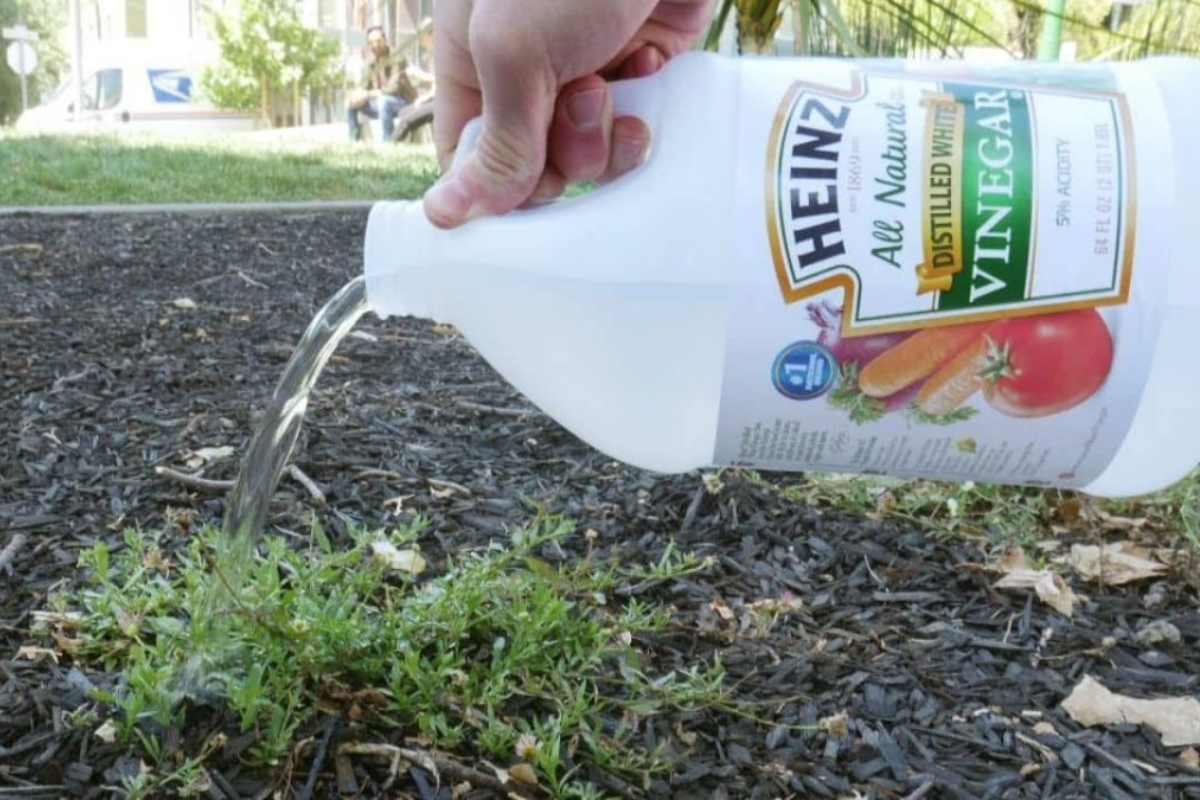
6. Kill Weeds With Vinegar:
White vinegar is used as a natural weed killer in your garden. When it sprayed on the weeds, vinegar will drain the moisture out of their leaves and eventually make them die. It works best on dry and sunny days.
7. Use Paper Towels To Keep The Plants Watered For Days:
If you are going out on a vacation for few days and don’t have a way to keep your indoor plants watered, get out your paper towel.
All you need to do is, take a paper towel and spread it evenly over all the soil. You don’t need to worry about your plants dying.
8. Cinnamon Powder To Prevent Diseases:
Cinnamon powder has some anti fungal properties and additionally smells great. Sprinkle it on your plants to prevent or stop diseases on seedlings.
Use coffee grounds to keep pests like ants, snails and slugs away from your garden.
10. Use Citrus Peel To Start Seeds:
Just poke a hole in the bottom of the peel for drainage and fill it with potting soil, then sow seed and sprinkle some water. When the seedling is ready for transplant, plant it directly in the garden or in a container with the peel.
11. Use Herbs To Deter Mosquitoes:
Make sure to grow your favorite herbs in your garden by grouping herb plants together that prevent mosquitoes and flies away.
12. Use Wine Bottles To Line Your Walkway:
This is the best way to recycle your old wine bottles is to use them to line your garden. Simply, stick the bottles in to the ground neck first so that the base of the bottle sticking up. Make sure they are buried deep enough so that they don’t get knocked over easily.
13. Use Tablecloth To Pull Heavier Items Over Grass:
Use a tablecloth to move heavy items like bags of soil or wood chips in your garden.
For growing watermelon support them by making watermelon slings out of your old t shirts or hoodies.
15. Use An Old Sink As A Cute Planter:
You can easily turn your old sinks of your kitchen or washroom in to cute planter that add decorative element to your garden.
16. Use Honey Propagate Cuttings:
Honey contains enzymes that promote root growth and you can also use it as a rooting hormone for your plants. It also helps plants in setting and they propagate easily and save them from fungal diseases.
17. Epsom Salt When Transplanting:
When planting seedlings or new plants, dig a hole and put 1 tablespoon of Epsom salt in the bottom of the hole and cover with a thin layer of dirt. Now place this plant in the hole and finish planting.
18. Use Cooking Water To Fertilize Plants:
When you boil or steam vegetables on the stove top, don’t pour that water down the drain. Wait until they cool down completely and use that water to your plants to fertilize them.
19. Newspaper To Smoother Weeds:
If weeds are surfacing your garden, cover the garden bed with newspaper to smoother the weeds before adding a layer of mulch.
20. Hydrogen Peroxide For Plants:
Hydrogen peroxide is the best thing to use for your plants. This solution will save your plants from root rot and helps the seeds to sprout.
The wind sneaks through the trees There is so much that you can feel but not see. The sun appears in the same areas each day But in life often we just assume things will be okay. Like leaves know that eventually, their place is on earth Sometimes we need to know our worth. In life as in nature, there are some absolutes and much we don’t know. It isn’t our job to have all the answers if we did we would never grow. Experience life, experience nature, experience it all. We don’t always have to be certain of how we will land or fall.
The problem begins with some scratching here and there. Maybe you spot some tiny specks around the house that you might’ve missed before. Maybe that beautiful hair that was so thick is looking a tad thin these days. Before you know it … yep. It’s confirmed.
Fido has fleas. And you’d better check Fluffy the Cat, too.
More than 2,500 different species of fleas exist throughout the world, yet one is the most common among American dogs and cats. It’s called Ctenocephalides felis, or the cat flea.
That’s right. If your dog has fleas, they’re most likely cat fleas.
Every pet owner should be aware of the signs of a possible flea infestation. They include:
Your dog (or cat) is scratching. Even if you don’t catch fleas red-handed, if you see your pet scratching or biting at its fur, fleas may well be the culprit. That’s because not only can fleas cause a sharp pain when they bite, their salivary glands give off a substance that’s irritating to many dogs and cats.
You can see them. Adult fleas are about an eighth of an inch long. They’re reddish-brown and very thin. It’s hard to really see what they look like without a microscope (though it’s easier on a light-colored fur), but they do have big back legs. They can jump, by some measurements, upward and outward at least 12 inches in a single leap. And one estimation finds that for every adult flea found on your pet, there are at least 100 immature ones hanging around.
You can see what they leave behind. It’s called “flea dirt,” and it looks a little like pepper. You can spot it on your pet’s skin, or your pet could leave it someplace, like:
Its bedding
The carpet
That favorite chair he’s been sleeping on even though you’ve ushered him off it a thousand times
The specks are actually bits of dried blood that will turn from black to brown, and finally back to red if you rehydrate them on a wet paper towel.
You can see other suspicious stuff around your home: Fleas lay eggs on your pet — tiny white ovals — that mostly fall off into the environment around it (your bed, the dog bed, the carpet, that favorite chair), only to hatch a few days later into flea larvae.
You can see larvae, too. They’re little, squiggly, worm-looking things with brown heads that will feed on all those specks until they wrap themselves up into a cocoon called a pupa. From larva to pupa takes about 3-4 weeks. After that, they’re fully grown fleas, looking for a ride and a little of your pet’s (or your) blood.
If you see tapeworms — internal parasites that are white or pinkish white and look like small pieces of rice that often show up by slipping out of your pet’s rectum — that’s a sign your pet may have been having it out with fleas.
Your dog (or cat) is losing its hair: It’s not from the fleas themselves, but from all the itching and biting. Fleas often gather at the neck and shoulder blades of your pets. The base of the tail and along the back of the legs is a favorite hangout for them, too. Those are also places animals will bite to get to the fleas. That can take its toll on a pet’s coat. With full-blown infestations, fleas are visible in the bare areas of a pet’s belly, too.
Their skin looks irritated: If you can get past your pet’s fur and look at the skin, fleabites are usually small, raised red dots. Again, look for bites on the back and neck and on the base of the tail. Another problem with fleabites is they can lead to flea allergy dermatitis, also known as fleabite hypersensitivity. If your pet has this, their skin can become itchy, red, and scaly. It can lead to secondary skin infections, too.
Their gums are pale: With a large infestation of fleas, some pets (especially smaller kittens or pups) could be in danger of anemia, or a loss of red blood cells. Fleas can take in up to 15 times their body weight in blood. Pale gums often signal anemia.
Fleas are, in the strictest sense of the word, pests. But they can be way more than that. They can transmit disease (to humans, too) and cause life-threatening problems for your pet. If you see any signs of fleas, ask your veterinarian what to do.
Keeping the weeds at bay is an essential part of caring for your garden. If you’re looking for a quick and easy way to get rid of those unwanted plants, you’re probably turning to weed killer.
High Profile Green
While store-bought weed killer is effective, it’s also filled with harsh chemicals that may damage your garden, rather than help it. Plus, the cost of weed killer can add up over time. To eliminate those problems, make your own weed killer at home using natural ingredients. Simply mix up a little dish soap, vinegar, and salt, pop it into a spray bottle, and watch those weeds disappear.
Inflorescence, “the arrangement of flowers on the axis, a flower cluster; a flowering or blossoming,” is a term used mostly in botany. Inflorescence comes straight from New Latin inflōrēscentia, a noun coined by the great Swedish botanist and zoologist Carolus Linnaeus (Carl von Linné), who formalized the system of binomial nomenclature used in the biological sciences. Inflōrēscentia is a derivative of the Late Latin verb inflōrēscere “to put forth flowers, bloom.” Inflōrēscere is a compound verb formed with the preposition and prefix in, in– “in, into,” but also, as here, used as in intensive prefix, and the verb flōrēscere “to begin flowering, increase in vigor.” Flōrēscere in turn is a compound of flōrēre “to be in bloom, be covered with flowers,” a derivative of the noun flōs (inflectional stem flōr-) “flower, blossom,” and the verb suffix –escere, which in Latin often has an inchoative sense, that is, it indicates the beginning of an action, as in rubescere “to become or turn red.” Inflorescence entered English in the 18th century.
HOW IS INFLORESCENCE USED?
To the amateur this opens a field of very interesting amusement: … watching every moment of the plant till it develops its beauties of inflorescence, which, if it prove of new character, is an ample compensation for the time spent upon the process.ROBERT BUIST, THE ROSE MANUAL, 1844
During fall and winter starch-grains … form the basis for that lavish expenditure of plant-force by which our orchards and woods are made glorious in the sudden inflorescence of spring.T. H. MCBRIDE, “PLANT CELLS AND THEIR CONTENTS,” POPULAR SCIENCE MONTHLY, JULY 1882







 Mws R Writings