Upcycle~ Magazine Side Table

Upcycling Table Tisch Magazine Record Schallplatte
https://aviliaway.wordpress.com/2013/10/28/upcycling-magazine-side-table/

Ingredients:

  • Old catalogues or magazines (they should be of the same size)
  • A record (or alternative table-top)
  • Paperclips
  • Coloured sticky/duct tape
  • All-purpose glue (or hot glue)

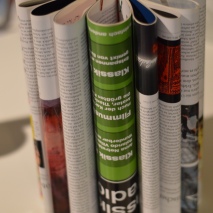
Firstly, take a magazine and open it to the 10th (or so) page. Roll it up to the left until the left edges of the pages touch the spine of the magazine.

DSC_0747
DSC_0746
DSC_0748

Roll up the next 10 pages (you don’t have to count, just estimate it 🙂 ) until their edges touch each other. Then fix it with a paper clip as close as possible to the back of the magazine.

How to make a table out of magazines

Repeat the second step until you’re at the second to last page. The last page shouldn’t be rolled up, yet.

DSC_0750
DSC_0751

Now you need the next magazine of the same size. Put the last page of the first magazine on top of the cover of the second one and roll them up as before, together with the first few pages of the magazines.

DSC_0752
DSC_0753

Repeat this until you think it is enough 🙂 (It depends on the thickness of the pages and how many pages your magazines have.) Don’t roll the last few pages, yet.


DSC_0755
DSC_0756

Now stand the whole thing up (hereby the paper clips are important, otherwise the pages might open again). Now you can roll in the last pages and fix them to the first pages of the first magazine using a paper clip.

DSC_0757
DSC_0762
DSC_0761

Next you stick the sticky tape around the whole thing on top and again on the bottom.

How to make a table out of magazines upcycling

Now you can remove the paper clips and make the second level as you did the first. It is important that the magazines of one level are of the same size, but all the levels don’t necessarily have to be even. However you prefer 🙂

Make as many levels as you want, depending on how high you want the table to be.

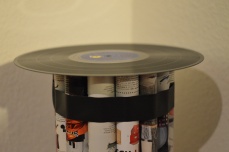
Now cut a piece of paper so that it matches the top of the table leg (in a circle) and stick one piece on top of each level. Glue the levels on top of each other and glue the record on top.

DSC_0735
DSC_0733
DSC_0736
DSC_0731

Done 🙂 I hope this was understandably phrased!

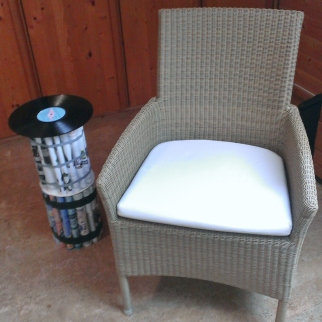
At our place the environmental-friendly table embellishes one corner of our living room together with my globe lamp 🙂
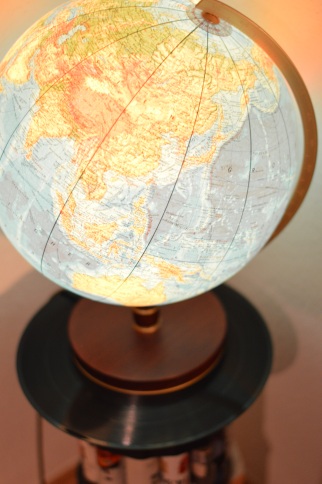
DSC_0738
DSC_0742
DSC_0744

At my brother’s there is also one of my tables 🙂

IMAG1422
IMAG1434

Diarrhea?~ Home Remedies

Make your own Gatorade

When diarrhea strikes, the first step is rehydrating. “Not a lot of people are aware that dehydration can also cause diarrhea,” says Nikola Djordjevic, MD, co-founder of MedAlertHelp.org. “On top of this, you lose a lot of fluids and electrolytes when you have loose bowels.” One of the best home remedies for diarrhea is to keep a water bottle with you and replace electrolytes with sports drinks like Gatorade. Dr. Djordjevic recommends making your own with six teaspoons of sugar, a half teaspoon of salt, and a liter of water.

Bind yourself with white rice

While you may not feel like eating, choosing something bland like white rice could bring relief. “White rice is an easy-to-digest food that won’t upset your stomach or intestines,” says Lisa Richards, a certified nutritionist, and creator of The Candida Diet. “It can help soothe your symptoms without causing any further irritation to your gut.” White rice is low in fiber, so it can slow down diarrhea and help bring your bowel movements back to normal consistency.

Avoid dairy and citrus

When you’re experiencing diarrhea, it’s not the time for a comforting bowl of ice cream. “Avoid all dairy products because enzymes for the digestion of dairy are usually flushed out or otherwise unavailable while experiencing diarrhea,” says Carolyn Dean, MD, ND. That means eating dairy can extend your misery; so can citrus and other acidic foods.

Reach for bananas

Bananas are easy on the stomach and help you to replace potassium. “It’s a very important mineral in our body because it helps regulate fluids, muscle tension, and nerve signals,” explains Dr. Djordjevic. When potassium levels become too low from a bout of diarrhea, you could start to experience muscle weakness and cramping.

Get your probiotics

Because diarrhea is usually caused by bad bacteria in our guts, replacing it with good bacteria is one of the fastest ways to get some relief. Research in Antibiotics found that taking probiotics for diarrhea, especially when caused by antibiotics, is safe and effective. Dr. Djordjevic recommends taking a probiotic supplement or finding a natural source like yogurt. Learn more about what probiotics can do for you here.

Add the BRAT diet

Bananas, rice, applesauce, and toast: While experts no longer recommend only following the BRAT diet when you have diarrhea—it doesn’t offer enough nutrition for kids to recover—they do like the fact that these foods are starchy and low in fiber, and they will help to bind your stool. They’re also gentle on your stomach and should help you feel better fast.

Try psyllium

Support your gut’s health by mixing up your own beverage made with the soluble fiber called psyllium. The main ingredient in Metamucil, it’s derived from the Indian herb Plantago ovata. “Take the powder or capsule form of psyllium to absorb the liquid contents from the intestines and bulk the stool,” recommends Dr. Dean. “Take one teaspoon shaken in a jar of water or two capsules twice a day with only a small amount of water.”

Try a new kind of hot chocolate

Another natural drink you can make at home might be a bit tastier than the others: Dr. Dean recommends stirring two teaspoons of carob powder into 6 ounces of water. The carob powder will have a subtle chocolate flavor and help to bind the stool and slow down diarrhea.

This Day In History~

MAY 22

A thousand pioneers head West as part of the Great Emigration

The first major wagon train to the northwest departs from Elm Grove, Missouri, on the Oregon Trail.

Although U.S. sovereignty over the Oregon Territory was not clearly established until 1846, American fur trappers and missionary groups had been living in the region for decades. Dozens of books and lectures proclaimed Oregon’s agricultural potential, tweaking the interest of American farmers. The first overland immigrants to Oregon, intending primarily to farm, came in 1841 when a small band of 70 pioneers left Independence, Missouri. They followed a route blazed by fur traders, which took them west along the Platte River through the Rocky Mountains via the easy South Pass in Wyoming and then northwest to the Columbia River. In the years to come, pioneers came to call the route the Oregon Trail.

In 1842, a slightly larger group of 100 pioneers made the 2,000-mile journey to Oregon. The next year, however, the number of emigrants skyrocketed to 1,000. The sudden increase was a product of severe depression in the Midwest combined with a flood of propaganda from fur traders, missionaries, and government officials extolling the virtues of the land. Farmers dissatisfied with their prospects in Ohio, Illinois, Kentucky, and Tennessee, hoped to find better lives in the supposed paradise of Oregon.

READ MORE: 9 Things You May Not Know About the Oregon Trail

On this day in 1843, some 1,000 men, women, and children climbed aboard their wagons and steered their horses west out of the small town of Elm Grove, Missouri. The train comprised more than 100 wagons with a herd of 5,000 oxen and cattle trailing behind. Dr. Elijah White, a Presbyterian missionary who had made the trip the year before, served as guide.

The first section of the Oregon Trail ran through the relatively flat country of the Great Plains. Obstacles were few, though the river crossings could be dangerous for wagons. The danger of Indian attacks was a small but genuine risk. To be on the safe side, the pioneers drew their wagons into a circle at night to create a makeshift stockade. If they feared Indians might raid their livestock—the Plains tribes valued the horses, though generally ignored the oxen—they would drive the animals into the enclosure.

Although many neophyte pioneers believed Indians were their greatest threat, they quickly learned that they were more likely to be injured or killed by a host of more mundane causes. Obstacles included accidental discharge of firearms, falling off mules or horses, drowning in river crossings, and disease. After entering the mountains, the trail also became much more difficult, with steep ascents and descents over rocky terrain. The pioneers risked injury from overturned and runaway wagons.

Yet, as with the 1,000-person party that made the journey in 1843, the vast majority of pioneers on the trail survived to reach their destination in the fertile, well-watered land of western Oregon. The migration of 1844 was smaller than that of the previous season, but in 1845 it jumped to nearly 3,000. Thereafter, migration on the Oregon Trail was an annual event, although the practice of traveling in giant convoys of wagons gave way to many smaller bands of one or two-dozen wagons. The trail was heavily traveled until 1884, when the Union Pacific constructed a railway along the route.

READ MORE: Manifest Destiny 

Citation Information

Article Title

A thousand pioneers head West as part of the Great Emigration

Author

History.com Editors

Website Name

HISTORY

URL

https://www.history.com/this-day-in-history/a-thousand-pioneers-head-west-on-the-oregon-trail

Access Date

May 22, 2020

Publisher

A&E Television Networks

Last Updated

May 20, 2020

Original Published Date

November 16, 2009BY HISTORY.COM EDITORS

What One Can See by MwsR

Amazingly, there it is

Right before my your eyes.

Something you actually just spied.

Like a connect the dots puzzle

You have made a picture

In your peripheral, you can see shapes,

You make out certain patterns

They join to make a picture, perhaps a face

Hard to convince someone else

Because what one sees is different from another

Yet time and time again while lying down

You will make out an elephant from out of the patterns

There, is a face of a man with a mustache

These curtains sure do lend to the imagination,

See the source image

The down right joy of it all.

Wow, what one can see!

Memorial Day Craft, DIY

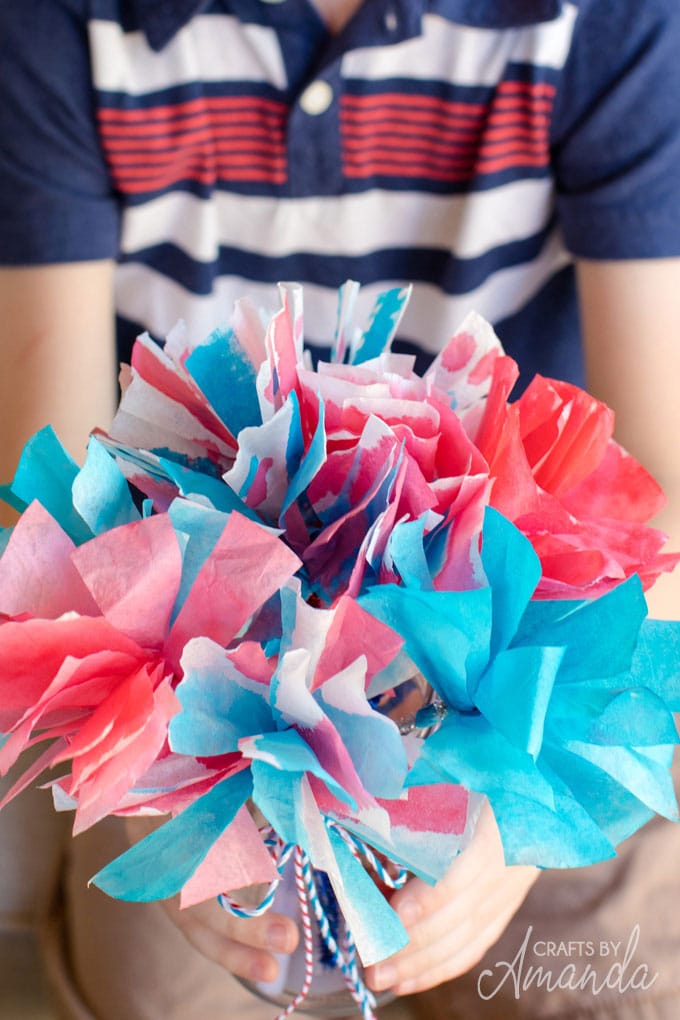
little boy holding a boquet of flowers made from watercolors and coffee filters
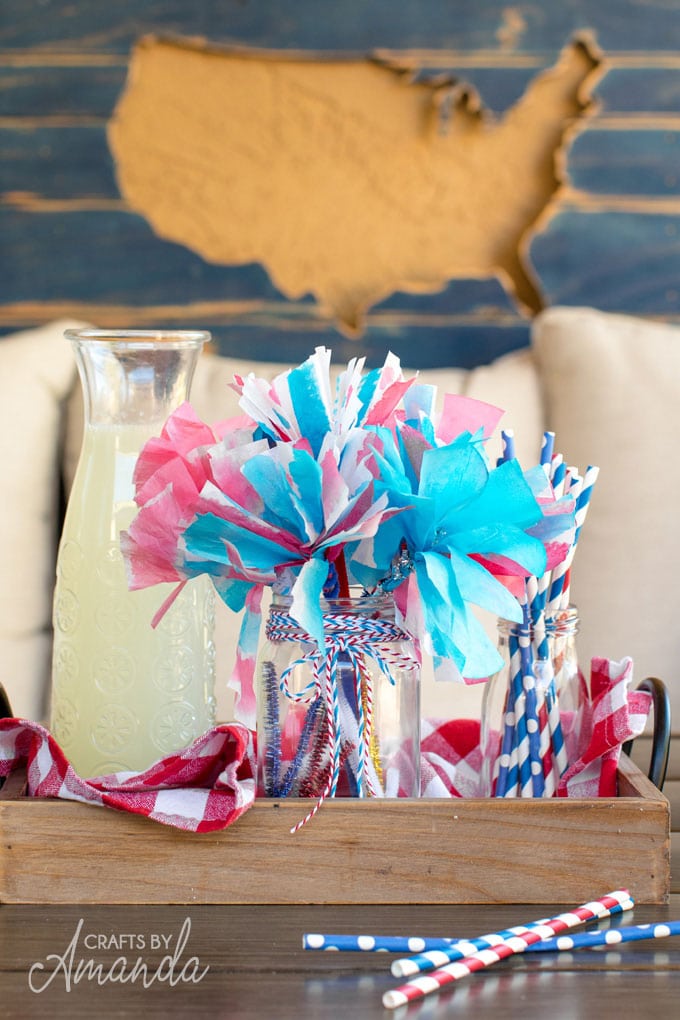
red white and blue paper flowers on table

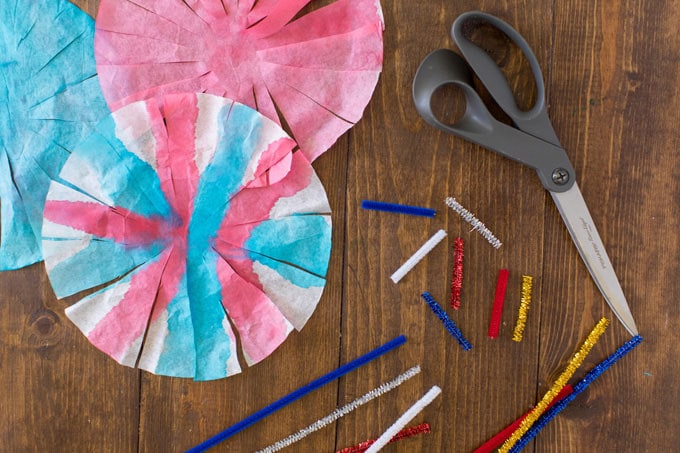
SUPPLIES YOU WILL NEED

supplies for coffee filter flowers

CRAFTING TIPS

  • Watercolor paint makes these super easy, but you could substitute food coloring if that’s what you have on hand.
  • You can use any color pipe cleaners you have on hand. We suggest patriotic colors like red, white, blue, silver, or gold.
  • have younger kids wear smocks or an oversized t-shirt, just in case!
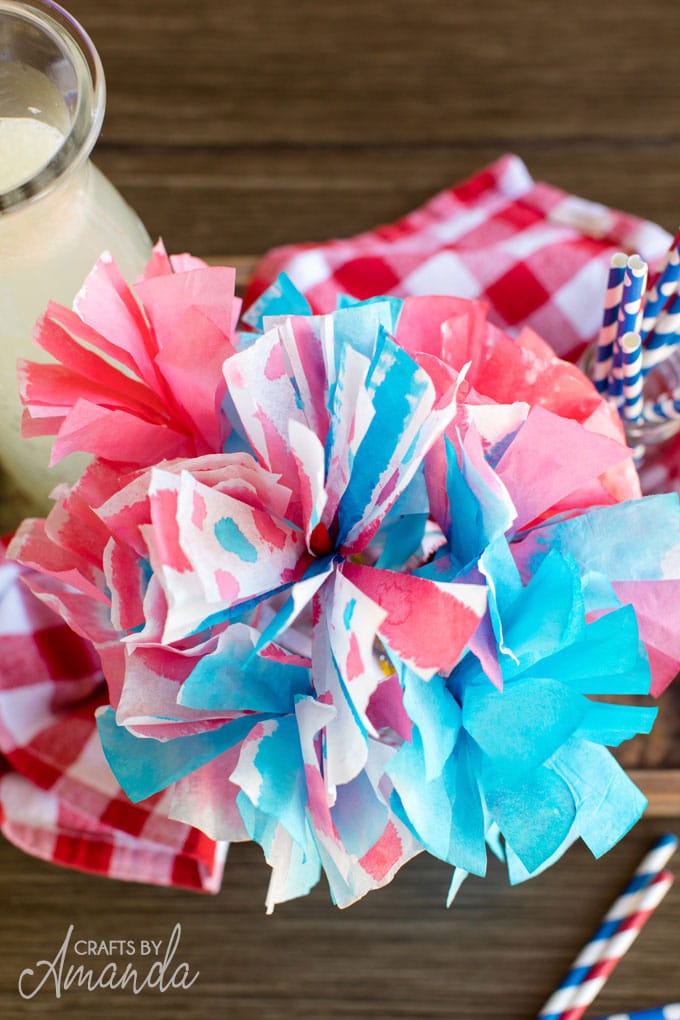
close up of coffee filter flowers

Report this ad

HOW TO MAKE COFFEE FILTER FLOWERS

  1. Place one of the coffee filters onto the paper plate and flatten out.
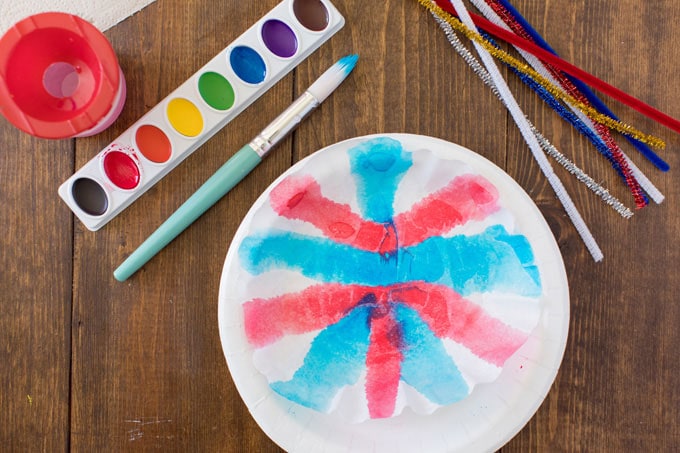
  2. Paint the coffee filter with water color paint. Paint some solid red, some solid blue and others a combination of blue and red, leaving some areas unpainted.
painted coffee filter on a paper plate

Report this ad

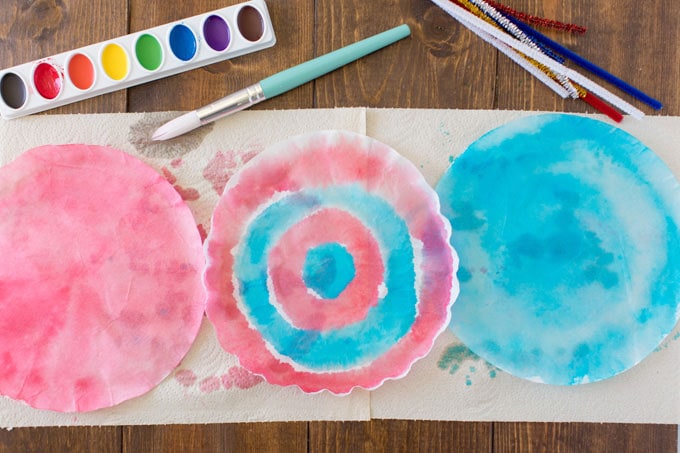
  1. Move the coffee filter to the towel and lay flat to dry. Repeat with the second coffee filter.
three painted coffee filters on paper towels
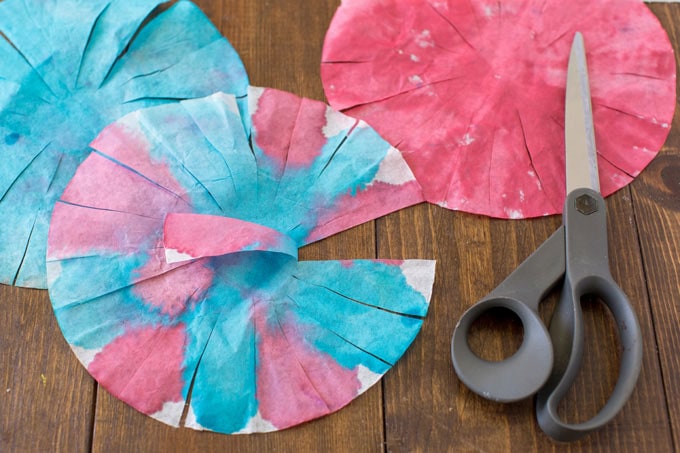
  1. Leaving the center of the filter in tact, cut the coffee filter in strips, working you way around the circle.
coffee filter that has been cut with scissors

Report this ad

  1. Cut a 1.5″ piece off of one end of a pipe cleaner and set aside.
  2. Take the longer piece of the pipe cleaner and poke it through the center of the coffee filter. There should be about 2″ of pipe cleaner poked through.
painted coffee filters and pipe cleaners on a table
  1. Turn the entire thing upside down and grasp the filter with your fingers.
pipe cleaner sticking out of coffee filter

Report this ad

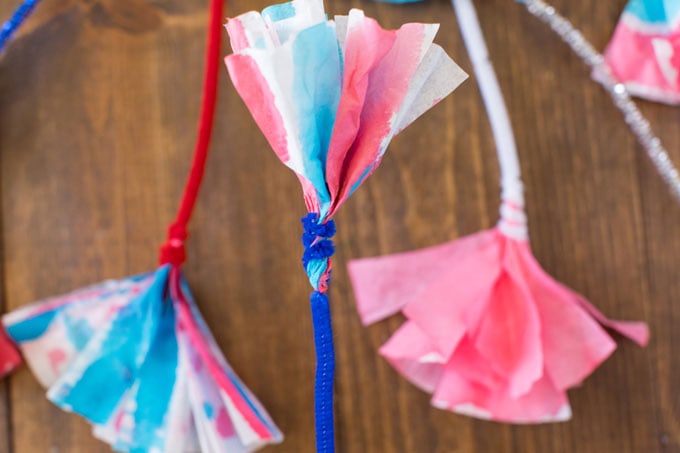
  1. Gather it around the pipe cleaner and secure it by wrapping the extra piece of stem that you cut off in an earlier step. Twist it around the part you are holding and turn the flower back upright.
pipe cleaner wrapped around coffee filter

Report this ad

  1. Manipulate with your finger until strips are spread out and it looks the way you want it to.

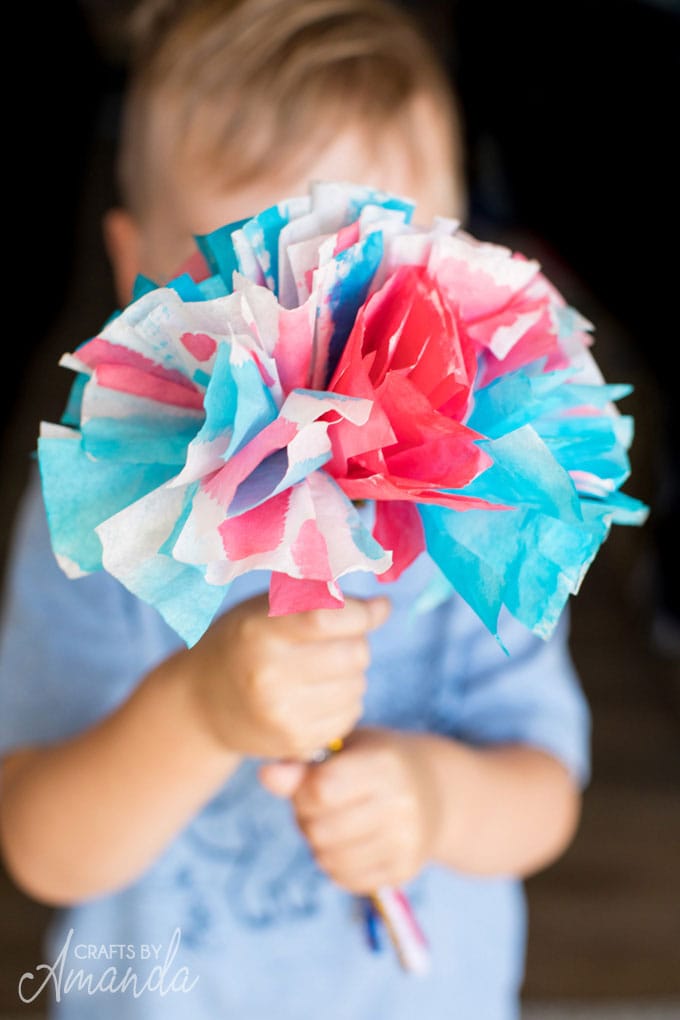
This fun 4th of July craft is great for kids of all age levels. Make some today!

boy holding bouquet of coffee filter flowers

Memorial Day Poem

Image result for memorial day poems printables

Memorial Day Quotes

Image result for memorial day quotes
Gratitude Memorial Day Quotes
Image result for memorial day quotes

Facts About Memorial Day

Image result for memorial day images

Memorial Day isn’t just an excuse to take a long weekend and loaf around eating grilled meats—although those are certainly among the reasons to love the holiday.

So before you head out to your barbecues and pool parties, here are some facts about Memorial Day, everybody’s favorite summer kick-off holiday.

It was originally called Decoration Day

To honor the deceased, soldiers would decorate graves of their fallen comrades with flowers, flags and wreaths. Hence Decoration Day. Although Memorial Day became its official title in the 1880s, the holiday wouldn’t legally become Memorial Day until 1967.

It wasn’t always celebrated the last Monday of May

After the Civil War, General John A. Logan, commander in chief of the Grand Army of the Republic, called for a holiday commemorating fallen soldiers to be observed every May 30. But due to the Uniform Monday Holiday Act, which took effect in 1971, Memorial Day was moved to the last Monday of May to ensure long weekends. Some groups, like the veterans’ organization American Legion, have been working to restore the original date to set Memorial Day apart and pay proper tribute to the servicemen and women who sacrificed their lives defending the nation.

This year, Memorial Day falls on Monday, May 28.

It’s legally required to observe a National Moment of Remembrance

In December 2000, Congress passed a law requiring Americans to pause at 3 p.m. local time on Memorial Day to remember and honor the fallen. But this doesn’t appear to be common knowledge, or if it is, by 3 p.m. most people seem to be too deep into a hot dog-induced food coma to officially observe the moment.

James A. Garfield delivered a rather lengthy speech at the first Memorial Day ceremony

Of course then it was still called Decoration Day, and at the time, Garfield was a Civil War General and Republican Congressman, not yet a President. On May 30, 1868, he addressed the several thousand people gathered at Arlington National Cemetery. “If silence is ever golden,” Garfield said, “it must be beside the graves of 15,000 men, whose lives were more significant than speech, and whose death was a poem the music of which can never be sung.”

Several states observe Confederate Memorial Day

In addition to the national holiday, nine states officially set aside a day to honor those who died fighting for the Confederacy in the Civil War: Texas, South Carolina, North Carolina, Alabama, Virginia, Louisiana, Mississippi, Tennessee and Georgia. The days vary, but only Virginia observes Confederate Memorial Day on the last Monday of May, in accordance with the federal observance of Memorial Day.

Waterloo, New York is considered the birthplace of Memorial Day

According to Waterloo’s website, in 1966 Congress unanimously passed a resolution to officially recognize Waterloo as the birthplace of Memorial Day. However, it remains a contentious debate, with other towns, like Boalsburg, Pa., claiming the title of “Birthplace of Memorial Day” as well.

More than 36 million people will travel at least 50 miles from home this Memorial Day

At least, according to AAA estimates. That’s the highest total since the recession.

Continue reading Facts About Memorial Day