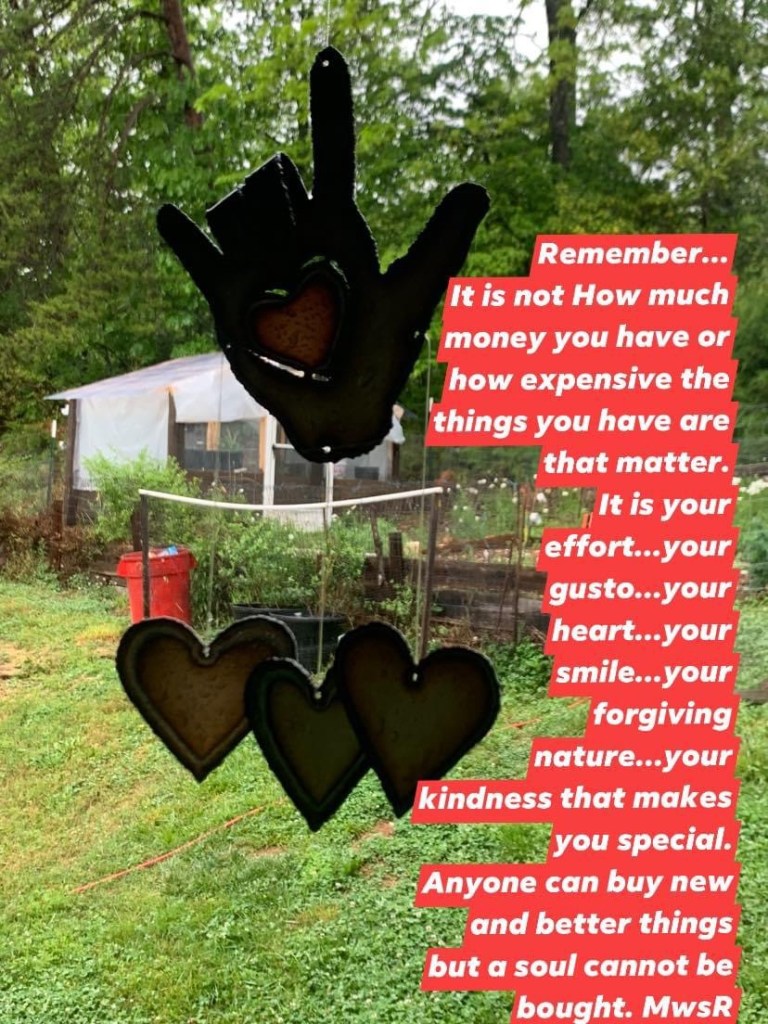
"If you are going to write, write from the heart." MwsR
"Life has not been the easiest, but it could have been worse!" MwsR
Life is about doing all you can to help others.
Don't go chasing rainbows, make your own pot of gold.
Love, Hope, Faith, the greatest of these is Love!
Heart disease is the number #1 killer of both men and women. While many get heart disease because of genetic factors, a poor diet and lack of exercise are the other driving causes. Even for those with a genetic disposition, a change in lifestyle can help reduce their odds. What’s the best diet if you’re worried about your heart?
In the 1990’s, researchers began seriously investigating hypertension (the official name for high blood pressure) and how to handle it through diet instead of medication. They knew becoming a vegetarian was the best solution, but most people aren’t willing to give up meat. Through studies, scientists learned that simply increasing one’s consumption of plants foods had a significant impact on heart health. They called the diet DASH, which stands for “dietary approaches to stop hypertension.”
The DASH diet has since become one of the most effective diets for improving your health. It was voted #2 on the U.S. News And World Report’s list of “Best Diets Overall,” and has a number of other benefits such as:
Easier weight loss
Stronger bones
Improved brain function
What are the rules? They aren’t too complicated. Every day, DASH dieters should eat:
6-8 servings of whole grains
No more than 6 servings of lean meat, fish, or poultry
4-5 servings of vegetables and fruit
2-3 servings of healthy fats and oil
2-3 servings of fat-free or reduced-fat dairy
No more than 2,300 milligrams of sodium
No more than 1 serving of alcohol
The DASH diet calls for less salt
Sweets are also monitored, so ideally, you aren’t eating more than 5 servings per week. You should also eat 4-5 servings of nuts, seeds, and legumes weekly. In order to follow these rules, you end up eliminating most packaged and processed foods, which will benefit your health a lot. For your diet to work as effectively as possible, take up an exercise you enjoy. Your blood pressure will thank you.
Do you often feel that your best is not good enough? I have and I am sure you have at one point in your life, it is practically inevitable. There is nothing wrong with you, for feeling this way. Often we are so bogged down with doing things that we think will be noticed for its quantity not necessarily it’s content. This is where we can mess up. Say for instance, oyu have mopped your house five times already this week and you are sure someone will notice. After all it has taken from your already busy day while mopping, and it leaves this wonderful fresh clean scent everywhere. Who wouldn’t notice and give you a compliment on being so proficient? Right?
Whether or not someone else notices that you have sincerely mopped and done it more than once, is not where you should place your value. Instead, try telling yourself that you did a super job and that you can do something on your very own, without praise. Instead of looking at things in a “best isn’t good enough” attitude, try saying this, “I feel good about what all I have accomplished on this day, in this week, or any other time I had.” Understand that you are totally good enough to get praised for something you have worked at, even if it is your own voice. Be it mopping or just doing anything, you should understand your own worth.
Soon, you will find you are doing things more because of instant gratification, rather than other’s gratitude.
First of all, this doesn’t apply to garden-variety t-shirts. Surely, you own at least one nice, collared shirt that has this mysterious loop in the middle of your back. We actually have the Navy to thank for the loops on our shirts. Believe it or not, there isn’t a lot of closet space while you’re out at sea, so sailors would have loops on their shirts so they could just hang them on hooks. College kids in the 1960s also utilized the loops, as they could hang up their shirts and keep them neat and wrinkle-free while at the gym. Today, manufacturers put them on shirts as a sign of class and quality. Also, you may have noticed that young ladies sometimes pull the hooks of boys they like, so there is still a practical reason to have these on our shirts.
When you see orange, gold, or reddish spots rupturing leaf surfaces, you’re dealing with rust. While it rarely kills plants, rust fungus makes leaves unsightly and weakens the plant by interfering with photosynthesis, the process a plant uses to make food. Each plant species that is susceptible to rust, hosts a particular rust species that may vary from other rust species in appearance.
Damage
Leaves are discolored or mottled yellow to brown. Powdery fungal clusters appear on the leaves. The powdery material can be scraped off. Leaves may become twisted and distorted and may dry and drop off. Twigs may also be infected.
Control
Many rust fungi are usually harmless to the plant and rarely require control measures. Where practical, remove and destroy leaves in fall. Several fungicides are available that can control rust fungi. Check with your local extension service for current recommendations.
Fire blight
Aptly named, fire blight gives trees and shrubs the appearance that portions of their branches have been scorched by fire. Blossoms and leaves of some twigs suddenly wilt and turn brown or black. Fire blight is caused by bacteria that are particularly active in warm, moist weather. Bees, rain, and infected pruning tools spread the disease.
Damage
Tips of infected branches may hang down. The bark at the base of the blighted twig takes on a water-soaked appearance, then looks dark, sunken, and dry. Fire blight attacks a few twigs at a time to create a flaglike effect of dead foliage on different areas of the plant.
Control
Prune out infected branches about
12 inches beyond any discoloration and destroy them. Disinfect pruning tools by dipping after each cut in a solution of 1 part chlorine bleach and 9 parts water. Avoid excess nitrogen fertilizer in spring and early summer. It forces succulent growth, which is more susceptible to fire blight infection.
Powdery mildew
Powdery mildew forms a white coating on leaf surfaces during dry, cloudy weather with high humidity. It is caused by any one of several fungi. Plants growing in shaded areas are often the most affected.
Damage
Leaves are covered with a thin layer or irregular patches of a powdery, grayish-white material. Leaves may become distorted. Infected leaves may turn yellow or red and drop. In late fall tiny black dots are scattered over the white patches like grains of pepper.
Control
When planting new trees and shrubs, choose resistant varieties. Some groups of highly susceptible plants, such as crape myrtles, crabapples, and lilacs, have cultivars selected for resistance to powdery mildew. Several fungicides are available that will control this mildew.
Gall
A symptom of a fungal or bacterial condition or infection by a number of insects, gall is an odd and sometimes unsightly growth on a part of a tree. It can very from 1/8-inch growths on leaves to massive swells on a tree’s trunk.
Damage
Swollen growth on leaves, shoots, or the trunks of trees.
Control
Because it can be hard to determine the cause of these symptoms—and because treatment would be different depending on the cause—it’s best to consult a tree care professional if you observe an outbreak of gall.
Witches’ broom
Characterized by odd-looking clusters of intense growth, shoots infected with witches’ broom grow out of lateral buds on branches in the vague pattern of a broom.
Damage
A prolific broom infection has the potential to pop up all over the tree, destroying it in some cases. Trees are susceptible to infection by witches’ broom at vulnerable points such as where pruning or injury has taken place.
Control
Prune and destroy brooms and injured branches. Spray the affected tree with locally recommended fungicides in fall or early spring.
Photo by William M. Ciesia, Forest Health Management International, Bugwood.org.
Canker
A localized dead area on a trunk or branch, cankers are caused by everything from mechanical damage inflected by a lawn mower to environmental stress in the form of frost cracks and sunscald to types of fungi and bacteria.
Damage
On young or smooth-barked trees, the surface of the canker is often discolored and tissue around the canker is enlarged. The size of a canker can range form a small lesion on a branch to a massive dead area on the plant’s trunk. Cankers on young trees can kill them. Cankers rarely kill established trees but they may cause serious growth deformities.
ControlMost canker-causing fungi infect stressed or injured trees. The best defense against canker is prevention. Keep trees healthy and prevent infection. In winter, wrap young, thin-barked trees, such as maples and apples, to prevent sunscald and frost cracks. In periods of drought, water trees thoroughly.
In the case of infectious cankers, remove branches six to 12 inches below the canker. Dead or dying branches should also be removed. Prune during dry weather to minimize the spread of the disease.
Leaf spot
Leaf spot is a fungi that causes red spots that rot holes in foliage. It spreads rapidly during cool, wet spring weather, when new foliage is developing. Ornamental cherry trees are especially vulnerable to leaf spot.
Damage
Infected leaves develop spots, then turn yellow or brown and drop off the tree.
Control
Shake infected leaves from the tree onto a disposable sheet or tarp and destroy. Prune the tree to encourage better air circulation and mulch well to prevent the fungi form splashing up from the ground.
Japanese beetle
Adult Japanese beetles feed on flowers and leaves of various trees and shrubs, such as linden, crabapple, birch, and rose. When the beetles find a food source, they release a scent that attracts more beetles. Females lay eggs in the soil, which hatch into grubs, a major lawn pest.
Damage
Japanese beetles eat leaf tissue between the veins, creating a skeletonized effect. They may also eat large holes in flower petals.
Control
Treat for grubs in your lawn and you’ll reduce the number of Japanese beetles (unless your neighbor doesn’t control grubs, in which case beetles will invade your garden). A fungus called milky spore controls grubs but may take a few years to build up an effective concentration. Adult beetle traps may lure more beetles than you already have in your garden. Plant trees and shrubs that beetles don’t like to feed on. Arborvitae, lilac, hemlock, holly, juniper, pine, red maple, red oak, rhododendron, and yew are a few plants that Japanese beetles rarely attack.
Emerald ash borer
A destructive metallic green beetle, emerald ash borers (EAB) invade and kill all types of ash trees, Fraxinus species. Green, white, Autumn Purple, and all others are susceptible. EAB kills trees in 2 to 4 years after initial infection. It has killed millions of trees in the Midwest and is slowly spreading across the country.
Damage
An EAB infected tree has a thin or dying crown and erratic growth along the trunk of the tree. It is often a popular site for woodpecker feeding as the bird is harvesting the beetles in the bark. Finally upon close inspection of the trunk you might see unique “D” shaped holes. This is where the beetle exited the tree.
Control
There are a host of preventive treatments available for trees within 15 to 20 miles of other infected trees. Treatment outside this risk zone is not prudent. Keep in mind that treatments must be done each year for the life of the tree and will not be effective against other injuries that may compromise the tree’s health.
Photo by Leah Bauer, USDA Forest Service Northern Research Station, Bugwood.org.
Bagworm
Bagworms eat leaves of many trees and shrubs. Larvae hatch in May or June and immediately begin feeding. Each larva constructs a bag that covers its entire body. Larvae pupate in the bags. When adult males emerge from pupal cases, they fly to find females and mate. After mating, the female lays eggs in the bag and it overwinters on a tree or shrub. Larvae emerge in spring to continue the cycle.
Damage
Leaves are chewed and branches or entire plants may be defoliated. Brown, 1- to 3-inch-long “bags” hang from the branches.
Control
Spray with Bacillus thuringiensis (Bt) between late May and mid-June to kill young worms. Handpick and destroy bags in winter to reduce the number of eggs and young the following year.
The next step
When you spot signs of pests on your trees, follow these four tips for safely gaining the upper hand in the battle.
1. Think before you treat. Pest damage is often cosmetic. A pest creates tattered foliage or spotted leaves for a short time, but then environmental conditions change and the pest is no longer present. The plant will cast off the damaged leaves and continue to thrive. A healthy ecosystem makes this possible.
2. Plant diverse species. Pests tend to prey on particular plant groups. Plant a mix of species, and pest damage that does occur will be confined to a few plants instead of spread through the entire landscape.
3. Choose plants that are well-suited to your site. Healthy, thriving plants will naturally overcome many pest attacks.
4. More is not always better in gardening. More water, more fertilizer, and more mulch can all lead to disease and pest problems.