Dead Butt Syndrome? Yes, It Is A Real Thing

What you need to know about “dead butt” syndrome

Due to Covid-19 stay-at-home orders, many people are spending more time at home, whether they’re working remotely or currently unemployed. Unfortunately, more time at home can lead to sedentary behaviors, such as sitting for long periods of time on the couch or your at-home office chair. Sitting can take a toll on the body, affecting everything from the neck to your legs.

“When we sit for long periods of time some very important elements of our core can become compromised,” says Sue Hitzmann, manual therapist and exercise physiologist and creator of the MELT Method and Melt Performance. Once you do finally stand up, the components of your core muscle group—your trunk—and key elements of your hip joints don’t move as smoothly, and your body compensates by putting stress on areas not designed to handle the demand.

Enter: Dead butt syndrome, clinically known as gluteus medius tendinopathy. The condition, caused by inflammation in the tendons in one of the smaller muscles that make up the buttocks, called the gluteus medius, can also occur in runners who don’t cross-train.

This pain can begin with little things like tension or aches in your neck and low back, or you’ll find yourself constantly shifting in your chair to find (in vain) a comfy position. Eventually, the symptoms are more noticeable and frequent. Your hips feel tight and your back will feel stiff. Your joints will snap, crackle, and pop when you move. But the symptoms aren’t just felt on the inside, they’re seen on the outside too, like a swayback posture for starters. (Find out the easy ways you can improve your posture.)

“The easiest and most obvious thing you can do during the workday is to get up more often,” says Hitzmann. If necessary set a timer to remind yourself to get up for a few minutes every hour. Then try these MELT Moves created by Hitzmann; you can do them three times a week for best results.

  • Slide 1 of 7: Due to Covid-19 stay-at-home orders, many people are spending more time at home, whether they're working remotely or currently unemployed. Unfortunately, more time at home can lead to sedentary behaviors, such as sitting for long periods of time on the couch or your at-home office chair. Sitting can take a toll on the body, affecting everything from the neck to your legs. "When we sit for long periods of time some very important elements of our core can become compromised," says Sue Hitzmann, manual therapist and exercise physiologist and creator of the MELT Method and Melt Performance. Once you do finally stand up, the components of your core muscle group—your trunk—and key elements of your hip joints don't move as smoothly, and your body compensates by putting stress on areas not designed to handle the demand. Enter: Dead butt syndrome, clinically known as gluteus medius tendinopathy. The condition, caused by inflammation in the tendons in one of the smaller muscles that make up the buttocks, called the gluteus medius, can also occur in runners who don't cross train. This pain can begin with little things like tension or aches in your neck and low back, or you'll find yourself constantly shifting in your chair to find (in vain) a comfy position. Eventually, the symptoms are more noticeable and frequent. Your hips feel tight and your back will feel stiff. Your joints will snap, crackle, and pop when you move. But the symptoms aren't just felt on the inside, they're seen on the outside too, like a swayback posture for starters. (Find out the easy ways you can improve your posture.) "The easiest and most obvious thing you can do during the workday is to get up more often," says Hitzmann. If necessary set a timer to remind yourself to get up for a few minutes every hour. Then try these MELT Moves created by Hitzmann; you can do them three times a week for best results.
Slide 3 of 7:  If you find a tender spot, what we call a "Barrier", simply roll up to the barrier rather than landing right on the tender spot. Create an indirect shear by clamming the leg open and closed at the hip joint (bring your left knee up toward the right and then let it fall back again). Or try a direct shear by straightening out your left leg and roll your body left to right; the roller stays still and you move your body slightly over the roller. Once you create the shear, roll onto the tender spot and let it compress. Wait on the spot, take two to three focused breaths right into the area you are compressing, and give the tissue a moment to adapt. Repeat on the other side. Here are more foam roller exercises that your body will thank you for doing.
Deep Hip Indirect Shear
If you find a tender spot, what we call a “Barrier”, simply roll up to the barrier rather than landing right on the tender spot. Create an indirect shear by clamming the leg open and closed at the hip joint (bring your left knee up toward the right and then let it fall back again). Or try a direct shear by straightening out your left leg and roll your body left to right; the roller stays still and you move your body slightly over the roller. Once you create the shear, roll onto the tender spot and let it compress. Wait on the spot, take two to three focused breaths right into the area you are compressing, and give the tissue a moment to adapt. Repeat on the other side. Here are more foam roller exercises that your body will thank you for doing.
Slide 2 of 7: First up, the deep hip glide and shear: Sit upright on a MELT Body Roller (or a similar roller you have at home). Place your left hand behind the roller and let your left leg fall to the side; keep your right leg bent with foot flat on the floor. GLIDE: Slowly move your body over the roller to prepare the tissue for the next technique called SHEAR.
Deep hip glide
First up, the deep hip glide and shear: Sit upright on a MELT Body Roller (or a similar roller you have at home). Place your left hand behind the roller and let your left leg fall to the side; keep your right leg bent with foot flat on the floor. GLIDE: Slowly move your body over the roller to prepare the tissue for the next technique called SHEAR.

Mini bridge

This move will help prevent your hamstrings and low back muscles from over-compensating: Place your feet hip width apart, knees bent with your hips on the top of the roller; keep your arms flat on the floor just out from your sides for balance. Push into your feet and try to ease the weight of your hips off the roller. Take care not to arch your back. Instead, think about your knees reaching over your toes. Hold this pose for five to ten seconds then slowly return your hips to the top of the roller. Repeat this slow controlled lift four times. Then repeat the pattern four more times without a pause. 

  • Slide 5 of 7: This move will help prevent your hamstrings and low back muscles from over-compensating: Place your feet hip width apart, knees bent with your hips on the top of the roller; keep your arms flat on the floor just out from your sides for balance. Push into your feet and try to ease the weight of your hips off the roller. Take care not to arch your back. Instead, think about your knees reaching over your toes. Hold this pose for five to ten seconds then slowly return your hips to the top of the roller. Repeat this slow controlled lift four times. Then repeat the pattern four more times without a pause. 
Slide 4 of 7: Lie on your back with the roller under your pelvis so that the majority of your glutes are on the opposite side of the roller from your trunk, and the top of your hips are on your side of the roller—not on the top. Keep your left foot planted firmly on the ground and push your left knee over your toes as you bring your right knee toward your chest; tuck your pelvis downward. This will lengthen the front side of the thigh and spine. Inhale and put a little pressure into the pose; grasp your right knee and gently pull toward your chest as you exhale and repeat the lengthening part by tucking your pelvis. Repeat on the other side.

Bent knee press

Lie on your back with the roller under your pelvis so that the majority of your glutes are on the opposite side of the roller from your trunk, and the top of your hips are on your side of the roller—not on the top. Keep your left foot planted firmly on the ground and push your left knee over your toes as you bring your right knee toward your chest; tuck your pelvis downward. This will lengthen the front side of the thigh and spine. Inhale and put a little pressure into the pose; grasp your right knee and gently pull toward your chest as you exhale and repeat the lengthening part by tucking your pelvis. Repeat on the other side.

Slide 6 of 7: This move reverses the traditional lunge to activate the lower part of your glutes and limit the amount of compensation your quadriceps and upper glutes are doing. (Worried about your glutes? Check out the butt exercises you can do at home.) Stand over the roller, right foot in front, left foot behind. Lower your left leg just below the knee onto the roller with your hips level. Push into your right foot and slowly hover your left shin over the roller—about two to three inches above. Hold this pose for five to ten seconds and slowly return your left shin to the roller and repeat the lift-and-pause four times. Next, repeat the movement four more times without the pause. Repeat on the other side.

The hover and lunge

This move reverses the traditional lunge to activate the lower part of your glutes and limit the amount of compensation your quadriceps and upper glutes are doing. (Worried about your glutes? Check out the butt exercises you can do at home.)

Stand over the roller, right foot in front, left foot behind. Lower your left leg just below the knee onto the roller with your hips level. Push into your right foot and slowly hover your left shin over the roller—about two to three inches above. Hold this pose for five to ten seconds and slowly return your left shin to the roller and repeat the lift-and-pause four times. Next, repeat the movement four more times without the pause. Repeat on the other side.

Slide 7 of 7: Lie on your left side with your knees bent and your head resting on the roller; stretch your arms out in front of you, left arm flat, right arm with hand placed flat on the r for balance. With your left foot on the r and your weight on your upper thigh (rather than your hip), roll your right hip forward so that your right knee is slightly in front of your left. Keep your heels together as you slowly lift your right knee up while keeping your pelvis and torso still; pause. Hold for 30 seconds, then return to the original position. Repeat four times, then switch sides.

Clams
Lie on your left side with your knees bent and your head resting on the roller; stretch your arms out in front of you, left arm flat, right arm with hand placed flat on the r for balance. With your left foot on the r and your weight on your upper thigh (rather than your hip), roll your right hip forward so that your right knee is slightly in front of your left.
Keep your heels together as you slowly lift your right knee up while keeping your pelvis and torso still; pause. Hold for 30 seconds, then return to the original position. Repeat four times, then switch sides.

Microsoft may earn an Affiliate Commission if you purchase something through recommended links in this article.
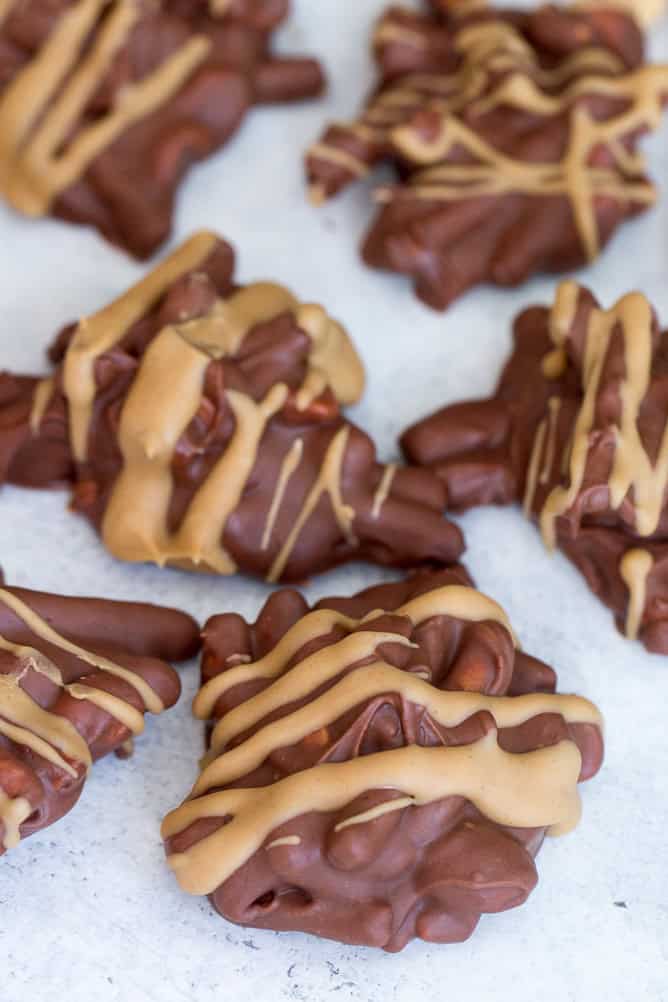

Clusters of Peanut Butter, Chocolate Chips and Pretzels

INGREDIENTS

  • 1 1/2 cup semi sweet chocolate chips
  • 1 cup peanut butter chips
  • 1/2 cup butter (cut into pieces)
  • 1/4 cup peanut butter
  • 2 cups pretzel sticks (roughly chopped)
  • 1 cup salted peanuts

INSTRUCTIONS

  1. In a large bowl, mix together chocolate chips, peanut butter chips, butter, and peanut butter. Microwave on high for 45 seconds, stir, and microwave again for 30 seconds. Stir until smooth (if it isn’t completely melted, return to the microwave for 20 second intervals, stirring after each time).
  2. Add pretzels and peanuts to the melted chocolate mixture and stir until they are completely coated in chocolate.
  3. Drop by tablespoonfuls onto wax paper and refrigerate for about 30 minutes or until firm.
  4. Optional: drizzle with melted peanut butter.
  5. If you don’t eat them all in one sitting, store leftovers in an airtight container.

Diabetic Information~Foods To Avoid

Foods to Avoid or Limithttp://www.betterfamilyhealth.org/treatment-of-diabetes.htmlSuitable Alternatives

High in Sugar
sugar, honey
spreads : jam, marmalade, syrups, nutellasweet drinks : cordial, soft drink, flavoured mineral water, tonic water, fruit juice drinks, ordinary flavoured milk, milkshakessweet wine/sherry, port, liqueurs, ordinary beerconfectionary : lollies, cough lollies, chocolate (ordinary/diabetic/carob), muesli/health bars
Use Stevia (0 calories) instead, tablet or liquid artificial sweetenerlow joule jam/marmalade, Promite, Vegemite, meat/fish pastelow joule cordial/soft drink, plain mineral/soda water, pure fruit juice (limit to 1 small glass a day), coffee, tea, herbal teas, Green tea is highly antioxidant
dry wine or spirit (1 to 2 drinks a day)
low joule pastilles
sweet biscuits (eg cream, chocolate, shortbread), cakes, donuts, iced buns, sweet pastries, crispbreads, Cruskits, wholemeal crackers, wheatmeal or coffee biscuits, scones, ‘no added sugar’ fruit loafRice crackers or biscuits
sweet desserts : ordinary jelly, fruit in sugar syrup, fruit pies, cheesecakes, puddings, ordinary flavoured yoghurt or ice-cream, ice-cream toppingslow joule jelly, fresh or tinned/stewed fruit without added sugar, plain or diet-lite ‘no added sugar’ yoghurt, plain ice-cream (1 scoop occasionally), low joule ice-cream topping
sweet cereals : some mueslis, Nutrigrain, Cocopops, Honey Smacks, Sugar Frosties, Weetbix, All-BranPorridge

High in Fat
mayonnaise, oily dressings, cream sauces, fatty gravies, sour creamlow joule dressings, vinegar, lemon juice, low joule Gravox, plain yoghurt, Olive Oil based dressings
fat on meat, chicken skin, fatty meats (sausages, bacon, salami)deep-fried foods, pies/pastriesVegetable oils are now considered unhealthy oils (including peanut oil)lean cuts of meat with skin and fat removedfoods cooked without fat, or with a minimal amount of coconut, olive, avacado, flaxseed or nut oils
snack foods : crisps, corn chipslarge amounts of margarine, oil, cream, peanut butter, drippingnuts, raw vegetables, fruit, plain popcornlimit to 3-6 teaspoons a day, preferably butter, moderate amounts of lard & ghee

Do you think you will find it difficult to commit to a healthier diet as a treatment of diabetes, here is a powerful and pragmatic suggestion in this Ted.com video from Graham Hill, founder of Treehugger.com – Be a weekday vegetarian.

Here is a list of the Best Antioxidants and Free Radical Scavengers that you should be taking as dietary supplements daily as recommended by Dr David Perlmutter, author of ‘Grain Brain’:

  • Tumeric
  • DHA Omega 3
  • B complex vitamins (including Vitamin B12)
  • Vitamin C & D
  • Bacopa
  • Brocolli
  • Alpha-Lipoic acid 300 (ALA)
  • Ashwagandha
  • Resveratrol
  • Milk Thistle
  • Green Tea
  • Probiotics
  • Coenzyme Q10 (coq10)

These nutritional supplements reduce oxidative stress on your brain and body, thus protecting your health.


Dr. Mercola Interviews Dr. David Perlmutter, Author of Grain Brain

Natural health expert and Mercola.com founder Dr. Joseph Mercola interviews Dr. David Perlmutter about the implications of diet to Alzheimer’s risk.

Here is a list of the Best Antioxidants and Free Radical Scavengers that you should be taking as dietary supplements daily as recommended by Dr David Perlmutter, author of ‘Grain Brain’:

  • Tumeric
  • DHA Omega 3
  • B complex vitamins (including Vitamin B12)
  • Vitamin C & D
  • Bacopa
  • Brocolli
  • Alpha-Lipoic acid 300 (ALA)
  • Ashwagandha
  • Resveratrol
  • Milk Thistle
  • Green Tea
  • Probiotics
  • Coenzyme Q10 (coq10)

These nutritional supplements reduce oxidative stress on your brain and body, thus protecting your health.

MwsR Writings~Human Nature

In a world where anyone can be almost anything they want, why do some humans choose to be cruel?

I have fought with an answer to this question. I remember when a friend of mine asked this very thing. She was certainly not looking for an answer, merely commenting on things that were being discussed, in our psychology class. We were discussing human nature and how sometimes that human nature, can be one of two things, a nurturer or one of a harmer. Now, this is not to say that all humans have the innate purpose of either nurture or harm, but these were the two aspects we had been discussing.

See the source image

I think that there are factors in each humans life that can and do impact which one of the two natures we will choose . Family life plays a big part in how some people learn to interact and co-exist with others. If you grew up in a family that was one of sharing and helping, then more than not you will be the nurturer kind of human. If your family was never really close and kept secrets from each other, and tended to go their own way, excluding others in the family, then you would probably not be a nurturer.

Another factor could be our experiences with love, loss, or being hurt. If when faced with any of these, we dealt with things in a manner conducing things like healing and moving past, we might tend to know more about nurturing, and would reflect that in our human nature. If when any of these have left us impaired, scared, or unable to move past things, we might tend to fall somewhere in the harmer human nature.

See the source image

A lot of things can impact a person’s ability to function or conduct their selves in a productive and useful way. For instance, if your mother or father never disciplined you, you may have never learned from any consequences of your actions. If you had been taught to take what you want, for example, you would inevitably still do that as an adult, as a human. That would mean you were of a harmer nature. After all, you would not be able to take everything you want without taking some from another, at some point.

As I suggested, lots of factors impact a human’s reactions, actions, and thoughts. Some that they may not be aware of. To answer that question would be to first examine another person’s life. Then you would need to find out their reason’s behind their actions, and finally, you would need to know them or talk with them more to know for sure.

Image result for be the change quote

Instead of trying to answer that question, maybe we should try to examine our own lives, first. Do we contribute to another human’s ability to harm another? Do we inadvertently turn a blind eye to things in this world that need to change? Our we doing the best we can to counteract the harmful ways people get treated?

Perhaps, we should be the difference we wish to see in others. Maybe just maybe our world can do better, starting one human at a time.

Image result for rainbow

I shall see you on this side of the rainbow~! MwsR

Take care and love one another!

See the source image
MwsR

Rain by MwsR

Image result for Rain


Falling over you,

Twisted by the memory of you

Bent towards the sight of you

Rain is coming down

Underneath it all I see

Behind the bruised, shocked me

Into another time, to meet

Rain is coming down

Side by side we are

Apart in thoughts and actions, we must be

Between what is good and wrong

At the point where you need strong

Rain is coming down

Spreading all around

Rain will fall again you’ll see

We will never be…

MwsR Writings

Have you ever felt really bad about something and wish it had never happened?😞
I think everyone has at one time or another.
Maybe it was a spontaneous thing or a premeditated thing.
That does not matter. Forgive yourself. Let it go.
Life is about living, making mistakes, learning, and loving.
Love yourself …flaws and all.

Poem

Smile,
By MwsR

She smiled, to keep up the pretense
Though she had herself, felt sad and intense.
She walked, not into a new day
Yet she ran into chaos, from every which way.
Her heart had let her down,
Still, her mind would not let her drown.
She cried, not really for letting others down
They were not the reasons she carried a frown.
She wished that she could just run away
Yet nothing made her demons stay at bay.
The dreams and wishes she once had
Now, they only make her sad.
She smiled to keep up the pretense
But what she needed was immense.

Goodbye By MwsR

Her views of the world are somewhat abnormal,

Like rain that fills the grave, of someone who lies cold.

Neither consequence or percept will determine her next move.

The path is determined by things long ago and old.

Her values are placed in the things and people who continually are there.

Like texts books in an abandoned high school, they can be still relevant.

Often reading the same chapter of her life each and every time, she searches for meaning

Never, is there a need for the final chapter, just the subsequent ones post haste.

Her laughter will definitely hide her million insecurities,

It is contagious and appears to be the real deal,

Often it will hide her heart, and the way she more than not, feels.

Wise to some degree, she has learnt who to share her dreams with.

With the slightest hesitations and reserve, she’ll share once more.

Her pain serves as a crown for her, each stone in it, is a lesson she must learn

Each adorning detail, is from all the tedious effort she gives, in just living.

With doubts and fears, she will live each day

Never fully resting, never really trusting, but always clinging to the good in others

The good that will justify her giving her trust, if it really is trust.

Her appearance can hide a multitude of worry.

You would not guess so much, just by looking at her.

It would appear that things are fine and dandy

Rich and blessed,

Like even her own heart takes a rest.

Her goodbye’s are never really goodbye’s

She will speak the words, but hold them in her mind.

That one little hope or that thing that she holds onto, will never tire

It will never let go.

Always, it will be there, in the creases of her thoughts,

On the pages that she writes,

In the songs that she sings.