Most adults don’t get enough exercise, but getting in shape has an abundance of mental and physical health benefits.
Walking can extend your life, prevent disease, and make you happier.
In some ways, walking is the perfect exercise, as it’s accessible, easy, and free.
By walking just 30 minutes a day, you can significantly transform your health.
There’s little that can transform your overall mental and physical health as much as exercise.
Working out regularly can extend your life, ward off heart disease and various cancers, rebuild the muscle and bone strength lost with age, and reduce levels of anxiety and depression.
Perhaps best of all, you can start to get all those benefits just by deciding to regularly go for a walk.
For many, getting started with fitness can be intimidating – weight training, interval sprints, and even certain bodyweight exercises might all seem a little too much if you aren’t familiar with where to begin. But people unsure about how they want to get started with fitness should take heart in a simple fact. Most research shows that doing just a little exercise is still vastly better than doing nothing.
Stepping outside and walking down the street – or through a park or along a trail – is enough to start transforming your health.
Recommended physical activity guidelines call for healthy adults to do a minimum of two and half hours of moderate-intensity activity – or 75 minutes of vigorous-intensity activity – plus at least two muscle-strengthening days a week.
Walking doesn’t get you all the way there, as it doesn’t include strength training. But even meeting the moderate activity guidelines with a regular walking habit can do a lot.
According to one large study of older adults published in the American Journal of Preventative Medicine that looked at 62,178 men and 77,077 women, people who walk at least 150 minutes per week were about 20% less likely to die than inactive adults during the 13-year study period.
“Walking has been described as the ‘perfect exercise’ because it is a simple action that is free, convenient, does not require any special equipment or training, and can be done at any age,” the authors wrote in their conclusion.
While life extension and disease reduction are important, those aren’t the only reasons to go for a walk. Smaller studies have shown that even a 30-minute walk on a treadmill is enough to lift the mood of someone suffering from a major depressive disorder.
A recent study from researchers at Harvard University and other institutions found that three hours of exercise a week, no matter the type of activity, could decrease the risks of depression. The risk decreased an additional 17% with each added 30 or so minutes of daily activity.
None of this is to say you shouldn’t eventually start incorporating strength training and other forms of exercise into your routine – there are reasons why those exercises are included in fitness guidelines. But if you just wanted to get started in a simple way, know that going for a walk can be more powerful than it seems.
MSG stands for monosodium glutamate. It is a flavor enhancer that is commonly added to Chinese food, canned vegetables, soups, and processed meats. It is part of a larger group of chemicals called glutamates. “MSG contains glutamic acid which is also naturally found in tomatoes, parmesan cheese, meat, walnuts, clams, sardines, mushrooms, and other foods,” says Emily Rubin, RD, the head dietitian for the celiac and fatty liver centers at Thomas Jefferson University in Philadelphia.00:4500:47 Clear Signs You’re Eating Too Much SaltUP NEXTThese Health Benefits of Avoc…4
What is MSG used for?
MSG is added to foods to enhance their savory or umami quality. Umami is a fifth flavor category, joining sweet, sour, salty, and bitter, according to the Academy of Nutrition and Dietetics. Always check out the ingredient list on the labels of prepared foods for MSG.
What does MSG taste like?
MSG has no texture or smell. It simply enhances a food’s natural flavor as opposed to adding a new one and tends to be most flavor intensifying when used in poultry, seafood, meats, and some vegetables.
What is MSG made of?
In a nutshell, MSG is produced by fermenting starch, sugar beets, sugar cane, or molasses. Fermentation is the process by which yeast or bacteria convert carbs into alcohol. This is the same process used to make yogurt and other healthful fermented foods.
Where did MSG come from?
A Japanese scientist first isolated MSG from seaweed soup in 1908 and noted its flavor-enhancing properties. He then filed a patent to produce MSG, which led to commercial production of the flavor enhancer; and decades later, the controversy started, the US Food and Drug Administration notes. In 1968 a brouhaha ignited when a biomedical researcher wrote to the editors of the New England Journal of Medicine citing a strange illness he developed after eating at Chinese restaurants—specifically those that cooked with MSG. His symptoms included numbness, weakness, and heart palpitations and became known as “Chinese Food syndrome.” Despite the lack of social media at the time, the letter went viral. Soon after its publication, everyone turned on MSG and a flurry of research on its health effects began.
There has been controversy as to whether some people develop symptoms such as headaches, muscle aches, and tingling after consumption of MSG, according to Rubin. “There has been no definitive evidence of a link between MSG and these symptoms,” she says. Despite this, some 50 years after the syndrome was first named, U.S. consumers still say they avoid MSG, according to the International Food Information Council, an industry-funded group.
The U.S. Food and Drug Administration says that MSG is “generally recognized as safe” (GRAS). The watchdog group requires that foods containing Added MSG list it on the ingredient panel as monosodium glutamate. If MSG is found naturally in some of the ingredients (hydrolyzed vegetable protein, autolyzed yeast, hydrolyzed yeast, yeast extract, soy extracts, and protein isolate), the manufacturer does not have to list MSG on the label. That said, these foods can’t say “No MSG” or “No added MSG” on their packaging. MSG also cannot be listed as generic spices and flavoring. Here’s a guide to decoding food labels.
Why do people think MSG is bad?
Some people may be sensitive to the additive and experience swelling in the throat and other symptoms when they consume a lot. Experts such as Michael Galitzer, MD, an integrative medicine specialist in Los Angeles and author of Outstanding Health: A Longevity Guide for Staying Young, Healthy, and Sexy for the Rest of Your Life believe the flavor enhancer is dangerous: “Its ingestion can cause inflammation of the small intestine, referred to as leaky gut, which will result in symptoms such as bloating, gas, diarrhea, and abdominal pain,” he says. These 7 signs suggest you may have a leaky gut.
How much MSG is safe?
Most research suggests you’d have to eat more than 3 grams of added MSG in a sitting to experience adverse effects—that’s according to a 2019 review of studies published in the journal Comprehensive Reviews in Food Science and Food Safety. The FDA explains that a typical serving of a food with added MSG contains less than 0.5 grams of MSG and that Americans consume about that much daily, on average. “MSG is generally found in processed foods. If your diet is filled with fresh, whole foods, your MSG intake is low,” says Rubin.
Is MSG gluten-free?
Yes, according to the National Celiac Foundation. There may be starches or sugars used in fermenting MSG, but wheat starch—which contains gluten—is not one of them. Even if wheat starch were used to make MSG, it is highly unlikely that the end-product would contain traces of gluten. They further clarify by stating that a person with celiac disease may react to the wheat in soy sauce, but not the MSG, for example.
Does MSG cause headaches?
MSG has been linked to headaches—including a debilitating migraine headache—but this link is far from conclusive. In fact, some research suggests MSG does not increase the risk of migraines. These findings were presented by the headache information site Curelator at the 2018 Annual Scientific Meeting of the American Headache Society. In January 2018, the International Headache Society struck MSG from a list of causative factors for headaches. Here are 13 foods that do make headaches worse.
Does MSG make you sleepy?
The FDA states that drowsiness that may occur in some people who are sensitive to MSG and consume 3 grams or more of the flavor enhancer. “MSG is controversial and the research has been inconsistent, but there are MSG-sensitive people and for them, it can trigger headaches, migraine, numbness, and extreme fatigue,” says Robin Foroutan, RDN, an integrative medicine dietitian at the Morrison Center in New York City and a spokesperson for the Academy of Nutrition and Dietetics. “I generally recommend that people with tendencies for headaches, migraine, and fatigue avoid it.”
Soy sauce is a common one, says Foroutan. “It’s best to read the ingredient list if you want to avoid it.” Here are some more types:
Chips and other snack foods
Seasoning blends
Canned soups
Frozen foods
Processed meats (jerky, deli meats, hot dogs, sausages)
Fast food and MSG:
At one time, it was easy to find MSG in fast-food restaurants, but more and more chains are eliminating the flavoring. Here’s the lowdown on some popular fast-food chains and whether they use MSG.
Does McDonald’s use MSG?
None of the items on McDonald’s core U.S. menu contain added MSG, but a handful of test and regional items in the United States do contain added MSG, a McDonald’s spokesperson confirmed.
Does Panda Express use MSG?
This popular Chinese restaurant does not add MSG to any of their dishes, but some ingredients may contain natural MSG, according to the corporate website.
Does Chick-fil-A use MSG?
MSG is present in some of Chick-fil-A’s menu choices, but they also offer a variety of options that do not contain added MSG, states Chick-fil-A, Inc.
Does Burger King use MSG?
The chain has dropped the flavoring from all its foods.
Does Subway use MSG?
The popular sandwich shop doesn’t add MSG to any of the items on the chain’s standard menu.
Consuming umami-rich broth may promote healthy eating behaviors and food choices, especially in women at risk of obesity, according to a study in Neuropsychopharmacology. Researchers evaluated changes in the brains of women after they consumed chicken broth with or without MSG. The broth with added MSG lit up areas of the brain connected to satisfaction and better eating control, the researchers discovered. What’s more, women who had the broth made better choices during their meal, favoring foods with less saturated fat.
“Our study suggests the possibility that people at high risk of obesity could benefit from an umami-rich broth before a meal to facilitate healthy eating and healthy food choice,” says Miguel Alonso-Alonso, MD, PhD, an Assistant Professor at the Center for the Study of Nutrition Medicine in Beth Israel Deaconess Medical Center in a news release.
“In Western and European cuisine, the flavor is built by adding fat,” says Carlene Thomas, RDN, a dietitian in the Washington DC- area and author of The Wedding Wellness Workbook: Your Nutrition How-To Before “I Do.” This includes butter, heavy cream, and cheese. “For those struggling with calorie consumption, using umami to season rather than fat could help with healthy weight management,” she says. (Here are 9 signs your overeating is actually an addiction.)
MSG can also be a major tool in helping to reduce your salt intake, Thomas adds. “The use of umami allows for less salt, specifically for MSG. That means, sodium levels can be reduced while maintaining or improving the taste of a product,” she explains. That can make a big difference in sodium intake, she says. (Check out these 7 signs you are eating too much salt.)
The post What Is MSG—and How Bad Is It, Really? appeared first on The Healthy.
Gardening encompasses a range of basic activities such as sowing, the planting of fruit, vegetables and flowers to more complex horticultural activities. We use the term ‘gardening’ to describe “an activity in which people grow, cultivate, and take care of plants (flowers and vegetables) for non-commercial use,” in domestic gardens, allotment and community gardens [3].
Engagement in gardening activities (either integrated in the school curriculum or community and home based) has shown to promote social relationships, family connection, emotional and mental wellbeing, moderate stress, reduce depression and anxiety, and improve cognitive and educational outcomes in children and adolescents [4-6]. Further personal well-being effects include increased enjoyment, sense of achievement, satisfaction and pride from nurturing the plants; feelings of mastery and empowerment for children who do not excel in the traditional academic setting; provide quiet time for reflection and increased confidence and self-esteem [6]. Participating in gardening activities appears to have a similar positive impact on adult wellbeing and mental health, with improvements in life satisfaction, vigour, psychological wellbeing, positive affect, quality of life [7-9] and reductions in stress, anger, fatigue, depression and anxiety symptoms reported [9-11]. Engagement in gardening has shown to have both immediate and long-term effects on mental health outcomes. Just gardening for several hours provides instantaneous reductions in depression and anxiety symptoms, while gardening daily is associated with reduced stress and increased life satisfaction [3].
Gardening is one of the most preferred methods of physical activity in older adults [12]. Recent research conducted at the University of Roehampton examined the effect of a gardening programme involving cultivating food on promoting bone health, mental health and reducing falls in older adults [13]. While the programme did not improve physical health, it did improve participant’s subjective wellbeing, and self-efficacy in achieving their goals. Other studies have further shown gardening to reduce stress, promote feelings of mastery, accomplishment and competence, higher levels of self-efficacy, self-esteem, and psychological wellbeing [14-15]. Moreover, the social and physical health benefits of community gardening has shown to delay dementia symptoms [16].
Given the compelling evidence for gardening and improved mental (and physical) health, Horticultural Therapy was developed as a cost-effective alternative treatment for those with psychological and psychiatric issues. Horticultural Therapy, which involves sowing and planting with therapeutic goals and objectives for improving or recovering health, is effective in treating patients with a number of mental health conditions, including clinical depression, schizophrenia, and substance abuse [17-18]. Unsurprisingly, such positive effects of the Horticultural Therapy appears to be stronger enduring in patients and therapy users than with the general population, with improvement of patients’ mental health persisting three months following therapy [3].
Why does gardening improve wellbeing and mental health?
There are a number of reasons for the positive effects of gardening on wellbeing and mental health. First, there is the strenuous physical exertion underpinning gardening activities. The benefits of physical activity and exercise for mental health are well known, with 30 minutes of daily exercise sufficient to improve and maintain wellbeing and mental health [19]. Planting, weeding, digging, raking, and mowing are considered physically intense and avid gardeners can easily exert the same amount of energy as running or going to the gym [20]. Gardening provides a more creative and enjoyable way to undertake physical exercise and meet the national exercise recommendations, which in return contribute to improving psychological health.
Gardening also allows individuals to interact with nature. In recent years, a growing number of studies led by researchers at Essex University, have demonstrated the benefits of ‘Green Exercise’ (GE; being physically active within a natural environment or greenspace), on wellbeing and mental health, with reductions in stress and depression, increases in self-esteem, mood and wellbeing reported in children and adolescents, adults, and vulnerable and disadvantaged populations [21]. Even small doses, such as five minutes of nature, is considered to improve self-esteem and mood [22]. Furthermore, GE can provide greater benefits than physical activity, exercise, or nature contact alone for wellbeing and mental health [21]. Gardening therefore offers an opportunity to not only interact with nature but also engaging in physical activity, therefore reaping all the health benefits of GE.
Community and therapeutic gardening projects offer a social context to the activity for social interaction, which can counteract feelings of loneliness and social isolation, especially for those with pre-existing learning difficulties and mental health [3]. It provides an opportunity to meet new people, make new friends, connect with people to develop a network or inner circle and draw support from like-minded people.
How to incorporate gardening into our lives during and beyond social isolation
There is clear evidence that gardening is an enjoyable and effective activity for improving physical activity as well as wellbeing and mental health across the lifespan. Whilst we are adapting to the many changes to work and home-life, the opportunities to incorporate gardening presents itself as an activity that individuals can do on their own or with loved ones. Gardening activities can include a range of activities, which suit all needs and skill levels in enjoyable and meaningful ways. For example, growing tropical houseplants from kitchen scraps such as avocado seeds and pineapple tops, or create a sensory herb garden such as basil, parsley, mint and chives on the windowsill using empty tin cans. Sprouting seeds is also an ideal way to produce some salad sprouts especially in tiny spaces, whilst teaching children about the journey of food from field to fork. Children’s learning can be bought outdoors in easy and educational activities. For example, using flowers for solving maths equations, examining soil, roots and shoots for biology lessons and the web of life.
Other activities that children, adults and older adults can incorporate into their lifestyle include sowing, growing, weeding and watering vegetables, fruits, plants, shrubs and flowers. Those that new to gardening can start small, growing in little pots or tin cans. Salad greens such as lettuce, rocket and chard are easy to grow in small spaces, and many baby leaf greens are ready to harvest in only 4-5 weeks. It is important to note that gardens can be everywhere, by the front door, steps, balcony, a rooftop or community gardens and allotments and all count towards maintaining wellbeing and mental health. Gardening offers a place where trial and error is welcome, so imagination can flow freely about what to grow. The work also never ends with gardening, the care and maintenance will keep gardeners active for at least 10 months of the year. Engagement in such activities will allow adults working from home to take regular breaks and reduce sedentary behaviour; children studying remotely or being home-schooled to reflect on their learning and reduce the stress associated with learning; families to interact with each other in a meaningful way and reduce feelings of helplessness and loneliness in older adults beyond the current climate.
Dr Vaithehy Shanmuganathan-Felton is a Senior Lecturer in Mental health and Wellbeing in Sport and Exercise at University of Roehampton.
Dr Luke Felton is a Senior Lecturer in Social Psychology of Human Performance at University of Roehampton.
Celia Briseid is the Growhampton Project Manager at University of Roehampton.
Betty Maitland is a Research Assistant at University of Roehampton.
When we meditate, we inject far-reaching and long-lasting benefits into our lives: We lower our stress levels, we get to know our pain, we connect better, we improve our focus, and we’re kinder to ourselves. Let us walk you through the basics in our new mindful guide on how to meditate.
This is a guidebook to the many different styles of meditation, the various benefits of each practice, plus free guided audio practices that help you learn how to meditate.
How do you learn to meditate? In mindfulness meditation, we’re learning how to pay attention to the breath as it goes in and out, and notice when the mind wanders from this task. This practice of returning to the breath builds the muscles of attention and mindfulness.
When we pay attention to our breath, we are learning how to return to, and remain in, the present moment—to anchor ourselves in the here and now on purpose, without judgement.
In mindfulness practice, we are learning how to return to, and remain in, the present moment—to anchor ourselves in the here and now on purpose, without judgement.
The idea behind mindfulness seems simple—the practice takes patience. Indeed, renowned meditation teacher Sharon Salzberg recounts that her first experience with meditation showed her how quickly the mind gets caught up in other tasks. “I thought, okay, what will it be, like, 800 breaths before my mind starts to wander? And to my absolute amazement, it was one breath, and I’d be gone,” says Salzberg.
SIGN UP FOR OUR NEWSLETTER
Get mindfulness meditation practices, research, and special offers from our Mindful community delivered to you.
While meditation isn’t a cure-all, it can certainly provide some much-needed space in your life. Sometimes, that’s all we need to make better choices for ourselves, our families, and our communities. And the most important tools you can bring with you to your meditation practice are a little patience, some kindness for yourself, and a comfortable place to sit.
A Basic Meditation for Beginners
The first thing to clarify: What we’re doing here is aiming for mindfulness, not some process that magically wipes your mind clear of the countless and endless thoughts that erupt and ping constantly in our brains. We’re just practicing bringing our attention to our breath, and then back to the breath when we notice our attention has wandered.
Get comfortableand prepare to sit still for a few minutes. After you stop reading this, you’re going to simply focus on your own natural inhaling and exhaling of breath.
Focus on your breath. Where do you feel your breath most? In your belly? In your nose? Try to keep your attention on your inhale and exhale.
Follow your breath for two minutes. Take a deep inhale, expanding your belly, and then exhale slowly, elongating the out-breath as your belly contracts.
Welcome back. What happened? How long was it before your mind wandered away from your breath? Did you notice how busy your mind was even without consciously directing it to think about anything in particular? Did you notice yourself getting caught up in thoughts before you came back to reading this? We often have little narratives running in our minds that we didn’t choose to put there, like: “Why DOES my boss want to meet with me tomorrow?” “I should have gone to the gym yesterday.” “I’ve got to pay some bills” or (the classic) “I don’t have time to sit still, I’ve got stuff to do.”
We “practice” mindfulness so we can learn how to recognize when our minds are doing their normal everyday acrobatics, and maybe take a pause from that for just a little while so we can choose what we’d like to focus on.
If you experienced these sorts of distractions (and we all do), you’ve made an important discovery: simply put, that’s the opposite of mindfulness. It’s when we live in our heads, on automatic pilot, letting our thoughts go here and there, exploring, say, the future or the past, and essentially, not being present in the moment. But that’s where most of us live most of the time—and pretty uncomfortably, if we’re being honest, right? But it doesn’t have to be that way.
We “practice” mindfulness so we can learn how to recognize when our minds are doing their normal everyday acrobatics, and maybe take a pause from that for just a little while so we can choose what we’d like to focus on. In a nutshell, meditation helps us have a much healthier relationship with ourselves (and, by extension, with others).
WHY LEARN TO MEDITATE?
When we meditate, we inject far-reaching and long-lasting benefits into our lives. And bonus: you don’t need any extra gear or an expensive membership.
Here are five reasons to meditate:
1: Understand your pain 2: Lower your stress 3: Connect better 4: Improve focus 5: Reduce brain chatter
How to Meditate
Meditation is simpler (and harder) than most people think. Read these steps, make sure you’re somewhere where you can relax into this process, set a timer, and give it a shot:
1) Take a seat
Find a place to sit that feels calm and quiet to you.
2) Set a time limit
If you’re just beginning, it can help to choose a short time, such as five or 10 minutes.
3) Notice your body
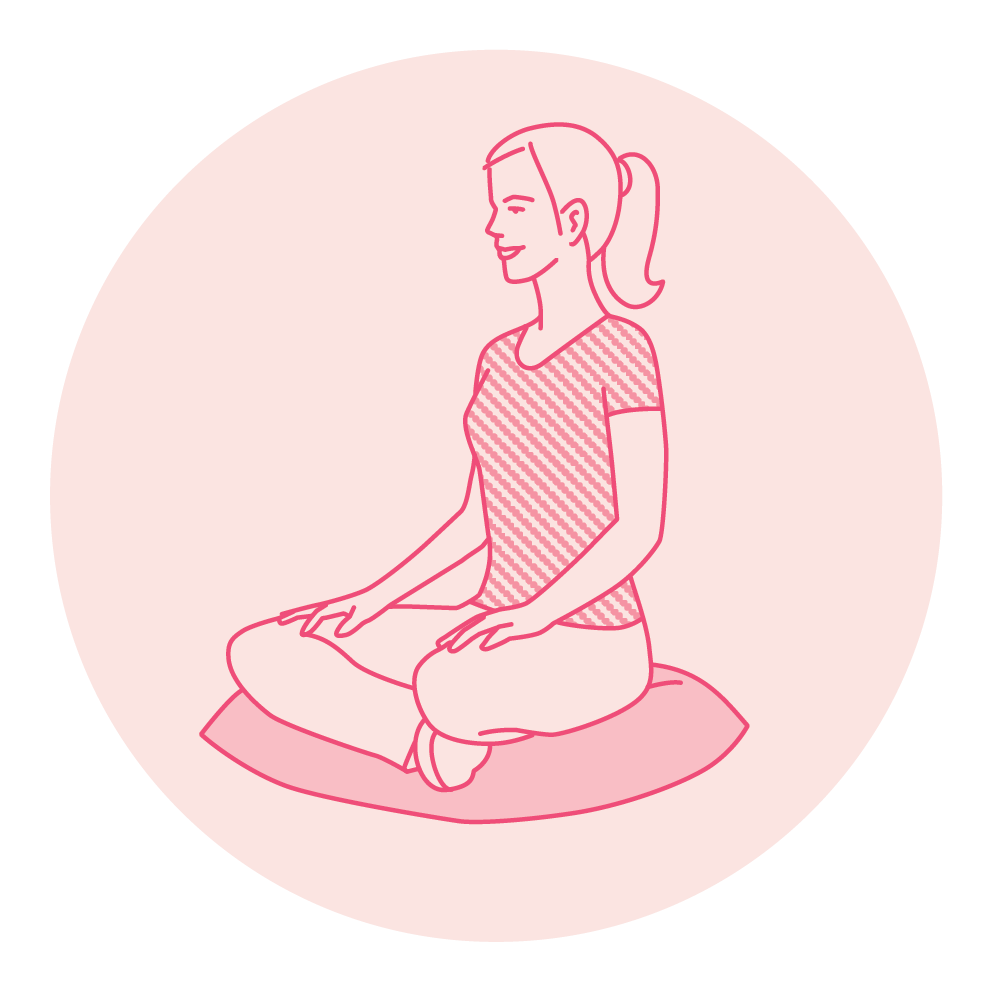
You can sit in a chair with your feet on the floor, you can sit loosely cross-legged, you can kneel—all are fine. Just make sure you are stable and in a position you can stay in for a while.
4) Feel your breath
Follow the sensation of your breath as it goes in and as it goes out.
5) Notice when your mind has wandered
Inevitably, your attention will leave the breath and wander to other places. When you get around to noticing that your mind has wandered—in a few seconds, a minute, five minutes—simply return your attention to the breath.
6) Be kind to your wandering mind
Don’t judge yourself or obsess over the content of the thoughts you find yourself lost in. Just come back.
7) Close with kindness
When you’re ready, gently lift your gaze (if your eyes are closed, open them). Take a moment and notice any sounds in the environment. Notice how your body feels right now. Notice your thoughts and emotions.
That’s it! That’s the practice. You go away, you come back, and you try to do it as kindly as possible.
Meditation 101: The Basics
Try this 3-part guided audio series from Barry Boyce:
How long would you like to meditate? Sometimes we only have time for a quick check-in, sometimes we can dip in a little longer. Meditating every day helps build awareness, fosters resilience, and lowers stress. Try to make meditation a habit by practicing with these short meditations from our Editor-in-Chief Barry Boyce. Find time to sit once a day for one month and see what you notice.
1-Minute Meditation
2:36
A short practice for settling the mind, intended for doing in the middle of the day, wherever you are out in the world.
10-Minute Meditation
10:28
A longer practice that explores meditation posture, breathing techniques, and working with thoughts and emotions as they surface during mindfulness practice.
15-Minute Meditation
15:54
A practice that explores sitting in formal meditation for longer periods of time.
SIGN UP FOR OUR NEWSLETTER
Get mindfulness meditation practices, research, and special offers from our Mindful community delivered to you.
Meditation Tips and Techniques:
We’ve gone over the basic breath meditation so far, but there are other mindfulness techniques that use different focal points than the breath to anchor our attention—external objects like a sound in the room, or something broader, such as noticing spontaneous things that come into your awareness during an aimless wandering practice. We’ve tapped mindfulness teacher Elisha Goldstein to craft our premium How to Meditate Course. If you’re interested in learning various meditation techniques to help you find focus, feel peace, and uncover your inner power, please explore our Mindful Online Learning School.
It’s estimated that 95% of our behavior runs on autopilot. That’s because neural networks underlie all of our habits, reducing our millions of sensory inputs per second into manageable shortcuts so we can function in this crazy world. These default brain signals are so efficient that they often cause us to relapse into old behaviors before we remember what we meant to do instead.
Mindfulness is the exact opposite of these default processes. It’s executive control rather than autopilot, and enables intentional actions, willpower, and decisions. But that takes practice. The more we activate the intentional brain, the stronger it gets. Every time we do something deliberate and new, we stimulate neuroplasticity, activating our grey matter, which is full of newly sprouted neurons that have not yet been groomed for “autopilot” brain.
But here’s the problem: While our intentional brain knows what is best for us, our autopilot brain causes us to shortcut our way through life. So how can we trigger ourselves to be mindful when we need it most? This is where the notion of “behavior design” comes in. It’s a way to put your intentional brain in the driver’s seat. There are two ways to do that—first, slowing down the autopilot brain by putting obstacles in its way, and second, removing obstacles in the path of the intentional brain, so it can gain control.
Shifting the balance to give your intentional brain more power takes some work, though. Here are some ways to get started.
Put meditation reminders around you. If you intend to do some yoga or to meditate, put your yoga mat or your meditation cushion in the middle of your floor so you can’t miss it as you walk by.
Refresh your reminders regularly. Say you decide to use sticky notes to remind yourself of a new intention. That might work for about a week, but then your autopilot brain and old habits take over again. Try writing new notes to yourself; add variety or make them funny. That way they’ll stick with you longer.
Create new patterns. You could try a series of “If this, then that” messages to create easy reminders to shift into the intentional brain. For instance, you might come up with, “If office door, then deep breath,” as a way to shift into mindfulness as you are about to start your workday. Or, “If phone rings, take a breath before answering.” Each intentional action to shift into mindfulness will strengthen your intentional brain.
More Styles of Mindfulness Meditation
Once you have explored a basic seated meditation practice, you might want to consider other forms of meditation including walking and lying down. Whereas the previous meditations used the breath as a focal point for practice, these meditations below focus on different parts of the body.
Introduction to the Body Scan Meditation
Try this: feel your feet on the ground right now. In your shoes or without, it doesn’t matter. Then track or scan over your whole body, bit by bit—slowly—all the way up to the crown of your head. The point of this practice is to check in with your whole body: Fingertips to shoulders, butt to big toe. Only rules are: No judging, no wondering, no worrying (all activities your mind may want to do); just check in with the physical feeling of being in your body. Aches and pains are fine. You don’t have to do anything about anything here. You’re just noticing.
Body Scan Meditation
25:41
A brief body awareness practice for tuning in to sensations, head-to-toe.
Begin to focus your attention on different parts of your body. You can spotlight one particular area or go through a sequence like this: toes, feet (sole, heel, top of foot), through the legs, pelvis, abdomen, lower back, upper back, chest shoulders, arms down to the fingers, shoulders, neck, different parts of the face, and head. For each part of the body, linger for a few moments and notice the different sensations as you focus.
The moment you notice that your mind has wandered, return your attention to the part of the body you last remember.
If you fall asleep during this body-scan practice, that’s okay. When you realize you’ve been nodding off, take a deep breath to help you reawaken and perhaps reposition your body (which will also help wake it up). When you’re ready, return your attention to the part of the body you last remember focusing on.
Introduction to the Walking Meditation
Fact: Most of us live pretty sedentary lives, leaving us to build extra-curricular physical activity into our days to counteract all that. Point is: Mindfulness doesn’t have to feel like another thing on your to-do list. It can be injected into some of the activities you’re already doing. Here’s how to integrate a mindful walking practice into your day.
Walking Meditation
8:58
A mindful movement practice for bringing awareness to what we feel with each step.
As you begin, walk at a natural pace. Place your hands wherever comfortable: on your belly, behind your back, or at your sides.
If you find it useful, you can count steps up to 10, and then start back at one again. If you’re in a small space, as you reach ten, pause, and with intention, choose a moment to turn around.
With each step, pay attention to the lifting and falling of your foot. Notice movement in your legs and the rest of your body. Notice any shifting of your body from side to side.
Whatever else captures your attention, come back to the sensation of walking. Your mind will wander, so without frustration, guide it back again as many times as you need.
Particularly outdoors, maintain a larger sense of the environment around you, taking it all in, staying safe and aware.
Introduction to Loving-Kindness Meditation
You cannot will yourself into particular feelings toward yourself or anyone else. Rather, you can practice reminding yourself that you deserve happiness and ease and that the same goes for your child, your family, your friends, your neighbors, and everyone else in the world.
A Loving-Kindness Meditation
17:49
Explore this practice to extend compassion to yourself, those around you, and the larger world.
This loving-kindness practice involves silently repeating phrases that offer good qualities to oneself and to others.
You can start by taking delight in your own goodness—calling to mind things you have done out of good-heartedness, and rejoicing in those memories to celebrate the potential for goodness we all share.
Silently recite phrases that reflect what we wish most deeply for ourselves in an enduring way. Traditional phrases are: • May I live in safety. • May I have mental happiness (peace, joy). • May I have physical happiness (health, freedom from pain). • May I live with ease.
Repeat the phrases with enough space and silence between so they fall into a rhythm that is pleasing to you. Direct your attention to one phrase at a time.
Each time you notice your attention has wandered, be kind to yourself and let go of the distraction. Come back to repeating the phrases without judging or disparaging yourself.
After some time, visualize yourself in the center of a circle composed of those who have been kind to you, or have inspired you because of their love. Perhaps you’ve met them, or read about them; perhaps they live now, or have existed historically or even mythically. That is the circle. As you visualize yourself in the center of it, experience yourself as the recipient of their love and attention. Keep gently repeating the phrases of loving-kindness for yourself.
To close the session, let go of the visualization, and simply keep repeating the phrases for a few more minutes. Each time you do so, you are transforming your old, hurtful relationship to yourself, and are moving forward, sustained by the force of kindness.
MORE GUIDED MEDITATION PRACTICES
The RAIN Meditation with Tara Brach
11:42
A practice for difficult emotions, RAIN is an acronym for Recognition of what is going on; Acceptance of the experience, just as it is; Interest in what is happening; and Nurture with loving presence.
A Mindfulness Practice to Foster Forgiveness
11:13
Explore this practice to let go of the tendency to add to our suffering during challenging situations.
1. Looking after plants gives us a sense of responsibility.
I remember when my mother gave me a little spot in our garden to tend. I must have been about five. I demarcated it with stones and planted forget-me-nots and ‘poached eggs’ flowers that still make me smile.
Source: Eric Rayner, used with permission
Having to care for plants is a good way to learn to look after and respect other living things and when we are small it helps develop an appreciation of the magic of nature.
2. Gardening allows us all to be nurturers.
It doesn’t matter if we are seven or seventy, male, female or transgender, gardening underlines that we are all nurturers. Horticulture is a great equalizer: plants don’t give a fig who is tending them and for those with mental health problems to be able to contribute to such a transformative activity can help boost self-esteem.
3. Gardening keeps us connected to other living things.
Gardening can act as a gentle reminder to us that we are not the centre of the universe. Self-absorption can contribute to depression, and focusing on the great outdoors – even in the pared-down form of a patio – can encourage us to be less insular.article continues after advertisement
As long ago as 2003, research concluded that for those in mental health units and prison, the social nature of group gardening is beneficial because it centers on collective skills and aspirations rather than individual symptoms and deficits. Yet to dig and delve in a walled or fenced garden also helps to keep vulnerable people within boundaries both literally and metaphorically, allowing them to feel safe at the same time as they expand their horizons.
4. Gardening helps us relax and let go.
For many, the peacefulness associated with gardening comes not from its social aspect however, but the opposite. It enables us to escape from other people. ‘Flowers are restful to look at. They have no emotions or conflict,’ said Freud. Tending to plants allows us to tap into the carefree part of ourselves with no deadlines, mortgages, or annoying colleagues to worry about.
Source: Sarah Rayner
Moreover, the rhythmic nature of many tasks associated with horticulture – weeding, trimming, sowing, sweeping – allows thoughts to ebb and flow along with our movements. I often take to watering the plants in my patio when trying to untangle the knots in plots or characterization that can arise when writing a novel, and all too often the solution comes to me far more easily there than if I sit staring and despairing at my screen. The competing thoughts inside my head somehow clear and settle, and ideas that are barely formed take shape.
5. Working in nature releases happy hormones.
To say that gardening encourages us to exercise and spend time outdoors might seem a statement of the obvious, but it’s worth reminding ourselves that what’s good for the body is also good for the mind. When I’m deeply immersed in writing it can be all too easy to forget this, but when we exercise levels of serotonin and dopamine (hormones that make us feel good) rise and the level of cortisol (a hormone associated with stress), is lowered. It’s true that a session in the garden can be tiring, but it can also get rid of excess energy so you sleep better and ultimately feel renewed inside.article continues after advertisement
Source: Sarah Rayner
6. Being amongst plants and flowers reminds us to live in the present moment.
As I explain in my little book on anxiety, ‘when we let go of ruminating on the past or worrying about the future and instead focus on the here and now, anxiety lessens’. So one of the best ways to calm the anxious mind and lift mood is to become more ‘present’. Next time you’re in a garden, pause for a few moments, and allow yourself to be aware of your senses.
Listen. Touch. Smell. See.
Just a short time experiencing the fullness of nature like this can be very restorative.
7. Gardening reminds us of the cycle of life, and thus come to terms with that most universal of anxieties: death.
Rituals can help us work through difficult emotions, including grief, and gardening is a form of ritual involving both the giving of life and acknowledgment of its end; it’s symbolic of regeneration. It’s no coincidence we create gardens of remembrance and mark the scattered ashes and graves of our loved ones with roses, shrubs, and trees; by doing so we’re acknowledging that from dust we all come and to dust we return.
8. Some aspects of gardening allow us to vent anger and aggression…
Clearly then, horticulture is not all sweetness and light: nature has its dark side too. In a similar vein, some of the therapeutic power of gardening is that it allows us to unleash our anger and aggression as well as providing an opportunity to nurture. Why beat pillows with a baseball bat or yell at the cat when you have a hedge to hack? I confess there are times when I enjoy cutting and chopping and yanking and binding as much, if not more, than sowing and feeding and watering, and the great thing about destructiveness in the garden is that it’s also connected to renewal and growth – if you don’t cut back the plants, your space will be swamped by them.article continues after advertisement
9. …whilst others allow us to feel in control.
In a similar vein, anxious people often feel overwhelmed, and gardening can be a good way of gaining a sense of control. Moreover, whereas trying to control other people is invariably a fruitless exercise, you’re more likely to succeed in controlling your beds and borders, which can make gardening a particularly satisfying experience.
10. Last but not least, gardening is easy.
When it comes to growing things, for all its power of healing, the world of plants can feel intimidating to an outsider. If you’re new to gardening you may well be anxious you won’t have ‘green fingers’ and here, as with all new ventures: starting small is key.
You don’t need garden the size of a meadow to enjoy horticulture; you don’t even need a patio the size of mine (above).
Source: Sarah Rayner
Just one hanging basket or few pots along a window ledge can lift the spirits whenever you look at them, and if you’re strapped for cash, why not recycle an old container like a colander or ice-cream carton?
I also recommend looking for packets that say ‘Ideal for Children’ – who cares if you left school years ago? Nasturtium are a good bet, as are sweet peas, or, if you can find a patch of earth which gets sunshine, try sowing sunflowers or poppies directly into the soil. It’s the perfect time of year to get planting and gardening is a lot more affordable than many other forms of therapy, so why not grow yourself better by making an appointment with Mother Nature today?
Turtles are reptiles of the order Testudines characterized by a special bony or cartilaginous shell developed from their ribs and acting as a shield. “Turtle” may refer to the order as a whole or to fresh-water and sea-dwelling testudines. The order Testudines includes both extant and extinct species. The earliest known members of this group date from the Middle Jurassic, making turtles one of the oldest reptile groups and a more ancient group than snakes or crocodilians. Of the 356 known species alive today, some are highly endangered.
Turtles are amazing, period.
Just to watch them move awkwardly and slow, popping up their cute wrinkled head out of their massive shells, and suddenly pulling it back in again. That in itself makes me smile every time I see it, and that is a fact.
However, here are a few more amazing turtle facts that will surely leave you wondering…
1) Turtles are Prehistoric.
The first turtle evolved even before the lizards and crocs, more than 200 million years ago. That’s old. Extremely old. Interesting facts to notice: Back then they couldn’t pull-back their heads, but they did have teeth.
2) Turtles Are Found All Over, Almost.
In a similar fashion to Snakes, also Turtles can be found all over the world, on each and every continent, except for the coldest and driest continent of all — Antarctica.
3) Turtles Have Great Senses.
Despite their old wrinkled looks, and being prehistoric, surprisingly turtles have excellent eyesight, a superb sense of smell, and they can even hear good!
4) The Turtle Shell is Not Bulletproof.
We tend to think that the powerful robust shell of the Turtle is some kind of bulletproof tank, and that as long as the turtle pulls his head back in – then he’s completely protected inside. That nothing can happen. Well, the facts tell us differently. The turtle shell has nerves and blood supply, and is actually made of up to 60 different bones that are connected together, so any injury to the shell structure—might make the turtle bleed and suffer from pain.
5) There Are Terrifying Turtles.
Are there really such things? It seems unthinkable, and most people I talk to have the one and only image in their minds, of the old funny-looking-Grandpa-like Turtle, slow, cautious and smiling. However, a Terrifying Turtle that is considered dangerous—does exist. It’s ‘The Alligator Snapping Turtle”, regarded as the heaviest freshwater turtle in the world, with a heavy head and a long thick shell, it resembles a dinosaur. This scary turtle lures fish using his tongue, right into his mouth, asit then devours them with tremendous speed and force. It will eat almost anything it can catch.
Alligator Snapping Turtle. Photo by Christopher Evans. CC license. CLICK TO ENLARGE!
Still, these turtles must be handled with extreme care and considered potentially dangerous.
6) Turtles Hardly Survive.
This is definitely one of the unfortunate turtle facts on our list. Taking into account their amazing track-record of survival over more than 200 million years, it’s quite surprising that only one out of 1,000 sea turtles survive after hatching. Most are eaten in their very early stages. However, if a baby male sea turtle does make it from the land, where it just hatched, to the sea, it will most probably never step on land again.
7) Turtle’s Life Depends on Temperature.
One of the interesting Sea Turtle facts is, that during incubation the turtle’s sex is determined by Temperature. If it’s above 29 degrees – then the baby will be a female turtle. If it’s below 29 degrees – then it will be a male. If the temperature rises above 33 degrees – then the turtle will not survive at all.
8) Turtles Are Immortal, Almost.
Some turtle species have the amazing ability to surpass a hundred years of age, easily. There is one Seychelles Giant Tortoise by the name of Jonathan, that lives on the Island of Saint Helena I in the South Atlantic Ocean. He was born in 1832 and is still alive. This makes him 182 years of age. Don’t believe me? Want the original facts? Read this BBC article about Jonathan the Tortoise.
9) Can Turtles Boost Fertility?
In ancient mythology, some cultures admired the turtle for its longevity, while others, like the Egyptians, regarded it as the enemy of the Sun God, and as the one who brings draught. The Tortoise on the other hand was portrayed as the one supporting the entire planet at its creation. Some ancient cultures believed the Tortoise had oracle powers and was associated with immortality, while others believed it was a symbol of fertility.
“if she is not able to bring a lamb, then she shall bring two turtles, or two young pigeons; the one for the burnt offering, and the other for a sin offering: and the priest shall make an atonement for her, and she shall be clean.”
“Yea, the stork in the heaven knoweth her appointed times; and the turtle and the crane and the swallow observe the time of their coming; but my people know not the judgment of the LORD.”
Quotes
“And the turtles, of course, all the turtles are free, as turtles and, maybe, all creatures should be.” —Dr. Seuss
“If a turtle doesn’t have a shell, is he homeless or naked?” —George Carlin
“Like an alligator, he can fully digest a turtle shell.” —Bill Brasky


 UP NEXTThese Health Benefits of Avoc…4
 © Ekaterina_Minaeva/ShutterstockIs MSG safe?
 © mark schlicht/ShutterstockWhat types of food tend to have added MSG?
 © homelesscuisine/Shutterstock