Bugs of the Summer~Information

https://davesgarden.com/guides/articles/lightning-bugs-june-bugs-and-sweet-tea
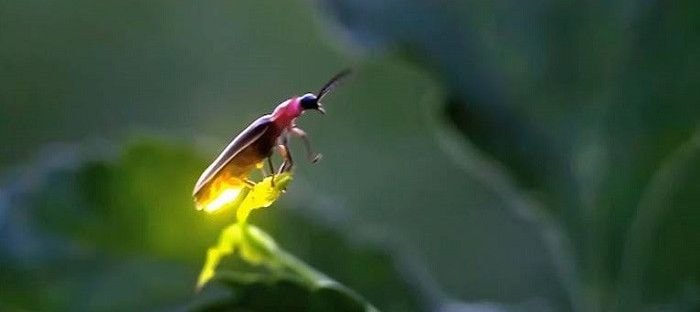
firefly lit up on a leaf

Lightning bug facts

These fascinating creatures are among several species of bio-luminescent insects that produce visible light. They store the chemicals and enzymes needed to produce the flashes in their bodies and mix it with oxygen to create the light. These flashes are unique to each species and the observer (and potential mates) can recognize which one they are seeing just by watching the flight pattern or counting the flashes. Females wait in the grass in one spot while flashing their ‘come hither’ lights directing the males to a rendezvous. Once mated, the females lay their eggs and die shortly after. Lightning bugs do not bite or sting and the light they emit has no heat. That’s why they are irresistible to kids. They fly slowly and are easy to catch in cupped hands. Some species of fireflies also have bio-luminescent eggs that flash when disturbed and the larvae (known as glow-worms) also emit light. Fireflies are pollen eaters and do not do any harm to flowers, grasses or trees.

Lightning bug lore

These unique little insects are special to many cultures around the world. They are believed to hold the souls of the departed in Japan. Another Asian legend was that fireflies were the souls of warriors that had fallen in battle. Native Americans believed that the fox tried to steal fire from the fireflies and set his tail on fire with some bark. He gives the hawk the flaming bark as he left the village, who scattered the embers as he flew away. That’s how the Apache people first received fire. The Victorians, who were experts at celebrating death and mourning believed that if a firefly came into a home that someone would die.
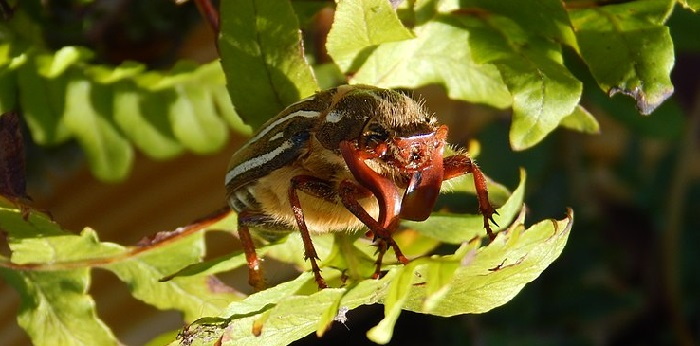
striped junebug

June bugs mean summer is here

June bugs did not have the same allure as the lightning bugs, however we still liked them because they meant that summer was officially here, and they also made good fishing bait. We saw two different beetles that we called June bugs here in western Kentucky. We saw striped ones and brown ones at night and the bigger, metallic green ones during the day. The night-time June bugs often arrived in May and while their numbers were the highest in early summer, they stayed around most of the season. The big, bumbling, clumsy beetles were attracted to the light over the garage door every evening and there were a couple of fat toads that lived under the porch steps that were well fed on June bugs. When they inevitably hit the garage door and fell to the ground, the toads were always waiting to slurp them up with their long, sticky tongues. There are over 100 species of scarab beetles that people call June bugs.

June bug lore

Many cultures with June bug lore believe that the presence of June bugs represent someone with a tough personality and not easily crushed by life’s troubles. On the opposite side of this, the term ‘crazy as a June bug in May’ describes someone who acts irrationally, probably because the June bugs seem irrational when they bumble around the lights at night.

June bug facts and how to deal with the larvae

It is unknown why certain insects are attracted to night-time lights. Most often it is the males, although in a few species both genders flock to the light. Often, they fly around the lights all night until they drop to the ground, exhausted. A popular theory is that they rely on a light source, such as the moon or the sun to navigate, however scientists really do not know why they have this behavior. June bugs flock to lights in such numbers that they often interfere with outdoor activities, bumbling and bumping into guests and family members on patios and in pools. June bugs to not bite or sting, however they do have prickly, stiff hairs on their legs that might pinch a bit if they land on you. The real problem with June bugs is the larval form. These grubs (which are also great fish bait) live in lawns and turf grass and cause damage by eating the roots. Damage appears as brown patches of dead grass and turf that is easily pulled with no roots attached. The grub population also attracts moles and armadillos and they can wreck a lawn with their tunnels and digging. A natural way to rid your lawn of these grubs is by broadcasting Hb nematodes across the lawn. The nematodes are tiny, microscopic worms that burrow into the grubs and kill them from the inside. If you go this route, then do not use the poisons that are available on the market, as they will kill the nematodes you’ve just bought too.

Summer in the South means bugs and humidity and you can either choose to embrace it or move. I grew up in a time where summer evenings were for sitting on the porch with a glass of sweet tea and your neighbors, or kids playing hide-and-seek or catching lightning bugs. Even now, the sight of fireflies blinking as I drive down the highway brings back fond memories and I head home to sit in my porch swing with a tall glass of sweet tea and enjoy the show in my front yard.


Weird Things To Do~

1.Don’t brush your teeth immediately after eating

It’s better not to brush your teeth immediately after meals and drinks, especially if they contained a lot of acid. Examples are citrus fruits, tomatoes, and fizzy drinks. The abrasive action of brushing can cause the acid to attack the tooth enamel and the layer underneath. It is best to wait at least half an hour before brushing. 

2. Build muscle to fit into a smaller size

https://www.health24.com/Lifestyle/Healthy-habits/7-weird-health-tips-that-are-actually-true-20180116

A kilogram of muscle weighs the same as a kilo of fat, but muscle is more compact and takes up less space than fat. This explains why a muscular person who weighs the same as a chubbier one will likely fit into a smaller pair of jeans.

3. Eat more calories to lose weight

Carbohydrates on their own may do nothing but spike your blood sugar, leaving you even hungrier than before. Adding proteins and fats like peanut butter and cheese will increase the calorie count of your meal, but will help you get full more quickly and stay satisfied for longer, which will lead to ingesting fewer calories in the long run.

4. Drink a hot beverage to help you cool off

In India it is the norm to drink hot tea in hot weather. It sounds crazy, but according to a study, a hot drink on a hot day will cool you off faster than a cold drink. When you drink a hot beverage, your body produces more sweat which, when it evaporates, cools you off.

5. Exercise to increase your energy levels

After a long day at work, exercise is probably the last thing you want to do, but getting moving can actually energise you. Through exercise, we recharge tired cells by giving them more oxygen. Physical activity that builds muscle strength also improves the efficiency of the mitochondria that produce the energy in the cells.

6. ‘Freeze’ cardiac patients to save their life

Cooling a cardiac arrest patient’s core temperature to below 32.2 degrees Celsius – a process called “induced hypothermia”, either by injecting them with a cold saline solution or placing ice packs on them increases their chances of complete recovery.

Hypothermia – when your core body temperature drops so low that normal metabolism and bodily functions cease – can lead to death, but can also radically slow down the dying process.

7. Close the lid when you flush the toilet

You should always flush the toilet with the seat down. If you don’t, water particles from the toilet will float around your bathroom and finally land on surfaces like your toothbrush. 

Experts say flushing creates an invisible cloud, called “toilet plume”, that’s expelled into the air by the force of the flush.

The toilet plume may contain faecal bacteria and other microorganisms like viruses. 

by Eugene Lotter


Upcycled Idea~Chair

Vintage Suitcase Into Chair

(link)

Mediterranean Plate

meal sample 2

Key Holder~Upcycled Idea

Metal Door Plate Key Holder Old Metal Door Knob Plate & Skeleton Key…re-purposed into a funky wall key holder.

key holder

Fascinating Creature~

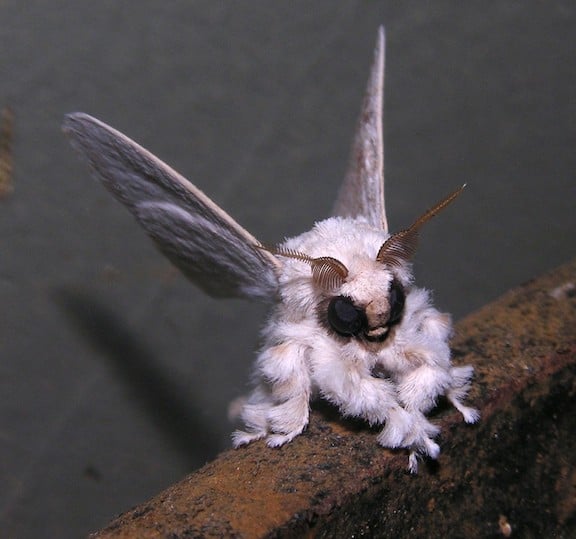
Weird Insects Around The World, Venezuelan Poodle Moth

Venezuelan Poodle Moth 

Discovered in Venezuela’s Gran Sabana region by Kyrgyzstan’s Dr. Arthur Anker in 2009, this unusual insect looks like a cross between a poodle and an angora sweater.

Ankara’s odd (some might say adorable) discovery went relatively unnoticed for several years, until someone posted his photo of the fuzzy white moth with bulging black eyes and bizarre antennae online.

It quickly went viral, but the moth (which experts believe belongs to the Artace genus) has yet to be confirmed as a new species.


    Tomatoes~Poisonous to Dogs?

    Are Tomatoes Poisonous for Dogs?

    Those of us with furry, barking friends may wonder whether tomatoes are safe to share. There’s a lot of confusing information out there on the topic, so here’s what you should know about each part—the ripe fruit, stems and leaves, as well as the flowering plant.

    Can My Dog Eat Tomatoes?

    Dogs can absolutely have the tomato fruit. If you want to give a tomato to a dog, small amounts won’t hurt them a bit. Many dogs love them for the same reason people do; they’re tasty!

    While they are nontoxic, don’t feed too much tomato to your dog because it can cause stomach upset. Tomatoes are notoriously acidic, which could definitely cause problems in a dog with a sensitive stomach.

    Be sure you start with small amounts to see how your dog reacts, just like you would when introducing any new food.

    Cooked Tomatoes and Tomato Pomace

    Cooked tomatoes are safe for dogs, just like ripe ones, and tomato pomace is a common ingredient in many dog foods.

    Tomato pomace is made from the ripe fruit and incorporates skin, pulp and seeds. It’s a frequent byproduct of human food production.

    Why Do People Think Tomatoes Are Poisonous to Dogs?

    The tomato is a member of the nightshade family of plants. Since some other members of this family are known to be very toxic, it raises doubt as to whether the more commonly consumed plants are truly healthy for dogs.

    Toxic Tomatine in Tomato Plants

    There is a potentially toxic substance found in tomatoes—called tomatine—that can be very harmful when consumed in large quantities.

    However, ripe tomatoes contain such a small amount that, even if your furry friend consumes far more than you ever intended, it’s not really a concern as far as toxicity goes.

    Unripe tomatoes contain slightly more tomatine, but the difference is probably not significant.

    Tomatine is found in greatest concentration in the tomato plant itself—more so in the flowers and small stems, but also in the leaves and the stalk.

    Even so, the flowers, stems and leaves don’t actually present much of a threat to dogs. The likelihood of a dog consuming enough of the plant to cause serious harm is very slim.

    Mild gastrointestinal upset is the most likely outcome when dogs eat tomato greenery. Large, grazing animals are the main concern when it comes to toxicity from tomato plants due to the volume of plant material they consume.

    That said, if you think that your dog has eaten a large amount of tomato plant, call your veterinarian for advice.

    Do Tomatoes Have Health Benefits for Dogs?

    Since we know tomatoes are not poisonous to dogs, it’s natural to wonder whether they offer any health benefits. Tomatoes can absolutely be good for dogs, which is why so many pet food manufacturers use them in their formulas.

    Tomatoes have lots of soluble and insoluble fiber. The pomace form has more fiber than whole tomatoes since the liquid is removed from the pomace, leaving behind only the fibrous parts of the fruit.

    Fiber helps to support healthy digestion and maintain your dog’s steady blood sugar levels.

    Tomatoes also contain antioxidants and several important vitamins and minerals, like potassium, vitamin C and vitamin K. The amount of these nutrients in the tomato or tomato pomace will depend heavily on the quality of the fruit.

    By: Jennifer Coates, DVM

    Featured Image: iStock.com/jbosley58


      DIY~ Outdoor Smoker

      Illustration for article titled Top 10 Outdoor DIY Projects You Can Do in Under an Hour
      http://lifehacker.com/make-a-diy-flower-pot-smoker-5576506

      Follow link above to find out how.