If reducing your mental load was one of your resolutions, there are several ways to do it. We’ve compiled 30 methods for relieving your overburdened brain, entangled thoughts, and cognitive commotion.
Schizophrenia is a severe psychiatric disorder characterized by hallucinations and psychotic episodes. It can be a terrifying disease for the people who have it, as well as their loved ones. The Mayo Clinic notes that people with the disorder “interpret reality abnormally,” and that the disordered thinking and erratic or bizarre behavior patients exhibit can greatly interfere with normal activities of daily living.
People who garden every day have wellbeing scores 6.6 per cent higher and stress levels 4.2 per cent lower than those who do not garden at all, the research from the Royal Horticultural Society found.
Mental health refers to cognitive, behavioral, and emotional well-being. It is all about how people think, feel, and behave. People sometimes use the term “mental health” to mean the absence of a mental disorder
Binge eating is when a person eats a much larger amount of food in a shorter period of time than he or she normally would. During binge eating, the person also feels a loss of control.
Considerations
A binge eater often:
Eats 5,000–15,000 calories in one sitting
Often snacks, in addition to eating three meals a day
Overeats throughout the day
Binge eating by itself usually leads to becoming overweight.
Binge eating may occur on its own or with another eating disorder, such as bulimia. People with bulimia typically eat large amounts of high-calorie foods, usually in secret. After this binge eating, they often force themselves to vomit or take laxatives. For more information, see: Bulimia
Causes
The cause of binge eating is unknown. However, binge eating often begins during or after strict dieting.Last Updated: 08/22/2017
Most people with binge-eating disorder are overweight or obese, but you may be at a normal weight. Behavioral and emotional signs and symptoms of binge-eating disorder include:
Eating unusually large amounts of food in a specific amount of time, such as over a two-hour period
Feeling that your eating behavior is out of control
Eating even when you’re full or not hungry
Eating rapidly during binge episodes
Eating until you’re uncomfortably full
Frequently eating alone or in secret
Feeling depressed, disgusted, ashamed, guilty or upset about your eating
Frequently dieting, possibly without weight loss
Unlike a person with bulimia, after a binge, you don’t regularly compensate for extra calories eaten by vomiting, using laxatives or exercising excessively. You may try to diet or eat normal meals. But restricting your diet may simply lead to more binge eating.
The severity of binge-eating disorder is determined by how often episodes of bingeing occur during a week.
When to see a doctor
If you have any symptoms of binge-eating disorder, seek medical help as soon as possible. Binge-eating problems can vary in their course from short-lived to recurrent or they may persist for years if left untreated.
Talk to your medical care provider or a mental health professional about your binge-eating symptoms and feelings. If you’re reluctant to seek treatment, talk to someone you trust about what you’re going through. A friend, loved one, teacher or faith leader can help you take the first steps to successful treatment of binge-eating disorder.
Helping a loved one who has symptoms
A person with binge-eating disorder may become an expert at hiding behavior, making it hard for others to detect the problem. If you have a loved one you think may have symptoms of binge-eating disorder, have an open and honest discussion about your concerns.
Provide encouragement and support. Offer to help your loved one find a qualified medical care provider or mental health professional and make an appointment.
Causes
The causes of binge-eating disorder are unknown. But genetics, biological factors, long-term dieting and psychological issues increase your risk.
Risk factors
Binge-eating disorder is more common in women than in men. Although people of any age can have binge-eating disorder, it often begins in the late teens or early 20s.
Factors that can increase your risk of developing binge-eating disorder include:
Family history. You’re much more likely to have an eating disorder if your parents or siblings have (or had) an eating disorder. This may indicate that inherited genes increase the risk of developing an eating disorder.
Dieting. Many people with binge-eating disorder have a history of dieting. Dieting or restricting calories during the day may trigger an urge to binge eat, especially if you have symptoms of depression.
Psychological issues. Many people who have binge-eating disorder feel negatively about themselves and their skills and accomplishments. Triggers for bingeing can include stress, poor body self-image and the availability of preferred binge foods.
Complications
You may develop psychological and physical problems related to binge eating.
Complications that may be caused by binge-eating disorder include:
Poor quality of life
Problems functioning at work, with your personal life or in social situations
Social isolation
Obesity
Medical conditions related to obesity, such as joint problems, heart disease, type 2 diabetes, gastroesophageal reflux disease (GERD) and some sleep-related breathing disorders
Psychiatric disorders that are often linked with binge-eating disorder include:
Depression
Bipolar disorder
Anxiety
Substance use disorders
Prevention
Although there’s no sure way to prevent binge-eating disorder, if you have symptoms of binge eating, seek professional help. Your medical care provider can advise you on where to get help.
If you think a friend or loved one has a binge-eating problem, steer her or him toward healthier behavior and professional treatment before the situation worsens. If you have a child:
Foster and reinforce a healthy body image, regardless of body shape or size
Discuss any concerns with your child’s primary care provider, who may be in a good position to identify early indicators of an eating disorder and help prevent its development
The Mayo Clinic experience and patient stories
Our patients tell us that the quality of their interactions, our attention to detail and the efficiency of their visits mean health care like they’ve never experienced. See the stories of satisfied Mayo Clinic patients.
Gardening encompasses a range of basic activities such as sowing, the planting of fruit, vegetables and flowers to more complex horticultural activities. We use the term ‘gardening’ to describe “an activity in which people grow, cultivate, and take care of plants (flowers and vegetables) for non-commercial use,” in domestic gardens, allotment and community gardens [3].
Engagement in gardening activities (either integrated in the school curriculum or community and home based) has shown to promote social relationships, family connection, emotional and mental wellbeing, moderate stress, reduce depression and anxiety, and improve cognitive and educational outcomes in children and adolescents [4-6]. Further personal well-being effects include increased enjoyment, sense of achievement, satisfaction and pride from nurturing the plants; feelings of mastery and empowerment for children who do not excel in the traditional academic setting; provide quiet time for reflection and increased confidence and self-esteem [6]. Participating in gardening activities appears to have a similar positive impact on adult wellbeing and mental health, with improvements in life satisfaction, vigour, psychological wellbeing, positive affect, quality of life [7-9] and reductions in stress, anger, fatigue, depression and anxiety symptoms reported [9-11]. Engagement in gardening has shown to have both immediate and long-term effects on mental health outcomes. Just gardening for several hours provides instantaneous reductions in depression and anxiety symptoms, while gardening daily is associated with reduced stress and increased life satisfaction [3].
Gardening is one of the most preferred methods of physical activity in older adults [12]. Recent research conducted at the University of Roehampton examined the effect of a gardening programme involving cultivating food on promoting bone health, mental health and reducing falls in older adults [13]. While the programme did not improve physical health, it did improve participant’s subjective wellbeing, and self-efficacy in achieving their goals. Other studies have further shown gardening to reduce stress, promote feelings of mastery, accomplishment and competence, higher levels of self-efficacy, self-esteem, and psychological wellbeing [14-15]. Moreover, the social and physical health benefits of community gardening has shown to delay dementia symptoms [16].
Given the compelling evidence for gardening and improved mental (and physical) health, Horticultural Therapy was developed as a cost-effective alternative treatment for those with psychological and psychiatric issues. Horticultural Therapy, which involves sowing and planting with therapeutic goals and objectives for improving or recovering health, is effective in treating patients with a number of mental health conditions, including clinical depression, schizophrenia, and substance abuse [17-18]. Unsurprisingly, such positive effects of the Horticultural Therapy appears to be stronger enduring in patients and therapy users than with the general population, with improvement of patients’ mental health persisting three months following therapy [3].
Why does gardening improve wellbeing and mental health?
There are a number of reasons for the positive effects of gardening on wellbeing and mental health. First, there is the strenuous physical exertion underpinning gardening activities. The benefits of physical activity and exercise for mental health are well known, with 30 minutes of daily exercise sufficient to improve and maintain wellbeing and mental health [19]. Planting, weeding, digging, raking, and mowing are considered physically intense and avid gardeners can easily exert the same amount of energy as running or going to the gym [20]. Gardening provides a more creative and enjoyable way to undertake physical exercise and meet the national exercise recommendations, which in return contribute to improving psychological health.
Gardening also allows individuals to interact with nature. In recent years, a growing number of studies led by researchers at Essex University, have demonstrated the benefits of ‘Green Exercise’ (GE; being physically active within a natural environment or greenspace), on wellbeing and mental health, with reductions in stress and depression, increases in self-esteem, mood and wellbeing reported in children and adolescents, adults, and vulnerable and disadvantaged populations [21]. Even small doses, such as five minutes of nature, is considered to improve self-esteem and mood [22]. Furthermore, GE can provide greater benefits than physical activity, exercise, or nature contact alone for wellbeing and mental health [21]. Gardening therefore offers an opportunity to not only interact with nature but also engaging in physical activity, therefore reaping all the health benefits of GE.
Community and therapeutic gardening projects offer a social context to the activity for social interaction, which can counteract feelings of loneliness and social isolation, especially for those with pre-existing learning difficulties and mental health [3]. It provides an opportunity to meet new people, make new friends, connect with people to develop a network or inner circle and draw support from like-minded people.
How to incorporate gardening into our lives during and beyond social isolation
There is clear evidence that gardening is an enjoyable and effective activity for improving physical activity as well as wellbeing and mental health across the lifespan. Whilst we are adapting to the many changes to work and home-life, the opportunities to incorporate gardening presents itself as an activity that individuals can do on their own or with loved ones. Gardening activities can include a range of activities, which suit all needs and skill levels in enjoyable and meaningful ways. For example, growing tropical houseplants from kitchen scraps such as avocado seeds and pineapple tops, or create a sensory herb garden such as basil, parsley, mint and chives on the windowsill using empty tin cans. Sprouting seeds is also an ideal way to produce some salad sprouts especially in tiny spaces, whilst teaching children about the journey of food from field to fork. Children’s learning can be bought outdoors in easy and educational activities. For example, using flowers for solving maths equations, examining soil, roots and shoots for biology lessons and the web of life.
Other activities that children, adults and older adults can incorporate into their lifestyle include sowing, growing, weeding and watering vegetables, fruits, plants, shrubs and flowers. Those that new to gardening can start small, growing in little pots or tin cans. Salad greens such as lettuce, rocket and chard are easy to grow in small spaces, and many baby leaf greens are ready to harvest in only 4-5 weeks. It is important to note that gardens can be everywhere, by the front door, steps, balcony, a rooftop or community gardens and allotments and all count towards maintaining wellbeing and mental health. Gardening offers a place where trial and error is welcome, so imagination can flow freely about what to grow. The work also never ends with gardening, the care and maintenance will keep gardeners active for at least 10 months of the year. Engagement in such activities will allow adults working from home to take regular breaks and reduce sedentary behaviour; children studying remotely or being home-schooled to reflect on their learning and reduce the stress associated with learning; families to interact with each other in a meaningful way and reduce feelings of helplessness and loneliness in older adults beyond the current climate.
Dr Vaithehy Shanmuganathan-Felton is a Senior Lecturer in Mental health and Wellbeing in Sport and Exercise at University of Roehampton.
Dr Luke Felton is a Senior Lecturer in Social Psychology of Human Performance at University of Roehampton.
Celia Briseid is the Growhampton Project Manager at University of Roehampton.
Betty Maitland is a Research Assistant at University of Roehampton.
1. Looking after plants gives us a sense of responsibility.
I remember when my mother gave me a little spot in our garden to tend. I must have been about five. I demarcated it with stones and planted forget-me-nots and ‘poached eggs’ flowers that still make me smile.
Source: Eric Rayner, used with permission
Having to care for plants is a good way to learn to look after and respect other living things and when we are small it helps develop an appreciation of the magic of nature.
2. Gardening allows us all to be nurturers.
It doesn’t matter if we are seven or seventy, male, female or transgender, gardening underlines that we are all nurturers. Horticulture is a great equalizer: plants don’t give a fig who is tending them and for those with mental health problems to be able to contribute to such a transformative activity can help boost self-esteem.
3. Gardening keeps us connected to other living things.
Gardening can act as a gentle reminder to us that we are not the centre of the universe. Self-absorption can contribute to depression, and focusing on the great outdoors – even in the pared-down form of a patio – can encourage us to be less insular.article continues after advertisement
As long ago as 2003, research concluded that for those in mental health units and prison, the social nature of group gardening is beneficial because it centers on collective skills and aspirations rather than individual symptoms and deficits. Yet to dig and delve in a walled or fenced garden also helps to keep vulnerable people within boundaries both literally and metaphorically, allowing them to feel safe at the same time as they expand their horizons.
4. Gardening helps us relax and let go.
For many, the peacefulness associated with gardening comes not from its social aspect however, but the opposite. It enables us to escape from other people. ‘Flowers are restful to look at. They have no emotions or conflict,’ said Freud. Tending to plants allows us to tap into the carefree part of ourselves with no deadlines, mortgages, or annoying colleagues to worry about.
Source: Sarah Rayner
Moreover, the rhythmic nature of many tasks associated with horticulture – weeding, trimming, sowing, sweeping – allows thoughts to ebb and flow along with our movements. I often take to watering the plants in my patio when trying to untangle the knots in plots or characterization that can arise when writing a novel, and all too often the solution comes to me far more easily there than if I sit staring and despairing at my screen. The competing thoughts inside my head somehow clear and settle, and ideas that are barely formed take shape.
5. Working in nature releases happy hormones.
To say that gardening encourages us to exercise and spend time outdoors might seem a statement of the obvious, but it’s worth reminding ourselves that what’s good for the body is also good for the mind. When I’m deeply immersed in writing it can be all too easy to forget this, but when we exercise levels of serotonin and dopamine (hormones that make us feel good) rise and the level of cortisol (a hormone associated with stress), is lowered. It’s true that a session in the garden can be tiring, but it can also get rid of excess energy so you sleep better and ultimately feel renewed inside.article continues after advertisement
Source: Sarah Rayner
6. Being amongst plants and flowers reminds us to live in the present moment.
As I explain in my little book on anxiety, ‘when we let go of ruminating on the past or worrying about the future and instead focus on the here and now, anxiety lessens’. So one of the best ways to calm the anxious mind and lift mood is to become more ‘present’. Next time you’re in a garden, pause for a few moments, and allow yourself to be aware of your senses.
Listen. Touch. Smell. See.
Just a short time experiencing the fullness of nature like this can be very restorative.
7. Gardening reminds us of the cycle of life, and thus come to terms with that most universal of anxieties: death.
Rituals can help us work through difficult emotions, including grief, and gardening is a form of ritual involving both the giving of life and acknowledgment of its end; it’s symbolic of regeneration. It’s no coincidence we create gardens of remembrance and mark the scattered ashes and graves of our loved ones with roses, shrubs, and trees; by doing so we’re acknowledging that from dust we all come and to dust we return.
8. Some aspects of gardening allow us to vent anger and aggression…
Clearly then, horticulture is not all sweetness and light: nature has its dark side too. In a similar vein, some of the therapeutic power of gardening is that it allows us to unleash our anger and aggression as well as providing an opportunity to nurture. Why beat pillows with a baseball bat or yell at the cat when you have a hedge to hack? I confess there are times when I enjoy cutting and chopping and yanking and binding as much, if not more, than sowing and feeding and watering, and the great thing about destructiveness in the garden is that it’s also connected to renewal and growth – if you don’t cut back the plants, your space will be swamped by them.article continues after advertisement
9. …whilst others allow us to feel in control.
In a similar vein, anxious people often feel overwhelmed, and gardening can be a good way of gaining a sense of control. Moreover, whereas trying to control other people is invariably a fruitless exercise, you’re more likely to succeed in controlling your beds and borders, which can make gardening a particularly satisfying experience.
10. Last but not least, gardening is easy.
When it comes to growing things, for all its power of healing, the world of plants can feel intimidating to an outsider. If you’re new to gardening you may well be anxious you won’t have ‘green fingers’ and here, as with all new ventures: starting small is key.
You don’t need garden the size of a meadow to enjoy horticulture; you don’t even need a patio the size of mine (above).
Source: Sarah Rayner
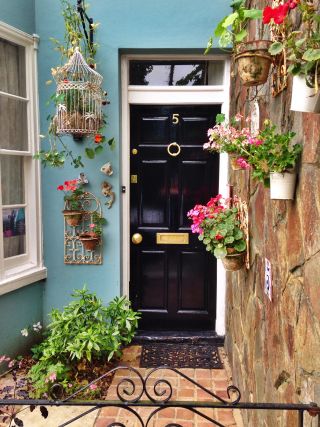
Just one hanging basket or few pots along a window ledge can lift the spirits whenever you look at them, and if you’re strapped for cash, why not recycle an old container like a colander or ice-cream carton?
I also recommend looking for packets that say ‘Ideal for Children’ – who cares if you left school years ago? Nasturtium are a good bet, as are sweet peas, or, if you can find a patch of earth which gets sunshine, try sowing sunflowers or poppies directly into the soil. It’s the perfect time of year to get planting and gardening is a lot more affordable than many other forms of therapy, so why not grow yourself better by making an appointment with Mother Nature today?










 Mws R Writings