Everyone’s Your Relative
:max_bytes(150000):strip_icc():format(webp)/136810024-56a897c83df78cf7729ef8e2.jpg)
Every human being has 99 percent of their DNA in common. A parent and child share 99.5 percent of the same DNA, and you have 98 percent of your DNA in common with a chimpanzee.
https://www.liveabout.com/
Every human being has 99 percent of their DNA in common. A parent and child share 99.5 percent of the same DNA, and you have 98 percent of your DNA in common with a chimpanzee.
https://www.liveabout.com/


The world’s total population is more than 7.5 billion. And obviously, that number sounds huge. However, it might feel a little more manageable once you learn that if every single one of those people stood shoulder-to-shoulder, they could all fit within the 500 square miles of Los Angeles, according to National Geographic.
The 60 Most Interesting World Facts You’ll Ever Hear (bestlifeonline.com)

Back in 2011, a physicist at the University of Sydney went viral after he placed a grape in the microwave and filmed the fiery aftermath. And oddly enough, scientists couldn’t explain the phenomenon until quite recently. A March 2019 study published in Proceedings of the National Academy of Sciences reported that the fruity fireball occurs as a result of the loose electrons and ions that cluster to form plasma when grapes get hot. And here are more of the 100 Fascinating Facts You’ll Want to Share with Everyone You Know.
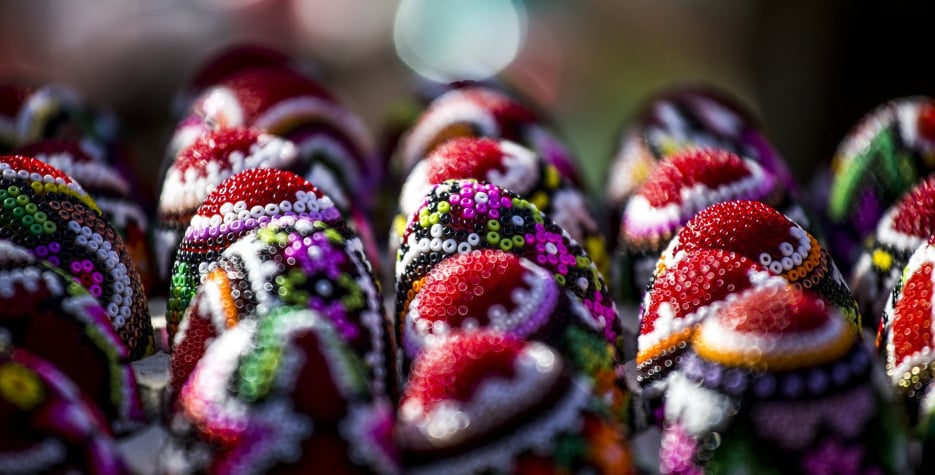
Orthodox Easter, also called Greek Easter is the principal festival of the Orthodox Church.
In the bible, it is the day when Mary Magdalene found that an empty tomb in the cave in which Jesus had been placed following his death by crucifixion on the Friday before.
It signifies the end of the 40 days of Lent, meaning Christians who gave up something during lent to signify Jesus’ time in the wilderness, can indulge themselves again.
In Egypt, Coptic Easter Monday is celebrated on the same day as Orthodox Easter Monday. The day forms part of a wider spring festival called ‘Sham El Nessim‘ and is a national holiday.
The date is different from Western Easter as the other Christian Churches base the date of calculating Easter on the Gregorian calendar, but the Eastern Orthodox Church still uses the earlier Julian calendar for calculating the dates of festivals, which also includes Easter.
The name Easter is derived from ‘Ostara’ or ‘Eostre’, a pagan goddess of fertility, whose feast was celebrated on the Vernal Equinox. The word East is also derived from her names, as is Oestrogen, the female hormone.
However, In most languages other than English and German, the holiday’s name is derived from Pesach, the Hebrew name of Passover, a Jewish holiday to which the Christian Easter is intimately linked.
Easter depends on Passover not only for much of its symbolic meaning but also for its position in the calendar. The Orthodox church uses the Julian calendar for the calculation of Easter, whereas the Western churches use the Gregorian calendar. This difference can often mean that Orthodox Easter falls later than Easter observed elsewhere. The earliest date it can fall is 4 April and the latest is 8 May.
Modern Easter celebrations revolve around eggs. They may be painted, rolled down hills or eaten if they are of the chocolate variety. The Christian tradition of egg is aid to represent rebirth and resurrection – new life being born from the egg. It’s also been said that egg recalls the shape of the stone that rolled away on Easter Sunday form the tomb that held Jesus’ body.
This egg tradition is almost certainly a distillation of a much older pagan custom celebrating spring. The ancient Persians celebrated their new year at the time of the vernal equinox by painting eggs.
Its adoption into the Christian traditions would have been quite seamless, as eggs were banned during the period of Lent preceding Easter.
The custom of decorating eggs is perhaps most famous in Ukraine. Known as Pysanky eggs, they are painted when raw as the uncooked eggshell absorbs the colored dye better than when cooked.
Did you know these 19 facts about the Christian holiday turned commercial powerhouse?
1. The tallest Easter egg chocolate was made in Italy in 2011. It stood at 10.39 meters and weighed an astounding 7,200 kg.
2. In the US, only 12 of the 50 states recognize Good Friday as a holiday.
3. The art of painting eggs is called pysanka, which originated in Ukraine. It involves using wax and dyes to color the egg.
4. The term Easter gets its name from Eastre, the Anglo-Saxon goddess who symbolizes the hare and the egg.
5. The exchange or giving of Easter eggs actually dates to before Easter and the giving of eggs is actually considered a symbol of rebirth in many cultures.
6. There used to be a tradition churches observed that resembled the game of “hot potato.” Here, the priest would toss a hard-boiled egg to one of the choir boys.
The boys would toss the egg amongst themselves and when the clock struck 12, whomever had the egg was the winner and got to keep the egg.
7. Peep peep… did you know Americans buy more than 700 million marshmallow Peeps during Easter? This makes Peeps the most popular non-chocolate Easter candy.
8. Americans consume more than 16 million jelly beans during this holiday. That is enough jelly beans to circle the globe not once, not twice, but three times.
9. Are you an ears, arms or tail person? Seventy-six percent of people eat the ears on the chocolate bunny first, 5 percent go for the feet and 4 percent for the tail.
10. During the holiday, more than 90 million chocolate bunnies, 91.4 billion eggs and 700 million Peeps are produced each year in the United States alone.
11. Next to Halloween, Easter is the biggest candy-consuming holiday of the year. Good thing they are almost six months apart, perfect for your yearly dentist check-ups!
12. An estimated $14.7 billion is spent in total for Easter in the US.
13. The Easter egg is said to symbolize and represent joy, celebration and new life.
14. Easter is the celebration of the resurrection of Christ; it is the oldest Christian holiday and one of the most important days of the year.
15. Half the states in the United States banned the dyeing of chicks on Easter; however, Florida recently overturned this law and now prevents the dyeing of all animals.
16. Not only did Florida overturn the dyeing of animals, but the state also held the largest Easter egg hunt, where 9,753 children searched for 501,000 eggs.
17. The White House of tradition of the Easter Egg Roll started back in 1878, with President Rutherford B. Hayes!
18. Workers in Birmingham, who make the famous Cadbury Creme Egg, produce more than 1.5 million egg delights a year.
19. The idea of the Easter bunny giving candies and eggs is said to have originated in Germany during the middle ages.
No matter how old you are or where you are in the world, Easter is a fun family tradition that never gets old.
From the Easter egg hunts to the taking your first bite into that chocolate bunny, it is not only a special religious holiday that marks an end to Lent, but one that represents the resurrection of Christ, too.
For those who aren’t so religious, Easter marks a long weekend, filled with fun.




 Mws R Writings