If you experience anxiety, you know it can be physically, emotionally and mentally exhausting. Although there are many treatments for anxiety, such as counseling or medications, wouldn’t it be great to find an exercise routine you could do from the comfort of your own living room? So to help you, here are the best exercises that you can use to relieve your anxiety:
It is a fact that walking is not only a great way to stay healthy, but also it helps to burn fat,” says Jenny Abouobaia, CPT, a trainer, nutritionist, proprietor of Squat Till You Drop, and a former professional international dancer and choreographer who has trained clients online and in-person trainer for more than 10 years. “However, it needs to be done in the right way. Every step you take burns calories, but you can seriously slim down and get toned by adding hills, intervals, and sculpting moves to your walk.”
In case you haven’t heard, walking more every day is an excellent way to stay active, burn plenty of calories, and ultimately lead a healthier, longer, and more fruitful life. But, like all forms of fitness—whether you’re lifting weights, performing HIIT, or doing long-distance forms of cardio—there are always little tricks you can use to make it even more effective.
For some of the interesting—and even incredible—things that happen when you walk more every day, read on, because we lay out of a handful of them right here.
Most adults don’t get enough exercise, but getting in shape has an abundance of mental and physical health benefits.
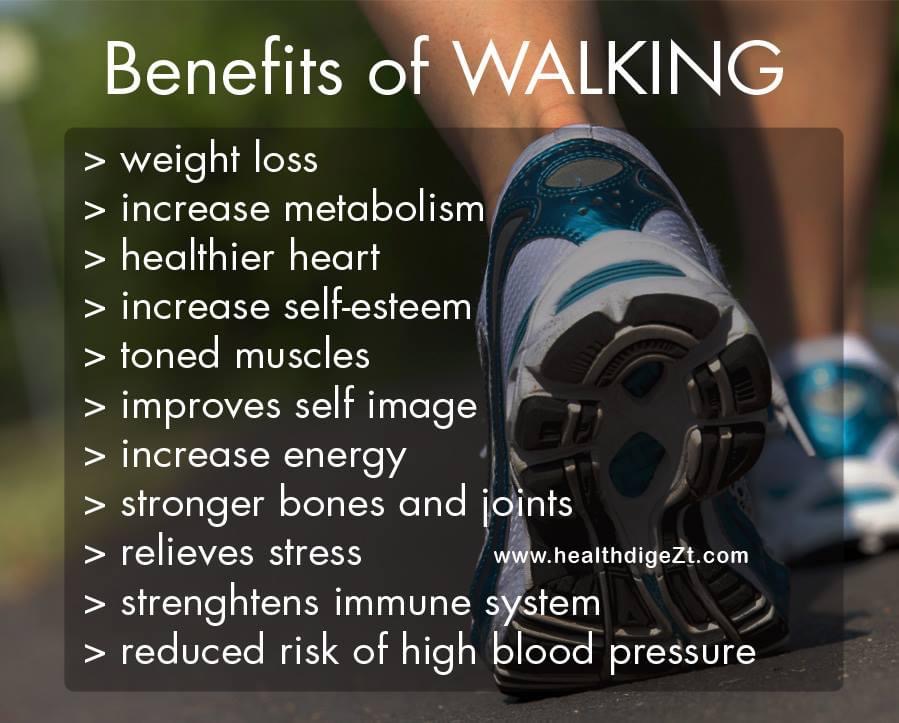
Walking can extend your life, prevent disease, and make you happier.
In some ways, walking is the perfect exercise, as it’s accessible, easy, and free.
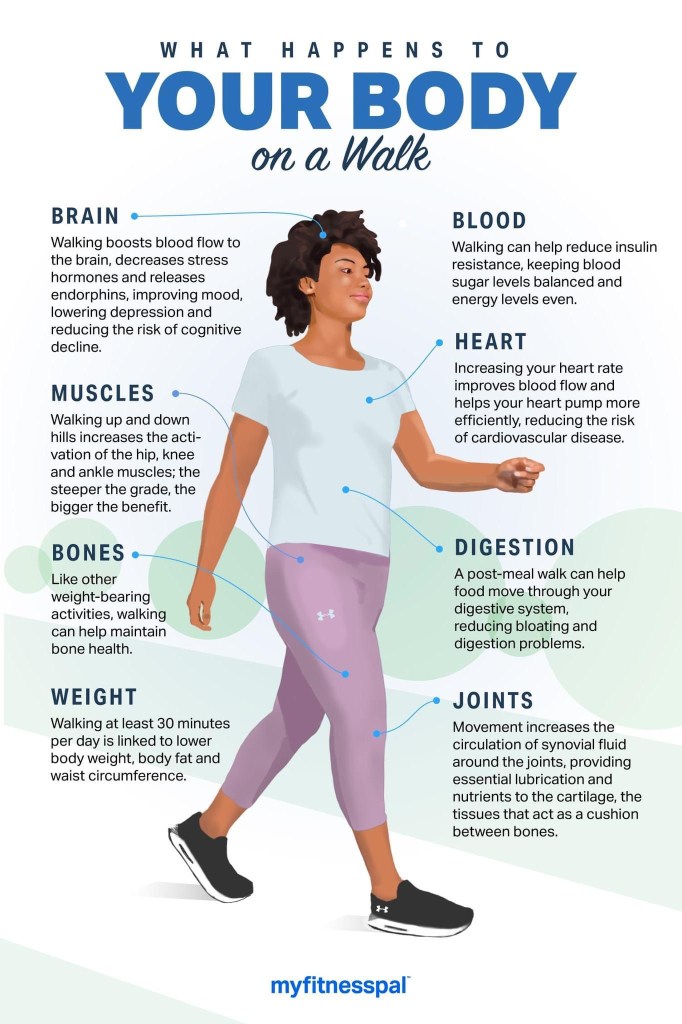
By walking just 30 minutes a day, you can significantly transform your health.
There’s little that can transform your overall mental and physical health as much as exercise.
Working out regularly can extend your life, ward off heart disease and various cancers, rebuild the muscle and bone strength lost with age, and reduce levels of anxiety and depression.
Perhaps best of all, you can start to get all those benefits just by deciding to regularly go for a walk.
For many, getting started with fitness can be intimidating – weight training, interval sprints, and even certain bodyweight exercises might all seem a little too much if you aren’t familiar with where to begin. But people unsure about how they want to get started with fitness should take heart in a simple fact. Most research shows that doing just a little exercise is still vastly better than doing nothing.
Stepping outside and walking down the street – or through a park or along a trail – is enough to start transforming your health.
Recommended physical activity guidelines call for healthy adults to do a minimum of two and half hours of moderate-intensity activity – or 75 minutes of vigorous-intensity activity – plus at least two muscle-strengthening days a week.
Walking doesn’t get you all the way there, as it doesn’t include strength training. But even meeting the moderate activity guidelines with a regular walking habit can do a lot.
According to one large study of older adults published in the American Journal of Preventative Medicine that looked at 62,178 men and 77,077 women, people who walk at least 150 minutes per week were about 20% less likely to die than inactive adults during the 13-year study period.
“Walking has been described as the ‘perfect exercise’ because it is a simple action that is free, convenient, does not require any special equipment or training, and can be done at any age,” the authors wrote in their conclusion.
While life extension and disease reduction are important, those aren’t the only reasons to go for a walk. Smaller studies have shown that even a 30-minute walk on a treadmill is enough to lift the mood of someone suffering from a major depressive disorder.
A recent study from researchers at Harvard University and other institutions found that three hours of exercise a week, no matter the type of activity, could decrease the risks of depression. The risk decreased an additional 17% with each added 30 or so minutes of daily activity.
None of this is to say you shouldn’t eventually start incorporating strength training and other forms of exercise into your routine – there are reasons why those exercises are included in fitness guidelines. But if you just wanted to get started in a simple way, know that going for a walk can be more powerful than it seems.


![Slide 2 of 8: According to the American Psychological Association, "self-efficacy" is defined as one's "belief in his or her capacity to execute behaviors necessary to produce specific performance attainments; [it] reflects confidence in the ability to exert control over one's own motivation, behavior, and social environment."In short: It's confidence in yourself and your abilities. According to Jaclyn London, MS, RD, CDN, Head of Nutrition & Wellness at WW, walking more every day—and making it a central component of your routine—is a surefire way to get more of this coveted self-assuredness. "Walking can be a tool in building self-efficacy," she says. "In general, starting a new routine around an activity can help you build confidence in your own skills and abilities—and walking is no exception."What's more, research has shown that if you walk with a more confident posture, you'll actually improve your own confidence. So walk tall, walk more, and feel your confidence flow! And for more great walking tips, check out these Secret Little Tricks for Walking More Every Day, According to Experts.](https://img-s-msn-com.akamaized.net/tenant/amp/entityid/BB1fePYH.img?h=416&w=799&m=6&q=60&u=t&o=f&l=f&x=548&y=180)
 © Maskot/DigitalVision/GettyWalking can improve your mental health and help fight depression
 Mws R Writings