I believe there are trials we cannot see, Spaces filled without joy or glee Things that bother us, but remain unspoken Almost like a vase that’s broken The vase cannot serve its purpose anymore We, like a vase, can carry others Keeping them safe, one with another But broken, we can’t Even if in a slant …… Look into another’s eye Some make you laugh Some make us cry Sad Eyes are a message Sometimes you’ll see it right off Sometimes and often, you won’t
If you want to make a change You can simply find some joy Joy is not easily found all the time More than not we have to search You can’t be happy for others, They have to be. You can’t fix others You just need to fix you, find your joy, share your hope Others will see positive, search for their hope, their joy, just because you have. Regardless of how you were, you can be that light, that positive for someone else. Perfect does not exist, don’t keep looking for it, you’ll be disappointed and you’ll get tired and fail. Be grateful, be thankful Have an awesome day!
Back in 2011, a physicist at the University of Sydney went viral after he placed a grape in the microwave and filmed the fiery aftermath. And oddly enough, scientists couldn’t explain the phenomenon until quite recently. A March 2019 study published in Proceedings of the National Academy of Sciences reported that the fruity fireball occurs as a result of the loose electrons and ions that cluster to form plasma when grapes get hot. And here are more of the 100 Fascinating Facts You’ll Want to Share with Everyone You Know.
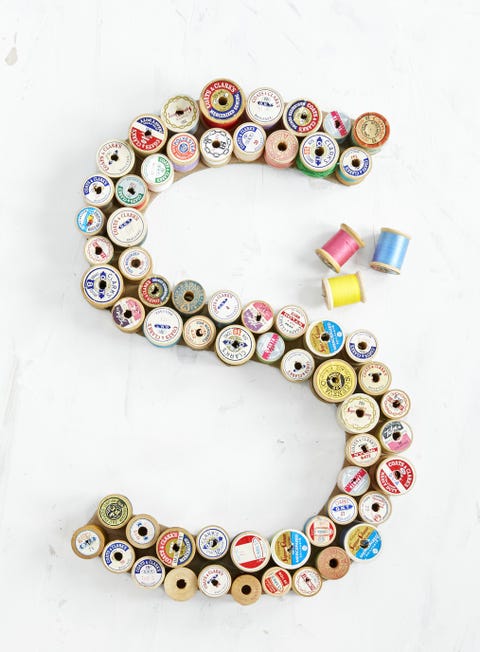
It’s a safe bet you’ve never seen a monogram wall decal quite like this before. Pick your letter—be it your first or last initial—then cut out the shape from a piece of thick cardboard. Next, hot-glue a colorful arrangement of spools to the surface and you’re officially well-stocked with a stunning new summer DIY.
1. Kids will be more technologically savvy and computer literate
Does your 4-year-old now know how to un-mute himself? Is your budding Mia Hamm completely comfortable with Zoom soccer lessons? While we parents may look on in horror, the fact is that this pandemic will inevitably make our children more computer literate, and that’s not necessarily a bad thing.
Says pediatric phycologist Dr. Ann-Louise Lockhart, “Due to distance learning and less face-to-face time, younger children have learned how to use devices, apps and programs they didn’t previously have access or exposure to. And since we all have different learning styles, these different methods have hopefully shown them, along with their parents and teachers, how they learn best.” In other words, since the start of the pandemic, many kids have naturally adapted to new (virtual) ways to learn and socialize. And rather than seeing this as a crutch or impediment to “real” learning, we’re better off considering it as one more tool in their educational toolbox.
2. They will be more anxious and wary of social interaction
It’s no surprise that half a year of teaching our children to stay away from other people has made them more scared of other people. And doctors say this is translating to actual, diagnosable anxiety. Dr. Mary Ellen Renna, a pediatrician in Jericho, NY, has noticed “a rapid increase in anxiety disorders in children,” and notes that “the sudden changes of not being able to go to school or go out and see friends has an impact on us all, but especially the children who are too young to have an understanding of what is happening.”
Dr. Sara Kopple, a pediatrician in New Rochelle, NY, agrees: “Teaching kids that intimacy with your peers is bad and pathologizing it will be hard to undo,” she says, noting that she’s seen this anxiety manifest physically: “There’s been a real increase in bladder and bowel issues in my practice. I think it’s because it’s one of the few areas where small kids have complete control.”
What can parents do? Open communication, mindfulness, and generally reminding our kids that it’s our job to keep them safe. But, to some extent, the anxiety of 2020 is unavoidable. “Now that we’re asking so many schools and districts to open back up, there will be a lot of push-back, anxiety, and fear,” Dr. Lockhart maintains.
3. But they may have more meaningful relationships with family and friends
Yes, we’re all spending a lot of time together. And while this is beyond frustrating for parents, for many children, it’s actually a terrific time to bond and develop a sense of security, which can translate to increased self-esteem and happiness down the road. Says Dr. Lockhart: “I have personally experienced a closeness with my children I wouldn’t have when they were at school all day. I have seen my kids through a different lens, and I really like it.”
This may also mean increased closeness with extended family. (Weekly FaceTime with Great Grandma? Check!) Or stronger relationships with neighbors, cousins or pod-mates. Dr. Kopple, in fact, predicts a rise in mixed-age socialization, as children engage in outdoor play with neighborhood kids, as opposed to formal playdates. “That sort of relationship development is really sweet and valuable,” she says. “Big kids get a chance to practice being responsible and being in charge. Little kids do a lot of modeling from the big kids.”
4. Obesity and overeating might become larger problems
The Covid 15 is real people, and it’s serious when it comes to children’s health. Dr. Renna has noticed “many children who were very active pre-Covid, [and have now] become complacent with exercise…They lose the incentive to move and stay healthy.” And the science backs this up: According to a study out of the University of Buffalo, lockdowns across the world have negatively impacted diet, sleep and physical activity among kids. Dr. Renna elaborates: “Children who are at home on a continual basis start to eat out of boredom, which can become a dangerous habit that is hard to break and may be carried into adulthood with devastating consequences.”
5. On the flip side, kids (and schools) may get more comfortable with being outside all year
Ever heard the expression “There is no bad weather, only bad clothing?” Consider that your motto for 2020, as children and adults, find increasingly creative ways to be outdoors for exercise, socialization, and all-around mental health. Says Dr. Kopple: “Kids are fine, they do recess in the middle of the winter. It’s the parents who have trouble with it.” And as many schools embrace outdoor models, this may have a lasting impact on a generation, who will adopt not only a hardier outlook than their wussy parents (raises hand), but could see benefits like increased competence, lower stress, and improved retention, according to a German study.
6. They will become more flexible and adaptable
With our understanding of the virus changing daily, it can be nearly impossible to plan for life. (Just ask anyone trying to figure out their kids’ school year right now.) But the plus side is that all this uncertainty is probably making children more flexible and less beholden to the schedules, expectations and rigidity we foist upon them.
“Children are learning that life isn’t always easy, predictable or neatly planned,” says Dr. Lockhart. “As a result of this pandemic, I believe they will learn that it is OK to make plans and have goals but having flexibility and being adaptable are equally important. They will learn that it is OK to feel disappointment and then make small or very large changes as a result.”
Now let’s hope we can say the same thing of all the grownups in the room.
“For most people, the coronavirus will be like any other flu or cold. Many people catch these illnesses during their lives and experience only mild symptoms,” says Dr. Carrie Lam.
For a certain amount of people: “There are no special signs or symptoms of coronavirus. In fact, that is one of the reasons why it spread so quickly,” says Dr. Kaushal M. Kulkarni, a board-certified ophthalmologist.
2.You Have a Loss of Senses
“Thirty percent of patients have a loss of smell (anosmia) and loss of taste (ageusia) as their first signs of a COVID-19 infection,” says Dr. Jonathan Kaplan. “Because of the relationship between smell and taste, the taste can also be significantly affected. It can take weeks to recover,” says Dr. Inna Husain.
3. You Have a Fever
“Coronavirus often begins with a fever of 100.4 degrees Fahrenheit within 2-14 days of exposure to an infected person,” says Dr. LaFarra Young, a pediatric pathologist, and health coach.
4. You Have a Dry Cough
One of the most common symptoms is a dry cough, which can be described as one without mucus or phlegm. “If you notice a slight cough or fever this would be reason enough to begin self-isolation allowing a couple of days to see if symptoms manifest,” says Dr. Giuseppe Aragona, a family medicine doctor. “It has been reported that the respiratory symptoms will worsen after a week, though in some cases the incubation period can be as little as two days.”
“The cough to look out for is a new, continuous cough,” reports the BBC. “This means coughing a lot for more than an hour or having three or more coughing episodes in 24 hours. If you usually have a cough, it may be worse than usual.”
5. You Have a Sore Throat or Headache
Nearly 14% of cases studied in China had symptoms of headache and a sore throat, reports WHO. The virus “travels to the back of your nasal passages and to the mucous membranes in the back of your throat,” reports Johns Hopkins. “That’s the place where symptoms—such as a sore throat and dry cough—often start.”
6. You Have Chills or Body Aches
CNN news anchor Chris Cuomo says he was shivering so much due to COVID-19 that he “chipped a tooth.” “They call them the rigors,” he said, adding that he felt like he was being beaten by “a piñata.”
Researchers at New York University also discovered aching muscles (known as myalgia) are among the factors that could signal respiratory distress caused by the coronavirus.
7. You Are Fatigued
“Some older or immunosuppressed individuals may not present with a fever, instead of presenting with other common symptoms such as sore throat, dry cough, or fatigue,” says Dr. LaFarra Young, a pathologist at King’s Daughters Medical Center. “Fatigue is a daily lack of energy; unusual or excessive whole-body tiredness not relieved by sleep,” reports WebMD. “Fatigue can prevent a person from functioning normally and affects a person’s quality of life.”
8. You Experience Shortness of Breath
Can’t get enough air in your lungs? “Extreme shortness of breath and respiratory issues are what is causing the increase in patients in the ICU. Increasing your immune system using Vitamin D can help decrease the likeliness of the spread of bacterial and viral infections,” says Dr. Geoffrey Mount Varner.
If you are struggling for air and can’t breathe, seek immediate medical attention.
9. You Have Pain in Your Chest
“Persistent pain or pressure in the chest” is one of the CDC’s “emergency warning signs”—seek medical help immediately if you feel it. This could be a symptom of the coronavirus or a heart issue, and tests can help determine the right course of action.
10. You Have Pink Eye
“Conjunctivitis, or more commonly known as pink eye, can present as a symptom of coronavirus,” says Dr. Kevin Lee. “People should be cognizant of possible aerosol transmission with the conjunctiva and through ocular secretions, like tears.”
11. You Have Diarrhea or Vomiting
Diarrhea, vomiting, and stomach pain may be more common as a symptom of COVID-19 than anticipated, according to The American Journal of Gastroenterology. Half the patients that were diagnosed complained of those issues in the study. Some patients may not even have respiratory symptoms and just digestive ones.
12. You Have a Bluish Face or Lips
This is considered one of the CDC’s “emergency warning signs” and they advise you “get medical attention immediately” if you see them. Cyanosis is the name for poor oxygen circulation in the blood that causes bluish discoloration of the skin.
13. You Feel Confused
Doctors have observed neurological symptoms, including confusion, stroke and seizures, in a subset of COVID-19 patients. If you are considered high risk, you may show rarer and more severe symptoms. The CDC considers “new confusion or inability to arouse” as an emergency warning sign. Do seek medical attention immediately if it sets in.
If you or someone you know is experiencing any of these symptoms, call your medical care provider before showing up. And to get through this pandemic at your healthiest, don’t miss these Sure Signs You’ve Already Had Coronavirus.




 Mws R Writings