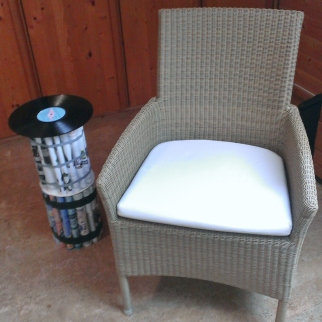
Old catalogues or magazines (they should be of the same size)
A record (or alternative table-top)
Paperclips
Coloured sticky/duct tape
All-purpose glue (or hot glue)
Firstly, take a magazine and open it to the 10th (or so) page. Roll it up to the left until the left edges of the pages touch the spine of the magazine.
Roll up the next 10 pages (you don’t have to count, just estimate it 🙂 ) until their edges touch each other. Then fix it with a paper clip as close as possible to the back of the magazine.
Repeat the second step until you’re at the second to last page. The last page shouldn’t be rolled up, yet.
Now you need the next magazine of the same size. Put the last page of the first magazine on top of the cover of the second one and roll them up as before, together with the first few pages of the magazines.
Repeat this until you think it is enough 🙂 (It depends on the thickness of the pages and how many pages your magazines have.) Don’t roll the last few pages, yet.
Now stand the whole thing up (hereby the paper clips are important, otherwise the pages might open again). Now you can roll in the last pages and fix them to the first pages of the first magazine using a paper clip.
Next you stick the sticky tape around the whole thing on top and again on the bottom.
Now you can remove the paper clips and make the second level as you did the first. It is important that the magazines of one level are of the same size, but all the levels don’t necessarily have to be even. However you prefer 🙂
Make as many levels as you want, depending on how high you want the table to be.
Now cut a piece of paper so that it matches the top of the table leg (in a circle) and stick one piece on top of each level. Glue the levels on top of each other and glue the record on top.
Done 🙂 I hope this was understandably phrased!
At our place the environmental-friendly table embellishes one corner of our living room together with my globe lamp 🙂
When diarrhea strikes, the first step is rehydrating. “Not a lot of people are aware that dehydration can also cause diarrhea,” says Nikola Djordjevic, MD, co-founder of MedAlertHelp.org. “On top of this, you lose a lot of fluids and electrolytes when you have loose bowels.” One of the best home remedies for diarrhea is to keep a water bottle with you and replace electrolytes with sports drinks like Gatorade. Dr. Djordjevic recommends making your own with six teaspoons of sugar, a half teaspoon of salt, and a liter of water.
Bind yourself with white rice
While you may not feel like eating, choosing something bland like white rice could bring relief. “White rice is an easy-to-digest food that won’t upset your stomach or intestines,” says Lisa Richards, a certified nutritionist, and creator of The Candida Diet. “It can help soothe your symptoms without causing any further irritation to your gut.” White rice is low in fiber, so it can slow down diarrhea and help bring your bowel movements back to normal consistency.
Avoid dairy and citrus
When you’re experiencing diarrhea, it’s not the time for a comforting bowl of ice cream. “Avoid all dairy products because enzymes for the digestion of dairy are usually flushed out or otherwise unavailable while experiencing diarrhea,” says Carolyn Dean, MD, ND. That means eating dairy can extend your misery; so can citrus and other acidic foods.
Reach for bananas
Bananas are easy on the stomach and help you to replace potassium. “It’s a very important mineral in our body because it helps regulate fluids, muscle tension, and nerve signals,” explains Dr. Djordjevic. When potassium levels become too low from a bout of diarrhea, you could start to experience muscle weakness and cramping.
Get your probiotics
Because diarrhea is usually caused by bad bacteria in our guts, replacing it with good bacteria is one of the fastest ways to get some relief. Research in Antibiotics found that taking probiotics for diarrhea, especially when caused by antibiotics, is safe and effective. Dr. Djordjevic recommends taking a probiotic supplement or finding a natural source like yogurt. Learn more about what probiotics can do for you here.
Add the BRAT diet
Bananas, rice, applesauce, and toast: While experts no longer recommend only following the BRAT diet when you have diarrhea—it doesn’t offer enough nutrition for kids to recover—they do like the fact that these foods are starchy and low in fiber, and they will help to bind your stool. They’re also gentle on your stomach and should help you feel better fast.
Try psyllium
Support your gut’s health by mixing up your own beverage made with the soluble fiber called psyllium. The main ingredient in Metamucil, it’s derived from the Indian herb Plantago ovata. “Take the powder or capsule form of psyllium to absorb the liquid contents from the intestines and bulk the stool,” recommends Dr. Dean. “Take one teaspoon shaken in a jar of water or two capsules twice a day with only a small amount of water.”
Try a new kind of hot chocolate
Another natural drink you can make at home might be a bit tastier than the others: Dr. Dean recommends stirring two teaspoons of carob powder into 6 ounces of water. The carob powder will have a subtle chocolate flavor and help to bind the stool and slow down diarrhea.
A thousand pioneers head West as part of the Great Emigration
The first major wagon train to the northwest departs from Elm Grove, Missouri, on the Oregon Trail.
Although U.S. sovereignty over the Oregon Territory was not clearly established until 1846, American fur trappers and missionary groups had been living in the region for decades. Dozens of books and lectures proclaimed Oregon’s agricultural potential, tweaking the interest of American farmers. The first overland immigrants to Oregon, intending primarily to farm, came in 1841 when a small band of 70 pioneers left Independence, Missouri. They followed a route blazed by fur traders, which took them west along the Platte River through the Rocky Mountains via the easy South Pass in Wyoming and then northwest to the Columbia River. In the years to come, pioneers came to call the route the Oregon Trail.
In 1842, a slightly larger group of 100 pioneers made the 2,000-mile journey to Oregon. The next year, however, the number of emigrants skyrocketed to 1,000. The sudden increase was a product of severe depression in the Midwest combined with a flood of propaganda from fur traders, missionaries, and government officials extolling the virtues of the land. Farmers dissatisfied with their prospects in Ohio, Illinois, Kentucky, and Tennessee, hoped to find better lives in the supposed paradise of Oregon.
On this day in 1843, some 1,000 men, women, and children climbed aboard their wagons and steered their horses west out of the small town of Elm Grove, Missouri. The train comprised more than 100 wagons with a herd of 5,000 oxen and cattle trailing behind. Dr. Elijah White, a Presbyterian missionary who had made the trip the year before, served as guide.
The first section of the Oregon Trail ran through the relatively flat country of the Great Plains. Obstacles were few, though the river crossings could be dangerous for wagons. The danger of Indian attacks was a small but genuine risk. To be on the safe side, the pioneers drew their wagons into a circle at night to create a makeshift stockade. If they feared Indians might raid their livestock—the Plains tribes valued the horses, though generally ignored the oxen—they would drive the animals into the enclosure.
Although many neophyte pioneers believed Indians were their greatest threat, they quickly learned that they were more likely to be injured or killed by a host of more mundane causes. Obstacles included accidental discharge of firearms, falling off mules or horses, drowning in river crossings, and disease. After entering the mountains, the trail also became much more difficult, with steep ascents and descents over rocky terrain. The pioneers risked injury from overturned and runaway wagons.
Yet, as with the 1,000-person party that made the journey in 1843, the vast majority of pioneers on the trail survived to reach their destination in the fertile, well-watered land of western Oregon. The migration of 1844 was smaller than that of the previous season, but in 1845 it jumped to nearly 3,000. Thereafter, migration on the Oregon Trail was an annual event, although the practice of traveling in giant convoys of wagons gave way to many smaller bands of one or two-dozen wagons. The trail was heavily traveled until 1884, when the Union Pacific constructed a railway along the route.
Watercolor paint makes these super easy, but you could substitute food coloring if that’s what you have on hand.
You can use any color pipe cleaners you have on hand. We suggest patriotic colors like red, white, blue, silver, or gold.
have younger kids wear smocks or an oversized t-shirt, just in case!
Report this ad
HOW TO MAKE COFFEE FILTER FLOWERS
Place one of the coffee filters onto the paper plate and flatten out.
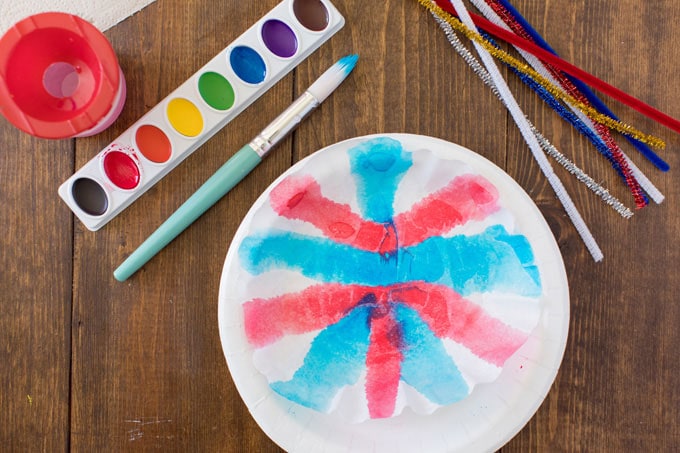
Paint the coffee filter with water color paint. Paint some solid red, some solid blue and others a combination of blue and red, leaving some areas unpainted.
Report this ad
Move the coffee filter to the towel and lay flat to dry. Repeat with the second coffee filter.
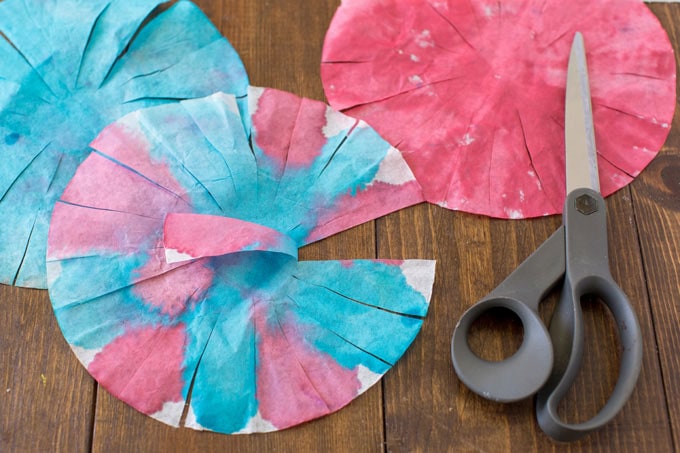
Leaving the center of the filter in tact, cut the coffee filter in strips, working you way around the circle.
Report this ad
Cut a 1.5″ piece off of one end of a pipe cleaner and set aside.
Take the longer piece of the pipe cleaner and poke it through the center of the coffee filter. There should be about 2″ of pipe cleaner poked through.
Turn the entire thing upside down and grasp the filter with your fingers.
Report this ad
Gather it around the pipe cleaner and secure it by wrapping the extra piece of stem that you cut off in an earlier step. Twist it around the part you are holding and turn the flower back upright.
Report this ad
Manipulate with your finger until strips are spread out and it looks the way you want it to.
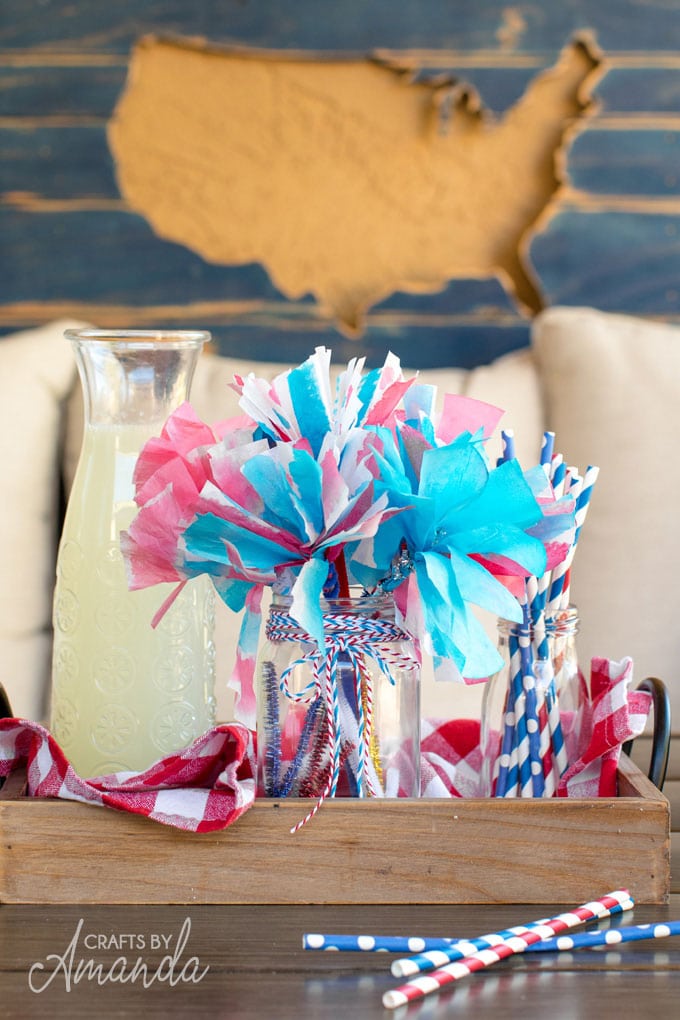
This fun 4th of July craft is great for kids of all age levels. Make some today!
Memorial Day isn’t just an excuse to take a long weekend and loaf around eating grilled meats—although those are certainly among the reasons to love the holiday.
So before you head out to your barbecues and pool parties, here are some facts about Memorial Day, everybody’s favorite summer kick-off holiday.
It was originally called Decoration Day
To honor the deceased, soldiers would decorate graves of their fallen comrades with flowers, flags and wreaths. Hence Decoration Day. Although Memorial Day became its official title in the 1880s, the holiday wouldn’t legally become Memorial Day until 1967.
It wasn’t always celebrated the last Monday of May
After the Civil War, General John A. Logan, commander in chief of the Grand Army of the Republic, called for a holiday commemorating fallen soldiers to be observed every May 30. But due to the Uniform Monday Holiday Act, which took effect in 1971, Memorial Day was moved to the last Monday of May to ensure long weekends. Some groups, like the veterans’ organization American Legion, have been working to restore the original date to set Memorial Day apart and pay proper tribute to the servicemen and women who sacrificed their lives defending the nation.
This year, Memorial Day falls on Monday, May 28.
It’s legally required to observe a National Moment of Remembrance
In December 2000, Congress passed a law requiring Americans to pause at 3 p.m. local time on Memorial Day to remember and honor the fallen. But this doesn’t appear to be common knowledge, or if it is, by 3 p.m. most people seem to be too deep into a hot dog-induced food coma to officially observe the moment.
James A. Garfield delivered a rather lengthy speech at the first Memorial Day ceremony
Of course then it was still called Decoration Day, and at the time, Garfield was a Civil War General and Republican Congressman, not yet a President. On May 30, 1868, he addressed the several thousand people gathered at Arlington National Cemetery. “If silence is ever golden,” Garfield said, “it must be beside the graves of 15,000 men, whose lives were more significant than speech, and whose death was a poem the music of which can never be sung.”
Several states observe Confederate Memorial Day
In addition to the national holiday, nine states officially set aside a day to honor those who died fighting for the Confederacy in the Civil War: Texas, South Carolina, North Carolina, Alabama, Virginia, Louisiana, Mississippi, Tennessee and Georgia. The days vary, but only Virginia observes Confederate Memorial Day on the last Monday of May, in accordance with the federal observance of Memorial Day.
Waterloo, New York is considered the birthplace of Memorial Day
According to Waterloo’s website, in 1966 Congress unanimously passed a resolution to officially recognize Waterloo as the birthplace of Memorial Day. However, it remains a contentious debate, with other towns, like Boalsburg, Pa., claiming the title of “Birthplace of Memorial Day” as well.
More than 36 million people will travel at least 50 miles from home this Memorial Day
At least, according to AAA estimates. That’s the highest total since the recession.
Want houseplants that are pet-friendly that also produce gorgeous blooms? Look no further than African violet. It comes in a range of purple and pink hues, is low maintenance, and thrives without bright light. Keep the soil moderately moist, and water African violets by letting them soak up water through the pot’s drainage hole to avoid damaging the leaves and petals. This flowering houseplant can brighten up even the smallest spaces because it stays less than 12 inches tall.
Tillandsia varieties make excellent pet-friendly, low-maintenance houseplants because they don’t need any soil to grow. Most air plants will stay smaller than 12 inches, and they thrive in bright, indirect light with a quick soak in water about once a week. However, cats and dogs alike will find their spindly, grass-like leaves tempting to chew on so make sure you keep them out of reach.
The variegated gray-and-green leaves of aluminum plant (part of the genus Pilea) make it an attractive, pet-safe houseplant. It stays shorter than 12 inches, grows well in medium to low light, and only needs water when the top inch of soil is dry. Since it tolerates low light, you can grow it almost anywhere that’s out of reach of your furry friends.
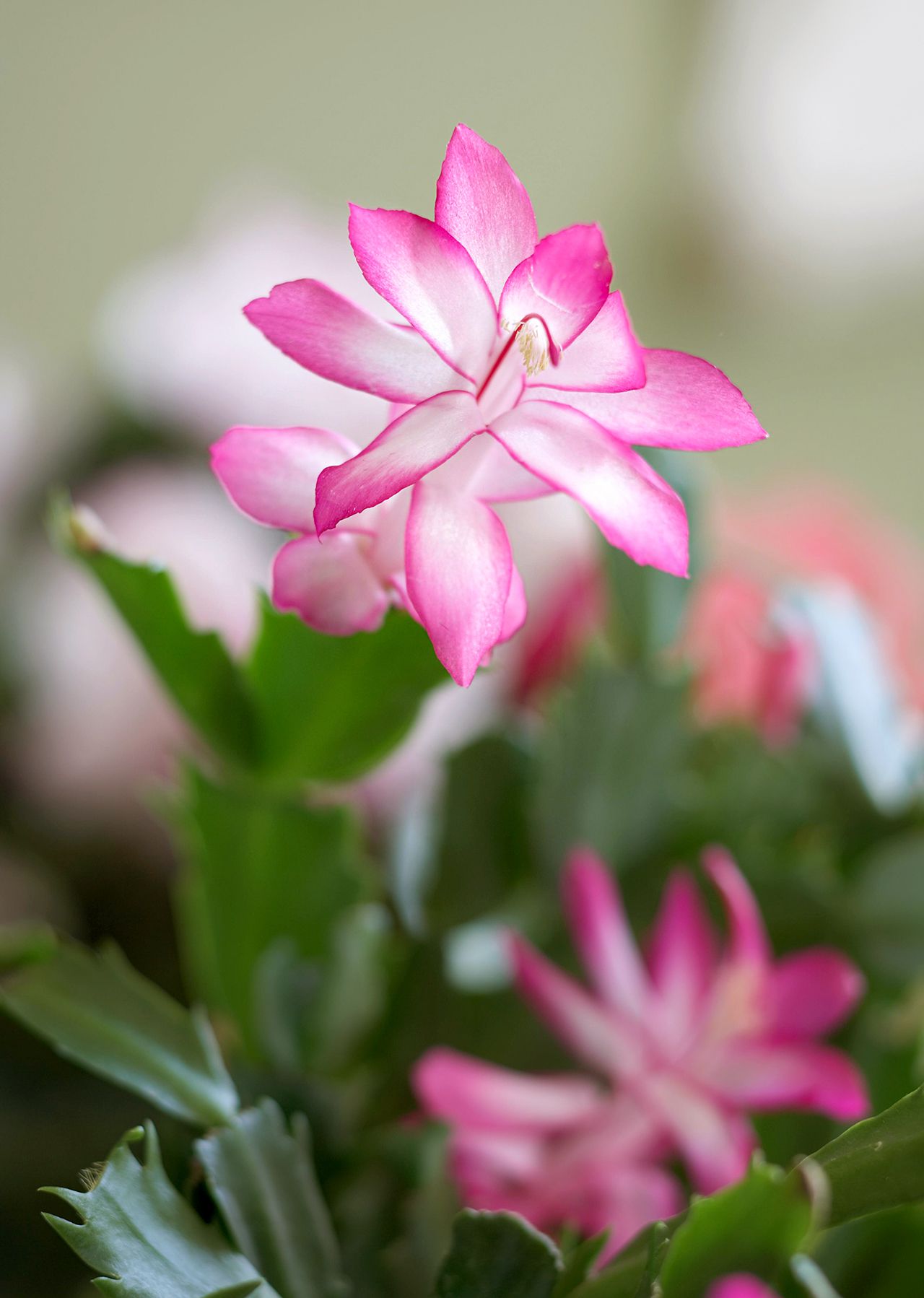
Unlike its dangerous holiday counterpart amaryllis, Christmas cacti are non-toxic plants to have around curious cats and dogs. You still shouldn’t let your pets chew on it (Christmas cacti can cause intestinal discomfort if eaten) but overall it’s a safer choice than many other festive plants. Christmas cacti can easily be confused with Thanksgiving cacti, but both are safe for pets and have similar care requirements. Both cacti stay relatively short (under 12 inches), but can spread up to two feet, and grow best with regular waterings and bright, indirect light.
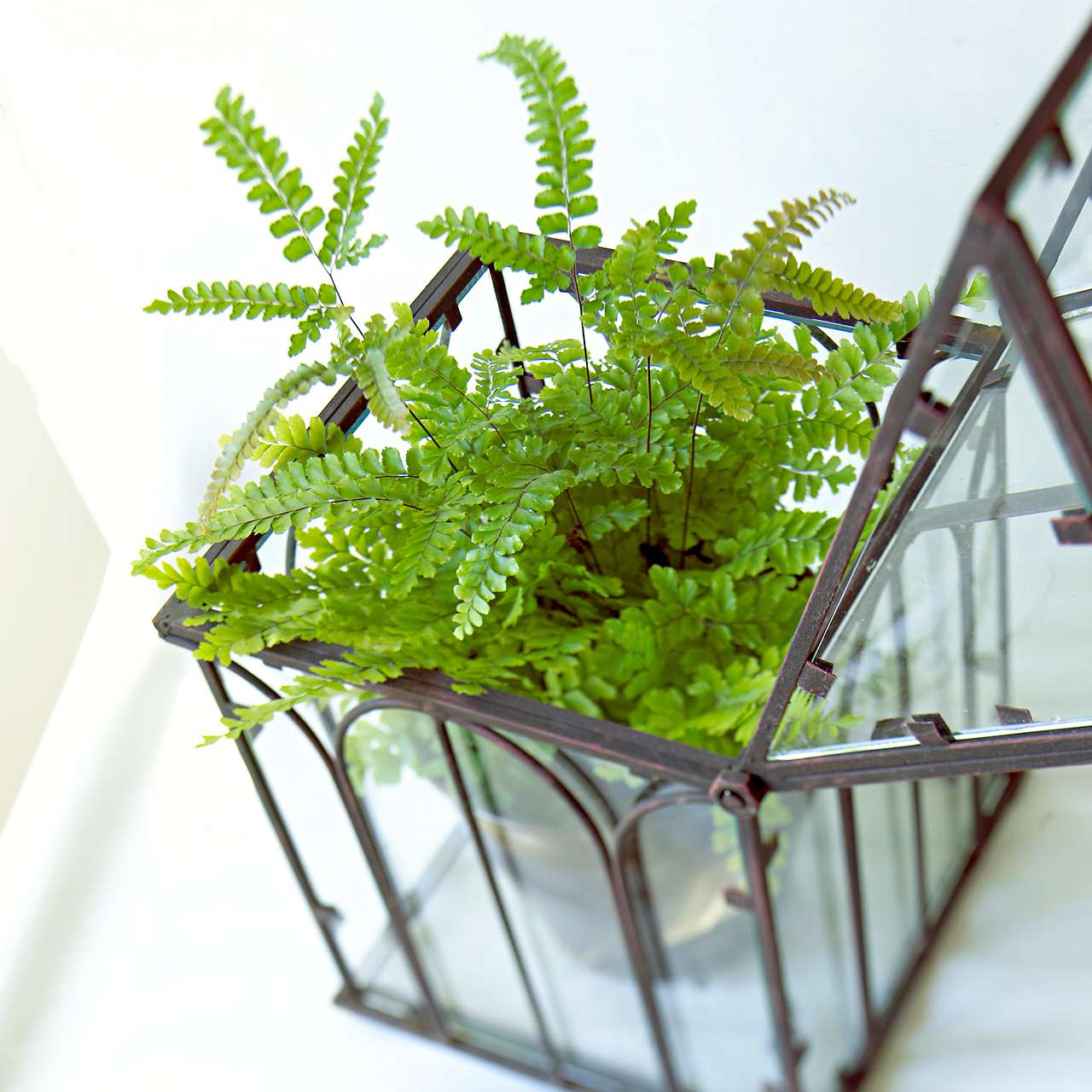
Identifying ferns can be a bit tricky, as there are several plants with the word “fern” in their name that are not actually part of the fern family. True ferns such as Boston and maidenhair are fair game as indoor plants safe for pets. Just beware of toxic misnomers like asparagus fern, which is actually part of the lily family. Though their size can vary, most ferns have similar needs: They like indirect light, evenly moist soil, and high humidity.
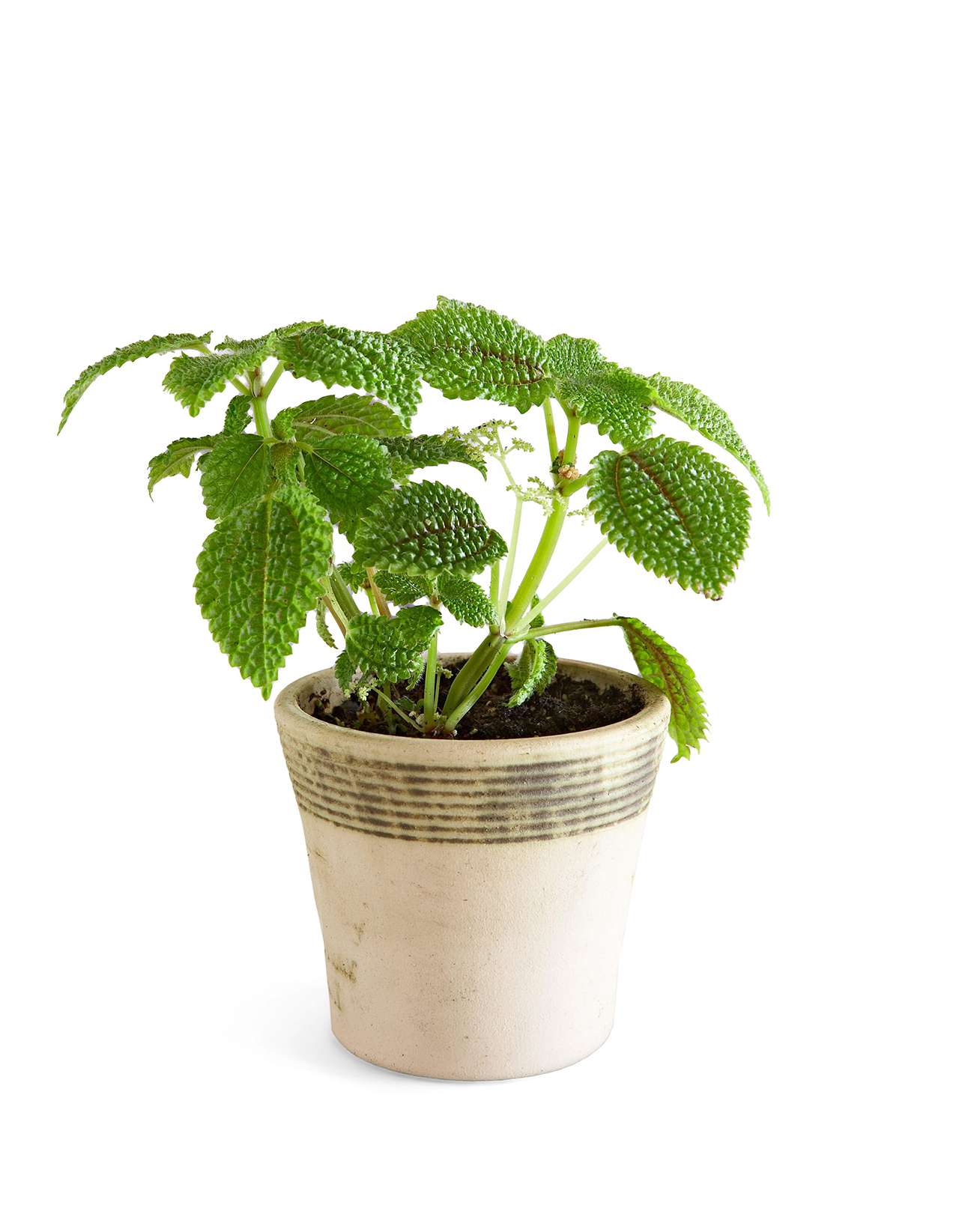
The friendship plant (which is closely related to aluminum plant) is named for the ease with which it can be divided and shared. If you get one as a gift, rest assured it’s safe for your cats and dogs, even if they take a bite out of this plant’s fuzzy, crinkly leaves. Friendship plant tolerates medium and low light, loves humidity (it grows well in terrariums), and usually doesn’t grow taller than 12 inches.
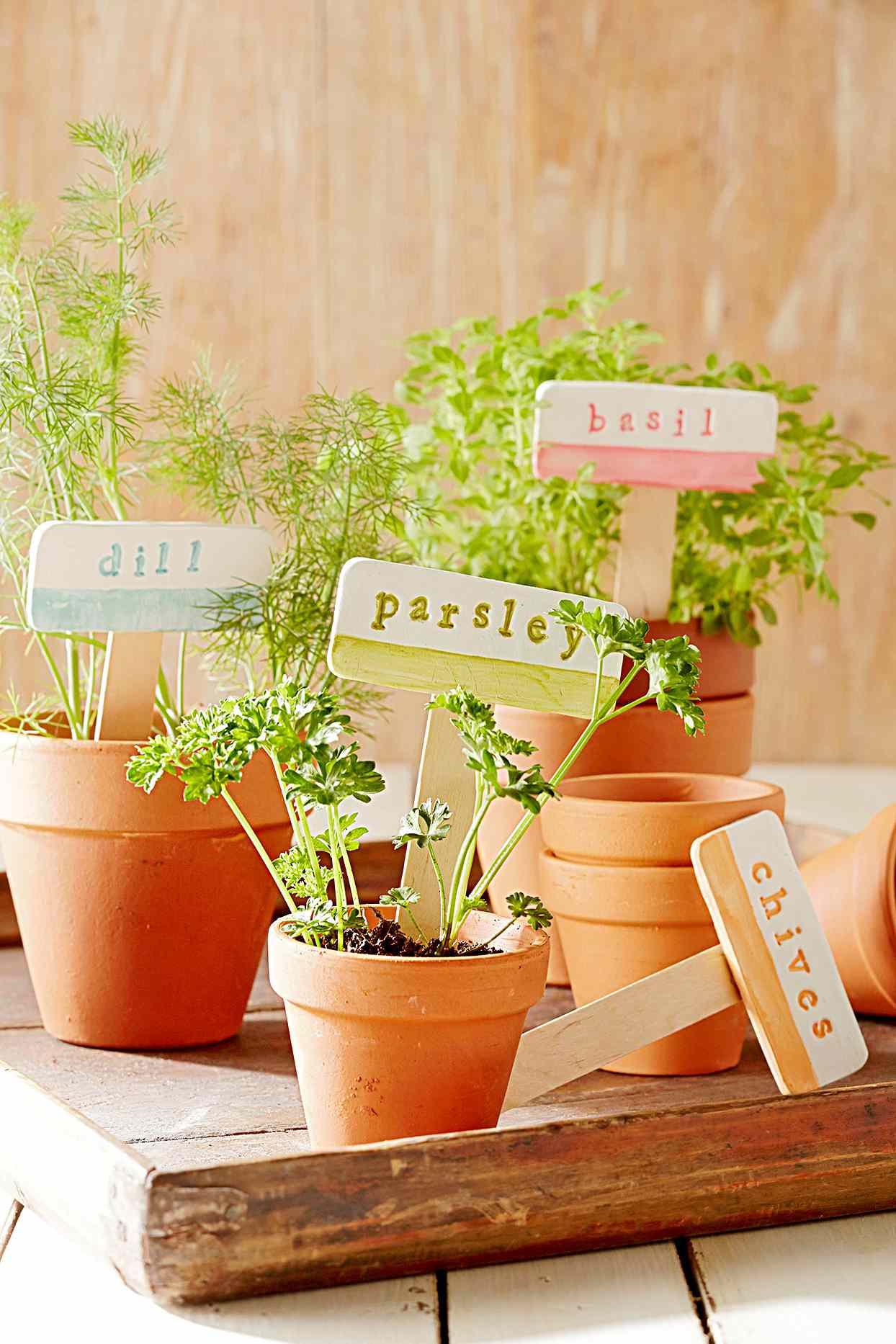
Indoor herb gardens are an easy way to add fresh flavor to your home cooked meals. But not all herbs are created equal when it comes to pet safety. Standards like lavender and oregano are off-limits, but basil, sage, and thyme are all houseplants that are pet-friendly. Place herbs in a sunny window that gets at least four or five hours of direct sunlight every day, and water when the top inch of soil is dry.
Pretty lace flower vine is an easy, pet-friendly houseplant that grows best in hanging baskets, well out of reach of your cat or dog. But should an extra-persistent pet make their way into the pot, no harm will be done. Hang this pretty plant in a spot with bright, indirect light, and water whenever the soil starts to feel dry, and its trailing stems will grow to about three feet long.
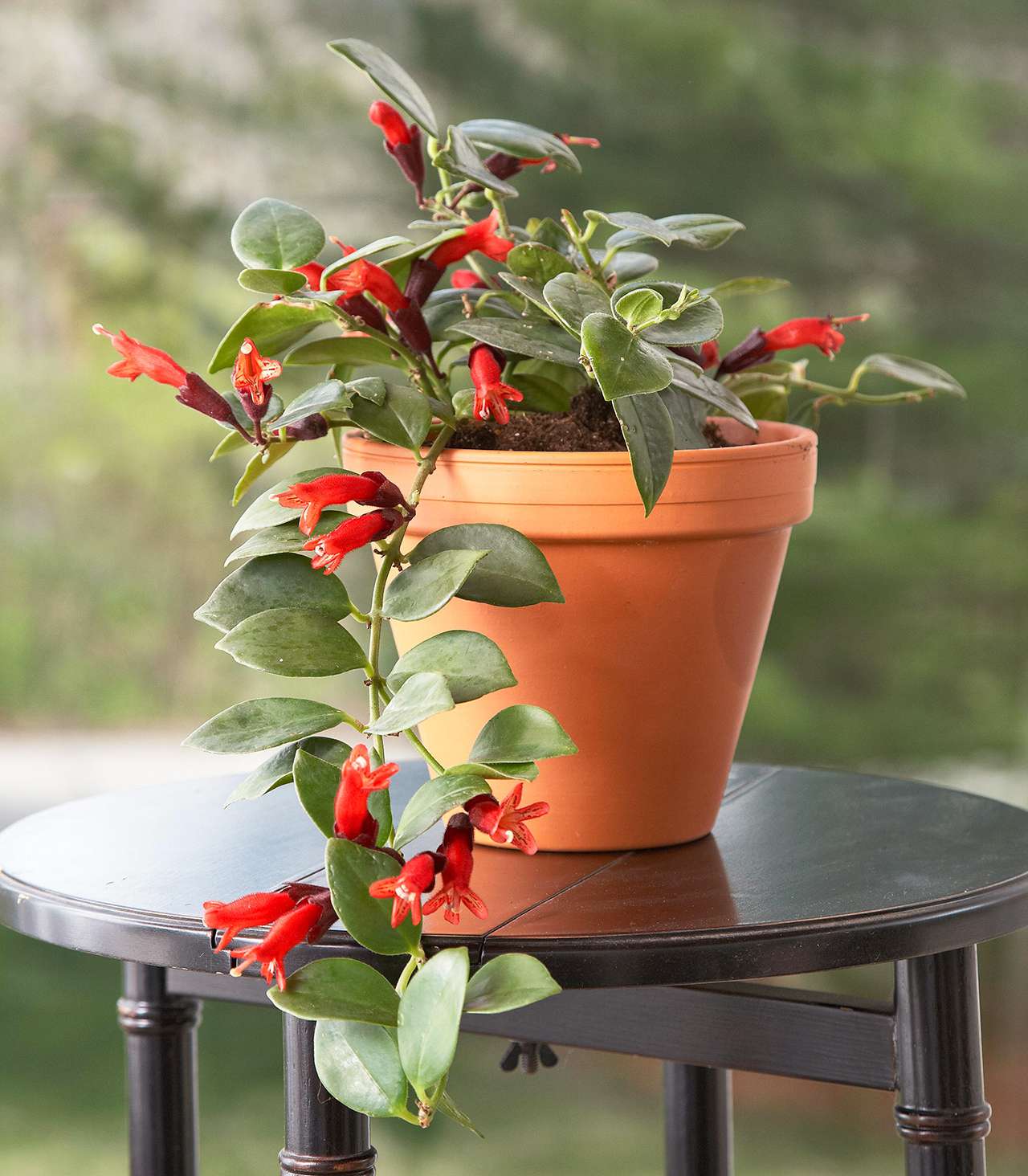
This quirky plant has blooms that look like tubes of lipstick, and is safe for cats and dogs alike (other members of the Peperomia family are, too). A native of the tropics, lipstick plant thrives in bright light and loves being outside in the warmer months. It can grow up to 20 inches tall and likes to have consistently moist soil, so don’t forget to water!
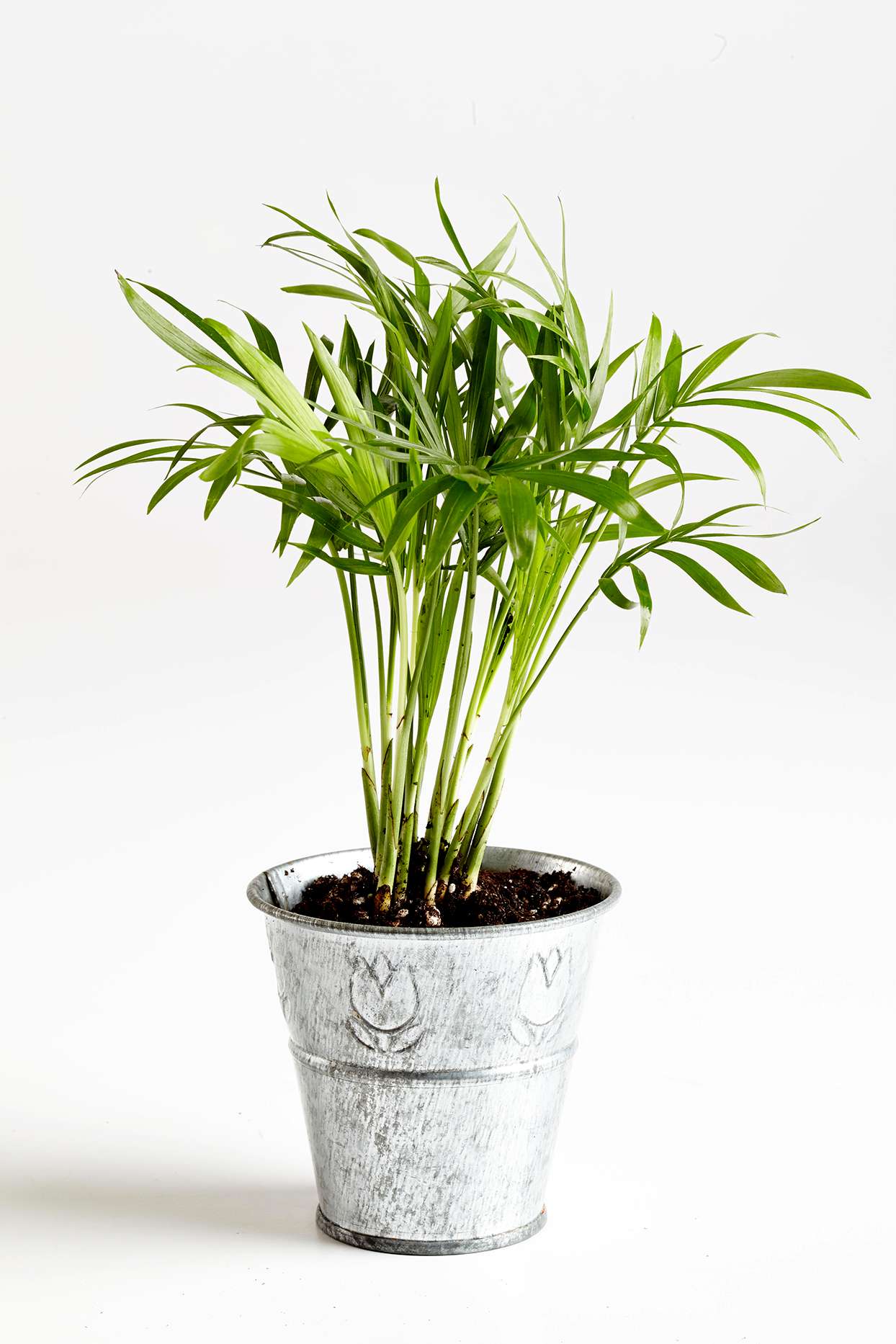
Pet owners looking to add a small tree indoors may want to pick up a parlor palm. This pet-friendly, low-maintenance houseplant is also a good starting point for beginners. It grows best in bright, indirect light, but also tolerates low light. Water when the top inch of soil is dry, and your parlor palm could reach up to eight feet (though four feet is more common).
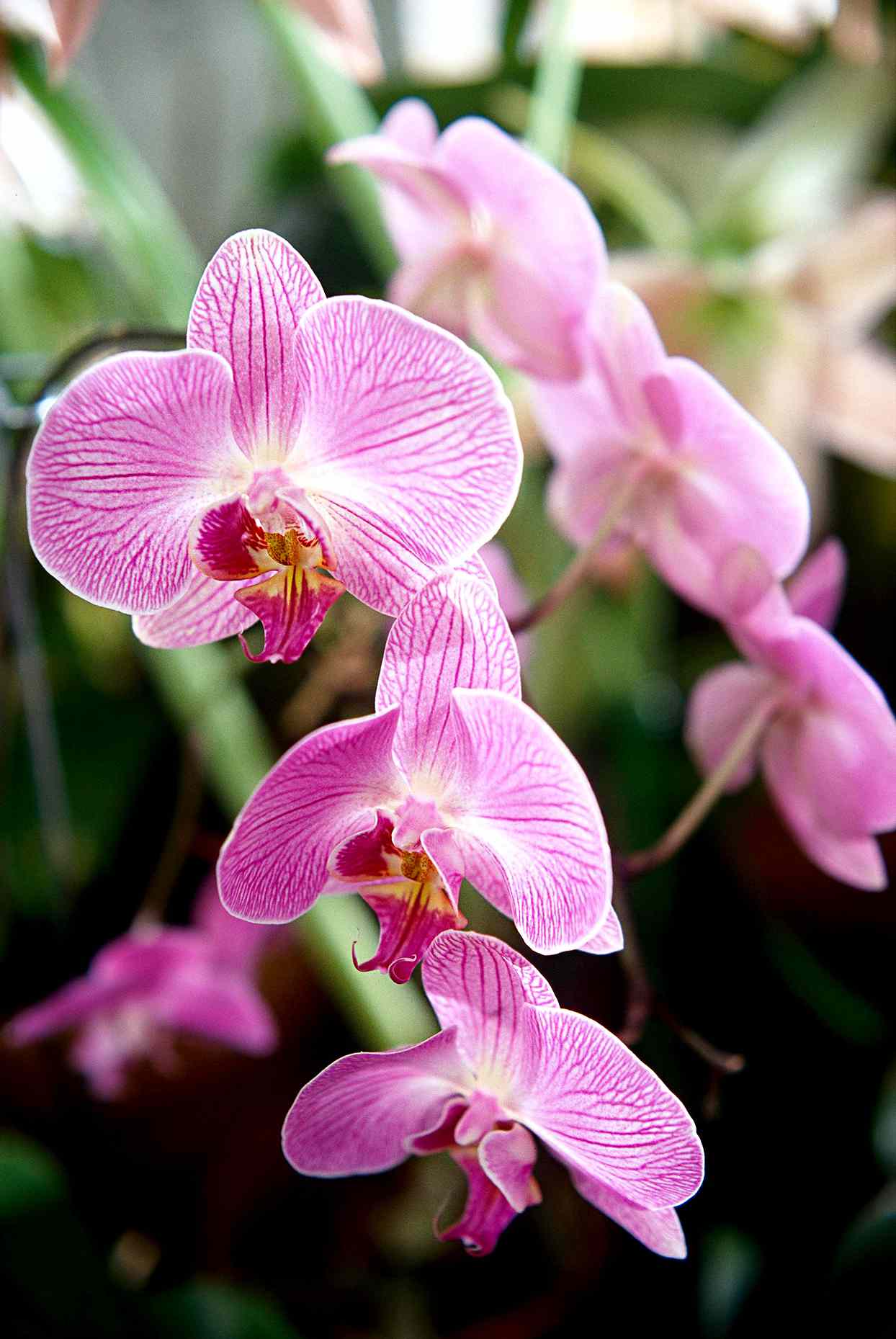
The common moth orchid (the one you’re most likely to see in the floral shop) isn’t harmful to pets. But one thing to watch for: Dogs and cats who love to chew may get into trouble in the potting mix, which often is made up of bark chips. The chips aren’t toxic but may cause tummy troubles if swallowed. Usually between one and three feet tall, this pet-friendly houseplant can tolerate low, medium, or bright light, and generally needs water once a week, or every other week.
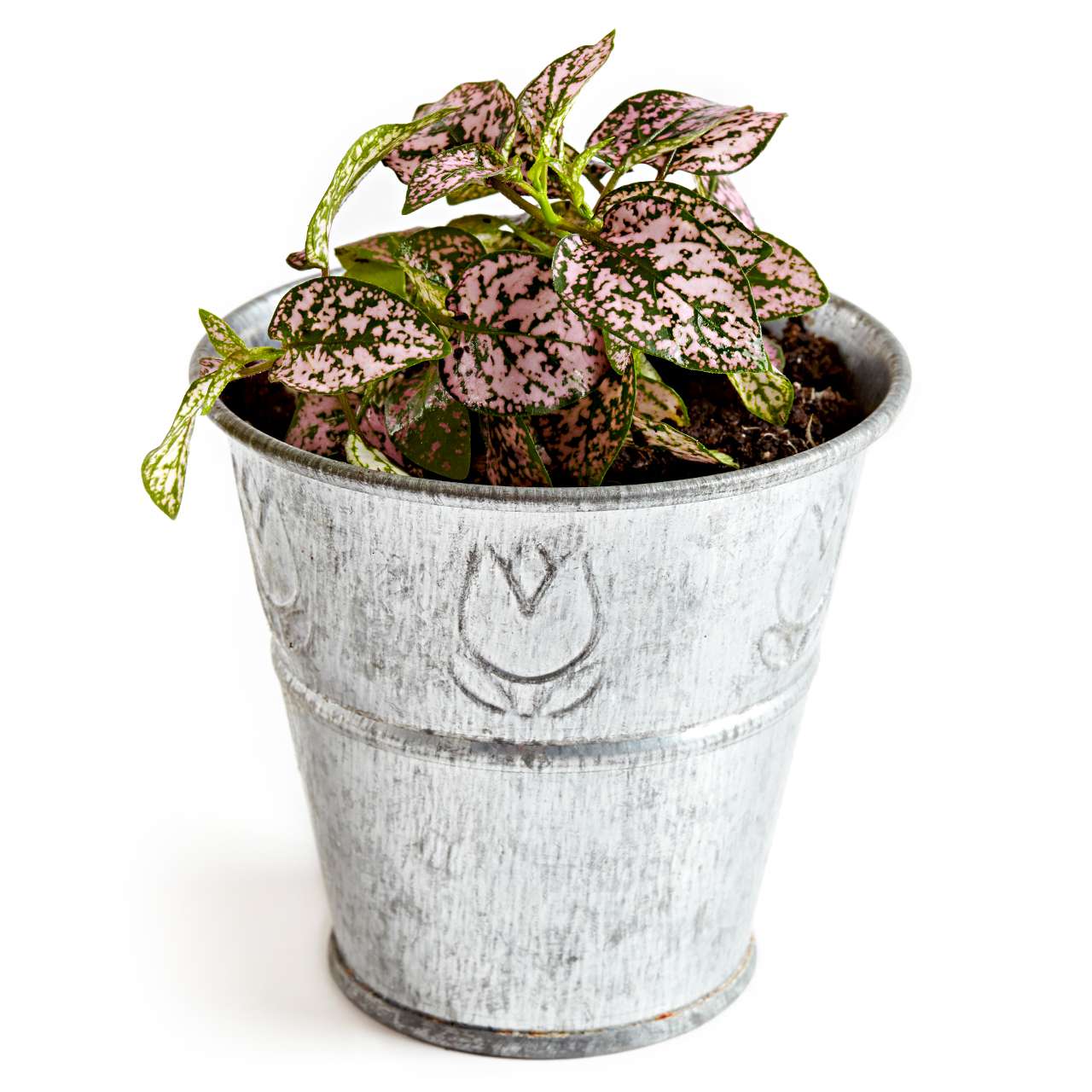
Use polka dot plant to add a splash of pattern and color to miniature gardens, terrariums, mixed containers, and more. You can find this pet-friendly plant in colors like pink or white, and though it can grow up to three feet tall, it usually stays on the small side (under 12 inches) in containers. Place it in a spot that gets bright, indirect light and keep the soil consistently moist.
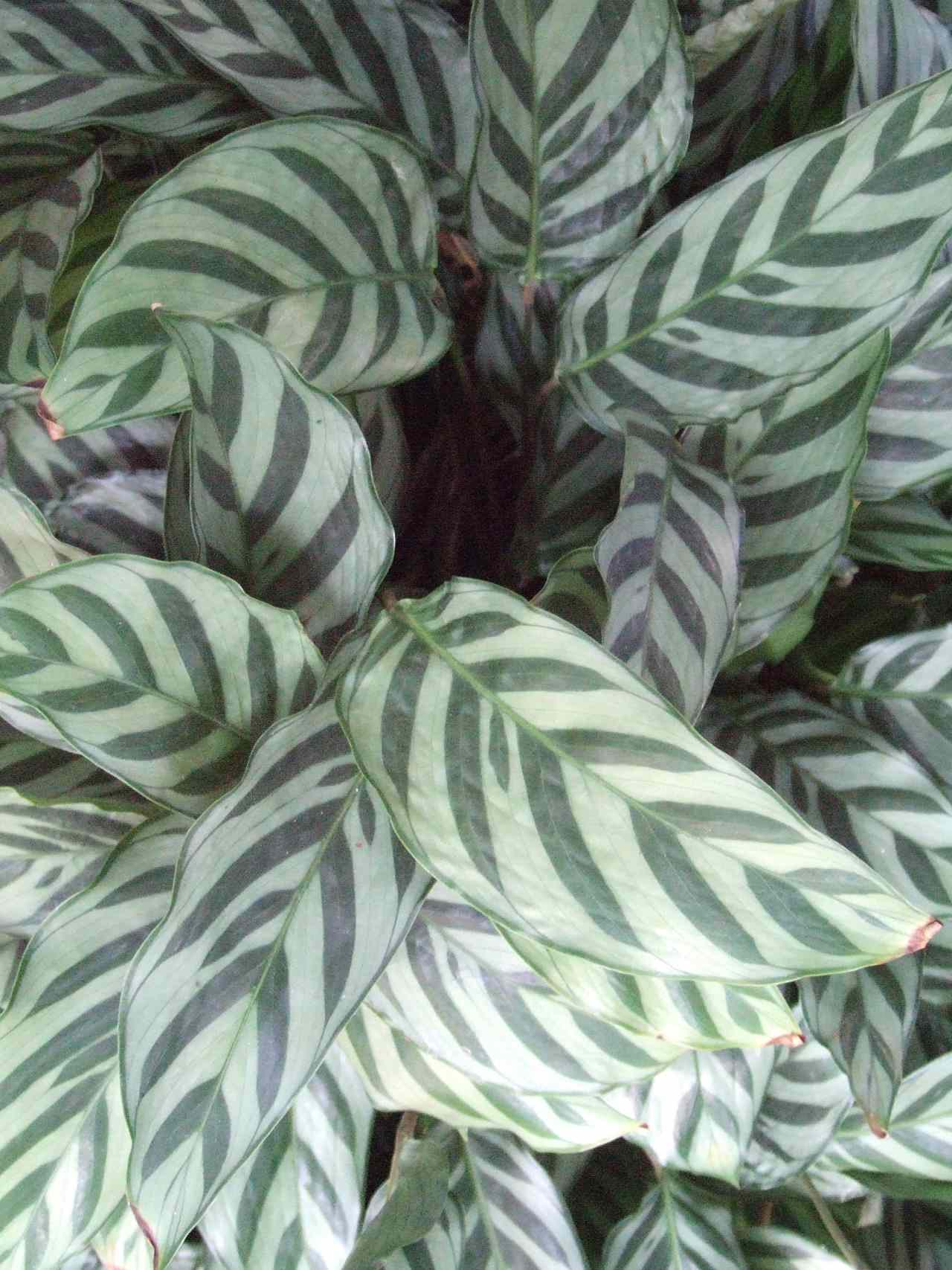
Topping out at six to eight inches, prayer plant is ideal for small spaces like bookshelves and end tables. Its red, cream, and green leaves curl up at night, giving it its name. What’s more, it’s one of the easiest houseplants you can grow that’s also safe for pets. It grows best in medium or low light, and you can let soil dry out a bit between waterings.
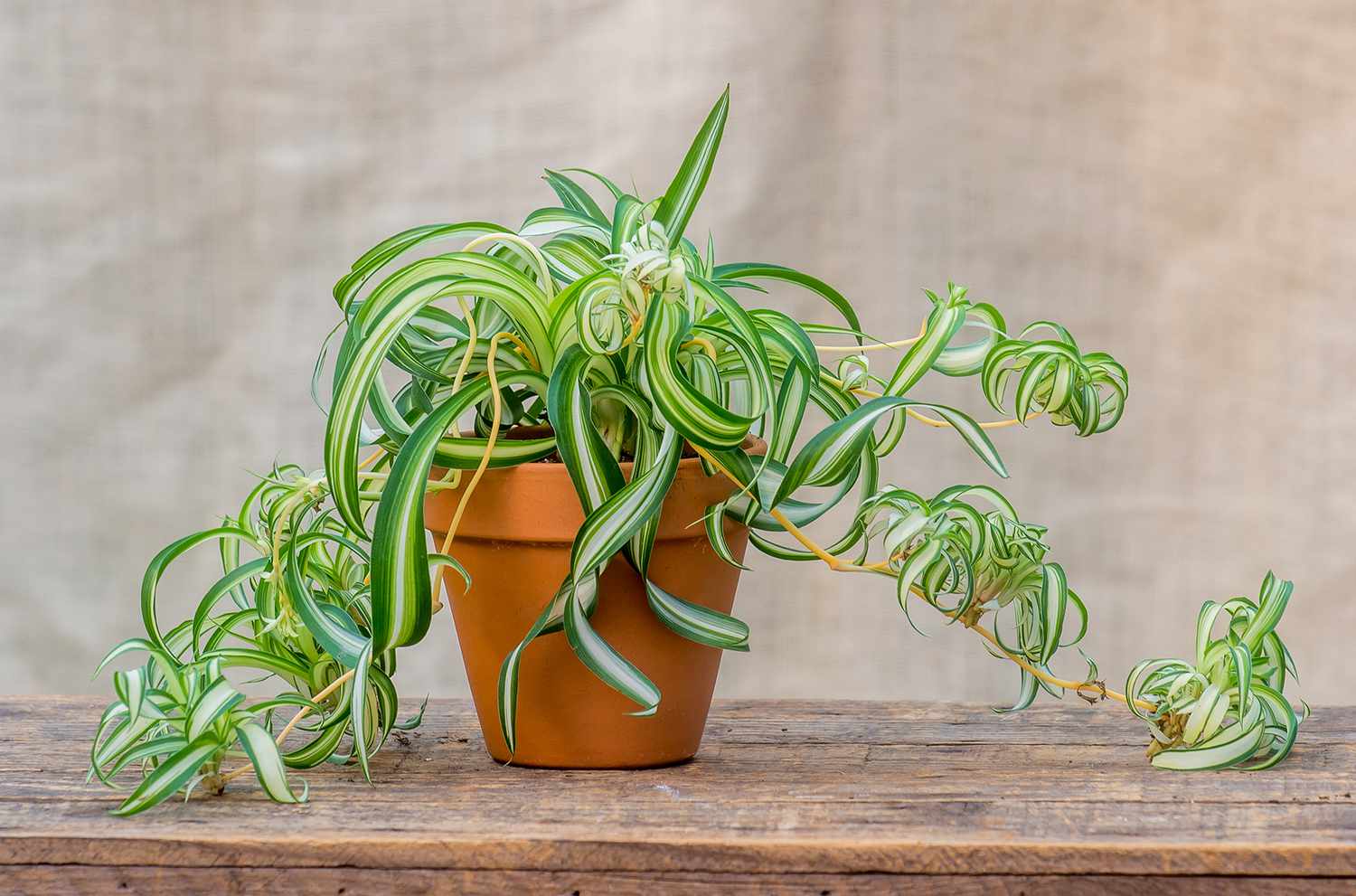
This pet-friendly houseplant is one of the easiest you can grow. It’s also super simple to grow more spider plants from the babies that the mother plant produces. Spider plant grows best in bright, indirect light, but it can tolerate low light, too. Let the soil dry between waterings, and your plant can grow up to 12 inches tall and 24 inches wide, and produce multiple baby plants.
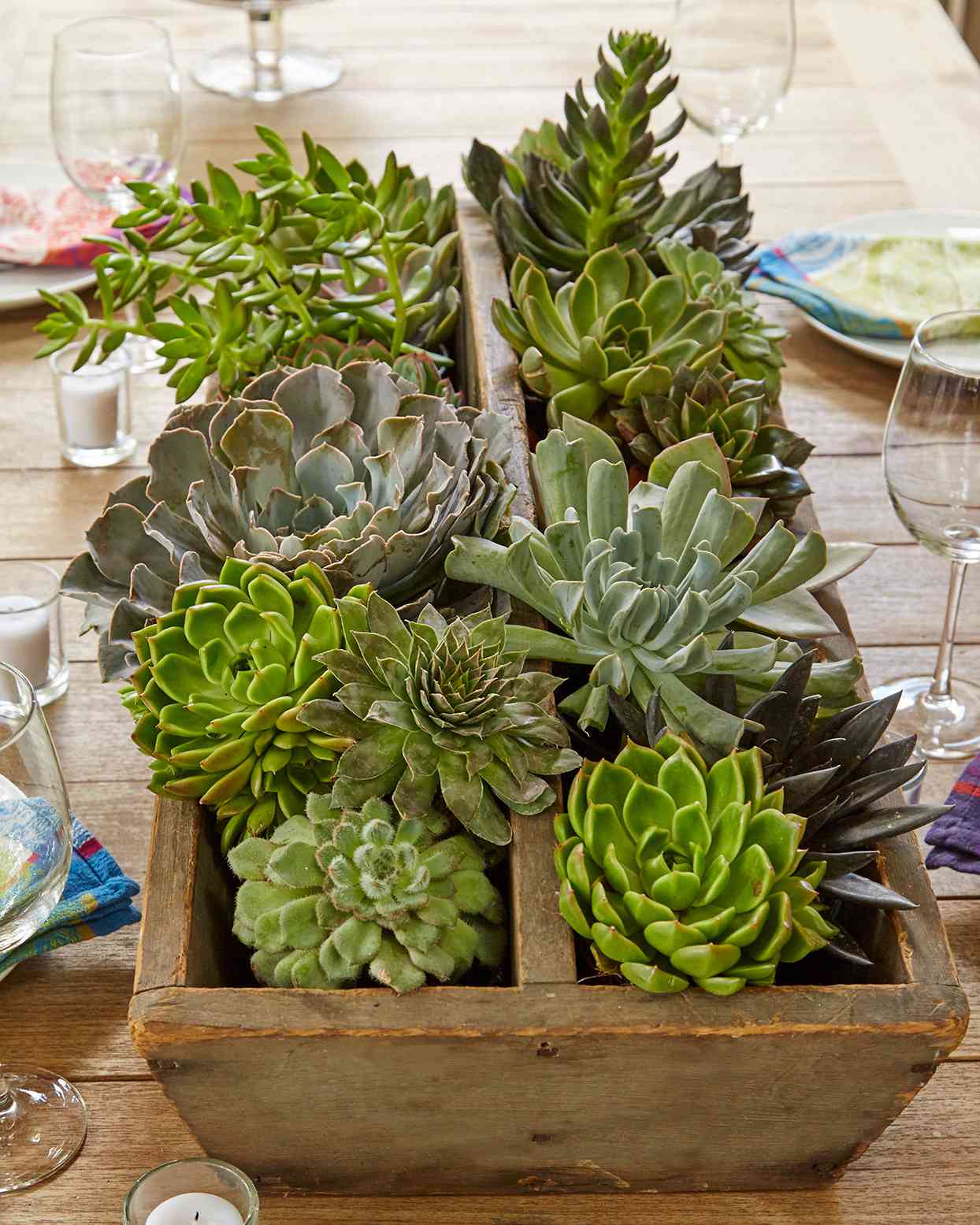
Many of the most popular succulents, including hens and chicks and echeverias, aren’t problematic, but with so many varieties on the market, it’s best to research each individual plant. Jade, for example, while similar to other succulents, is actually dangerous to pets. Most succulents stay just a few inches tall when grown indoors. They will do best in bright light, and only need watering every couple of weeks.
Heart disease is the number #1 killer of both men and women. While many get heart disease because of genetic factors, a poor diet and lack of exercise are the other driving causes. Even for those with a genetic disposition, a change in lifestyle can help reduce their odds. What’s the best diet if you’re worried about your heart?
In the 1990’s, researchers began seriously investigating hypertension (the official name for high blood pressure) and how to handle it through diet instead of medication. They knew becoming a vegetarian was the best solution, but most people aren’t willing to give up meat. Through studies, scientists learned that simply increasing one’s consumption of plants foods had a significant impact on heart health. They called the diet DASH, which stands for “dietary approaches to stop hypertension.”
The DASH diet has since become one of the most effective diets for improving your health. It was voted #2 on the U.S. News And World Report’s list of “Best Diets Overall,” and has a number of other benefits such as:
Easier weight loss
Stronger bones
Improved brain function
What are the rules? They aren’t too complicated. Every day, DASH dieters should eat:
6-8 servings of whole grains
No more than 6 servings of lean meat, fish, or poultry
4-5 servings of vegetables and fruit
2-3 servings of healthy fats and oil
2-3 servings of fat-free or reduced-fat dairy
No more than 2,300 milligrams of sodium
No more than 1 serving of alcohol
The DASH diet calls for less salt
Sweets are also monitored, so ideally, you aren’t eating more than 5 servings per week. You should also eat 4-5 servings of nuts, seeds, and legumes weekly. In order to follow these rules, you end up eliminating most packaged and processed foods, which will benefit your health a lot. For your diet to work as effectively as possible, take up an exercise you enjoy. Your blood pressure will thank you.
First of all, this doesn’t apply to garden-variety t-shirts. Surely, you own at least one nice, collared shirt that has this mysterious loop in the middle of your back. We actually have the Navy to thank for the loops on our shirts. Believe it or not, there isn’t a lot of closet space while you’re out at sea, so sailors would have loops on their shirts so they could just hang them on hooks. College kids in the 1960s also utilized the loops, as they could hang up their shirts and keep them neat and wrinkle-free while at the gym. Today, manufacturers put them on shirts as a sign of class and quality. Also, you may have noticed that young ladies sometimes pull the hooks of boys they like, so there is still a practical reason to have these on our shirts.




























 Mws R Writings